

Abstract
Psychotherapy is increasingly practiced across disciplines, with clinicians from different professions bringing distinct scopes of practice, theoretical orientations, approaches to assessment, and ways of knowing to their psychotherapy practice. Clinical supervision, however, has often remained situated within disciplinary or theoretical silos. This commentary introduces the Stemmed Diamond Model of Clinical Supervision, a conceptual framework designed to support integrative and transdisciplinary psychotherapy supervision. The model builds upon the original Y Model of psychotherapy, the restructured and adapted Y Model presented in The Nurses’ Guide to Psychotherapy and the Expanded Y Model, extending the concepts of foundation, differentiation, development, and integration into clinical supervision.
The Stemmed Diamond Model brings together Foundational and Relational Supervision Models with Structured and Competency-Based Supervision Models, recognizing these as overlapping and complementary rather than mutually exclusive perspectives. At the center of the model is Supervisory Integration, through which supervisors consider supervisee needs, developmental stage, client formulation, psychotherapy approach, evidence and clinical knowledge, ethics and professional scope, culture and context, organizational and systemic factors, along with professional judgement.
These considerations guide the intentional selection, integration, and shifting of supervisory perspectives according to the needs of the supervisee, client, and clinical context. Within transdisciplinary supervision, differences among professional disciplines and psychotherapy traditions are conceptualized as potential sources of knowledge while maintaining clear boundaries related to scope of practice, competence, ethics, and professional accountability.
This model proposes that supervisory expertise is reflected not simply in mastery of a single supervision approach, but in the capacity to determine when, why, and how different supervisory perspectives should be used. The Stemmed Diamond Model offers a structured yet flexible framework intended to support clinician development, psychotherapy practice, professional accountability, public protection, and person-centered care.
Keywords
Clinical supervision, Transdisciplinary supervision, Psychotherapy supervision, Stemmed Diamond Model, Integrative supervision, Supervisory integration, Professional development, Client-centered care, Person-centered care
Introduction
Psychotherapy is increasingly practiced across professional and disciplinary boundaries [1,2]. Depending on jurisdictional legislation and regulation; psychotherapy and counselling may be provided by nurses, psychologists, social workers, psychotherapists and counsellors, physicians, occupational therapists, and other regulated professionals. Although these clinicians may provide similar psychotherapeutic interventions, they enter practice with different professional foundations, scopes of practice, approaches to assessment, theoretical traditions, and ways of knowing and understanding clients.
Clinical supervision has not always reflected this reality. Supervision frequently develops within professional or theoretical silos, with clinicians supervised primarily by members of their own discipline or through a particular psychotherapy or supervision model [1,3,4]. Discipline-specific supervision remains important for developing professional identity, understanding regulatory expectations, and ensuring profession-specific competence [5,6]. However, psychotherapy itself frequently extends beyond the boundaries of any single discipline [1,7]. It can also be conceptualized along a continuum that includes unidisciplinary, intradisciplinary, interdisciplinary, transdisciplinary, and blended approaches [1,3,8]. Transdisciplinary supervision moves beyond simply bringing different professions together. It creates opportunities for supervisors and supervisees to intentionally draw upon different disciplinary ways of knowing, assessing, conceptualizing, and intervening while maintaining attention to professional scope, competence, ethics, and accountability.
The broader clinical supervision literature supports the importance of developmental responsiveness, the supervisory relationship, competency development, evaluation, ethical accountability, and attention to the wider context of clinical practice [5,6,9–11]. Yet the diversity of these models also raises an important question: How can supervisors integrate these different perspectives when supervising clinicians from multiple professions who themselves may practice multiple forms of psychotherapy?
From the Y Model to the Stemmed Diamond Model
The conceptual development of the Stemmed Diamond Model of Clinical Supervision builds upon the original Y Model of psychotherapy described by Goldberg and Plakun (2013), the subsequently restructured and adapted Y Model presented in The Nurses' Guide to Psychotherapy and the later Expanded Y Model developed to conceptualize the blending of psychotherapy practices by more advanced clinicians [4,12,14]. Goldberg and Plakun's (2013) original Y Model provided a useful representation of psychotherapy education in which shared or common psychotherapy knowledge forms the stem, followed by differentiation into therapy-specific approaches [12]. The model highlighted that different psychotherapies may share foundational competencies while retaining distinct theoretical and technical characteristics. The restructured and adapted Y Model presented in The Nurses' Guide to Psychotherapy extended this conceptualization by organizing psychotherapy approaches along structured and less structured pathways while retaining common foundational psychotherapy knowledge and competencies [3]. This adaptation was particularly relevant for clinicians learning more than one psychotherapy approach. The Expanded Y Model (Figure 1) subsequently moved the concept further toward integration [14]. Rather than conceptualizing psychotherapy approaches as permanently separated branches, the Expanded Y Model recognized that clinicians may increasingly integrate interventions and perspectives across psychotherapy approaches as their training, supervision, clinical experience, reflective capacity, and professional judgement develop.
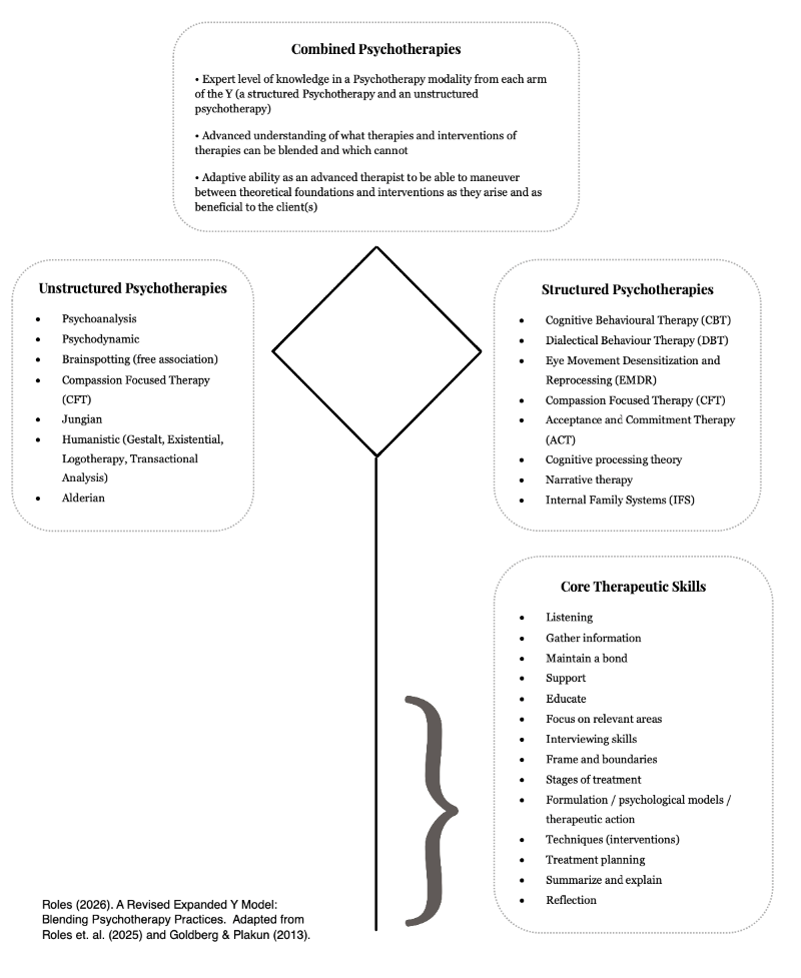
Figure 1. Expanded Y Model.
Models of Clinical Supervision
Clinical supervision has been conceptualized through numerous theoretical traditions. Developmental models emphasize changes in supervisee needs and competencies over time [11]. Bernard's (1979) Discrimination Model emphasizes the supervisor's ability to select among different supervisory roles and areas of focus according to the needs of the supervisee [15]. Relational and psychotherapy-based models draw greater attention to the supervisory relationship, therapeutic processes, use of self, and parallel processes, while competency-based approaches emphasize skill acquisition, assessment, feedback, evaluation, and protection of the public [5,6,9].
Systemic approaches further broaden the supervisory lens. The Seven-Eyed Model, for example, encourages attention to the client, therapist, supervisor, relationships among them, and the wider systems within which therapy and supervision occur [16]. Reflective approaches similarly encourage clinicians to examine how experience, assumptions, knowledge, and professional judgement influence clinical practice [17]. These models offer different but potentially complementary ways of understanding supervision. Research has also historically cautioned against assuming that one supervision model is universally superior to others [18].
The Stemmed Diamond Model of Clinical Supervision
The Stemmed Diamond Model of Clinical Supervision represents a further evolution of this conceptual thinking. It moves the principles of foundation, differentiation, development, and integration from psychotherapy education and practice into the supervision process itself. This progression is also consistent with developmental approaches to supervision. The Integrative Developmental Model, for example, recognizes that supervisory needs change as clinicians develop in motivation, autonomy, self-awareness, clinical conceptualization, intervention skills, and other domains [11]. Similarly, competency-based approaches emphasize that supervision must attend not only to reflection and professional development but also to observable competence, feedback, evaluation, and accountability [5,9]. The Stemmed Diamond Model therefore proposes that increasing supervisory expertise should not necessarily result in greater allegiance to one model. Instead, development may increase the supervisor's capacity to select, integrate, and shift among supervisory perspectives intentionally.
The model builds conceptually upon the original Y Model of psychotherapy, the restructured and adapted Y Model and the Expanded Y Model [2,14,12].
The Stemmed Diamond Model does not seek to replace the previously discussed models of supervision. Rather, it provides a conceptual framework for organizing and intentionally integrating them. One side of the diamond encompasses Foundational and Relational Supervision Models, including developmental, process and relational, reflective practice, attachment-informed, psychodynamic, humanistic, and narrative approaches. Collectively, these approaches contribute attention to professional identity, reflective capacity, relational awareness, use of self, parallel process, and developmental growth [2,19–21]. The other side encompasses Structured and Competency-Based Supervision Models, including social role and task-oriented approaches, the Discrimination Model, competency-based supervision, the Integrative Developmental Model, Seven-Eyed supervision, microskills approaches, integrative and comprehensive models, and psychotherapy-based supervision. These perspectives contribute to competency assessment, feedback, educational planning, skill development, evaluation, ethical accountability, and targeted supervisory interventions. Importantly, these two sides should not be understood as mutually exclusive categories [2,22,23].
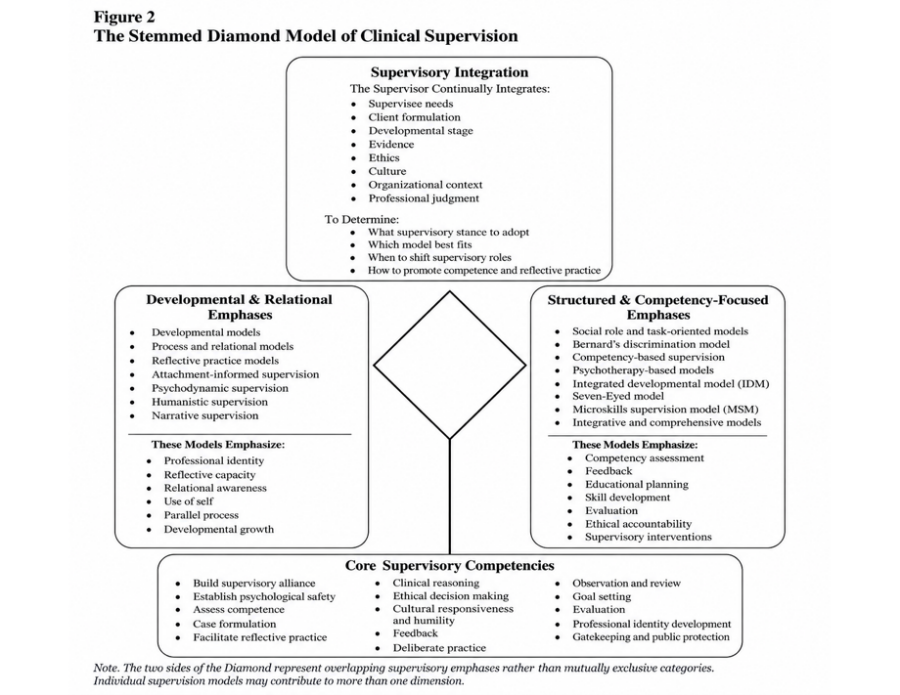
Figure 2. The Stemmed Model of Clinical Supervision.
Many supervision models contain relational, developmental, structural, and competency-based elements [2,24,25]. Their positioning within the Diamond is intended to facilitate conceptual organization and supervisory reflection rather than establish rigid classifications. At the center is Supervisory Integration. Here, the supervisor considers: supervisee needs and developmental stage; client formulation and psychotherapy approach; evidence and clinical knowledge; ethics and professional scope; culture and context; organizational and systemic factors; and professional judgement. These considerations guide the supervisor in determining which supervisory stance, model, intervention, or combination of approaches is most appropriate at a particular point in supervision. The stem of the diamond represents the translation of supervisory integration back into psychotherapy practice and ultimately into client care. Supervision is therefore not an endpoint. Its purpose extends beyond supervisee development to strengthening psychotherapy practice, maintaining ethical and professional accountability, protecting clients, and improving the quality of care.
The Stemmed Diamond Model extends the concepts of foundation, differentiation, development, and integration into clinical supervision. Foundational and relational approaches and structured and competency-based approaches expand the supervisor's repertoire, while supervisory integration guides the selection and blending of perspectives according to supervisee needs, client formulation, developmental stage, evidence, ethics, culture, organizational context, and professional judgement.
A Framework for Transdisciplinary Psychotherapy Supervision
The Stemmed Diamond Model may be particularly useful for transdisciplinary psychotherapy supervision because it does not privilege a single profession, psychotherapy orientation, or supervision theory. A nurse psychotherapist, psychologist, social worker, psychotherapist, occupational therapist, or physician may approach the same clinical presentation through somewhat different professional lenses. These differences represent potential sources of knowledge. Transdisciplinary supervision allows clinicians to consider these perspectives while remaining grounded in their own professional responsibilities. This approach is consistent with Canadian supervision literature emphasizing that supervision involves developmental, relational, competency, ethical, legal, and professional responsibilities rather than simply consultation about individual cases [6]. Supervision must therefore simultaneously create space for learning while maintaining responsibility for competency and public protection.
Transdisciplinary supervision does not mean that disciplinary boundaries disappear. Supervisors and supervisees remain accountable to their respective scopes of practice, competencies, ethical standards, and regulatory requirements. Instead, professional boundaries establish accountability without becoming boundaries to learning. Transdisciplinary supervision creates opportunities for learning to expand beyond the traditional silos of knowledge and application. The same principle applies to psychotherapy orientation. Supervisors may draw from cognitive-behavioral, psychodynamic, compassion-focused, trauma-focused, humanistic, systemic, and other psychotherapy traditions when clinically appropriate. Psychotherapy-specific supervision remains particularly important when developing competence in a particular modality. For example, CBT supervision emphasizes formulation, structured intervention, deliberate skill development, feedback, and therapist competence [26]. Integration therefore should not mean indiscriminately mixing therapeutic or supervisory techniques. It requires sufficient knowledge to understand what is being integrated, why it is being integrated, and whether the supervisor and supervisee possess the competence to do so. The central supervisory question consequently shifts from: "Which model of supervision do I use?" to: "What does this supervisee, working with this client, within this professional, therapeutic, cultural, and organizational context, need from supervision at this moment?" The Stemmed Diamond Model proposes that answering this question requires both structure and flexibility. Models provide the structure; professional judgement determines how they are used.
The progression from the original Y Model, through the restructured and adapted Y Model and Expanded Y Model, to the Stemmed Diamond Model of Clinical Supervision reflects an increasingly integrative understanding of psychotherapy education, practice, and supervision [2,12,14]. The Stemmed Diamond Model also draws upon a broader tradition within supervision scholarship. Developmental models remind supervisors that needs change as clinicians develop [11]; the Discrimination Model illustrates the importance of intentionally shifting supervisory roles and foci [15]; relational and reflective traditions emphasize relationship, self-awareness, and reflection [17]; systemic models widen attention to relationships and context [16]; and competency-based approaches emphasize assessment, feedback, ethics, and accountability [5,6,9].
Conclusion
Different dimensions of supervisory models are brought together within the Stemmed Diamond Model of Clinical Supervision, creating a framework designed specifically to support integrative and transdisciplinary psychotherapy supervision. It provides a foundation from which to remove the disciplinary and theoretical silos often found in contemporary clinical supervision. It conceptualizes supervisory expertise not as mastery of one model but as the increasing ability to determine when, why, and how different supervisory perspectives should be used. For transdisciplinary psychotherapy supervision, the model is intentionally both integrative and bounded: open to different professional ways of knowing and multiple psychotherapy and supervision traditions while remaining grounded in competence, evidence, scope of practice, ethics, professional accountability, and client-centered care. Ultimately, the goal is not to produce clinicians or supervisors without disciplinary or theoretical foundations. Rather, it is to develop clinicians and supervisors who are sufficiently grounded in those foundations to thoughtfully move between and beyond them when doing so enhances professional development, psychotherapy practice, and client care.
References
2. Roles S, Kalia K. Introduction. In: Roles S, Kalia K, Editors. The Nurses’ Guide to Psychotherapy. Singapore: Springer Nature Singapore; 2024. pp. 1–12.
3. McGuinness S, Guerin S. Interprofessional supervision among allied health professionals: a systematic scoping review. J Interprof Care. 2024 Jul-Aug;38(4):739–58.
4. Roles S, Valiente C, Castonguay N, Campbell D. Nursing competencies: Supervision and consultation.In: Roles S, Kalia K, Editor. The Nurses’ Guide to Psychotherapy. Singapore: Springer Nature Singapore; 2024. pp. 239–56.
5. Bernard JM, Goodyear RK. Fundamentals of clinical supervision. 6th ed. Pearson; 2019.
6. Shepard B, Martin L, Robinson B. Clinical supervision of the Canadian counselling and psychotherapy profession. Canadian Counselling and Psychotherapy Association; 2016.
7. Opland C, Torrico TJ. Psychotherapy and Therapeutic Relationship. 2024 Oct 6. In: StatPearls [Internet]. Treasure Island (FL): StatPearls Publishing; 2024 Jan–.
8. Martin P, Kumar S, Ducat W, Snowdon D. Interprofessional supervision: strengthening clinical supervision by utilising commonalities across professions: Interprofessional supervision. The Journal of Practice Teaching and Learning. 2024 Aug 1;22(1-2):97–114.
9. Corey G, Haynes RH, Moulton P, Muratori M. Clinical supervision in the helping professions: A practical guide. 3rd ed. American Counseling Association; 2021.
10. Reséndiz Juárez G, Fruggeri L. Supervisor's Positioning in Systemic Training: Complex Relational Space and Significant Oscillations. J Marital Fam Ther. 2026 Jan;52(1):e70095.
11. Stoltenberg CD, McNeill BW. IDM supervision: An integrative developmental model for supervising counselors and therapists. 3rd ed. Routledge; 2011.
12. Goldberg DA, Plakun EM. Teaching psychodynamic psychotherapy with the Y model. Psychodyn Psychiatry. 2013 Mar;41(1):111–25.
13. Roles S, Valiente C, Rijo I, Castonguay N. Training and psychotherapy. In: Roles S, Kalia K, Editors. The nurses’ guide to psychotherapy: A reference book for nurses providing psychotherapy. Singapore: Springer Nature; 2024. pp. 231–8.
14. Roles S. An Expanded Y Model: Blending Psychotherapy Practices. J Ment Health Disord. 2025;5(1):87–90.
15. Bernard JM. Supervisor training: A discrimination model. Counselor education and supervision. 1979 Sep;19(1):60–8.
16. Hawkins P, Shohet R. Supervision in the helping professions. 4th ed. Open University Press; 2012.
17. Schön DA. Educating the reflective practitioner: Toward a new design for teaching and learning in the professions. Jossey-Bass; 1987.
18. Goodyear RK, Bernard JM. Clinical supervision: Lessons from the literature. Counselor Education and Supervision. 1998 Sep;38(1):6–22.
19. College of Registered Psychotherapists of Ontario. Professional practice standards for registered psychotherapists. CRPO Professional Practice Standards; 2024. Available from: https://crpo.ca/wp-content/uploads/2026/01/CRPO-Standards-Jan124-Revised-Dec1125.pdf
20. Rønnestad MH, Orlinsky DE, Willutzki U. Exploring influences of supervision on psychotherapists’ professional development: Correlates across career-level cohorts. Counselling Psychology Quarterly. 2025 Apr 3;38(2):297–319.
21. Schubert S, Buus N, Monrouxe L, Hunt C. Interrogation in clinical supervision sessions: Exploring the construction of clinical psychology trainees' professional identities. Soc Sci Med. 2023 May;325:115887.
22. Canadian Counselling and Psychotherapy Association. National clinical supervision competency framework. Canadian Counselling and Psychotherapy Association; 2025. Available from: https://www.ccpa-accp.ca/national-clinical-supervision-competency-framework/
23. Elnasseh A, Mehta VS, Manolova G, Pedersen GA, Golden S, Eloul L, et al. Perspectives on competency-based feedback for training non-specialists to deliver psychological interventions: multi-site qualitative study of the EQUIP competency-based approach. BJPsych Open. 2024 Jun 3;10(4):e125.
24. British Psychological Society. Supervision guidance for psychologists. British Psychological Society; 2024. Available from: https://www.bps.org.uk/guideline/supervision-guidance-psychologists
25. Stevens YJ, Dudley J. Relational supervision in CAT. In: Brummer L, Cavieres M, Tan R, Editors. Oxford Handbook of Cognitive Analytic Therapy. Oxford University Press; 2024. pp. 802–22.
26. Sudak DM, Codd III RT, Ludgate JW, Sokol L, Fox MG, Reiser RP, et al. Teaching and supervising cognitive behavioral therapy. John Wiley & Sons; 2015.