Loading


Archives of Alzheimer's & Parkinson's Disease
ISSN: 3144-1092

2026
Volume 1, Issue 1, p1-40
Articles published in this issue are Open Access and licensed under Creative Commons Attribution License (CC BY NC) where the readers can reuse, download, distribute the article in whole or part by mentioning proper credits to the authors.
Fronting the twin challenges: Alzheimer’s and Parkinson’s disease
Chong Chen
Alzheimer's and Parkinson's diseases are two of the most prominent and complex progressive neurological disorders that have a profound global impact [1,2]. These diseases affect millions of individuals worldwide, causing significant morbidity and placing a substantial burden on healthcare systems and society [3,6]. Despite considerable advancements in understanding these disorders over the years, developing effective treatments remains a complex and multifaceted challenge [7,8].
Arch Alzheimers Parkinsons Dis, 2026, Volume 1, Issue 1, p1-3 | DOI: 10.46439/alzheimers.1.001
Capturing the true burden of Parkinson’s disease: Methodological priorities for future research
Noor Un Nisa, Laiba Riaz, Muhammad Aashir Zahid
National studies of Parkinson’s disease (PD) provide critical data for healthcare planning, yet methodological limitations continue to undermine their utility. This review examines recent epidemiological work, including the Greek nationwide analysis, to highlight three priority areas for refinement: diagnostic accuracy, survival methodology, and recognition of disease heterogeneity.
Arch Alzheimers Parkinsons Dis, 2026, Volume 1, Issue 1, p4-12 | DOI: 10.46439/alzheimers.1.002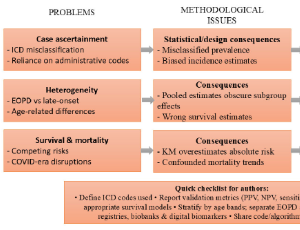
Music-based interventions in Alzheimer’s and Parkinson’s disease
Neelima Chauhan, Richa Mishra, Hemant Toshikhane, Swati Patil, Iype Cherian
Alzheimer's disease (AD) and Parkinson's disease (PD) constitute a leading cause of disability and death worldwide. Millions of people are currently afflicted with AD and PD with numbers expected to double by mid-century, if effective disease-modifying treatments do not become available. There is no cure for AD or PD. Current Food and Drug Administration (FDA)-approved treatments are symptomatic which do not halt the progression of the disease and are associated with adversities.
Arch Alzheimers Parkinsons Dis, 2026, Volume 1, Issue 1, p13-21 | DOI: 10.46439/alzheimers.1.003
- Abstract |
- Full Text |
- Cite |
- Supplementary File
Edible plants: Promising source for prevention and management of Parkinson’s and Alzheimer's disease
Acharya Balkrishna, Shreya Joshi, Rama Shankar, Uday Bhan Prajapati, Rashmi Atul Joshi
India can be regarded as an agricultural country where 46% of its land is utilized for farming [1]. Since ancient times, plants have been utilized for their edible properties and for medicinal and therapeutic purposes. The ancient medicinal science Ayurveda strongly recommends the use of natural ingredients in the form of food to remain healthy and also to cure various ailments.
Arch Alzheimers Parkinsons Dis, 2026, Volume 1, Issue 1, p22-28 | DOI: 10.46439/alzheimers.1.004
Invisible in the data: transgender populations in Alzheimer’s and dementia research
Divya Ramanathan
Alzheimer’s disease and related dementias (ADRD) are widely studied conditions, yet the populations represented in dementia research do not always reflect the diversity of individuals who age with these disorders. Transgender and gender-diverse populations remain largely absent from many epidemiological datasets and longitudinal cohort studies that inform current models of cognitive aging.
Arch Alzheimers Parkinsons Dis, 2026, Volume 1, Issue 1, p29-31 | DOI: 10.46439/alzheimers.1.005
Copper – dopamine crosstalk: A blueprint for next-generation brain health monitoring
Ayushi, Neha Agrawal, Niroj K Sethy
Metal neurotransmitter interaction has well expanded role due to their direct relation with neurodegenerative diseases. Among this copper dopamine coupling is well studied because of the biochemical and redox interplay between copper ions and dopamine, where copper regulates dopamine metabolism while dopamine can chelate and redox-cycle copper.
Arch Alzheimers Parkinsons Dis, 2026, Volume 1, Issue 1, p32-35 | DOI: 10.46439/alzheimers.1.006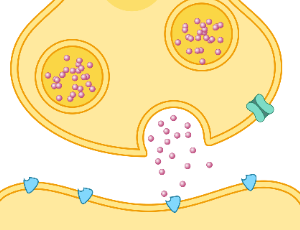
Parkinson’s disease with dementia: A biochemical and pathophysiological treatment approach
John D Young
About three years ago, Memorial Sloan Kettering Cancer Center (MSK) developed a stem cell-based therapy that may help advance the treatment of Parkinson's disease. Researchers took embryonic stem cells and manipulated them to produce neurons that could be implanted into the brains of patients with mild Parkinson's disease.
Arch Alzheimers Parkinsons Dis, 2026, Volume 1, Issue 1, p36-40
Recommended Articles
Fronting the twin challenges: Alzheimer’s and Parkinson’s disease
Alzheimer's and Parkinson's diseases are two of the most prominent and complex progressive neurological disorders that have a profound global impact [1,2]. These diseases affect millions of individuals worldwide, causing significant morbidity and placing a substantial burden on healthcare systems and society [3,6]. Despite considerable advancements in understanding these disorders over the years, developing effective treatments remains a complex and multifaceted challenge [7,8].
Capturing the true burden of Parkinson’s disease: Methodological priorities for future research
National studies of Parkinson’s disease (PD) provide critical data for healthcare planning, yet methodological limitations continue to undermine their utility. This review examines recent epidemiological work, including the Greek nationwide analysis, to highlight three priority areas for refinement: diagnostic accuracy, survival methodology, and recognition of disease heterogeneity.
Music-based interventions in Alzheimer’s and Parkinson’s disease
Alzheimer's disease (AD) and Parkinson's disease (PD) constitute a leading cause of disability and death worldwide. Millions of people are currently afflicted with AD and PD with numbers expected to double by mid-century, if effective disease-modifying treatments do not become available. There is no cure for AD or PD. Current Food and Drug Administration (FDA)-approved treatments are symptomatic which do not halt the progression of the disease and are associated with adversities.
Edible plants: Promising source for prevention and management of Parkinson’s and Alzheimer's disease
India can be regarded as an agricultural country where 46% of its land is utilized for farming [1]. Since ancient times, plants have been utilized for their edible properties and for medicinal and therapeutic purposes. The ancient medicinal science Ayurveda strongly recommends the use of natural ingredients in the form of food to remain healthy and also to cure various ailments.
Invisible in the data: transgender populations in Alzheimer’s and dementia research
Alzheimer’s disease and related dementias (ADRD) are widely studied conditions, yet the populations represented in dementia research do not always reflect the diversity of individuals who age with these disorders. Transgender and gender-diverse populations remain largely absent from many epidemiological datasets and longitudinal cohort studies that inform current models of cognitive aging.
Copper – dopamine crosstalk: A blueprint for next-generation brain health monitoring
Metal neurotransmitter interaction has well expanded role due to their direct relation with neurodegenerative diseases. Among this copper dopamine coupling is well studied because of the biochemical and redox interplay between copper ions and dopamine, where copper regulates dopamine metabolism while dopamine can chelate and redox-cycle copper.
Parkinson’s disease with dementia: A biochemical and pathophysiological treatment approach
About three years ago, Memorial Sloan Kettering Cancer Center (MSK) developed a stem cell-based therapy that may help advance the treatment of Parkinson's disease. Researchers took embryonic stem cells and manipulated them to produce neurons that could be implanted into the brains of patients with mild Parkinson's disease.