Loading


Journal of Clinical Anesthesia and Intensive Care
ISSN: 2767-3367
Editors Choice Articles
Mind-body approaches for reducing the need for post-operative opioids: Evidence and opportunities
Bethany D. Pester, Robert R. Edwards, Marc O. Martel, Christopher J. Gilligan, Samantha M. Meints
While opioids remain our most potent analgesics in the management of pain, the many potential harms of prescription opioids have become increasingly clear. Despite the analgesic benefits for people with acute and chronic pain [1], opioid therapy (especially long-term opioid treatment) can result in significant problems such as opioid misuse, the development of opioid use disorder, and overdose. Some authors report that up to 20-30% of patients in primary and tertiary care settings who are maintained on long-term opioid therapy misuse opioids (i.e., use them in a manner other than how the opioids are prescribed) [2,3]. Misuse of opioids can cause or exacerbate additional health problems in people with chronic pain [1,4], and in fact, roughly 10% of patients prescribed long-term opioid therapy may develop an opioid use disorder (OUD), although prevalence varies between studies depending on differences in methodology and operational definitions [3].
J Clin Anesth Intensive Care, 2022, Volume 3, Issue 1, p1-5 | DOI: 10.46439/anesthesia.3.016
Is blood type “O” associated with a higher risk of post-partum hemorrhage and hemostasis disorders? A retrospective study
Pomeline Temmerman, Tamara Zec, Seyed Javad Bidgoli
Background: Maternal hemorrhage represents the most prevalent complication and primary cause of mortality during childbirth. Extensive studies have elucidated noteworthy correlations between ABO blood type and cardiovascular disease risk in both genders. Notably, individuals with blood type O exhibit a substantial variation in the formation of the platelet plug on vascular lesions, accompanied by a reduction in von Willebrand factor.
J Clin Anesth Intensive Care, 2024, Volume 4, Issue 1, p11-22 | DOI: 10.46439/anesthesia.4.021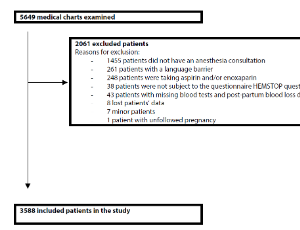
Potential of the Prognostic Nutritional Index (PNI): A simple and effective tool for mortality prediction in intensive care
Fatma Erseven, Hatice Gulgun Fırat, Melisa Irem Kara, Pınar Tulinay Bulut
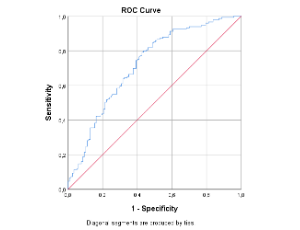
Aim: Early identification of mortality risk remains a challenge in the Intensive Care Unit (ICU). The Prognostic Nutritional Index (PNI), a simple tool reflecting combined nutritional and immunological status (via serum albumin and lymphocyte count), has shown promise across various critically ill populations. This study aims to evaluate the prognostic value of PNI in predicting in-hospital mortality among a cohort of adult patients admitted to a medical ICU, and to assess its clinical utility as an accessible biomarker for risk stratification.
J Clin Anesth Intensive Care, 2025, Volume 5, Issue 1, p16-21 | DOI: 10.46439/anesthesia.5.026