Loading


Clinical Research in Oncology
ISSN: 3071-2378
2026
Volume 2, Issue 1, p1-30
Articles published in this issue are Open Access and licensed under Creative Commons Attribution License (CC BY NC) where the readers can reuse, download, distribute the article in whole or part by mentioning proper credits to the authors.
Measurable residual disease as a surrogate endpoint for overall survival in acute myeloid leukemia: a call to action
Marie-Helene Blanchet Zumofen, Vicky Huang, Kathryn Matt, Neerav Monga, Thomas Prebet, Thomas J. Prior, Bourras-Rezki Bengoudifa, Brenda Chyla, Carole Longson, Beate Wulff, Reshma Patel, Daniel Lopes de Menezes
The standardization and implementation of new endpoints are crucial for the development of novel therapeutic agents. These endpoints help streamline clinical development while maintaining high standards of care for innovative treatments, ultimately leading to improved patient outcomes.
Clin Res Oncol, 2026, Volume 2, Issue 1, p1-11 | DOI: 10.46439/Oncology.2.009
Pancreatic cancer therapy in the era of precision oncology
Sakarie Mustafe Hidig
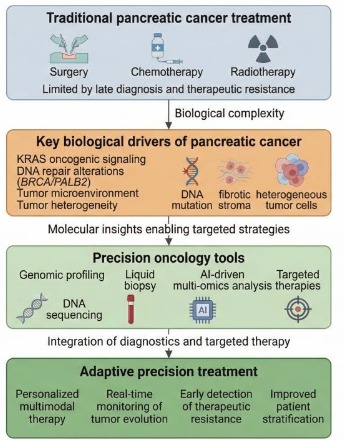
Pancreatic cancer, predominantly pancreatic ductal adenocarcinoma (PDAC), remains one of the most lethal malignancies, characterized by late diagnosis, aggressive tumor biology, and profound resistance to conventional therapies. Despite advances in surgical techniques and combination chemotherapy regimens such as FOLFIRINOX and gemcitabine-based therapies, survival outcomes remain poor, with five-year survival rates barely exceeding 10%.
Clin Res Oncol, 2026, Volume 2, Issue 1, p12-17
Clinical validation of a metabolomics-based multi-cancer early detection test
M. Gopichand, A. Gupta, K. K. Mittal, A. Ahmad, M. V. Kalloli, P. R. Kumar, P. P. Lad, I. Longkumer, R. V. Nagarkar, W. R. Narayan, R. Neve, S. K. Pal, K. V. S. Rao, D. Sadhupati, G. Sagar, Z. Siddiqui, V. Tripathi, N. M. Saquib, V. P. Singh
Multi-cancer detection (MCD) tests can improve the efficacy of existing screening tests by detecting a greater number of cancers. For exerting a clinical impact, however, it is important that the MCD is able to accurately detect early-stage cancers, a feature that is limited in currently available tests.
Clin Res Oncol, 2026, Volume 2, Issue 1, p12-23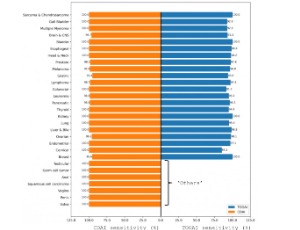
- Abstract |
- Full Text |
- Cite |
- Supplementary File
Five-year recurrence-free survival in glioblastoma: A case series of eight patients treated with a traditional herbal adjunct
Mahmood Mirzaee
Glioblastoma (GBM) is an aggressive brain tumor with poor prognosis despite standard treatment. This case series presents eight patients with confirmed GBM who received traditional herbal preparation in addition to standard therapy. Over a follow-up period of two to five years, none showed signs of tumor recurrence on serial MRI.
Clin Res Oncol, 2026, Volume 2, Issue 1, p24-25
Predicting GIST mitotic index before surgery: Where conventional CT fits in oncology precision?
Junjie An, Yingzheng Ren, Yang Yang, Yonghong Dong
Risk stratification for gastrointestinal stromal tumor (GIST) depends on postoperative mitotic index (MI), a histologic marker unavailable before surgery to guide neoadjuvant therapy and operative strategy. In 2020, Ren et al.
Clin Res Oncol, 2026, Volume 2, Issue 1, p26-30
Recommended Articles
AI-driven designed protein epigenomics
The biological revolutions of computationally designed proteins, induced pluripotent stem cells (iPSCs), and the CRISPR-Cas9 system finally enables modifications that can spur deep understanding of spatial requirement of epigenetic information. This commentary describes the utility of a computationally designed protein, EED Binder (EB), when fused to dCas9 (EBdCas9) for identifying critical sites of PRC2 dependent histone H3K27me3 marks in the chromatin.
Fight tumor heterogeneity
Intratumor heterogeneity has attracted more and more attention in recent years. Heterogeneity is the driving force of tumor clone evolution. Chromosomal instability, somatic mutation, epigenetic modification and extrachromosomal DNA (ecDNA) contribute to tumor heterogeneity. The degree of such heterogeneity is extremely high.
Modulating the immunotolerant tumor microenvironment to enhance irreversible electroporation ablation therapy
Over the years, several ablation techniques, such as radiofrequency ablation (RFA), microwave ablation, and cryoablation, have been developed and implemented in the treatment of different cancers. Of these ablation technologies, RFA is the most widely used. RFA is a form of thermal ablation that relies on radio waves to produce an electrical current at the tip of an inserted electrode, thus allowing for heat production at the site of the tumor.
Harnessing innovation for the future of breast cancer management
Background: Breast cancer remains a major global health burden despite therapeutic advances, necessitating further innovations to address persistent challenges like therapeutic resistance, adverse effects, and mortality in subgroups. Emerging technologies offer promising opportunities in this regard through data-driven, precise, and personalized approaches.
Measurable residual disease as a surrogate endpoint for overall survival in acute myeloid leukemia: a call to action
The standardization and implementation of new endpoints are crucial for the development of novel therapeutic agents. These endpoints help streamline clinical development while maintaining high standards of care for innovative treatments, ultimately leading to improved patient outcomes.
Pediatric and adolescent cancer in a national referral hospital in Peru in 2024: Epidemiological profile and public health challenges
Background: Pediatric cancer remains a significant cause of morbidity and mortality in low- and middle-income countries. In Peru, structural barriers limit timely diagnosis, comprehensive treatment, and proper epidemiological registration. This study aims to characterize the epidemiological and clinical profile of the pediatric cancer population at INSN-Breña in 2024.
The role of the nervous system in the development of brain tumorigenesis: From neurons to the tumor microenvironment
Brain tumors, especially malignant gliomas and metastases, continue to pose serious clinical challenges due to their complex biology and limited treatment options. The traditional research paradigm mainly focuses on the tumor cells themselves and their interaction with the immune microenvironment, while the critical role of the nervous system (including neurons, glial cells, neurotransmitters/modulators, and nerve fibers) in the pathological process of tumors has been underestimated for a long time.
EUnetCCC: Rising to the growing challenge of cancer in Europe
According to the most recent estimates of the European Cancer Information System (ECIS) cancer is the second cause of death in Europe and the number one cause of death among Europeans under 65 years of age. It is estimated that 1 in 2 Europeans will develop cancer in their lifetime and that 1 in 5 will die because of cancer.
Targeting ESR1 mutations: Imlunestrant and the next chapter in ER-positive breast cancer care
Around 80% of breast cancers in women aged 45 years and older are estrogen receptor–positive (ER+). Despite advances in endocrine therapy, resistance driven by ESR1 mutations remains a major clinical challenge. These mutations cause constitutive receptor activation even in estrogen-deprived environments, limiting the efficacy of aromatase inhibitors and fulvestrant.
Pancreatic cancer therapy in the era of precision oncology
Pancreatic cancer, predominantly pancreatic ductal adenocarcinoma (PDAC), remains one of the most lethal malignancies, characterized by late diagnosis, aggressive tumor biology, and profound resistance to conventional therapies. Despite advances in surgical techniques and combination chemotherapy regimens such as FOLFIRINOX and gemcitabine-based therapies, survival outcomes remain poor, with five-year survival rates barely exceeding 10%.
Five-year recurrence-free survival in glioblastoma: A case series of eight patients treated with a traditional herbal adjunct
Glioblastoma (GBM) is an aggressive brain tumor with poor prognosis despite standard treatment. This case series presents eight patients with confirmed GBM who received traditional herbal preparation in addition to standard therapy. Over a follow-up period of two to five years, none showed signs of tumor recurrence on serial MRI.
Clinical validation of a metabolomics-based multi-cancer early detection test
Multi-cancer detection (MCD) tests can improve the efficacy of existing screening tests by detecting a greater number of cancers. For exerting a clinical impact, however, it is important that the MCD is able to accurately detect early-stage cancers, a feature that is limited in currently available tests.
Predicting GIST mitotic index before surgery: Where conventional CT fits in oncology precision?
Risk stratification for gastrointestinal stromal tumor (GIST) depends on postoperative mitotic index (MI), a histologic marker unavailable before surgery to guide neoadjuvant therapy and operative strategy. In 2020, Ren et al.
NAD+ at the interface of metabolism, epigenetic regulation, and RNA control in cancer: Evidence, knowledge gaps, and a proposed integrative framework
Cancer is increasingly recognized as a systems-level disease in which genetic alterations interact with metabolic, epigenetic, transcriptional, post-transcriptional, and microenvironmental regulatory networks.