

Abstract
Purpose: The “Choosing Wisely” recommendations issued by the Society of Surgical Oncology in 2016 recommend against routine use of Sentinel Lymph Node Biopsy (SLNBx) in select patients 70 years and older. Despite this guideline, SLNBx rates are consistently above 80% across the U.S in those eligible for omission. Our objective was to institute a year-long quality improvement initiative across Novant Health Cancer Institute- NHCI’s three major regions to more closely adhere to the “Choosing Wisely” guideline and to document the shared decision-making process.
Methods: Starting in 2025, we utilized our statewide Breast Cancer Tumor Council meetings for educational discussions and shared standardized Electronic Medical Record (EMR) dot phrases. Quarterly reviews were conducted to quantify improvements in adherence to the guideline, document the shared decision making, and document the reason for completion of SLNBx in patients otherwise candidates for SLNBx omission.
Results: Prior to implementation, 91.5% of patients who were candidates to omit biopsy via the “Choosing Wisely” criteria received SLNBx. After implementation of this initiative, only 13.3% of qualified patients received SLNBx when meeting these criteria. Adherence to documentation was further evaluated and showed 97% of “Choosing Wisely” decisions were documented after implementation of this initiative.
Conclusions: Rapid evolution in clinical practice is achievable in time frames as short as one year, even for practices that have been commonplace for decades. The implementation of a focused institutional-wide goals and leveraging the workflow integration of the EMR can drive clinical practice changes, which ultimately lead to improvements in patient care.
Keywords
Sentinel Lymph Node Biopsy, Breast cancer, Choosing Wisely, Quality improvement, Older adults, Guideline adherence, Shared decision-making, Axillary staging
Abbreviations:
SLNBx: Sentinel Lymph Node Biopsy; SSO: Society of Surgical Oncology; NCCN: National Comprehensive Cancer Network; ASCO: American Society of Clinical Oncology; NHCI: Novant Health Cancer Institute; EMR: Electronic Medical Record; QI: Quality Improvement
Introduction
Sentinel Lymph Node Biopsy (SLNBx) has served as the standard of care for axillary staging in breast cancer for more than two decades, offering high diagnostic accuracy with substantially less morbidity than complete axillary lymph node dissection [1–3]. Despite its long-standing history, SLNBx is not without its risks and consequences. Prospective studies and systematic reviews have documented clinically significant rates of lymphedema, upper extremity pain, paresthesias, and functional impairment after SLNBx. These complications often carry significant and disproportionate morbidity and consequences in older patients who already face competing comorbidities and reduced physiologic reserve [4–8].
Due to these risks the Society of Surgical Oncology (SSO) issued a formal “Choosing Wisely” recommendation in 2016 advising against routine SLNBx in women aged 70 years and older with early-stage, hormone receptor–positive breast cancer treated with breast conservation, as SLNBx rarely changes clinical management in this population. This recommendation was subsequently incorporated into guidelines published by both the National Comprehensive Cancer Network (NCCN) and the American Society of Clinical Oncology (ASCO) [4,5]. These recommendations now represent the consensus view that axillary staging in this low-risk population yields no meaningful survival benefit and rarely alters systemic therapy decisions [6]. Due to this, it is unnecessary to expose many of these patients to potential additional morbidity and cost from the SLNBx.
Despite robust evidence and clear guidelines, real-world adherence has remained poor. National registry data consistently show that more than 80% of patients who meet “Choosing Wisely” criteria continue to undergo SLNBx [10–12]. This gap between guidelines and practice reflects a broader challenge in medicine: new clinical guidelines are often slow to be embraced in daily clinical practice. When this change must occur across diverse practice settings, this process is difficult without targeted sustained institutional effort [7–9].
At Novant Health Cancer Institute (NHCI), an analysis of the CRStar Cancer Registry confirmed this national pattern. Between 2017 and 2023, 91.5% of patients meeting Choosing Wisely eligibility criteria underwent SLNBx, a frequency far above reasonable for guideline adherence. In response, NHCI designed and implemented a year-long, multi-region QI initiative in 2025 targeting both practice change and incorporation of shared decision-making into documentation. This study describes the design and outcomes of this system-wide initiative.
Materials & Methods
Study design and setting
This study combines a retrospective review of baseline institutional performance (2017–2023) with a prospective evaluation of a structured QI intervention (2025). The study was conducted across the three major regions of NHCI, a community-based, multi-region cancer program in North Carolina, with 15 breast surgeons participating across all regions, 4 in the Charlotte region, and 4 the Triad (Winston-Salem) region, and 7 in the Coastal (Wilmington) region.
Patient population
Eligible patients were women aged 70 years and older diagnosed with invasive, hormone receptor–positive breast cancer who underwent breast conservation surgery at an NHCI facility. This is consistent with The Society of Surgical Oncology Choosing Wisely initiative, which recommends against routine SLNBx in women greater than or equal to 70 years of age with clinically node-negative, hormone receptor–positive, HER2-negative breast cancer. No other exclusion criteria were applied.
Baseline data
Patients meeting Choosing Wisely eligibility criteria during 2017–2023 were identified retrospectively from the CRStar Cancer Registry. The primary outcome for the baseline period was the proportion of eligible patients who underwent SLNBx.
Quality improvement initiative
Beginning in January 2025, two complementary strategies were implemented system-wide across the NHCI. First, the statewide NHCI Breast Cancer Tumor Council, a regularly scheduled multidisciplinary meeting attended by surgeons across all three regions, was used to initiate discussions and education on the Choosing Wisely recommendation, the supporting evidence base, and shared decision-making best practices. Second, standardized EMR documentation tools were developed and distributed to all 15 participating surgeons, providing templated language for recording the Choosing Wisely discussion, the patient’s decision, and when SLNBx was performed, the clinical rationale or the patient’s preference to proceed with SLNBx. Importantly all data was stratified by region. It was not stratified by surgeon, and individual data was not collected on each surgeon’s individual compliance. Furthermore, there was no punitive action taken against surgeons who did not meet a theoretical threshold. The approach was designed to be collaborative and adaptable for surgeons’ individual practices.
Outcome measures
Three primary outcomes were assessed quarterly throughout 2025: (1) the rate of SLNBx among patients meeting Choosing Wisely eligibility criteria; (2) the rate of adequate documentation of reasoning for SLNBx in patients eligible for omission who underwent SLNBx; and (3) the rate of adequate shared decision-making documentation across all eligible patients.
Results
Baseline performance (2017–2023)
During the seven-year baseline period, 1,313 patients met “Choosing Wisely” eligibility criteria across all three NHCI regions. Of these, 1,201 (91.5%) underwent SLNBx, a rate consistent with, and at the high end of, published national benchmarks. This high rate was consistent across the three regions. In the Charlotte region 540 women were eligible for the “Choosing Wisely” criteria, of which 493 received SLNBx (91.3%), In the Triad region the rate was 96.5% (313/302) and in the Coastal region these rates were 88.8% (460/406). Notably between 2017 and 2019 (prior to Choosing Wisely recommendations), SLNBx rates remained above 88% across all three regions, every year. From 2019 to 2023 (after Choosing Wisely recommendations, prior to initiative implementation) SLNBx rates remained above 86% across all three regions every year (Figure 4).
Post-initiative performance (2025)
524 patients underwent breast-conserving surgery who were 70+ across NHCI in 2025. Three hundred fifty-four patients met “Choosing Wisely” eligibility criteria. Of these, only 47 (13.3%) underwent SLNBx, representing a 78-percentage-point reduction from the baseline performance. Among these 47 patients, 20 (43%) elected biopsy by personal preference following a documented shared decision-making discussion, 11 (23%) had clinical circumstances outside the strict parameters of the guideline. This includes multifocal disease, unknown pre-operative receptor status, or equivocal lymph node findings. Sixteen (34%) lacked a documented rationale for preforming SLNBx despite meeting “Choosing Wisely” eligibility criteria (Figure 1). Adherence to this initiative was comparable across all three regions and improved quarter over quarter after implementation. The Charlotte region performed 8 SLNBx’s in Q1 of 2025 which decreased to 3 in Q4 of 2025. The Coastal region decreased from 7 to 0 across 2025, and the Triad region decreased from 8 to 1 SLNBx’s preformed (Figure 5).
Documentation adherence
Of 549 Choosing Wisely decisions made in 2025, 533 (97%) were adequately documented in the EMR. Sixteen (3%) lacked documentation (Figures 2 and 3). Rates of inadequate documentation were consistent across all three regions, with the Charlotte region having 3, the coastal region having 6, and the Triad region having 7 cases of inadequate documentation in 2025.
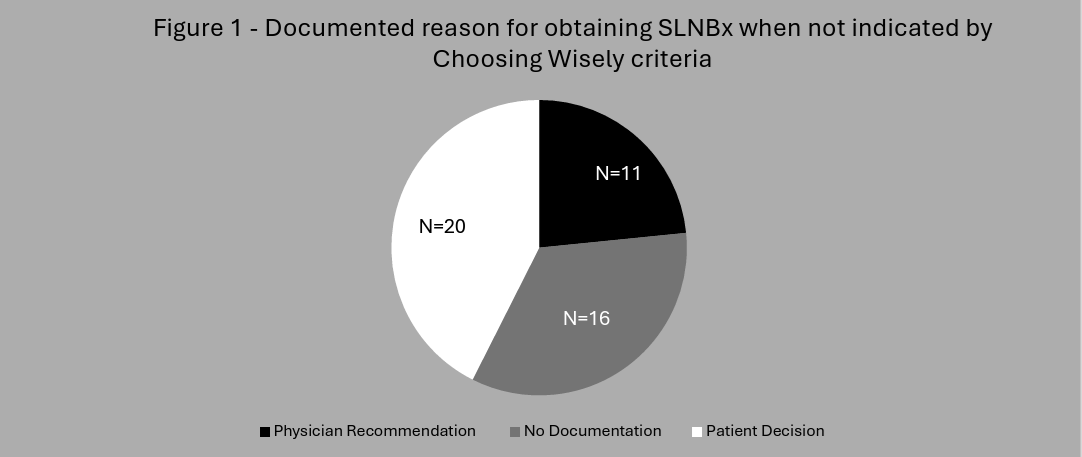
Figure 1. Shows the documented reason for the 47 patients who underwent sentinel lymph node biopsy, who were candidates for biopsy omission per Choosing Wisely criteria: 16 cases did not provide reasoning within the documentation, 20 cases documented patient choice as the reason and 11 cases documented physician recommendation due to multifocal disease, no receptor status pre-operatively, or questionable lymph node status pre-operatively.
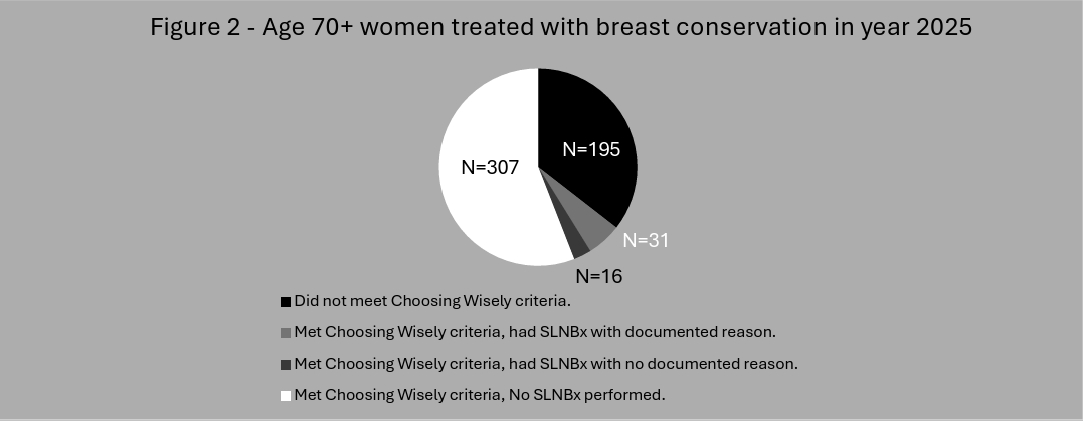
Figure 2. Shows all women age 70 and over who were treated with breast conservation in 2025: 307 of these women met criteria for Choosing Wisely and no SLNBx was performed. 31 patients met criteria and had an SLNBx performed and the reason was documented. 16 patients also met criteria but did not have a documented reason for why SLNBx was performed. One hundred ninety-five patients did not meet criteria for Choosing Wisely.
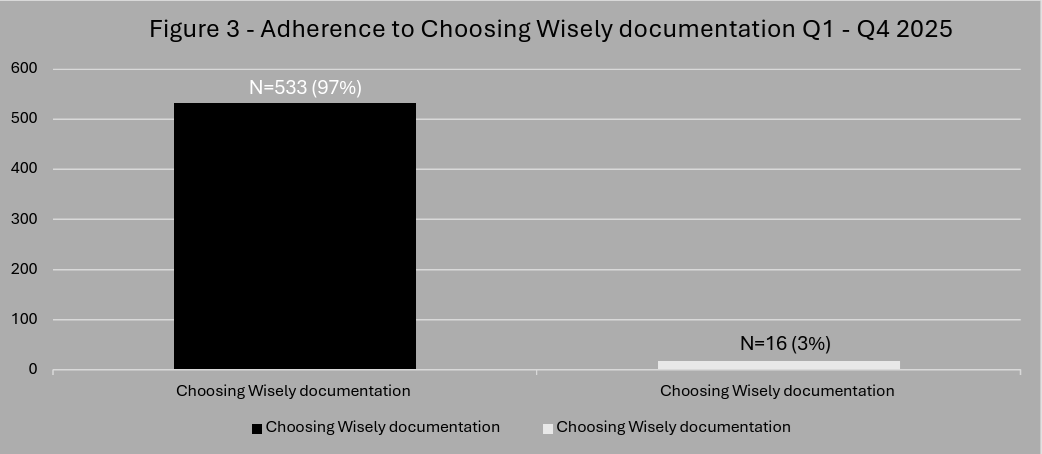
Figure 3. Shows the adherence to Choosing Wisely documentation in 2025. 533 patients had adequate documentation. For the “Choosing Wisely” decision 16 patients did not have adequate documentation.
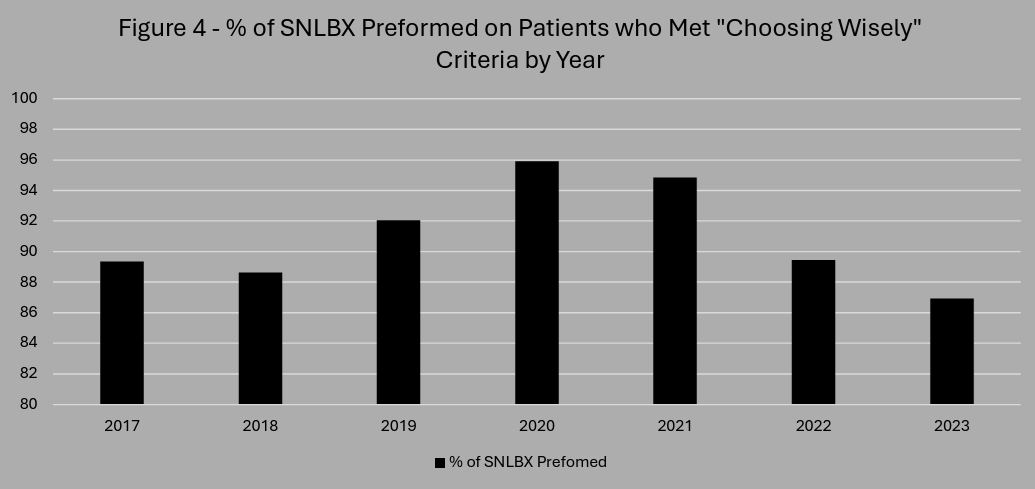
Figure 4. Shows the percent of patients who met criteria for SLNBx omission who received a SLNBx each year. This is cumulative data across all three regions of the Novant Health Cancer Institute.
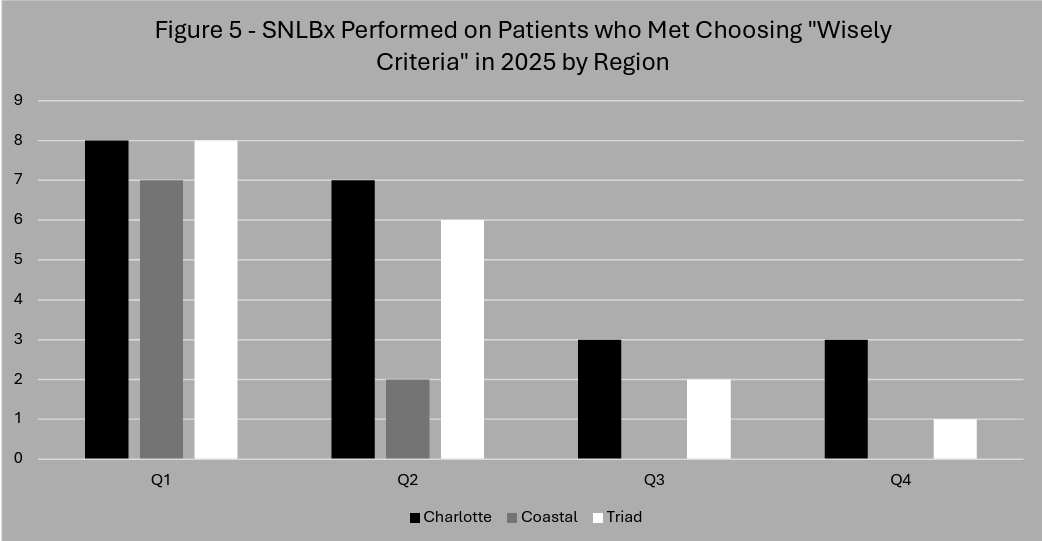
Figure 5. Shows the raw number of SLNBx performed in each quarter of 2025. Data is broken down by region. Of note the Coastal region had zero performed in Q3 and Q4. Shows the quarter over quarter improvement across all regions.
Discussion
This study demonstrates that a coordinated, system-wide QI initiative can produce rapid and substantial improvement in adherence to the Choosing Wisely guideline for SLNBx omission in older, low-risk breast cancer patients. The reduction from 91.5% to 13.3% within a single calendar year considerably exceeds the incremental improvements reported in national-level analyses, where practice change has been slow despite nearly a decade of published guidelines [10–12]. This study further showed that these improvements can be driven across multiple regions simultaneously and consistently rather than one central region accounting for a majority of performance improvements.
Two implementation strategies appear to have driven this outcome. Leveraging an existing statewide tumor council minimized implementation burden while enabling recurring, peer-to-peer dialogue across a geographically distributed system. By utilizing a standing meeting that has already been well established, attendance and engagement are more readily available, without the burden of increased administrative efforts.
Concurrent deployment of standardized EMR documentation tools embedded the “Choosing Wisely” discussion directly into the operative planning workflow, supported both consistent documentation and efficient shared decision-making. The 97% documentation adherence rate reflects the practical utility of this approach. Utilizing documentation to guide clinicians provides more seamless integration of documentation as a standard part of their workflow.
Persell et al. used point-of-care reminders and structured notes, as well as clinician feedback, to integrate quality improvement measures into daily practice. This was preformed at a large internal medicine practice and had a multi-faceted approach that notably used EMR-based quality improvement systems to help improve decision making and documentation in the clinical setting [10]. Ebbers et al. has shown that structured and standardized documentation templates in the EMR have increased clinical note clarity as well [11]. Other studies in the literature have shown utility to system-wide quality improvement meetings to drive improved adherence to clinical guidelines. In particular Ivers et al. showed that quality improvement feedback, when delivered by a supervisor or respected colleague in regular frequent meetings, provided the most benefit in improving quality. Furthermore, they showed that specific goals and action plans with targeted areas of improvement – particularly those with lower baseline performance – have positive results when targeting areas for clinical quality improvement [12,13]. Austin et al. showed that quarterly review performances were particularly helpful in providing a concrete framework for structured periodic review. Our approach was to combine the benefits of both the EMR along with quarterly performance meetings into one cohesive quality improvement initiative [14].
The 47 patients who underwent SLNBx despite meeting eligibility criteria, illustrate the appropriately nuanced nature of real-world guideline application. Patient preference accounted for 20 cases (43%), affirming that shared decision-making is still a key component of this approach. Furthermore, it ensures that this approach is not encroaching on patient autonomy to strictly adhere to clinical guidelines. Eleven cases (23%) involved clinical indications outside guideline parameters, reflecting this approach’s ability to allow physicians to utilize their clinical judgment and years of experience when necessary. The documentation of these cases further shows that this approach is ensuring physicians have considered the clinical guidelines at hand when making these judgments. The 16 undocumented cases (34%) represent the most actionable quality gap and will be the primary target of future QI cycles.
We also recognize that this initiative unfolded alongside important new randomized evidence on axillary staging that applies more broadly than the 2016 “Choosing Wisely” recommendation targeted by our intervention. In December 2024, the INSEMA trial demonstrated that axillary sentinel node surgery could be safely omitted in patients with clinically node-negative, early-stage breast cancer, and the earlier SOUND trial reported similar findings; together these data informed the 2025 ASCO guideline update, all of which extend to women of all ages, not only those 70 and older [15,16]. Because this evidence emerged just before our QI initiative launched, it is a plausible alternative explanation for at least part of the decline in SLNBx we observed, and it is not possible to fully separate its influence from that of our intervention using our study design. Several features of our data, however, suggest that the QI initiative was a substantial independent driver of the change rather than a bystander to a broader, evidence-driven shift. First, the magnitude and speed of the decline, from 91.5% to 13.3% within a single calendar year, considerably exceeds the gradual, multi-year adoption patterns typically seen after practice-changing trials are published [10–12]. Second, SLNBx rates fell in a stepwise fashion quarter over quarter throughout 2025 rather than shifting abruptly at a single point in time, a pattern more consistent with the cumulative effect of recurring tumor council education and EMR-based reinforcement than with a one-time response to trial publication. Third, this decline occurred concurrently and to a comparable degree across all three of our geographically distinct regions and among 15 independently practicing surgeons; such tightly coordinated, system-wide change would be an unusual signature of passive guideline diffusion alone and is more consistent with a deliberate, system-wide intervention. Taken together, these observations support our conclusion that the QI initiative meaningfully contributed to the observed practice change, even as we acknowledge that concurrently evolving evidence and guidelines likely also played a role.
Several limitations in this study are worth acknowledgment. Baseline data derive from a retrospective registry review, and patient-level characteristics were not matched across time periods. The study was conducted within a single health system with existing infrastructure including a statewide tumor council and integrated EMR. This may not be available in all practice settings, making this approach less favorable for some systems. This study is further limited by only having a one-year post-intervention follow-up which currently precludes assessment of long-term sustainability this approach. Prospective, multi-institutional evaluation would strengthen generalizability as well as future follow-up within our system. As discussed above, this study also cannot fully disentangle the effect of our QI initiative from the concurrent publication of the INSEMA and SOUND trials and the subsequent 2025 ASCO guideline update; a comparison of SLNBx trends at a similar network without this initiative would help clarify the relative contribution of each factor. Despite these limitations, this study provides direct evidence that the evidence-to-practice gap for SLNBx omission in older breast cancer patients is an implementation problem amenable to structured institutional intervention.
Conclusion
A focused, system-wide quality improvement initiative reduced SLNBx rates from 91.5% to 13.3% among guideline-eligible patients within a single year at a multi-region cancer institute. These results demonstrate that rapid, clinically meaningful change in long-standing surgical practice is achievable through coordinated institutional education, structured QI reviews, and EMR-integrated documentation tools. We offer a replicable model for rapidly closing guideline-to-practice gaps in surgical oncology at large multi-center institution, this format is applicable to programs striving to comply with newer recommendations (i.e. SOUND/INSEMA recommendations) with younger age groups.
Conflicts of Interest
The authors have no relevant financial disclosures or other conflicts of interest to disclose.
Funding Statement
No funding was received for this study.
Acknowledgments
All 15 Surgical Oncologists across the Novant Health Cancer Institute.
Author Contributions Statement
PST and ECW contributed to study conception and design. ECW acquired the data. ECW and JKO analyzed and interpreted the data. JKO drafted the manuscript. PST critically revised the manuscript for important intellectual content. All authors read and approved the final manuscript.
References
2. Thompson J, Le J, Hop A, Melnik M, Paulson J, Wright GP. Impact of Choosing Wisely Recommendations on Sentinel Lymph Node Biopsy and Postoperative Radiation Rates in Women Over Age 70 Years with Hormone-Positive Breast Cancer. Ann Surg Oncol. 2021 Oct;28(10):5716–22.
3. Tortorello GN, Shafique N, De Jesus EM, Gimotty P, Dheer A, Fayanju OM, et al. Sentinel Lymph Node Biopsy in Low-Risk Breast Cancer in Patients ≥ 70 Years: How Wisely are We Choosing? Ann Surg Oncol. 2026 Feb;33(2):1212–20.
4. Baltz AP, Siegel ER, Kamal AH, Siegel R, Kozlik MM, Crist STS, et al; ASCO Quality Publications Task Force. Clinical Impact of ASCO Choosing Wisely Guidelines on Staging Imaging for Early-Stage Breast Cancers: A Time Series Analysis Using SEER-Medicare Data. JCO Oncol Pract. 2023 Feb;19(2):e274–85.
5. Nagarajah S, Powis ML, Fazelzad R, Krzyzanowska MK, Kukreti V. Implementation and Impact of Choosing Wisely Recommendations in Oncology. JCO Oncol Pract. 2022 Oct;18(10):703–12.
6. Park KU, Somerfield MR, Anne N, Brackstone M, Conlin AK, Couto HL, et al. Sentinel Lymph Node Biopsy in Early-Stage Breast Cancer: ASCO Guideline Update. J Clin Oncol. 2025 May 10;43(14):1720–41.
7. Cabana MD, Rand CS, Powe NR, Wu AW, Wilson MH, Abboud PA, et al. Why don't physicians follow clinical practice guidelines? A framework for improvement. JAMA. 1999 Oct 20;282(15):1458–65.
8. Jagsi R, Huang G, Griffith K, Zikmund-Fisher BJ, Janz NK, Griggs JJ, et al. Attitudes toward and use of cancer management guidelines in a national sample of medical oncologists and surgeons. J Natl Compr Canc Netw. 2014 Feb;12(2):204–12.
9. Katz MHG, Francescatti AB, Mullett TW, Harris J, Bleznak AD, Nelson H, et al. First National Effort to Optimize the Performance of Cancer Surgery by the American College of Surgeons Commission on Cancer and Cancer Surgery Standards Program: Early Results After Implementation of the Operative Standards. Ann Surg. 2025 Sep 1;282(3):371–81.
10. Persell SD, Kaiser D, Dolan NC, Andrews B, Levi S, Khandekar J, et al. Changes in performance after implementation of a multifaceted electronic-health-record-based quality improvement system. Med Care. 2011 Feb;49(2):117–25.
11. Ebbers T, Kool RB, Smeele LE, Dirven R, den Besten CA, Karssemakers LHE, et al. The Impact of Structured and Standardized Documentation on Documentation Quality; a Multicenter, Retrospective Study. J Med Syst. 2022 May 27;46(7):46.
12. Ivers NM, Grimshaw JM, Jamtvedt G, Flottorp S, O'Brien MA, French SD, et al. Growing literature, stagnant science? Systematic review, meta-regression and cumulative analysis of audit and feedback interventions in health care. J Gen Intern Med. 2014 Nov;29(11):1534–41.
13. Ivers N, Yogasingam S, Lacroix M, Brown KA, Antony J, Soobiah C, et al. Audit and feedback: effects on professional practice. Cochrane Database Syst Rev. 2026 Jun 22;6(6):CD000259.
14. Austin JM, Demski R, Callender T, Lee KH, Hoffman A, Allen L, et al. From Board to Bedside: How the Application of Financial Structures to Safety and Quality Can Drive Accountability in a Large Health Care System. Jt Comm J Qual Patient Saf. 2017 Apr;43(4):166–75.
15. Reimer T, Stachs A, Veselinovic K, Kühn T, Heil J, Polata S, et al. Axillary Surgery in Breast Cancer - Primary Results of the INSEMA Trial. N Engl J Med. 2025 Mar 13;392(11):1051–64.
16. Gentilini OD, Botteri E, Sangalli C, Galimberti V, Porpiglia M, Agresti R, et al; SOUND Trial Group. Sentinel Lymph Node Biopsy vs No Axillary Surgery in Patients With Small Breast Cancer and Negative Results on Ultrasonography of Axillary Lymph Nodes: The SOUND Randomized Clinical Trial. JAMA Oncol. 2023 Nov 1;9(11):1557–64.