

Abstract
Geophagy is described in most countries of the world as a practice observed in pregnant women. In industrialized countries, it results from migrant populations who carry with them their cultural habits and practices. This is the case in France and more particularly in Guiana, an overseas territory. Originally used to treat the ills of pregnancy, it is today considered to be dangerous for the woman and her unborn child.
A survey involving 788 pregnant women examining substance use during pregnancy was conducted in three maternity wards in Guiana in 2017-2018. This survey on the Pemba (clay in local language) issue also performed interviews and observations with a dozen women and a dozen health professionals in 2019.
Among all women who gave birth, just over 15% of women used Pemba while pregnant. Just over half of them lived in Saint-Laurent-du-Maroni territory. These Pemba users were ten times more likely to have Creole English as their mother tongue, and two times more likely to have never been to school or have achieved an education level lower than eight years. They were also more likely to live alone and consume alcohol, more particularly beer, with T-ACE scores higher than 1. Moreover, this profile of female Pemba consumers is illustrated by the life stories and pregnancy details of two of these women.
In French Guiana, geophagy seems to be considered an addiction in the same way as alcohol since it is considered a danger by health professionals working around pregnancy. Pemba consumers feel that the traditional use thereof is stigmatized. It is therefore necessary for them to be educated on the dangers posed by Pemba, not only to themselves but also to their unborn child, especially because consuming Pemba is an ancestral practice for these women and is traditionally considered to be safe.
Keywords
Pemba, Pregnancy, Guiana, Alcohol, T-ACE, Mother tongue, Practice, Stigma
Introduction
Geophagy, as the action of eating uneatable materials and specifically earth or kaolin, is globally described [1,2], albeit mainly in African countries [3], but also in all areas where settlements were based on migrations from these countries. Worldwide, it concerns mainly women and children, especially pregnant women [4,5]. In industrialized countries, the reality of geophagy is discussed [6], and it is mainly reported among migrant people in large cities [7,8], as the importation of a cultural habit, or as a response to change and dietary acculturation [9].
As the clay products are mainly imported from the countries of production because the consumers demand traditional products, European countries such as the United Kingdom and Germany have published sanitary warnings dissuading the ingestion of these clays in pregnancy [7]. For instance, “an alert notification from European Commission to the Cameroon Ministry of Public Health” was made because of the high amount of lead in imported clays [10]. French Guiana, as well as its neighbor, Surinam, is concerned by this phenomenon [11], mainly in populations along the Maroni River, known as Maroons [1], but also in Cayenne due to high migrations from Haiti where the phenomenon is well established [13]. The local designation of the kaolin used in French Guiana is Pemba. Geophagy is described as pica in most cases [14] but increasingly as an addiction, due to the craving expressed by the users [15].
The phenomenon of eating something that is not food has long since been described. A first explanation is to see this practice as a traditional remedy with medicinal use and for spiritual healing [1]. Three main reasons for consuming clay have emerged from the literature: fight against hunger, response to dietary deficiency [8] and search for micronutrients, or protection against toxins and pathogens. Nowadays, modern medicine uses clay for internal and external purposes, mostly against diarrhea or nausea, but also to clean wounds or purify the skin [1].
The more complete works are those of anthropologists aiming to understand the practice and its survival in the contemporary world and in countries where food is widely available [16]. This behavior concerns mostly women and very young children, and even more so pregnant women. In some countries, this pica reveals pregnancy itself. Food cravings and aversions are well-known phenomena in pregnancy and some pica behaviors are associated with this period [17].
The prevalence of clay eating in pregnancy is extremely variable around the world and within different continents and contexts, although it is more widespread in African countries and rural settings. In an obstetrical hospital population in Douala, one third of women had consumed Pemba while pregnant. Their main characteristics were: living in a remote part of the country, being single and having a primary level of education [4]. Mainland France is also concerned with this phenomenon, and a study amongst 284 migrant women revealed that 14.1% were clay consumers [18] and that among the 105 who were pregnant 26 had consumed kaolin at least once in their pregnancy, with no significant effect as compared to non-users on the weight of their newborns [19]. Another study among HIV patients in Northern France in Sub-Saharan African, Caribbean, and French Guiana natives estimated the life use of clay at 40% and the present use at 9% [20]. This latter study investigated the motives of eating clay, the awareness of adverse effects, the sources of information and the information about the behavior given to their physician by the patients eating clay: only 4% informed a health professional [20]. Finally, in a study in Paris, an anthropologist attempted to define the product and the practice: “It is not food, nor a spice, and it has no function, as said one of her interviewed: ‘It is useless, the one who eats it does nothing, it is for the one who has free time’” [21].
Eating clay during pregnancy mostly causes deficiencies, mainly iron, leading to anemia [4]. The consequences of eating clay during pregnancy are still unclear for infants, except when there is an exposure to lead, which is “ubiquitous in soils, foodstuffs, water and air” [22] or to other heavy metals [11]; however, some of the effects are well known, particularly concerning iron deprivation during pregnancy and the consecutive anemia [23]. For instance, a lower hemoglobin level in pregnant women and lower head circumferences of neonates were reported in a cohort in Iran [17]. The anemia induced by pica is linked to premature births and the presence of aluminium in the clay may cause adverse neuro-development in babies [24]. Recent alerts around this consumption mostly concerned the risk of such materials, as chalk or clay may provoke an exposition to lead or arsenic in fetuses [7]. Some authors also highlighted the risk of selenium accumulation but also the supplementation in calcium, cobalt, zinc and others in pregnant women [10]. In most countries, anemia is a signal to question mothers on clay ingestion or pica practices, notably in migrant populations from countries where geophagy is well established, as in the case of New York City [23]. Other studies, for instance in a large cohort of Danish women with proficiency in the Danish language, identified that the phenomenon was extremely rare, i.e., 0.02% of pregnant women [6].
Some reports exist concerning the consumption of clay in French Guiana, designated as Pemba. A report on this practice underlined that it was traditionally utilized as a natural remedy, but with the emergence of new uses, there is now pica or even an addictive use [25]. In 2010, a local alert in French Guiana concerned a potential contamination of the clay with aluminium, especially since traditional foods can also be contaminated with lead by mining activities, as in the case of cassava (manioc) in French Guiana, the risks of contamination with heavy minerals are increasing [26]. Consequently, a municipal act [2] was passed by Saint-Laurent-du-Maroni town prohibiting the sale of “Pemba” in local marketplaces due to “a serious and immediate danger to pregnant women”. Information for pregnant women was published in a booklet specifically for pregnancy, with a page dedicated to the interdiction of alcohol, tobacco, illicit drugs and Pemba. Some posters with the same prohibition are affixed on the walls of the hospitals, with the text in English Creole.
Materials and Methods
A quantitative survey was conducted in maternity wards in French Guiana on the consumption of Pemba during pregnancy, in which 809 women who gave birth in 2017-2018 responded. An ad-hoc questionnaire was designed using the self-assessment by the Pregnancy and Addictions Study Group (GEGA, available on their website) as an outline.
This questionnaire was originally developed to guide maternity patients [27]. It has been adapted for French Guiana to local consumption, identification of migrant or cross-border population groups and supplemented with questions from the T-ACE [28] and more precise modalities regarding consumption. It was offered to women after delivery (usually one or two days after birth).
The questionnaire was available in French, Brazilian Portuguese, Spanish and Creole Surinamese or River Languages (Nengee). The women were asked about their mother tongue and language groupings were constructed by recoding on the basis of groups of the main languages of Guiana [19]. It was suggested that women completed the questionnaire themselves or that the interviewer completed it with/or for them. The vast majority of women preferred the second solution. We therefore did not have any exclusion directly related to the language or illiteracy of mothers as a result of the recruitment of local mother tongue investigators or the help of midwives speaking the local languages.
The instruction for inclusion was to solicit all present women on the days of the survey, excluding underage women and women who gave birth to stillborn children. Information on the purposes of the survey was provided in writing or orally in a language the women understood, and their consent was obtained as requested by the Ethics Committee.
The objective of the numbers of questionnaires was defined for each of the maternity departments (Cayenne, Kourou and Saint-Laurent-du-Maroni) on the basis of the birth register for 2016, representing 57%, 6%, and 37% of births, respectively. This resulted in 809 questionnaires being completed. The health centers, which carry out a total of thirty deliveries per year, have not been surveyed. The number of collection days required per hospital was then calculated according to the number of rooms. The distribution of the questionnaires was checked throughout the collection, in particular concerning the municipality of residence, in order to verify its representativeness. For the present analysis, the study population was restricted to 788 women having given birth to single child.
In addition to the quantitative survey, two sets of interviews or observations were conducted in French Guiana, focusing more specifically on the question of Pemba: we conducted a dozen observational interviews with Bushinengue women with a native-language investigator in 2018. Furthermore, there were a dozen interviews with caregivers completed by observations, informal conversations during consultations or in the maternity center in 2019. Interviews with caregivers were often short, particularly when a woman did not come for the consultation. Nevertheless, the interviews were interrupted as soon as the staff had to continue with the next mother (half an hour in general). They were supplemented by many dialogues, recorded in notes, during breaks and informal times. Qualitative data were subjected to hierarchical thematic analyses and vocabulary analysis using Nvivo12 software.
Statistical analyses
The data were computerized by the research team and analyzed using Modalisa8 and SPSS20, involving crossed tables. All comparisons in this article are significant (p<0.001), unless otherwise stated. For Pemba use, the data distinguish between users and non-users. Pemba consumption is explained by area of residence, number of children alive, education level, maternal language, single parent status, alcohol (and especially beer) consumption before and during pregnancy, a T-ACE score of one or more, information on alcohol consumption during pregnancy given by health professionals, pregnancy monitoring, help returning home and income (Table 1). A multivariable logistic regression was conducted to explain this behavior using six significant questions describing the sociodemographic characteristics and alcohol consumption, in particular: zone of residence, maternal language, education level, marital status, having three or more children, and a T-ACE score of one or more.
Ethics
The questionnaire was strictly anonymous, with only the mother’s year of birth being collected; her complete date of birth and that of the child did not appear on the questionnaire. The CERES, the ethics committee of the Paris Descartes University, validated the questionnaire as well as the procurement procedures (Decision 2017-25) and a simplified declaration was submitted to the French National Board of Ethics, CNIL (n°2081716).
Results
A total of 788 women were described according to their Pemba consumption: 16.2% had used Pemba once in their lives and 15.1% used Pemba during their last pregnancy (Table 1). This consumption showed significant disparities according to the place of residence, the number of living children, the level of education, the mother’s native language, her marital status, level of consumption during pregnancy, the monitoring of the pregnancy and her level of income.
|
|
Pemba |
No Pemba |
Total |
|
N (%) |
119 |
669 |
788 |
|
Residence |
|
|
|
|
Cayenne area |
16.0 |
59.9 |
53.3 |
|
Saint-Laurent area |
54.6 |
14.6 |
28.2 |
|
Abroad and isolated areas |
29.4 |
1.9 |
3.6 |
|
Number of children alive: |
|
|
|
|
≥ 3 |
75.2 |
46.1 |
50.4 |
|
≥ 5 |
36.8 |
16.4 |
19.4 |
|
Education level: |
|
|
|
|
Under secondary |
55.5 |
34.2 |
37.5 |
|
College |
31.1 |
25.2 |
26.1 |
|
Baccalaureate or higher |
13.4 |
40.5 |
36.4 |
|
Maternal language: |
|
|
|
|
Maroni river |
89.5 |
28.0 |
37.1 |
|
French |
3.5 |
20.0 |
8.4 |
|
French creole |
3.5 |
35.1 |
30.4 |
|
Marital status |
|
|
|
|
Single |
61.3 |
51.2 |
52.7 |
|
Partnered |
37.0 |
34.2 |
34.6 |
|
Married |
1.7 |
14.6 |
12.7 |
|
Consumption before pregnancy: |
|
|
|
|
Alcohol |
63.9 |
50.0 |
47.9 |
|
Of which beer |
70.1 |
54.2 |
57.0 |
|
T-ACE >1 |
63.0 |
48.7 |
50.8 |
|
T-ACE >2 |
25.2 |
22.1 |
22.6 |
|
Alcohol during pregnancy: |
|
|
|
|
On occasion |
10.3 |
8.7 |
8.9 |
|
Once a month |
13.7 |
3.7 |
5.2 |
|
Once a week or more |
6.9 |
2.9 |
3.4 |
|
Information on alcohol by** No Yes |
13.4 85.6 |
23.4 75.6 |
21.9 77.1 |
|
Inadequate PCU |
56.0 |
29.8 |
33.7 |
|
No help returning home |
10.1 |
18.5 |
17.2 |
|
Income |
|
|
|
|
None |
1.2 |
6.2 |
5.4 |
|
Work (woman or couple) |
11.0 |
20.2 |
18.9 |
|
RSA and family allowances |
54.0 |
38.4 |
40.8 |
Most of the pregnant women (53.3%) lived in Cayenne, with less than a third in Saint-Laurent-du-Maroni (28.2%) and a very small minority (3.6%) in an isolated commune or abroad. Nevertheless, among the consumers of Pemba, 54.6% lived in Saint-Laurent du Maroni, 29.4% in an isolated commune or abroad and finally, 16% in Cayenne. This also explains why Pemba use was overrepresented among those who spoke the River languages as their mother tongue (89.5%). Having a foreign nationality showed no significant link with Pemba use. Conversely, living in another country and speaking a River language as her mother tongue were significantly linked with this practice.
The Pemba users were also more represented (55.5% versus 37.5% overall) among women who had never been to school or who had at most a college level of education. This also partly explains why Pemba consumers were the majority (54%) among women receiving the RSA [1] or family allowances as well as those with inadequate prenatal care.
This Pemba use was associated with alcohol consumption before pregnancy (63.9 %), most often beer (70.1%). This alcohol consumption explained that 63% of participants had a T-ACE score above 1. During pregnancy, these Pemba consumers drank alcohol at least monthly, even though they had been informed of its danger: indeed, 85% of them declared they had been given this information by professionals.
The logistic regression results are shown only for the four significant variables among the six tested in boxplot form (Figure 1): maternal language, education level, marital status and T-ACE score.
The role of the maternal language is major. For instance, Pemba use was 10.37 times more frequent for English Creole or River language women than for women with French as their mother tongue. Conversely, Pemba consumption was significantly less likely (OR=0.45) for French Creole speaking women. The risk was almost the same as the reference for women with Portuguese and Amerindian as their respective maternal languages (OR=1.04).
Pemba use was more than twice as likely (OR=2.16) for women with no schooling or with less than an eight years level of education than for women with a baccalaureate or higher. This risk was significantly higher for women with a high school level of education (OR=2.46). As regards marital status, the risk of using Pemba was 6% higher for partnered women as compared to single ones. Conversely, the risk was reduced tenfold for married women (OR=0.13). The risk of using Pemba was also linked to alcohol use, as a T-ACE score lower than 1 divided the risk by two (OR=0.57) compared to a T-ACE score equal to 1 or more.
From the two questionnaires and the observations made during their completion, we reconstituted short life stories to give more precise examples of what the women said.
Questionnaire n°899
This young woman was 24 years old, lived in the Saint-Laurent area, was a Bushi tongo native speaker, and was born in French Guiana. She dropped out of school at her final grade of secondary school, lived with her mother and received family allowances. Pregnant for the 4th time, she had three living children besides her newborn. She started her pregnancy follow-up at 12 weeks and made only four visits in total. She had no particular difficulties during this pregnancy. She reported drinking alcohol on occasion, especially beer, did not smoke and did not consume any illicit substances. A health professional had asked her about her alcohol consumption and provided her some information. She said that she had consumed Pemba throughout the pregnancy, never stopped and did not take iron or any other medication. Her child was born at 36 weeks and weighed 2410g.
Questionnaire n° 905
This 19-year-old woman had just given birth to her first child after an abortion. She lived in the Saint-Laurent area, was a Bushi tongo native speaker, and was born in French Guiana. She was still at school studying for a sales professional baccalaureate, lived with her mother and had no personal income. She declared she had had a difficult pregnancy, with a follow-up at 8 weeks, 5 visits in total and a prescription for painkillers and iron. She reported drinking alcohol on occasion, especially beer, did not smoke and did not consume any illicit substances. A health professional had asked her about alcohol and provided her with relevant information. She explained her baby was born small for their age, 2130 g at 38 weeks, and had been transferred to a neonatology ward. She stated that she used a lot of Pemba during her pregnancy, explaining that her sisters had also done so.
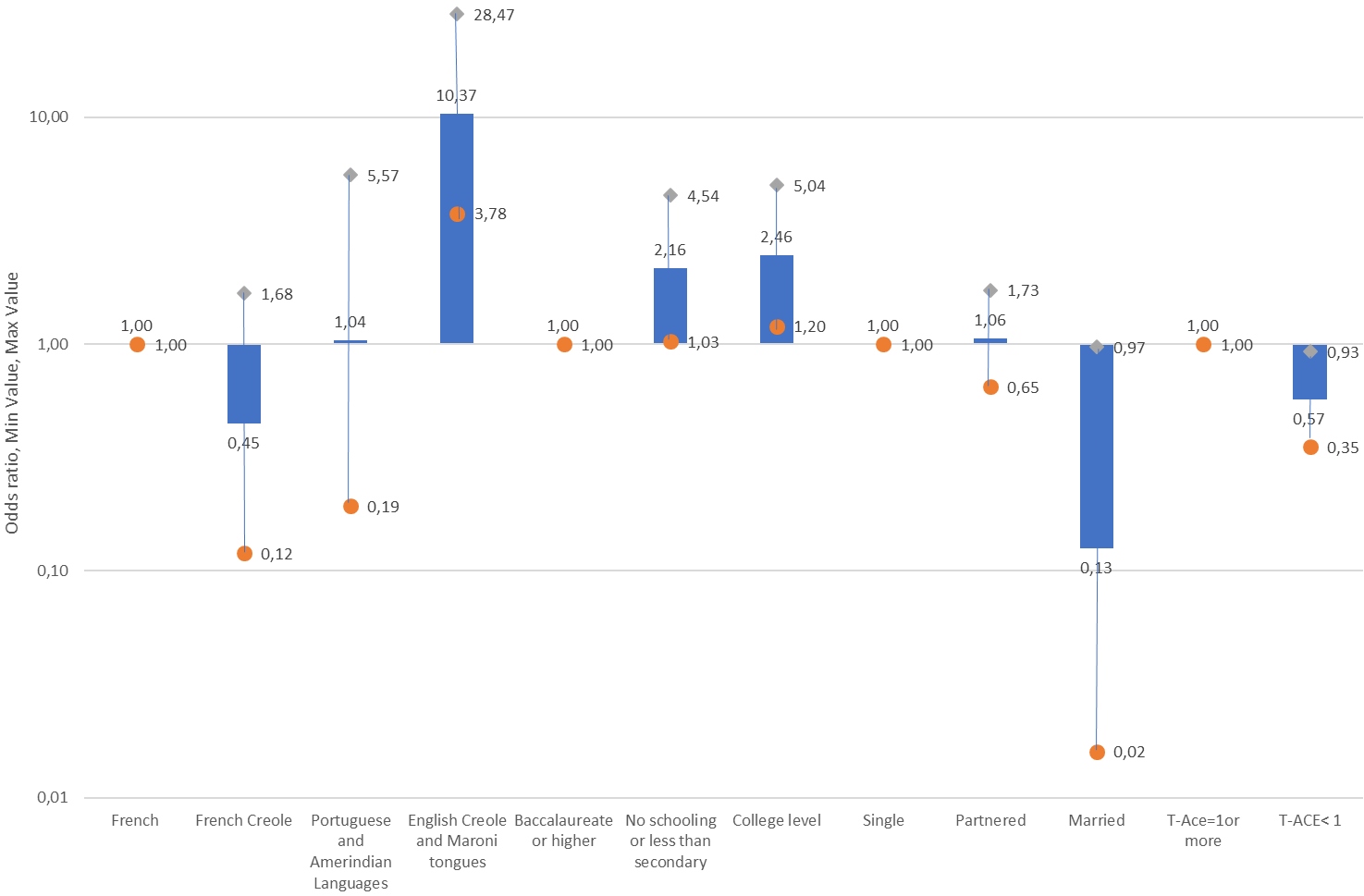
Figure 1: Odds-ratio (Min-Max) for explaining Pemba use, controlled by six variables.
A majority of the caregivers we spoke to had received no information about clay eating when studying in mainland France and had discovered the subject in Guiana. Within this new knowledge of the practice, they had mostly presumed that it exclusively concerned the population living along the Maroni River, not those living in Cayenne and not the Haitians. “More in the Maroons, the women from the River, the Haitians it may be, it seems somewhat exceptional, well, for me” (Midwife, maternity ward, public hospital).
Concerning the Pemba use, the midwives recognized that the women did not easily speak about their clay eating, and one of them acknowledged a link with the politics forbidding this practice and the stigma they feel:
Interviewer: To forbid the practice, it is also a problem?
Midwife: Yes, exactly. And I think that perhaps they experienced what their relatives said, uh, who had, well, answered this question, yes I eat it, and who have had a really reproving discourse and then, they said in the community, that it is something you had better to do without, not to reveal (Midwife, public hospital).
Most of the midwives told us that the women were afraid of being judged or stigmatized for this behavior and they preferred not to answer even when the midwives informed them they were anemic and gave them nutrition advice.
Another point widely empathized in the caregivers’ discourses was that the women were reluctant to use any medication, especially when they felt no pain, and with anemia being a silent illness, the women did not take care. Most of the participants recognized, as in the two aforementioned examples, that they did not take the iron when prescribed. In the case of anemia, the midwives asked about the clay eating, using various appellations:
“In general, for [anemia], well, after, when we take a look at the check-up, we ask, ‘Do you eat earth?’ Or, because when you say Pemba sometimes, even the Maroons, uh, we say earth, white clay, or just earth…” (Midwife, prenatal care, public hospital).
But the caregivers also assess that it was difficult to convince the women to take iron supplementation when needed:
“When they develop[ed] anemia, they didn’t take the iron. They are used to [being] anemic, they feel good; it is an invisible pain. When they are in pain, they [take] the medication, but here, they feel nothing. They always had pregnancies without problem[s], they are not afraid, the babies are small but they are well” (Nurse, 49 years old, general hospital).
Discussion
French Guiana is an attractive overseas destination for many migrants from countries such as Haiti and Surinam, searching for a better life [29]. These migrants carry with them their cultural habits and practices including geophagy, which are well known among pregnant women described in anthropological articles [17]. Our survey was conducted in three maternity wards in French Guiana in 2017 and 2018, in which 15.1% of women declared they had used Pemba in their last pregnancy. This statistic concerned the general population of pregnant women, not the general population. It also cannot be compared with the frequencies obtained among migrants in mainland France [18], nor with the prevalence in an HIV group [20]. This prevalence in pregnant women in this region might be under evaluated for two main reasons. First, we noted it was difficult for caregivers to acknowledge that clay use is a practice linked to an ethnic minority, as the French statistics and politics forbid any reference to sub-populations based on ethnicity. They were thus reluctant to recognize this fact to avoid being considered discriminatory among their patients. Conversely, they did feel that geophagy should concern Haitian women. This is a limitation in our quantitative data as in Cayenne the women were not asked in the same manner as in Saint-Laurent, where the practice is well known and imputed to Maroons or Bushinengue. Secondly, we mostly used the word Pemba to ask the question whereas Haitians say earth or tè [13]. These two effects could explain the lower prevalence in Cayenne where Haitians are overrepresented.
The profile of female Pemba consumers in Guyana is quite similar to that described by the data in the literature, namely single migrant women with a low level of education [4]. Pemba use was also more common among women whose mother tongue is not French or French Creole, the latter most often being questioned in the local declination of national surveys. Our survey enriches this profile of Pemba consumers during pregnancy to the extent that this consumption was proved in association with alcohol consumption, particularly beer consumption, as illustrated in the life history of questionnaire number 899. Having a T-ACE score above 2 concerned 25.2% of Pemba users, which associates some risk with alcohol use before pregnancy. The level of alcohol use before pregnancy is a valid indicator for the risk of alcohol use while pregnant, and the utility of such a score to estimate the risk is well documented [30].
The same warning labelling applies in French Guiana as on the mainland, specifically on every alcoholic container since 2007 [31], with moderate results on the education of pregnant women [32], even though the teratogenic effects of alcohol are uncontested in the literature. The mere duplication of this symbol for clay or Pemba, a substance traditionally used by local populations, should not replace the information on the risks given in the media, education, and by health professionals.
Other authors have identified that there was “a failed Public health intervention” in England by forbidding cultural behavior, leading to silent consumption [7]. The position chosen in French Guiana to relate this behavior to alcohol or illicit drugs leads to a black market and to the denial of its use. We observed hidden sales of clay on local markets due to its prohibition in Saint-Laurent-du-Maroni which was considered as concerning all areas, as the sellers and caregivers thought it was forbidden in all Guiana.
The women feel that Pemba use is objectionable or prohibited by warning labels, and they feel a stigma against their traditional use, but they do not receive any information, for instance, about the fact that they feel the urge to eat clay because they need iron. The symbolic value of clay consumption seemed to be that it affirmed the women’s national identity [9] and this aspect was not revealed by our observations but rather by the quantitative data, as most users were living along the Maroni River or speaking a Nengee language.
As we explored elsewhere, the paradox of prevention is obvious: the main supports for prevention are the maternity booklet and posters, often in languages the concerned women do not understand, because they are illiterate or cannot read the written message, or only understand that the practice is forbidden by the hospital. Their mothers and sisters always consumed clay, but modern medicine forbids it without a clear explanation of its consequences, mainly for their children. As observed in most parts of the world, this behavior is, in all likelihood, due to disappear as a result of the mere influence of girls’ education, as those having passed the Baccalaureate are almost never reported as consuming clay [13].
Another consequence of prohibition should be that pregnant women turn to another product, such as raw rice, to replace Pemba [10] and its digestive effect; they may also turn to tobacco, especially chewing tobacco, where the expected effect is to moderate stress or to fight boredom. The prevalence statistics in French Guiana reveal a low level of tobacco smoking in women [33], and only six of our 788 participants smoked during their pregnancy, which is something that should be enhanced. Before pregnancy, the younger, well-educated women living in towns tend to smoke more tobacco and cannabis due to a “model” imported from the mainland.
Another health matter was worth noting in our results. The same women eat Pemba and regularly drink beer, with some of them explaining in our qualitative survey that they associated the products with helping them to eat the clay, which is very dry. Moreover, in remote areas the quality of water is problematic for drinking use. The prenatal care norms thus seem out of reach, as noted for the application of recommendations for diabetes that appeared unsuited to this territory, “where 20% of people live in very slum-like housing without water and without electricity” [34].
Eating clay is described as addictive in more recent papers, because people described an irrepressible craving leading to increasing use [13]. But in most cultures where it is widespread, the clay use is tolerated during pregnancy but not in other circumstances, when it is considered a bad habit. The pregnancy craving is always described as a distinct behavior. The tendency in addiction centers is to use tests to assess dependency, as for other products [15]. Pica as an eating disorder differentiates between adults, pregnant women, and young children. The assimilation of this behavior to an addiction erases this difference between groups, even though the pregnancy period is, in all distinguished cultures, shown to be directly linked to this practice.
Conflict of Interest
The authors declare no conflict of interests.
Funding
This research was carried out with support from the Guiana Perinatal Network for data collection, internship funding from the USPC Princeps programme and support for missions by the Cermes3.
Acknowledgments
We thank all participants for their time and the Guiana Perinatal team for their support in collecting data.
References
2. Henry JM, Cring FD. 8 Geophagy. Soils and Human Health. 2012:179.
3. Njiru H, Elchalal U, Paltiel O. Geophagy during pregnancy in Africa: a literature review. Obstetrical & Gynecological Survey. 2011;66(7):452-9.
4. Essome H, Engbang JP, Ndedi GP, Valere MK, Boten M, Foumane P, et al. Kaolin Clay Consumption and Pregnancy: Prevalence, Hematological Consequences and Outcome of Labour in the Douala. Open Journal of Obstetrics and Gynecology. 2017;7(12):1166.
5. Fawcett EJ, Fawcett JM, Mazmanian D. A meta-analysis of the worldwide prevalence of pica during pregnancy and the postpartum period. International Journal of Gynecology & Obstetrics. 2016;133(3):277-83.
6. Mikkelsen TB, Andersen AMN, Olsen SF. Pica in pregnancy in a privileged population: myth or reality. Acta Obstetricia et Gynecologica Scandinavica. 2006;85(10):1265-6.
7. Madziva C, Chinouya MJ. Clay ingestion during pregnancy among black African women in a North London Borough: understanding cultural meanings, integrating indigenous and biomedical knowledge systems. Frontiers in Sociology. 2020;5:20.
8. Mills ME. Craving more than food: the implications of pica in pregnancy. Nursing for Women's Health. 2007;11(3):266-73.
9. Hunter-Adams J. Interpreting habits in a new place: migrants’ descriptions of geophagia during pregnancy. Appetite. 2016;105:557-61.
10. Frazzoli C, Pouokam GB, Mantovani A, Orisakwe OE. Health risks from lost awareness of cultural behaviours rooted in traditional medicine: An insight in geophagy and mineral intake. Science of the Total Environment. 2016;566:1465-71.
11. Lambert V, Boukhari R, Misslin-Tritsch C, Carles G. La géophagie: avancées dans la compréhension de ses causes et conséquences. La Revue de Médecine Interne. 2013;34(2):94-8.
12. Price R. Maroons in Guyane: Getting the Numbers Right. New West Indian Guide/Nieuwe West-Indische Gids. 2018;92(3-4):275-83.
13. Simmat-Durand L, Richemé D, Toutain S. Le pica est-il une addiction ? Les consommations d'argile chez les femmes enceintes en Guyane française. Psychotropes. 2020;26(4):53-85.
14. Myaruhucha C. Food cravings, aversions and pica among pregnant women in Dar es Salaam, Tanzania. Tanzania Journal of Health Research. 2009;11(1).
15. Caillet P, Poirier M, Grall-Bronnec M, Marchal E, Pintas C, Wylomanski S, et al. Consommation de kaolin parmi les femmes migrantes en France métropolitaine : PICA ou dépendance ? Thérapie. 2018;73(6):578.
16. Young SL. Pica in pregnancy: new ideas about an old condition. Annual Review of Nutrition. 2010;30:403-22.
17. Khoushabi F, Ahmadi P, Shadan MR, Heydari A, Miri A, Jamnejad M. Pica practices among pregnant women are associated with lower hemoglobin levels and pregnancy outcome. Open Journal of Obstetrics and Gynecology. 2014;2014.
18. Caillet P, Poirier M, Grall-Bronnec M, Marchal E, Pineau A, Pintas C, et al. High prevalence of kaolin consumption in migrant women living in a major urban area of France: A cross-sectional investigation. PloS One. 2019;14(7):e0220557.
19. Caillet P, Poirier M, Grall-Bronnec M, et al. Is problematic consumption of clay frequent among migrant women? 22ème Congrès de la Société Française de Pharmacologie et de Thérapeutique; 12-14 juin 2018; Toulouse2018.
20. Kmiec I, Nguyen Y, Rouger C, Berger JL, Lambert D, Hentzien M, et al. Factors Associated with Geophagy and Knowledge About Its Harmful Effects Among Native Sub-Saharan African, Caribbean and French Guiana HIV Patients Living in Northern France. AIDS and Behavior. 2017;21(12):3630-5.
21. Pessoa G. Le goût de l'argile. La géophagie des femmes africaines dans le quartier de Château Rouge (enquête). Terrains & Travaux. 2005;9(2):177-91.
22. Gundacker C, Kutalek R, Glaunach R, Deweis C, Hengstschläger M, Prinz A. Geophagy during pregnancy: Is there a health risk for infants? Environmental research. 2017;156:145-7.
23. Thihalolipavan S, Candalla BM, Ehrlich J. Examining Pica in NYC Pregnant Women with Elevated Blood Lead Levels. Maternal and Child Health Journal. 2013;17(1):49-55.
24. Lambert V, Pouget K, Basurko C, Boukhari R, Dallah F, Carles G. Géophagie et grossesse: état des connaissances et conduite à tenir. Expérience d’une maternité de Guyane française. Journal de Gynecologie Obstetrique et Biologie de la Reproduction. 2014;43(7):496-503.
25. Louison A. Rapport sur l'enquête autour du Pemba dans l'ouest guyanais. Réseau Périnat Guyane; 2012.
26. Rimbaud D, Restrepo M, Louison A, Boukhari R, Ardillon V, Carles G, et al. Blood lead levels and risk factors for lead exposure among pregnant women in western French Guiana: the role of manioc consumption. Journal of Toxicology and Environmental Health, Part A. 2017;80(6):382-93.
27. Barthes MH, Vandendriessche D, Gaugue J, Urso L, Therby D, Subtil D. Dépistage des situations de vulnérabilité psychosociale et toxicologique pendant la grossesse: évaluation d’un auto-questionnaire par comparaison aux données du dossier médical. Journal de Gynécologie Obstétrique et Biologie de la Reproduction. 2015;44(5):433-42.
28. Sokol RJ, Delaney-Black V, Nordstrom B. Fetal alcohol spectrum disorder. Jama. 2003;290(22):2996-9.
29. Jolivet A. Migration, health and care in French Guiana: Université Pierre et Marie Curie - Paris VI; 2014.
30. Simmat-Durand L, Toutain S. Alcohol risk during pregnancy in French Guiana: Distinguishing low and high risks and their covariates for prevention. Journal of Preventive Medicine & Healthcare. 2022;4(1):1027.
31. Dumas A, Toutain S, Hill C, Simmat-Durand L. Warning about drinking during pregnancy: lessons from the French experience. Reproductive Health 2018;1:15-20.
32. Dumas A, Toutain S, Simmat-Durand L. Alcohol use during Pregnancy and Breastfeeding: A National Survey in France. Journal of Women's Health. 2017;26(7):798-805.
33. Simmat-Durand L, Toutain S. Les consommations de tabac, d’alcool et de pemba pendant la grossesse en Guyane française, prévalence et particularités. Santé Publique. 2019;31(6):771-83.
34. Sabbah N, Carles G, Demar M, Nacher M. Diabetes in French Guiana, adapting national standards of therapeutic education and care to the amazonian challenge. World J Diabetes. 2021;12(2):98-107.