

Introduction
Inefficient care is a leading factor in poorer outcomes for patients. According to the OECD, one-fifth (20%) of healthcare expenditure either does not improve people’s health or could worsen their outcomes [1]. In addition, the World Health Organisation estimates that 40% of health spending is wasted through inefficiency [2].
Efficiency in cancer care is not just about money, but also time, quality of life, and missed opportunities for patients and their families. In order to follow the principles of person-centred care (from All.Can’s policy report: Harnessing data for better health care) [3] as well as improving cancer care efficiency, policymakers and practitioners first need to better define what health outcomes they are trying to achieve. Furthermore, they must ensure that these ambitions align with what matters most to patients and their families. The use of more transparent, high-quality and holistic data is imperative if a system-wide approach to continuously assessing and improving efficiency in cancer care is to be supported. According to All.Can, doing so will allow for a) the identification of practices that fall below national standards or lead to inequalities in cancer care, b) better coordination of multidisciplinary teams and resources and c) performance benchmarking, to drive continuous improvement in care provision and increased accountability by those responsible for ensuring patient needs are met.
Various measures can, and should, be used to assess the efficiency, quality and equality of cancer care. However, the traditional focus of healthcare systems and regulatory agencies on evaluating basic outcomes data, such as remission rate, recurrence rate and survival, can give an incomplete and even an inaccurate picture of care efficiency across the diversity of cancers. [4] As such, these core datasets should be continuously re- evaluated and, where appropriate, refined according to best evidence.
The All.Can “Cancer Efficiency Metrics Study” published in June 2022, was produced by The Health Value Alliance in partnership with the University of Southampton (UK) and presents an evidence-based suite of cancer care efficiency metrics identified through a robust evidence review and stakeholder interviews.
The academic review yielded 126 publications, 15 national cancer registries across Europe and Western countries and Australasia and 1 international registry as relevant references and resources for the study. In parallel to the academic review, 20 interviews with stakeholders from across the cancer care continuum were conducted, with transcripts thematically analysed using the grounded approach.
The Cancer Efficiency Metrics Study is not designed to be an exhaustive assessment of “efficiency” in cancer care nor to be a manual for the implementation of cancer care efficiency metrics. Rather, it seeks to deliver a set of evidence-based metrics that may not be collected routinely in healthcare but which demonstrate sufficient evidence to suggest they should be considered for routine collection. The report also serves as a reference for stakeholders to use when seeking to establish their own framework and set of real-world measures and baselines and subsequently implement a progressive assessment of efficiency in cancer care, serving their own organisational or personal aims and objectives.
Overall, the research identified 13 cancer metric categories, 24 cancer metric themes and 137 individual cancer metrics. These metrics can be applied by stakeholders across the cancer care continuum to consistently assess, benchmark and improve efficiency in cancer care. The report also presents opportunities for further research.
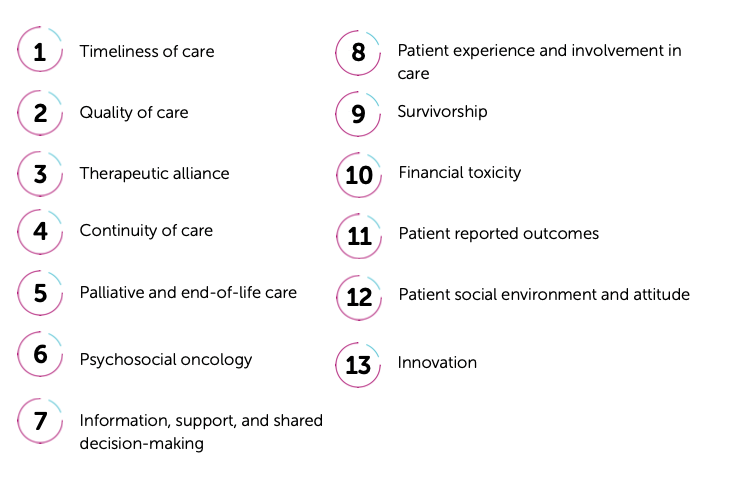
Figure 1. 13 cancer efficiency metric themes.
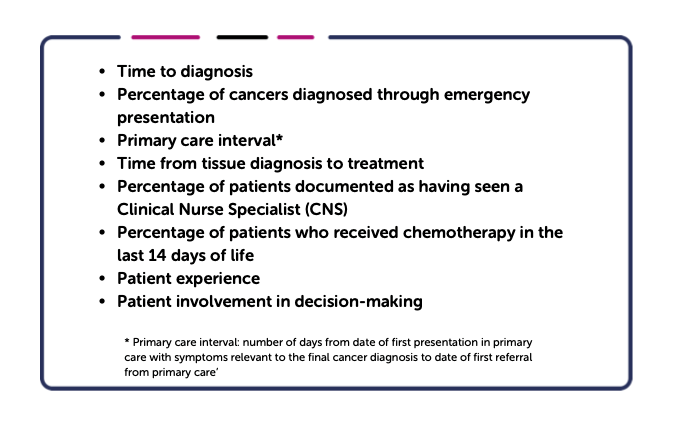
Figure 2. 8 cancer efficiency metric themes.
Ultimately, from examining what metrics were specifically referred to across all the data sources (the health literature, registries and the stakeholder interviews), a core set of 8 metrics were identified.
Importantly, there were only three metric themes where the research, registries and interviews consistently mapped, namely:
- Timeliness of care
- Quality of care; and
- Financial toxicity
As such, these may represent the most important areas of cancer care where patients have voiced concerns and where metrics are best applied to improve efficiency.
In summary, the report offers a set of evidence-based metrics for stakeholders to use as a reference and foundation for assessing cancer care efficiency, however best suits their needs and ambitions. All the metrics identified in this report can be translated across many cancer types and ultimately implemented into routine practice. Finally, the report is foundational, and will evolve over time.
Utilising these metrics could serve to elevate current standards of patient- centred care by identifying opportunities to:
a) Improve outcomes for patients: the delivery of accessible, patient-centred, evidence- based, high quality cancer care achieves the best possible outcomes for all cancer patients with the resources available)
b) Optimise allocation of resources: using available resources in such a way as to achieve optimal outcomes equitably distributed across the system and population
c) Use data to continuously learn: using newly available data to contribute to an adaptive and learning healthcare system that strives for continuous improvement to benefit cancer patients and their families.
REPORT LINK: https://www.all-can.org/wp-content/uploads/2022/06/Final_The-Al.Can-Efficiency-Metrics-Study.pdf
References
2. World Health Organization. The world health report: health systems financing: the path to universal coverage. 2010. Available
3. All.Can Harnessing data for better cancer care. Available at: https://www.all-can.org/news/featured/all-cans-policy-report-harnessing-data-for-better-cancer-care/
4. Kalager M, Adami HO, Lagergren P, Steindorf K, Dickman PW. Cancer outcomes research—a European challenge: measures of the cancer burden. Molecular Oncology. 2021 Dec;15(12):3225-41.
5. Patient insights on cancer care: opportunities for improving efficiency. Findings from the international All.Can patient survey: https://www.all-can.org/reports/all-can-patient-survey/