Loading


Journal of Cancer Biology
ISSN: 2692-7896
2026
Volume 7, Issue 1, p1-25
Articles published in this issue are Open Access and licensed under Creative Commons Attribution License (CC BY NC) where the readers can reuse, download, distribute the article in whole or part by mentioning proper credits to the authors.
Exercise and its influence on the tumor microenvironment — the role of muscle-cancer cross talk
Dorothea Clauss, Nadira Gunasekara, Wilhelm Bloch
Exercise is increasingly being recognized as an important part of cancer treatment, as it has been shown to alleviate treatment- and disease-related side effects and improve quality of life of patients with cancer. Furthermore, exercise has been linked to a reduced risk of cancer recurrence, particularly in cases of breast and colorectal cancer. In recent years, the question has come to the forefront: “How?” does exercise influences cancer survival, and with it the interest in the underlying physiological mechanisms.
J Cancer Biol, 2026, Volume 7, Issue 1, p1-2 | DOI: 10.46439/cancerbiology.7.081
Wearable device for detection and elimination of cancer cells at inception: birth of a new era
Kambiz Afrasiabi
Despite major advances in molecular oncology and cancer therapeutics, early detection remains a critical limitation for many malignancies. Current screening approaches rely largely on anatomical or morphological changes, highlighting a persistent gap between modern biological understanding of cancer and its clinical application. This article examines the evolution of cancer biology and explores why these advances have not yet translated into effective early detection strategies.
J Cancer Biol, 2026, Volume 7, Issue 1, p3-6 | DOI: 10.46439/cancerbiology.7.082
Molecular subtypes of breast cancer in Nigeria: clinicopathological insights from immunohistochemical profiling
Adesoji E. Adetona, Iyanuoluwa Olajumoke Oso, Adesola H. Oniye, Grace T. Akojede, Stephen K. Ogunlade, Ezinne C. Obii- Okpala
Breast cancer remains the most frequently diagnosed malignancy among women worldwide and a leading cause of cancer-related mortality. Its burden continues to rise in low- and middle-income countries, where late presentation, limited diagnostic capacity, and uneven access to targeted therapies contribute substantially to poor outcomes.
J Cancer Biol, 2026, Volume 7, Issue 1, p7-14 | DOI: 10.46439/cancerbiology.7.083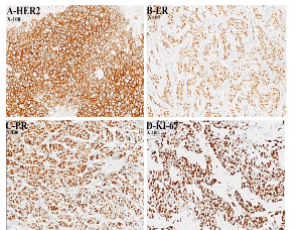
Preoperative radiation boost in early-stage breast cancer: a focused report
Firas Eladoumikdachi, Bruce Haffty
In breast-conserving therapy, whole-breast radiotherapy (WBRT) followed by a postoperative tumor bed boost is the standard approach for patients at increased risk of local recurrence [1–6]. However, postoperative boost delivery is limited by challenges in tumor bed delineation after surgery, particularly in the setting of oncoplastic reconstruction, and may prolong overall locoregional treatment time. Historical concerns regarding wound healing have limited the use of preoperative breast radiotherapy, though these concerns largely stem from experiences with whole-breast irradiation rather than limited-volume boost dosing [7,8].
J Cancer Biol, 2026, Volume 7, Issue 1, p15-18 | DOI: 10.46439/cancerbiology.7.084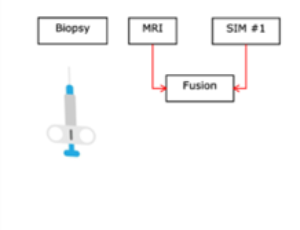
Beyond a binary RTK-RAS biomarker: context-aware precision oncology in early-onset colorectal cancer
Enrique Velazquez-Villarreal
Early-onset colorectal cancer (EOCRC) is increasing worldwide and represents a biologically and clinically heterogeneous disease that requires precision approaches extending beyond conventional single-gene biomarkers. Recent analyses of receptor tyrosine kinase-RAS (RTK-RAS) pathway alterations demonstrate that their clinical significance is strongly dependent on age at diagnosis, ancestry, and treatment exposure. In particular, RTK-RAS alterations have been associated with unfavorable survival in untreated early-onset non-Hispanic White colorectal cancer, while an opposite association has been observed in FOLFOX-treated late-onset disease.
J Cancer Biol, 2026, Volume 7, Issue 1, p19-25 | DOI: 10.46439/cancerbiology.7.085
Recommended Articles
Oncogenic specificity in nevus and melanoma formation
There is striking clinical, histological, and molecular diversity observed across melanocytic tumors. Activating mutations in BRAF and NRAS are well-established initiators of benign melanocytic nevi and melanoma. However, accumulating evidence reveals that the biological outcome after oncogene activation is dependent on cellular state differences that vary by anatomic site, developmental timing, and cell of origin.
Correlation of bone marrow morphologic assessment and genetic aberrations in plasma cell myeloma with clinical outcomes
Plasma cell myeloma is a hematopoietic neoplasm with morphologic and genetic heterogeneity. Genetics have been shown to play an important role in risk stratification of plasma cell myeloma however the correlation between genetic aberrations and morphologic features is not well studied. In performing a systematic study of 266 multiple myeloma bone marrow biopsies from 329 patients, we initially investigated the association between bone marrow morphology, conventional cytogenetics, gene expression profiling and gene mutations
CD133 and centrosomes: How CD133 inhibits autophagy and induces the undifferentiated state of cancer cells at centrosomes
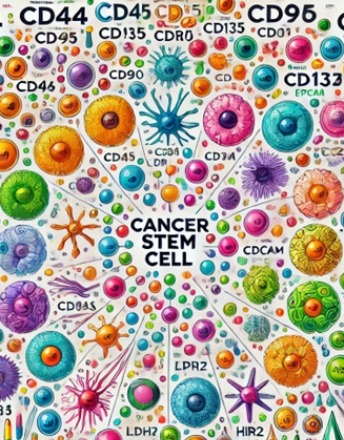
CD133 is a transmembrane protein that mainly localizes to the plasma membrane of normal stem cells as well as cancer stem cells, and is widely known as a cancer stem cell marker. CD133 was recently shown to localize in the cytoplasm; however, its transport pathway and functions currently remain unknown.
Role of H3K9 demethylases in DNA doublestrand break repair
H3K9 demethylases can remove the repressive H3K9 methylation marks on histones to alter chromatin structure, gene transcription and epigenetic state of cells. By counteracting the function of H3K9 methyltransferases, H3K9 demethylases have been shown to play an important role in numerous biological processes, including diseases such as cancer.
The Oncogenic Role of ADAR1-Mediated RNA Editing in Thyroid Cancer
A-to-I RNA modifications performed by the adenosine deaminase acting on RNA (ADAR) protein family are gaining traction as important mechanisms in cancer biology. A-to-I RNA editing changes adenosine to inosine on double stranded RNA, which co-transcriptionally alters transcript sequence and structure. A number of microRNA (miRNA) precursors are known to be edited by the ADARs, which alters the expression and/or function of the mature miRNA.
Machine learning for precision medicine in cancer: Transforming drug discovery and treatment
Machine learning (ML) is a branch of artificial intelligence that uses an algorithm to process the data, retrieve valuable information, learn from it, find a pattern, and make predictions. Manual data analyses suffer from several disadvantages including it is time-consuming and subject to error.
The rising tide of pancreatic adenocarcinoma: A review of risk factors, diagnostic challenges, and treatment updates
Pancreatic ductal adenocarcinoma (PAC) is an aggressive malignancy that is frequently locally invasive or widely metastatic at the time of diagnosis. As such, morbidity and mortality remain extremely high. Despite growing advances in surgical technique and medical management, the incidence and mortality rate are expected to increase over the next two decades.
Implications of the USP10-HDAC6 axis in lung cancer - A path to precision medicine
Lung cancer is the leading cause of cancer death among both men and women in the United States. Because lung cancer is genetically heterogeneous, tailored therapy alone or in combination with chemotherapy would increase patient overall survival as compared with the one-size-fits-all chemotherapy. TP53-mutant lung cancer accounts for more than half of all lung cancer cases and is oftentimes more aggressive and resistant to chemotherapy. Directly targeting mutant p53 has not yet been successful, so identification of novel therapy targets and biomarkers in the TP53-mutant lung cancer is urgently needed to increase the overall survival in this subgroup.
Granular cell tumor (Abrikossoff's tumor) of the tongue: A case report
Granular cell tumor, also known as Abrikossoff’s tumor, is a benign tumor that is relatively rare and is slightly more common in female patients, with a higher prevalence between the fourth and sixth decades of life although it is possible to appear at any age. It can appear in any part of the body but about 45-65% of all the lesions appear in the head or neck areas. Intraoral lesions represent about 70% of these cases.
Sézary's syndrome: Review of the clinical, histomorphological and diagnostic aspects of a rare cutaneous lymphoma
Sézary's Syndrome consists of a rare type of non-Hodgkin cutaneous T-cell lymphoma (CTCL), being a very aggressive leukemic variant of CTCL. Given its rarity and its ability to mimic other more common diseases, this neoplasm represents a major diagnostic challenge for both clinicians and pathologists.
Perturbation of cellular integrity by nicotine: A major component of e-cigarette smoke
In recent years, the use of electronic cigarettes (e-cigarettes) or “vape” in which nicotine is the major component has been dramatically increasing, particularly among teenagers and young adults. This is due to a general perception that e-cigarettes are harmless to use, in particular for the cessation of tobacco smoking. Thus, a better understanding of whether e-cigarettes pose a risk to human health is urgently needed. Nicotine exposure can accelerate malignant growth of cancer cells.
Cryoablation is a safe alternative to surgery for low-risk breast cancer
Cryoablation of breast cancer offers an alternative to surgery for women who are not ideal surgical candidates. It is a minimally invasive procedure that has already had success in fibroadenoma treatment with good tumor reduction and cosmesis. The findings of cryoablation as treatment for early-stage, low-risk breast cancer has been previously discussed in the recently published article ‘Cryoablation: A promising non-operative therapy for low-risk breast cancer’.
Advances in the investigation of the Epstein Barr Virus (EBV) in Colombia during the last 20 years
Epstein Barr Virus (EBV) belongs to the family Herperviridae, subfamily Gammaherpesvirinae, genus Lymphocriptovirus [1]. It is one of the most common human viruses as most people get infected with EBV at some point in their lives. EBV spreads most commonly through bodily fluids, primarily saliva. Although viral DNA has been detected in breast milk and genital secretions [2], the evidence for sexual transmission is extremely limited [3].
COVID-19 in patients with and without cancer: Examining differences in patient characteristics and outcomes
This study examines differences between patients with and without cancer in patient demographic and clinical characteristics and COVID-19 mortality and discusses the implications of these differences in relation to existing cancer disparities and COVID-19 vulnerabilities. Data was collected as a part of a retrospective study on a cohort of COVID-19 positive patients across Mount Sinai Health System from March 28, 2020 to April 26, 2020. Descriptive, comparative, and regression analyses were applied to examine differences between patients with and without cancer in demographic and clinical characteristics and COVID-19 mortality and whether cancer status predicts COVID-19 mortality controlling for these covariates using SAS 9.4. Results showed that, of 4641 patients who tested positive for COVID-19, 5.1% (N=236) had cancer.
The role of exercise and physical activity in osteosarcoma for patients and survivors
Exercise has been found to improve function, mitigate disability, enhance the anticancer immune system response, and improve quality of life for patients with osteosarcoma and its survivors. Of late, exercise has additionally been implemented as an adjuvant to standard therapies. These products of exercise, along with the benefits of physical activity in pre- and postoperative rehabilitation, were summarized in the recently published book chapter Exercise and Physical Activity in Patients with Osteosarcoma and Survivors.
Plasma oncology - Physical plasma as innovative tumor therapy
In medical diagnostics, complex physical techniques are state of the art and everyday clinical practice would be unthinkable without them. But also, in the field of therapeutic interventions there are several physical procedures. For example, ionizing radiation is used in oncology and non-ionizing radiation in dermatological (UV light) and photodynamic therapies (laser). Similarly, electrosurgical and laser procedures are well established in surgery.
DKK2 mediated immunosuppressive pathway and angiogenesis for colon cancer progression
Available targeted therapies for colorectal cancer (CRC) are limited. Immunotherapy offers new options for cancer treatment, but most of CRC are refractory to current immune checkpoint blockade, which indicates the possible presence of yet uncharacterized immune-suppressive mechanisms. Herein we report that high levels of Dickkopf-related protein 2 (DKK2) are expressed in human CRC tumors, and the DKK2 blockade caused stronger activation of tumor-infiltrating CD8+ T cells in ex vivo culture. A correlation of high DKK2 expression
Changing the landscape of non-small cell lung cancer disparities
In the United States, lung and bronchus cancers are the second most common types of cancer and are responsible for the largest number of deaths from cancer, with African Americans suffering disproportionately from lung and bronchus cancers. This disparity likely results from a complex interplay among social, psycho-social, lifestyle, environmental, health system, and biological determinants of health.
Reflex ordered testing for molecular biomarkers in lung adenocarcinoma: An update
Molecular biomarker testing is essential to the work up of metastatic and advanced non-small cell lung carcinoma. Despite molecular testing guidelines proposed by the National Comprehensive Cancer Network, Association for Molecular Pathology, and many others, multiple reports continue to indicate that lung cancer patients are inadequately tested for key molecular biomarkers. Within our hospital system, reflex ordered testing of a panel of molecular biomarkers in all newly diagnosed lung adenocarcinomas was approved and implemented in 2017.
Telangiectatic osteosarcoma: A bare bones account
Examination of the surface of bones (from which soft tissues have been removed) provides a window complementary to that provided by clinical, standard anatomic, laboratory and radiologic studies. That approach, utilized successfully for analysis of other forms of osteosarcoma is applied to the high grade telangiectatic version of medullary osteosarcoma.