

Abstract
The management of severe, refractory chronic pain remains a major unmet clinical need, complicated by opioid limitations and the narrow therapeutic window of intrathecal ziconotide, a selective N-type voltage-gated calcium channel (CaV2.2) blocker. A recent study by Jin et al. provides the first in vivo evidence that spinal neuropeptide FF (NPFF) receptor signaling functionally cross-talks with CaV2.2 to enhance ziconotide-evoked antinociception without inducing tolerance. This commentary integrates advances in GPCR-ion channel crosstalk, receptor subtype pharmacology, and translational pain medicine. We discuss that NPFF-based combinatorial strategies can enhance ziconotide’s analgesic efficacy, potentially allowing a reduction in ziconotide dosage to mitigate its neurological side effects and thereby inform the development of novel combinatorial analgesic strategies for clinically accessible intrathecal delivery. We also highlight unresolved questions regarding NPFF1/NPFF2 subtype contributions, cell-type-specific signaling, and translatability to human pathological pain. The NPFF-CaV2.2 axis represents a promising target to revolutionize non-opioid pain pharmacotherapy.
Keywords
Neuropeptide FF, Ziconotide, CaV2.2 channel, Pain, GPCR-ion channel crosstalk
Introduction
Chronic pain represents a global public health crisis. Opioid analgesics are limited by respiratory depression, addiction, tolerance, and hyperalgesia, driving demand for mechanism-based non-opioid treatments [1]. Ziconotide is a first-in-class intrathecal analgesic that selectively blocks CaV2.2 channels on presynaptic nociceptor terminals, inhibiting calcium influx and neurotransmitter release. It produces potent analgesia across acute, inflammatory, and neuropathic pain without abuse liability [2,3]. However, clinical use is restricted by a steep dose-response curve, neurological side effects (dizziness, ataxia, nystagmus), and invasive delivery [4,5]. Combination strategies that potentiate ziconotide at lower doses could greatly expand its utility, but their translational feasibility remains underexplored [6].
Neuropeptide FF (NPFF) and related peptides (NPVF, dNPA) act on two Gi/o-coupled G-protein-coupled receptors (GPCRs), NPFF1 and NPFF2, which are densely expressed in spinal somatosensory pathways [7–9]. NPFF receptors modulate nociception, opioid tolerance, and withdrawal, and inhibit CaV2.2 in vitro via Gβγ signaling [10,11]. Until recently, however, there was a lack of in vivo evidence linking NPFF signaling to CaV2.2-mediated analgesia [12].Jin et al. used mouse thermal (tail-flick) and visceral (acetic acid writhing) pain models to assess the interaction. We found that intrathecal NPFF, NPVF, or dNPA dose-dependently enhanced ziconotide analgesia without affecting baseline nociception. This effect was abolished by the NPFF antagonist RF9 but not by the opioid antagonist naloxone, confirming opioid independence. Notably, 8-day co-administration did not induce tolerance [12].
These findings demonstrate that the NPFF system acts as an endogenous functional modulator that potentiates ziconotide-induced analgesia, thereby supporting the potential of ziconotide?NPFF combination therapy. However, the study was limited to acute pain models in male mice; whether similar potentiation occurs in chronic pain states or both sexes remains unknown. Additionally, while NPFF agonists show promise, their safety profile-particularly regarding off-target effects on autonomic or neuroendocrine functions-requires systematic evaluation prior to clinical translation.
This commentary expands these findings by: (1) Contextualizing NPFF-CaV2.2 crosstalk within modern GPCR-ion channel signaling; (2) Dissecting NPFF1/NPFF2 subtype roles in spinal analgesia; (3) Evaluating translational potential for intrathecal therapy; (4) Highlighting key unresolved mechanistic and clinical questions, including the pharmacokinetic feasibility of intrathecal NPFF delivery (e.g., cerebrospinal fluid stability, compatibility with implantable pumps) and the need for chronic pain and sex specific preclinical validation. Future first-in-human trials should prioritize dose- escalation safety studies with rigorous neurological and autonomic monitoring. Overcoming the blood-brain barrier impermeability of peptides remains a major translational barrier for systemic delivery, though intrathecal administration bypasses this issue.
Mechanistic Foundations: GPCR-mediated Modulation of Presynaptic CaV2.2 Channels
CaV2.2 channels are key regulators of nociceptive neurotransmitter release [2,13]. Ziconotide binds the extracellular pore and causes voltage-independent, use-dependent block [2,3]. In contrast, Gi/o-coupled GPCRs (including NPFF receptors) inhibit CaV2.2 via membrane-delimited Gβγ signaling, stabilizing closed states and reducing open probability without pore occlusion [11,14,15]. These distinct mechanisms create a strong basis for functional synergy [12,14].
Structural and functional studies show that Gβγ interacts with the CaV2.2 intracellular I-II loop and C-terminus of CaV2.2, thereby reducing gating efficacy [11,14]. This preferentially suppresses release during high neuronal activity (pathological pain) while sparing basal transmission [14,16]. NPFF receptors do not bind CaV2.2 directly but modulate channel activity via Gi/o signaling, forming a functional complex at presynaptic active zones [12,17]. However, most evidence for direct Gβ-CaV2.2 interactions comes from heterologous expression systems; whether native spinal presynaptic terminals employ identical molecular mechanisms remains less directly validated.
A schematic representation of the proposed NPFF-CaV2.2 signaling synergy with ziconotide is provided in Figure 1.
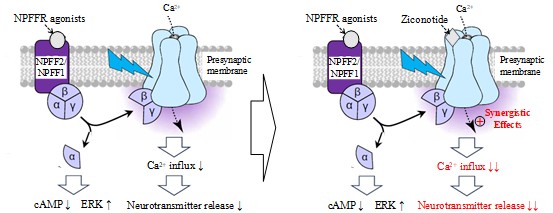
Figure 1. Schematic of NPFF-CaV2.2 crosstalk and synergy with ziconotide at spinal presynaptic nociceptor terminals.
NPFF2 receptors (predominant in spinal cord) activate Gi/o proteins, releasing Gβγ subunits that bind CaV2.2 channels to reduce open probability. Ziconotide blocks the channel pore. These distinct inhibitory mechanisms act synergistically to suppress calcium influx and neurotransmitter release. NPFF1 receptors (mainly supraspinal) are not shown here. Jin et al. used mouse thermal (tail-flick) and visceral (acetic acid writhing) pain models to assess the interaction. They found that ziconotide analgesia is independent of opioid or NPFF tone: naloxone and RF9 did not alter the effect of ziconotide given alone. However, NPFF receptor activation shifted the ziconotide dose-response leftward, enhancing analgesia at submaximal doses. This pattern reflects functional potentiation via downstream signaling, supporting clinically meaningful dose sparing [12].
In the study by Jin et al., both NPFF1-preferring (NPVF) and NPFF2-selective (dNPA) agonists produced similar potentiation. This finding suggests that either subtype can drive sufficient CaV2.2 modulation, or alternatively, that both receptors couple to overlapping Gi/o pathways [7,8,12]. However, these interpretations remain speculative, because subtype-selective antagonists or genetic knockdown were not used. Therefore, future work with subtype-selective tools will be required to clarify the dominant receptor contributions in vivo.
Receptor Subtype Specialization and Spinal Cord Circuitry
NPFF1 receptors are concentrated in hypothalamic neuroendocrine regions, while NPFF2 receptors predominate in the spinal dorsal horn, thalamus, and brainstem-areas critical for nociception [7–9]. This distribution implies that spinal analgesic effects are likely NPFF2-driven, with NPFF1 modulating supraspinal affective or neuroendocrine pain components [7,9]. However, direct functional evidence for this subtype specialization in the spinal cord remains limited, as most data are derived from receptor localization studies rather than in vivo functional dissection.
In the study by Jin et al., NPVF and dNPA enhanced ziconotide analgesia similarly at equimolar doses. Possible explanations: (1) Overlapping signaling: both receptors efficiently couple to Gi/o-Gβγ-mediated CaV2.2 inhibition [7,10,14]. (2) Co-expression: spinal circuits co-express both subtypes, so either activates a common pool [7,8]. (3) Ligand cross-reactivity: partial non-selectivity masks strict subtype dependence [7,8]. Importantly, because the study did not employ subtype-selective antagonists or genetic knockdown, these interpretations remain speculative.
In visceral pain, dNPA tended to be more potent, consistent with spinal NPFF2 upregulation in inflammatory and neuropathic states [9,12]. This observation suggests that NPFF2-selective agonists may be superior in pathological pain, although this inference requires confirmation in additional pain models and with selective pharmacological tools.
CaV2.2 and NPFF receptors are expressed on primary afferent terminals and spinal interneurons. Future work using conditional knockout, electrophysiology, and calcium imaging will help define cell-type-specific modulation. Such studies should also clarify whether NPFF enhances ziconotide’s inhibition of primary afferent release or alternatively engages pain-gating inhibitory circuits [3,16].
Translational Potential and Safety Considerations
Ziconotide’s clinical potential is limited by dose-related neurological side effects and intrathecal delivery [4]. The findings of Jin et al. strongly support intrathecal co-administration of ziconotide with stable NPFF agonists. This combinatorial approach avoids the limitations of single-drug therapy, providing a safe and tolerable option for intrathecal pain management. This study is preliminary, and the long-term safety and clinical application of the combined strategy need further verification through subsequent in vivo experiments and clinical trials.
Dose reduction and mitigation of neurological side effects
Ziconotide’s therapeutic index is narrow because analgesic and neurotoxic doses are closely spaced. Side effects stem from supraspinal CaV2.2 blockade in cerebellar and vestibular pathways [4]. Based on existing experimental evidence, NPFF-based combinatorial strategies can enhance ziconotide’s analgesic efficacy. This may allow a reduction in ziconotide dosage, thereby mitigating its neurological side effects. Such an approach could inform the development of novel combinatorial analgesic strategies for intrathecal delivery. However, the safety profile of chronic intrathecal NPFF agonists themselves remains unexplored; potential adverse effects on autonomic, endocrine, or motor functions require systematic evaluation before clinical translation. Furthermore, intrathecal co-administration introduces pharmacokinetic uncertainties, including peptide stability in cerebrospinal fluid, compatibility with implantable pumps, and potential for altered ziconotide clearance.
Opioid independence
A key advantage is strict opioid independence. Naloxone did not block NPFF-mediated potentiation, confirming analgesia occurs without opioid receptor activation [12,18]. This feature is valuable for patients with opioid intolerance, addiction risk, or opioid-induced hyperalgesia, and may reduce reliance on systemic adjuvants that carry their own side effects [1,6,18].
Tolerance resistance
Ziconotide monotherapy exhibits no tolerance [4]. Jin et al. showed no analgesic tolerance after 8 days of ziconotide monotherapy or ziconotide-NPFF co-administration. The study suggests that NPFF sustains ziconotide’s inhibitory efficacy toward CaV2.2 channels without inducing compensatory adaptive remodeling. It remains speculative whether NPFF preserves this favorable profile by reinforcing ziconotide’s target engagement, possibly through modulation of CaV2.2-associated signaling pathways [1,12]. Regardless, the combination appears promising for chronic intrathecal infusion in refractory pain, pending longer-term safety studies.
Broadened pain indications
Ziconotide efficacy varies across pain etiologies [4]. Because NPFF receptors are upregulated in neuropathic and inflammatory pain, potentiation may be stronger in pathological states [9]. Jin et al.’s visceral pain model showed robust enhancement, supporting use in abdominal, pelvic, and visceral pain often poorly managed by conventional analgesics. Future studies should test efficacy in nerve injury, diabetic neuropathy, and spinal cord injury models, and should include both sexes to assess potential sex-dependent differences in NPFF-CaV2.2 signaling.
Unresolved Questions and Future Directions
Despite major advances, key questions remain:
Subtype-selective pharmacology
Highly selective NPFF1 and NPFF2 antagonists for in vivo use are lacking [7,8]. Such tools are needed to definitively assign subtype contributions to ziconotide potentiation and to determine whether single-subtype targeting suffices or dual targeting is optimal. In the absence of these tools, the relative contributions of NPFF1 versus NPFF2 subtypes remain speculative.
Molecular crosstalk mechanisms
While Gi/o-Gβγ signaling is central, downstream effectors are poorly defined. For example, it remains unknown whether NPFF alter CaV2.2 trafficking, gating kinetics, or phosphorylation state. Live-cell imaging, proteomics, and neuronal electrophysiology will define the molecular links between NPFF receptors and enhanced ziconotide inhibition. However, most current evidence is derived from heterologous expression systems; validation in native spinal presynaptic terminals is still needed.
Clinical safety and pharmacokinetics
Intrathecal polypharmacy necessitates rigorous evaluation of pharmacokinetic interactions and synergistic neurological side effects. A critical unresolved question is whether NPFF agonists may modify ziconotide clearance or or its distribution in cerebrospinal fluid and spinal cord. Additionally, the feasibility of chronic co-administration via implantable intrathecal pumps (including issues of peptide stability, aggregation, and compatibility) requires preclinical assessment. These are key determinants for safe intrathecal combination therapy and warrant preliminary nonclinical pharmacokinetic and safety studies, followed by early-phase clinical trials to reduce translational risks.
Conclusion
Jin et al. establish a novel opioid-independent analgesic axis where spinal NPFF receptor activation enhances CaV2.2-mediated ziconotide analgesia. This work bridges basic neuropharmacology and clinical pain care, offering a strategy to overcome limitations of current non-opioid therapies. By enabling ziconotide dose reduction, preserving long-term efficacy without apparent tolerance, and acting across pain modalities, ziconotide-NPFF combination therapy represents a promising paradigm for intrathecal analgesia.
Future investment in subtype-selective ligands, mechanistic dissection of GPCR-ion channel crosstalk, and rigorous translational development will be critical. First-in-human trials should prioritize dose-escalation safety studies with close monitoring for neurological, autonomic, or endocrine adverse events. Major translational barriers include the lack of long-term safety data, uncertainty about optimal dosing regimens, and the need for specialized intrathecal delivery infrastructure. Overcoming these hurdles will determine whether this endogenous modulatory pathway can be successfully translated into clinical practice. The NPFF-CaV2.2 pathway demonstrates how endogenous neuromodulatory systems can optimize existing therapeutics, providing a rational framework for next-generation mechanism-based non-opioid pain treatments.
Conflicts of Interest
The authors have no conflicts of interest to declare.
Acknowledgement
This work was supported by the project (XJ202510634215).
References
2. Wie CS, Derian A. Ziconotide. 2025 Jan 19. In: StatPearls. Treasure Island (FL): StatPearls Publishing; 2026.
3. Li Q, Lu J, Zhou X, Chen X, Su D, Gu X, et al. High-Voltage-Activated Calcium Channel in the Afferent Pain Pathway: An Important Target of Pain Therapies. Neurosci Bull. 2019 Dec;35(6):1073–84.
4. McDowell GC 2nd, Pope JE. Intrathecal Ziconotide: Dosing and Administration Strategies in Patients With Refractory Chronic Pain. Neuromodulation. 2016 Jul;19(5):522–32.
5. Wallace MS, Rauck RL, Deer T. Ziconotide combination intrathecal therapy: rationale and evidence. Clin J Pain. 2010 Sep;26(7):635–44.
6. Karri J, Singh M, Modi DJ, Orhurhu V, Seale C, Saulino M, et al. Combination Intrathecal Drug Therapy Strategies for Pain Management. Pain Physician. 2021 Dec;24(8):549–69.
7. Bray L, Froment C, Pardo P, Candotto C, Burlet-Schiltz O, Zajac JM, et al. Identification and functional characterization of the phosphorylation sites of the neuropeptide FF2 receptor. J Biol Chem. 2014 Dec 5;289(49):33754–66.
8. Nguyen T, Marusich J, Li JX, Zhang Y. Neuropeptide FF and Its Receptors: Therapeutic Applications and Ligand Development. J Med Chem. 2020 Nov 12;63(21):12387–402.
9. Yang HY, Tao T, Iadarola MJ. Modulatory role of neuropeptide FF system in nociception and opiate analgesia. Neuropeptides. 2008 Feb;42(1):1–18.
10. Roumy M, Zajac JM. Effects of neuropeptide FF on intracellular Ca2+ in mouse spinal ganglion neurons. Eur J Pharmacol. 1996 Jun 13;306(1-3):291–5.
11. Zamponi GW, Currie KP. Regulation of Ca(V)2 calcium channels by G protein coupled receptors. Biochim Biophys Acta. 2013 Jul;1828(7):1629–43.
12. Jin G, Zhang J, Pang J, Zhang N, Ren Y, Zheng Y, et al. Functional crosstalk between neuropeptide FF system and N-type voltage-gated calcium channels in ziconotide-mediated antinociception in mice. Psychopharmacology (Berl). 2026.
13. Mochida S. Presynaptic Calcium Channels. Int J Mol Sci. 2019 May 6;20(9):2217.
14. Huang J, Zamponi GW. Regulation of voltage gated calcium channels by GPCRs and post-translational modification. Curr Opin Pharmacol. 2017 Feb;32:1–8.
15. Weiss N, Zamponi GW. Opioid Receptor Regulation of Neuronal Voltage-Gated Calcium Channels. Cell Mol Neurobiol. 2021 Jul;41(5):839–47.
16. Cunningham KL, Littleton JT. Mechanisms controlling the trafficking, localization, and abundance of presynaptic Ca2+ channels. Front Mol Neurosci. 2023 Jan 13;15:1116729.
17. Kim SH, Kim J, So I, Lee HH. Direct crosstalk between GPCRs and ion channels via G proteins. Exp Mol Med. 2025 Dec;57(12):2717–28.
18. Gibula-Tarlowska E, Kotlinska JH. Crosstalk between Opioid and Anti-Opioid Systems: An Overview and Its Possible Therapeutic Significance. Biomolecules. 2020 Sep 28;10(10):1376.