

Abstract
Recombinant human erythropoietin (EPO) has been used extensively for over 3 decades to treat anemia, including that associated with cancer treatment. Multiple randomized clinical trials have found that EPO treatment ameliorates anemia and reduces transfusion requirements in cancer patients undergoing chemotherapy. However, reports of some trials suggested that EPO treatment might also exacerbate neutropenia, as anticipated by pre-clinical observations that EPO suppresses neutrophil production in short- and long-term marrow cultures. However, neutropenia was expected in these trials and not reported in detail. Recently, primary data from 5 industry-sponsored trials of EPO treatment in cancer patients became available through the Yale Open Data Access (YODA) project, allowing us to examine serial absolute neutrophil counts (ANCs) from 1650 cancer patients randomized to EPO or placebo treatment. The incidence of severe neutropenia (ANCs <500/mm3 and <200/mm3) during the initial 12 weeks of each trial was determined and found consistently to be greater for study subjects assigned to EPO than to placebo. Study-specific odds ratios for the occurrence of ANCs <500/mm3 (EPO vs. placebo) ranged from 1.24 to 2.08, with a Cochran-Mantel-Haenszel odds ratio for the combined studies of 1.48 (95% confidence interval, 1.08 – 2.03, p=0.014). A statistically significant odds ratio was also found for ANC values of <200/mm3 (1.73, 1.10–2.70, p=0.016), but not for neutropenia overall (ANCs <1500/mm3). These findings indicate that EPO treatment of cancer patients receiving myelosuppressive chemotherapy may be associated with an increased incidence of severe neutropenia.
Keywords
Erythropoietin, EPO treatment, Neutropenia
Abbreviations:
EPO: Recombinant Human Erythropoietin; ANC: Absolute Blood Neutrophil Count; YODA: Yale Open Data Access project
Introduction
Recombinant human erythropoietin (EPO) was approved by the FDA for treatment of anemia associated with cancer chemotherapy in 1993, based on findings from clinical trials that EPO ameliorated anemia, reduced blood transfusions, and improved quality of life measures. Since this time, multiple randomized, placebo controlled clinical trials have confirmed these findings, and EPO has been used widely to ameliorate anemia associated with cancer treatment, although its use has decreased in recent years because of concerns about deleterious off-target effects, including evidence of increased cancer recurrence and/or progression among cancer patients treated with EPO [1–5].
When EPO first became clinically available, it was considered possible that EPO treatment might suppress neutrophil production since erythroid and non-erythroid myeloid cells were known to originate from a common pool of multipotential progenitor cells [6,7], suggesting the possibility that lineage competition might occur if one differentiation pathway was pharmacologically amplified. Moreover, EPO had been observed to suppress neutrophil production in both short- and long-term marrow cell cultures [8–11]. However, no evidence emerged subsequently from extensive clinical experience to indicate that EPO treatment alters the production of blood cells other than erythrocytes in individuals with normal hematopoietic reserves and marrow function.
Nonetheless, early studies of the clinical effects of EPO suggested that EPO treatment might exacerbate neutropenia in individuals with compromised hematopoietic reserves and suppressed marrow function (e.g. premature newborns [12,13] and cancer patients undergoing myelosuppressive chemotherapy [14–18]. Findings of a multicenter trial of EPO treatment in cancer patients reported in 1993 [14] indicated that severe neutropenia (absolute neutrophil count or ANC <500/mL) occurred more frequently in trial participants randomized to EPO treatment than in those assigned to placebo (41% vs. 31%). However, these differences were not determined to be statistically significant. A separate, detailed study of subjects treated at one of this trial’s participating centers suggested that ANC nadirs were on average lower and more prolonged in individuals receiving EPO than in those given placebo [15], but numbers analyzed were too limited for definitive conclusions. In addition, several subsequent trials of EPO treatment in cancer patients listed “granulocytopenia” as an adverse event that occurred more frequently in study subjects who received EPO treatment than in those given placebo [16–18]. However, most published clinical trials of EPO treatment of anemia in cancer patients provided little or no hematologic data beyond hemoglobin and hematocrit measurements, and, in general, because chemotherapy-induced neutropenia was expected in these trials, the incidence and severity of neutropenia was not reported in detail.
Recently, primary data from 5 prospective randomized, placebo controlled clinical trials of EPO treatment in cancer patients undergoing varying chemotherapy treatment regimens, sponsored by Johnson & Johnson, became available through the Yale Open Data Access (YODA) project. These data allowed us to compare serial absolute neutrophil counts (ANCs) from 1650 study subjects with various forms of cancer who participated in these trials and were randomly assigned to either EPO or placebo treatment.
Methods
Primary data from 5 prospective randomized, placebo controlled clinical trials of EPO treatment in cancer patients, sponsored by Johnson & Johnson and accessed through the Yale Open Data Access (YODA) project were analyzed (Table 1) [https:\\yoda.yale.edu/data-request/2017-2486/]. The sample sizes of these trials varied from 71 to 922. While all studies followed patients randomized to EPO or placebo treatment for at least 12 weeks, studies 1 and 2 were limited to 12 weeks. Hence, for the sake of uniformity, data analysis was limited to the initial 12 weeks of each study. Study subjects of 4 trials were treated with myelosuppressive cyclic chemotherapy regimens for variety of solid tumor and hematologic malignancies, excluding myeloid leukemias, while the 5th trial included only patients with metastatic breast cancer, who received “standard of care, first line chemotherapy" that included a variety of cytotoxic chemotherapy drugs given as single agents or in combination regimens that were generally less myelosuppressive than the cyclic combination chemotherapy regimens used to treat cancer patients in trials 1 to 4. Given the various cancer diagnoses of individuals who participated in these trials, the chemotherapy regimens used to treat study subjects varied both among and within the trials, such that the degree of myelosuppression experienced by study subjects also varied. In trials 1 to 4, most study subjects experienced some degree of neutropenia (i.e. recorded ANCs <1500/mm3) during 12 weeks on study, ranging from 64% to 84% in the individual trials. However, in trial number 5 [19], in which cancer chemotherapy regimens were generally less myelosuppressive, the percent of subjects with recorded neutropenic ANC measurements was much less (17%) during the trial's initial 12 weeks. EPO dosing also varied somewhat among the trials. In trials 1 to 4, study subjects randomized to receive recombinant human erythropoietin (rHuEPO) received 150 U/kg by subcutaneous (SC) injection 3 times per week, with dose increases to 300 U/kg x3/week in trials 3 and 4, if blood hemoglobin (Hgb) levels had not increased by >1 g/dL after 4 weeks on study. In trial number 5, subjects randomized to rHuEPO treatment received 40,000 U by SC injection once per week with dose increases to 60,000 U/wk or decreases to 30,000 U/wk depending on Hgb response after 4 weeks on study. Four of the 5 trials analyzed for the present study resulted in publications, identified through ClinicalTrials.gov and PubMed [14,16,28,29].
|
Trials |
Study 1 |
Study 2 |
Study 3 |
Study 4 |
Study 5 |
|
Registration number |
NCT00269997 |
NCT00266617 |
NCT00270166 |
NCT00270127 |
NCT00211133 |
|
Protocol Number |
I88–036 |
I88–037 |
EPO-INT-3 |
EPO-INT-10 |
EPO-INT-76 |
|
Patients randomized (Placebo, EPO) |
72 34, 38 |
87 43, 44 |
201 65, 136 |
375 124, 251 |
939 470, 469 |
|
Number with ANC data (Placebo, EPO) |
71 33, 38 |
86 43, 43 |
198 65, 133 |
373 123, 250 |
922 466, 456 |
|
Publications |
Henry et al. [29] |
Case et al. |
unpublished |
Publications |
Henry et al. [29] |
|
Visit Schedule weeks 1–12 |
Weekly 1–12 |
Weekly 1–12 |
Weekly 1–4, 6, 8, 10, 12 |
Weeks 0, 2, 4, 6, 8, 10, 12 |
Weeks 0, 4, 6, 8, 10, 12 |
|
Diagnoses |
Solid tumor and hematologic malignancies other than myeloid leukemias |
Solid tumor and hematologic malignancies other than myeloid leukemias |
Solid tumor and hematologic malignancies other than myeloid leukemias |
Solid tumor and hematologic malignancies other than myeloid leukemias |
Metastatic breast cancer |
|
Chemotherapy |
Various cyclic cisplatin chemotherapy regimens |
Various cyclic chemotherapy non-platinum regimens |
Various cyclic chemotherapy regimens |
Various cyclic non-platinum chemotherapy regimens |
Standard of care, first line chemotherapy regimens |
|
Baseline data N patients Solid tumor, N (%) Age (mean ± SD) Male, % Race White, % Black, % Other, % |
72 97% 60 (12) 50%
82% 18% 0% |
87 70% 62 (12) 33%
86% 11% 1% |
201 65% 58 (14) 28%
100% 0% 0% |
373 201 (54%) 58 (14) 33%
96% 1% 2% |
939 100% 55 (11) 0%
98% 0.4% 1% |
ANC values were recorded weekly for study subjects in 2 of the trials but less frequently in the other 3. Minimum ANC values were recorded during the initial 12 weeks of each trial, and ANC values <1500/mm3 were classified as neutropenia, while ANCs <500/mm3 and <200/mm3 were classified as severe neutropenia. Numbers of recorded ANC values <500/mm3 and <200/mm3, as well as numbers of reported adverse events, per study subject during the first 12 weeks of the studies were also determined. Cochran-Mantel-Haenszel odds ratios were used to compare the percent of study subjects with rates of ANC values less than 1500/mm3, 500/mm3, or 200/mm3 in the placebo and EPO treatment groups, controlled by study. Also, a generalized linear model with a Poisson distribution and log link was used to assess the number of ANC values <500/mm3 and <200/mm3, as well as numbers of reported adverse events, in the placebo and EPO treatment groups controlled by study. P-values of <0.05 were considered to be statistically significant, and for P-values >0.05, 2 decimal places are shown, while for P values <0.05, 3 decimal places are shown. SAS version 9.4 and R Studio were used for the analyses, and heterogeneity among studies was assessed using the I2 statistic.
Results
Overall, in the 5 trials that were reviewed (Table 1), the percent of study subjects randomized to EPO treatment that developed neutropenia (i.e. had at least one recorded ANC value <1500 mm3) was similar to that of subjects randomized to placebo, except for trial number 5 [19] in which chemotherapy treatment regimens varied widely and were generally less myelosuppressive than those used in trials 1-4 (Figure 1). However, a consistent finding in each trial was that more study subjects assigned to EPO than to placebo developed severe neutropenia with recorded ANC values <500/mm3 or <200/mm3. Moreover, in each study the rate of episodes of severe neutropenia (i.e. the numbers of recorded ANCs <500/mm3 or <200/mm3 for each study subject per 12 weeks on study) was consistently greater for those randomized to EPO treatment than for those given placebo (Table 2).
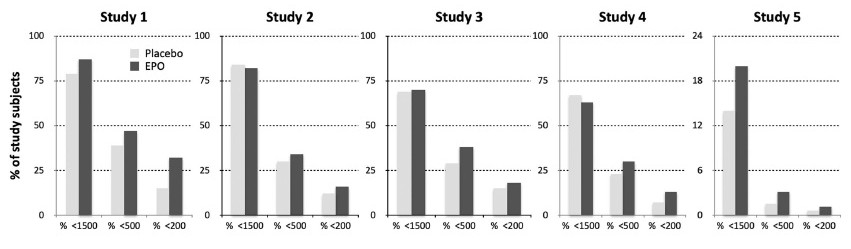
Figure 1. Percent of study subjects that developed neutropenia of increasing severity during 12 weeks on study. The Y axis scale for Study 5 data differs from that of the other studies because the proportion of study subjects in this study who developed neutropenia was much less than in the other studies.
|
|
Study 1 |
Study 2 |
Study 3 |
Study 4 |
Study 5 |
Combined |
|
ANC <500/mm3 Placebo EPO Odds ratio (95% CI) P value a |
13 (39%) 18 (47%) 1.38 (0.54-3.56) 0.63 |
13 (30%) 15 (35%) 1.24 (0.50-3.05) 0.82 |
19 (29%) 49 (37%) 1.41 (0.74-2.68) 0.34 |
28 (23%) 76 (30%) 1.48 (0.90-2.44) 0.14 |
7 (1.5%) 14 (3.1%) 2.08 (0.83-5.19) 0.13 |
80 (11%) 172 (19%) 1.48 (1.08-2.03) 0.017 |
|
Number of ANCs <500/mm3/subject/12 wks Placebo (95% CI) EPO (95% CI) P value b |
0.70 (0.46-1.04) 1.00 (0.73-1.47) 0.048 |
0.53 (0.36-0.80) 0.52 (0.35-0.79) 0.99 |
0.69 (0.52-0.93) 0.83 (0.69-1.01) 0.30 |
0.36 (0.27-0.48) 0.48 (0.41-0.58) 0.10 |
0.015 (0.01-0.03) 0.033 (0.02-0.04) 0.09 |
0.19 (0.17-0.23) 0.33 (0.29-0.37) 0.009 |
|
ANC <200/mm3 Placebo EPO Odds ratio (95% CI) P value a |
5 (15%) 12 (32%) 2.58 (0.80-8.34) 0.16 |
5 (12%) 7 (16%) 1.48 (0.43-5.08) 0.76 |
10 (15%) 24 (18%) 1.21 (0.54-2.71) 0.69 |
8 (7%) 32 (13%) 2.11 0.94-4.73) 0.08 |
3 (0.6%) 5 (1.1%) 1.71 (0.41-7.20) 0.50 |
31 (4%) 80 (9%) 1.71(1.09-2.68) 0.020 |
|
Number of ANCs <200/mm3/subject/12 wks Placebo (95% CI) EPO (95% CI) P value b |
0.27 (0.14-0.52) 0.45 (0.28-0.72) 0.24 |
0.12 (0.05-0.28) 0.18 (0.09-0.36) 0.58 |
0.31 (0.20-0.48) 0.43 (0.33-0.56) 0.23 |
0.09 (0.05-0.16) 0.18 (0.13-0.24) 0.044 |
0.006 (0.002-0.02) 0.011 (0.005-0.03) 0.50 |
0.07 (0.05-0.09) 0.14 (0.12-0.17) 0.005 |
|
a. Fisher Exact tests for individual studies and logit estimates of the common odds ratio b. Poisson generalized linear model |
||||||
However, these differences, although consistent, were not statistically significant in any individual trial, and, while odds ratios for an increased likelihood of severe neutropenia (ANC <500/mm3) in study subjects randomized to EPO treatment compared to those assigned to placebo were consistently greater than 1.0, ranging from 1.24 to 2.08, none were statistically significant individually (Table 2, Figure 2). Nonetheless, when findings of the 5 trials were combined, a statistically significant increase in the incidence of severe neutropenia for study subjects treated with EPO overall, compared to those given placebo, was evident. The Cochran-Mantel-Haenszel odds ratio for the combined studies was 1.48 with a 95% confidence interval (CI) of 1.08 – 2.03 and a P value of 0.028, indicating increased risks of severe neutropenia (ANC <500/mm3) for study subjects who received EPO treatment. Moreover, a larger statistically significant odds ratio for differences between the EPO and placebo treatment groups was found for ANC values of <200/mm3 (1.72, 1.09-2.68, p=0.020). At the same time, however, there was not a significantly increased risk of neutropenia overall, i.e. ANC values <1500/mm3 (1.15, 0.83-1.59, p=0.40) (Figure 2). The heterogeneity among studies as analyzed in Figure 2, measured by the I2 statistic, was low: 0% to 12.5%.
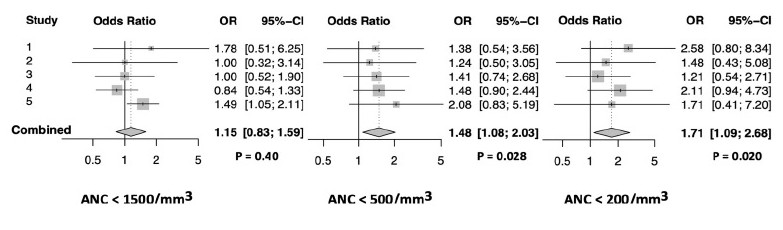
Figure 2. Meta-analysis of the incidence of severe neutropenia. Cochran-Mantel-Haenszel odds ratios for differences in the likelihood of neutropenia of varying severity in EPO vs. placebo treatment groups are shown.
The rates of severe neutropenia episodes (i.e. total numbers of recorded ANC values <500/mm3 or <200/mm3 per study subject per 12 weeks on study) were also significantly greater for subjects treated with EPO vs. placebo in the combined studies: 0.33 (95% CI, 0.29-0.37) vs. 0.19 (0.17-0.23) for ANC values <500/mm3 and 0.14 (0.12-0.17) vs. 0.07 (0.05-0.09) for ANC values <200/mm3 in the EPO treatment groups vs. the placebo groups, p=0.009 and p=0.005 respectively (Table 2).
Because the incidence of severe neutropenia in the EPO and placebo treatment groups was found to differ, it was of interest to determine if there might also have been differences in the occurrence of adverse events documented in these studies. Overall, adverse events were not recorded more frequently for study subjects treated with EPO vs. those who received a placebo (Table 3). However, only a proportion of study subjects in these 5 trials (40.2% overall; range: 84% to 17% in the individual trials) were sufficiently myelosuppressed for neutropenia to be recorded (i.e. ANCs <1500/mm3 ), much less for moderate to severe neutropenia (ANCs <1000/mm3 , 28.2% overall) to be observed, and notably, among those study subjects who experienced neutropenia while on study, the reported frequency of adverse events, including fever and signs of infection, was significantly greater for those treated with EPO than those given placebo (Table 3).
|
Rate of adverse events recorded per 12 weeks a |
All Study Subjects (95% CI) |
Study Subjects with minimum ANC values <1500/mm3 (95% CI) |
Study Subjects with minimum ANC values <1000/mm3 (95% CI) |
|
Placebo |
3.95 (3.77-4.13) |
3.80 (3.56-4.05) |
3.95 (3.66-2.26) |
|
EPO |
3.94 (3.78-4.10) |
4.14 (3.92-4.36) |
4.42 (4.16-4.69) |
|
Rate ratio (95% CI) |
1.00 (0.95-1.05) |
1.09 (1.01-1.18) |
1.12 (1.02-1.23) |
|
P value |
0.93 |
0.037 |
0.022 |
|
aRate and 95% CI from a Poisson generalized linear model |
|||
Discussion
This study of 5 prospective randomized, placebo controlled clinical trials of EPO treatment in cancer patients undergoing chemotherapy, of whom some in all trials and most in 4 trials received treatment regimens that were myelosuppressive, finds that severe neutropenia (ANCs <500/mm3 and <200/mm3) occurred more frequently in EPO treated study subjects than in those given placebo. This finding indicates that EPO treatment may suppress granulopoiesis and neutrophil production when hematopoietic reserves are substantially reduced by myelosuppressive chemotherapy. The possibility of such an effect was suggested by preclinical short- and long-term hematopoietic cell culture studies in which EPO was found to suppress neutrophil production while stimulating erythropoiesis and red cell production in vitro [8–11]. The possibility that EPO treatment might affect granulocytopoiesis in the setting of chemotherapy induced myelosuppression was also suggested in early reports of EPO treatment in cancer patients [14–18], but this possibility had not been examined in detail previously.
Overall, increases in the likelihood of severe neutropenia by EPO treatment during myelosuppressive chemotherapy observed in the present study were observed consistently in all 5 trials that were reviewed. Moreover, there was evidence that this off target effect of EPO treatment was clinically consequential, for among study subjects who were sufficiently myelosuppressed for neutropenia to be observed, not only was the likelihood of severe neutropenia increased but the frequency of adverse events, including fever and other signs of infection, was also increased.
Interestingly, results of our present study suggest an explanation for findings of a study reported five decades ago (before EPO was molecularly defined and measurable) in which red cell hypertransfusion of children with malignancies to achieve hemoglobin levels of 14-16 g/dL (which, by inference, would suppress endogenous EPO levels) was found to enhance the recovery of neutrophil counts following myelosuppressive chemotherapy [19].
While our findings suggest that competition between erythroid and myeloid lineages may be elicited in vivo by EPO treatment when hematopoietic reserves are substantially reduced by myelosuppressive chemotherapy, as observed in short- and long-term hematopoietic cell culture studies in vitro [8–11], they provide no information on the basis for such an effect. Nonetheless, recent studies of hematopoiesis suggest potential mechanisms. Normal steady state production of mature neutrophils and erythrocytes appears to be derived in large part from long-lived, lineage committed or biased progenitor cells rather than from multipotential stem or progenitor cells [20], such that myeloid and erythroid lineages would be expected to expand and contract independently depending on lineage-specific cytokine signaling (e.g. that of EPO and G-CSF) without lineage competition when hematopoietic reserves are normal. However, when committed progenitors are reduced by cytotoxic chemotherapy, uncommitted, multipotential hematopoietic stem and progenitor cells, normally quiescent, may assume an increased role in erythrocyte and neutrophil production. Given evidence that lineage specific cytokines, e.g. EPO, G-CSF, and CSF-1, directly influence lineage choice in the differentiation of multipotential hematopoietic progenitor cells [21–23], effects of EPO on the lineage fate of restricted numbers of such progenitors could lead to a suppression of myelopoiesis and neutrophil production. Moreover, while cytotoxic chemotherapy reduces hematopoietic progenitor cell numbers in the bone marrow, it also impairs accessory cells that support hematopoiesis [24–26], and recent evidence suggests that the terminal development of committed erythroid and neutrophil precursors depends in part on shared accessory cell niches [27], which, if limited, could result in a competitive suppression of neutrophil development when erythropoiesis is pharmacologically amplified by EPO treatment.
During the 1990's and 2000's, EPO treatment was used widely in the management of cancer patients because of well documented clinical studies demonstrating that EPO could ameliorate chemotherapy-associated anemia, reduce blood transfusions, and improve quality of life measures for patients. However, in more recent years the use of EPO with cancer treatment has declined because of evidence that EPO may negatively affect cancer patient survival by increasing thrombotic complications and the risk of cancer recurrence and dissemination [3–5,28–30]. Indeed, the largest of the trials reviewed in our present study (published in 2005) was halted prematurely because of interim findings indicating a survival disadvantage for cancer patients who participated in the trial and were randomized to receive EPO treatment [28]. Consequently, current guidelines recommend that EPO treatment not be used as an adjunct to cancer therapy administered with curative intent [31]. Nonetheless, given its proven benefits in ameliorating chemotherapy-associated anemia and anemia-related symptoms, EPO treatment continues to be used together with myelosuppressive chemotherapy regimens in palliative cancer management, and our findings indicate that when EPO treatment is used in this clinical setting there should be an enhanced awareness of the possibility of an increased risk of transient severe neutropenia and neutropenia-associated adverse events.
Acknowledgements
This study, carried out under YODA Project # 2017-2486, used data obtained from the Yale University Open Data Access Project, which has an agreement with Janssen Research & Development, L.L.C. The interpretation and reporting of research using this data are solely the responsibility of the authors and do not necessarily represent the official views of the Yale University Open Data Access Project or Janssen Research & Development, L.L.C. Portions of the present report were presented at an annual meeting of the American Society of Hematology and published previously in abstract form [32].
Author Contributions
D.W. designed the study, oversaw the analysis and presentation of data, and wrote the manuscript. E.W obtained source data from the YODA project, performed data analysis and presentation, and reviewed and edited the manuscript. C.N. contributed to the presentation of data and interpretation of results and reviewed and edited the manuscript.
References
2. Singh AK, Szczech L, Tang KL, Barnhart H, Sapp S, Wolfson M, et al; CHOIR Investigators. Correction of anemia with epoetin alfa in chronic kidney disease. N Engl J Med. 2006 Nov 16;355(20):2085–98.
3. Henke M, Laszig R, Rübe C, Schäfer U, Haase KD, Schilcher B, et al. Erythropoietin to treat head and neck cancer patients with anaemia undergoing radiotherapy: randomised, double-blind, placebo-controlled trial. Lancet. 2003 Oct 18;362(9392):1255–60.
4. Bohlius J, Wilson J, Seidenfeld J, Piper M, Schwarzer G, Sandercock J, et al. Recombinant human erythropoietins and cancer patients: updated meta-analysis of 57 studies including 9353 patients. J Natl Cancer Inst. 2006 May 17;98(10):708–14.
5. Bennett CL, Silver SM, Djulbegovic B, Samaras AT, Blau CA, Gleason KJ, et al. Venous thromboembolism and mortality associated with recombinant erythropoietin and darbepoetin administration for the treatment of cancer-associated anemia. JAMA. 2008 Feb 27;299(8):914–24.
6. TILL JE, McCULLOCH EA. A direct measurement of the radiation sensitivity of normal mouse bone marrow cells. Radiat Res. 1961 Feb;14:213-22.
7. Till JE, McCulloch EA. Hemopoietic stem cell differentiation. Biochim Biophys Acta. 1980 Nov 26;605(4):431–59.
8. Van Zant G, Goldwasser E. Competition between erythropoietin and colony-stimulating factor for target cells in mouse marrow. Blood. 1979 May;53(5):946–65.
9. Dexter TM, Testa NG, Allen TD, Rutherford T, Scolnick E. Molecular and cell biologic aspects of erythropoiesis in long-term bone marrow cultures. Blood. 1981 Oct;58(4):699–707.
10. Salvado AJ, La Russa VF, Kessler SW, Wright DG. Effects of erythropoietin in human long-term marrow cultures. Blood. 1988;72:101a.
11. Mayani H, Guilbert LJ, Janowska-Wieczorek A. Modulation of erythropoiesis and myelopoiesis by exogenous erythropoietin in human long-term marrow cultures. Exp Hematol. 1990 Mar;18(3):174–9.
12. Beck D, Masserey E, Meyer M, Calame A. Weekly intravenous administration of recombinant human erythropoietin in infants with the anaemia of prematurity. Eur J Pediatr. 1991 Sep;150(11):767–72.
13. Ohls RK, Christensen RD. Recombinant erythropoietin compared with erythrocyte transfusion in the treatment of anemia of prematurity. J Pediatr. 1991 Nov;119(5):781–8.
14. Case DC Jr, Bukowski RM, Carey RW, Fishkin EH, Henry DH, Jacobson RJ, et al. Recombinant human erythropoietin therapy for anemic cancer patients on combination chemotherapy. J Natl Cancer Inst. 1993 May 19;85(10):801–6.
15. Wright DG, St Germaine D, Jacobson RJ. Evidence that recombinant human erythropoietin may exacerbate neutropenia in myelosuppressed cancer patients. Clin Res 1991; 39(2):171a.
16. Littlewood TJ, Bajetta E, Nortier JW, Vercammen E, Rapoport B; Epoetin Alfa Study Group. Effects of epoetin alfa on hematologic parameters and quality of life in cancer patients receiving nonplatinum chemotherapy: results of a randomized, double-blind, placebo-controlled trial. J Clin Oncol. 2001 Jun 1;19(11):2865–74.
17. Littlewood TJ, Nortier J, Rapoport B, Pawlicki M, de Wasch G, Vercammen E, et al; Epoetin Alfa Study Group. Epoetin alfa corrects anemia and improves quality of life in patients with hematologic malignancies receiving non-platinum chemotherapy. Hematol Oncol. 2003 Dec;21(4):169–80.
18. Grote T, Yeilding AL, Castillo R, Butler D, Fishkin E, Henry DH, et al. Efficacy and safety analysis of epoetin alfa in patients with small-cell lung cancer: a randomized, double-blind, placebo-controlled trial. J Clin Oncol. 2005 Dec 20;23(36):9377–86.
19. Smith PJ, Ekert H. Evidence of stem-cell competition in children with malignant disease. A controlled study of hypertransfusion. Lancet. 1976 Apr 10;1(7963):776–9.
20. Calabria A, Spinozzi G, Cesana D, Buscaroli E, Benedicenti F, Pais G, et al. Long-term lineage commitment in haematopoietic stem cell gene therapy. Nature. 2024 Dec;636(8041):162–71.
21. Rieger MA, Hoppe PS, Smejkal BM, Eitelhuber AC, Schroeder T. Hematopoietic cytokines can instruct lineage choice. Science. 2009 Jul 10;325(5937):217–8.
22. Endele M, Etzrodt M, Schroeder T. Instruction of hematopoietic lineage choice by cytokine signaling. Exp Cell Res. 2014 Dec 10;329(2):207–13.
23. Grover A, Mancini E, Moore S, Mead AJ, Atkinson D, Rasmussen KD, et al. Erythropoietin guides multipotent hematopoietic progenitor cells toward an erythroid fate. J Exp Med. 2014 Feb 10;211(2):181–8.
24. Wei Q, Frenette PS. Niches for Hematopoietic Stem Cells and Their Progeny. Immunity. 2018 Apr 17;48(4):632–48.
25. Banfi A, Bianchi G, Galotto M, Cancedda R, Quarto R. Bone marrow stromal damage after chemo/radiotherapy: occurrence, consequences and possibilities of treatment. Leuk Lymphoma. 2001 Sep-Oct;42(5):863–70.
26. Batsivari A, Haltalli MLR, Passaro D, Pospori C, Lo Celso C, Bonnet D. Dynamic responses of the haematopoietic stem cell niche to diverse stresses. Nat Cell Biol. 2020 Jan;22(1):7–17.
27. Romano L, Seu KG, Papoin J, Muench DE, Konstantinidis D, Olsson A, et al. Erythroblastic islands foster granulopoiesis in parallel to terminal erythropoiesis. Blood. 2022 Oct 6;140(14):1621–34.
28. Leyland-Jones B, Semiglazov V, Pawlicki M, Pienkowski T, Tjulandin S, Manikhas G, et al. Maintaining normal hemoglobin levels with epoetin alfa in mainly nonanemic patients with metastatic breast cancer receiving first-line chemotherapy: a survival study. J Clin Oncol. 2005 Sep 1;23(25):5960–72.
29. Henry DH, Brooks BJ Jr, Case DC Jr, Fishkin E, Jacobson R, Keller AM, et al. Recombinant human erythropoietin therapy for anemic cancer patients receiving cisplatin chemotherapy. Cancer J Sci Am. 1995 Nov-Dec;1(4):252–60.
30. Debeljak N, Solár P, Sytkowski AJ. Erythropoietin and cancer: the unintended consequences of anemia correction. Front Immunol. 2014 Nov 11;5:563.
31. Rizzo JD, Brouwers M, Hurley P, Seidenfeld J, Arcasoy MO, Spivak JL, et al; American Society of Hematology and the American Society of Clinical Oncology Practice Guideline Update Committee. American Society of Hematology/American Society of Clinical Oncology clinical practice guideline update on the use of epoetin and darbepoetin in adult patients with cancer. Blood. 2010 Nov 18;116(20):4045–59.
32. Wright DG, Wright EC, Noguchi CT. Neutropenia in Myelosuppressed Cancer Patients Treated with Recombinant Human Erythropoietin (EPO). Blood. 2019 Nov 13;134:1034.