Loading


Journal of Clinical and Experimental Hematology
ISSN: 2834-3328
All Articles
T cell engagers targeting CD19 to treat B cell malignancies, and beyond
Xiaoqiang Yan, Ph.D
In the past decade, a tremendous progress has been made in developing T cell engaging bi-specific antibodies (BsAbs) targeting CD19 to treat B cell malignancies. The T cell engaging bi-specific molecule binds to CD3 on a T cell and a tumor-associated antigen (TAA) on a target cell and redirects the T cell to a specific target cell bypassing the MHC restriction mechanism, leading to the formation of immune synapse between the T cell and target cell and target cell lysis.
J Clin Exp Hematol, 2022, Volume Volume 1, Issue Issue 1, p1-3 | DOI: 10.46439/hematol.1.001
Taking BAFF-R targeting CAR T-cells on the road
Martha E. Gadd, Hong Qin
Chimeric antigen receptor (CAR) T cells were first clinically tested in trials against metastatic solid tumors without therapeutic benefit; however, these efforts established the necessary domains that are required for a functional CAR T-cell. With the characterization of cells within the immune system, the expression of CD19 was found to dictate B cell lineage that remains present on normal and malignant B cells.
J Clin Exp Hematol, 2024, Volume Volume 3, Issue Issue 1, p1-3 | DOI: 10.46439/hematol.3.010
A commentary on patient and caregiver perceptions of home blood transfusions in the United States
Tara Rakiewicz, Lindsay Wilde, Alexandra Cohen, Adam F. Binder
Patients with transfusion dependent cytopenias from their hematologic malignancies experience a high burden of care. They often visit the cancer center 2-3 times a week for Complete blood count (CBC) checks and possible transfusions – spending hours of their day traveling for and receiving care. Home blood transfusions, while available in other countries, have not been well established in the United States (US).
J Clin Exp Hematol, 2025, Volume Volume 4, Issue Issue 1, p1-4 | DOI: 10.46439/hematol.4.024
Warts, hypogammaglobulinemia, infections, and myelokathexis (WHIM) syndrome and tetralogy of fallot; Case report and literature review
Amer Khojah, Hadeel Alshareef, Lujain Alzahrani, Mohammad Binhussein, Ameera Bukhari, Imad Khojah
WHIM (Warts, Hypogammaglobulinemia, Infections, and Myelokathexis) syndrome is a rare primary immunodeficiency disorder characterized by susceptibility to human papillomavirus (HPV) infections, neutropenia, and hypogammaglobulinemia.
J Clin Exp Hematol, 2023, Volume Volume 2, Issue Issue 1, p1-5 | DOI: 10.46439/hematol.2.007
A comparison of the prevalence of the ABO and RhD blood types among different racial/ethnic groups in the different provinces of the Republic of South Africa
Eagleton S, De Lange-Jacobs PC, Juganath N, Glatt TN
Knowledge of ABO and RhD blood type prevalence within a population is essential for blood transfusion services to maintain an adequate, appropriately distributed supply, particularly for rarer types such as RhD negative blood.
J Clin Exp Hematol, Volume 5, Issue 1, p1-5
Recent advancements to characterize human blood via thixo-visco-elasto-plastic modeling
Matthew Armstrong, Andre Pincot
In the previous several years there has been much progress in developing more accurate thixo- lasto- visco-plastic rheological models that can be used to mechanically characterize human blood. In theory as the thixo-elasto-visco-plastic (TEVP) model accuracy and predictive capability improves, the parameterization, as well as insights and parametric correlations will also improve.
J Clin Exp Hematol, 2022, Volume Volume 1, Issue Issue 1, p4-6 | DOI: 10.46439/hematol.1.002
Commentary: Three-dimensional transvaginal ultrasound diagnosis of interstitial ectopic pregnancy in a unicornuate uterus: A case report
Yanhua Dong, Hezhou Li, Runwei Liang
Unicornuate uterus represents a congenital uterine anomaly, with an incidence of approximately 0.1%-0.4%. The discourse surrounding the administration of interstitial pregnancy persists as a subject of contention. This uncommon malady is on the rise in terms of frequency, encompassing approximately 2%-6.8% of all instances of ectopic gestations and comprising 2%-4% of tubal ectopic pregnancies.
J Clin Exp Hematol, 2024, Volume Volume 3, Issue Issue 1, p4-7 | DOI: 10.46439/hematol.3.011
A commentary on ‘Association between the weight-adjusted-waist index and familial hypercholesterolemia: A cross-sectional study’
Sisi Xu, Weijia Yang, Xuan Lyu, Fangying Wu, Chengjie Wang, Wei Mao, Minchun Yang
Familial hypercholesterolemia (FH) is a common inherited metabolic disorder characterized by abnormally high blood levels of low-density lipoprotein cholesterol (LDL-C). Depending on the mode of inheritance, FH is mainly divided into two subtypes: heterozygous FH (HeFH) and heterozygous FH (HoFH).
J Clin Exp Hematol, 2025, Volume Volume 4, Issue Issue 1, p5-6 | DOI: 10.46439/hematol.4.025
Research progress and prospect of circular RNA in multiple myeloma
Wenjun Yu, Fan Zhou
Multiple myeloma (MM) is a clonal plasma cell neoplasm manifested by anemia, hypercalcemia, impairment of renal function and bone destruction. It is now the second most common malignancy in hematology.
J Clin Exp Hematol, 2023, Volume Volume 2, Issue Issue 1, p6-9 | DOI: 10.46439/hematol.2.008
Neutropenia in myelosuppressed cancer patients treated with recombinant human erythropoietin (EPO)
Daniel G. Wright, Elizabeth C. Wright, Constance T. Noguchi
Recombinant human erythropoietin (EPO) has been used extensively for over 3 decades to treat anemia, including that associated with cancer treatment. Multiple randomized clinical trials have found that EPO treatment ameliorates anemia and reduces transfusion requirements in cancer patients undergoing chemotherapy.
J Clin Exp Hematol, 2026, Volume Volume 5, Issue Issue 1, p6-12 | DOI: 10.46439/hematol.5.034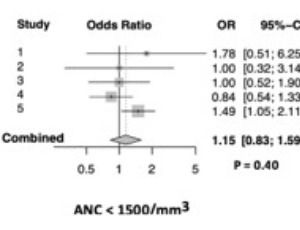
New indications for nailfold videocapillaroscopy in the assessment and diagnosis of rheumatic diseases
Rafael Martín Holguera, Juan Antonio de Juanes Méndez, Belen Miguel Ibañez, Olga Martínez González, Manuel Martín Martínez, Ana Isabel Turrión Nieves
Periungual capillaroscopy is a technique that allows the study of the microcirculation of the periungual beds in a non-invasive and simple way, allowing the papillary dermis to be visualized in vivo. It is one of the fundamental diagnostic tests in clinical practice and teaching in rheumatology today.The basic patterns in capillaroscopy are determined by the structure and architecture of the nail bed, capillary density, the presence of avascular areas, capillary morphology and vascular flow.
J Clin Exp Hematol, 2025, Volume Volume 4, Issue Issue 1, p7-10 | DOI: 10.46439/hematol.4.028
Prevalence of anemia and associated factors among Under-five children attended at Bule Hora general hospital, West Guji zone, Oromia region, Southern Ethiopia
Alqeer Aliyo, Abdurezak Jibril, Yonas Dessie
Anemia is a condition that causes decline of erythrocytes concentration in circulation or hemoglobin in the blood and a concomitant impairment of oxygen transportation. The World Health Organization (WHO) defined as hemoglobin (Hgb)<12 g/dL in adult non-pregnant women, Hgb <11g/dL in pregnant females, Hgb <13g/dL in adult men, Hgb <11g/dl in children whose age is 6-59 months, Hgb <11.5 g/dl in children whose age is 5-11years, Hgb<12 g/dl for children whose age is 12-14 years and Hgb <13 g/dL in newborns.
J Clin Exp Hematol, 2022, Volume Volume 1, Issue Issue 1, p7-15 | DOI: 10.46439/hematol.1.003
Commentary on “Ultrasmall polyvinylpyrrolidone-modified iridium nanoparticles with antioxidant and anti-inflammatory activity for acute pancreatitis alleviation”
Wenzhang Jin, Xiang Su
Acute pancreatitis (AP) can lead to severe body damage, including a systemic inflammatory response and multiorgan failure, and current therapies rely heavily on symptomatic treatment and supportive care, with a lack of targeted therapeutic strategies for specific pathologic processes.
J Clin Exp Hematol, 2024, Volume Volume 3, Issue Issue 1, p8-13 | DOI: 10.46439/hematol.3.012
Efbemalenograstim alfa, a long-acting granulocyte colony-stimulating factor, a novel dimeric G-CSF Fc fusion protein for reducing the risk of febrile neutropenia following chemotherapy
Simon Xi-Ming Li, Qing-Song Hou, Shu-Fang Wang, Jian-Min Chen, Wei Yao, Yan-Yan Fu, Li- Chuan Liu, Ren-Shu Li, Han Yang Chen, Kai Yang Tang, Xiao Qiang Yan
Chemotherapy?induced neutropenia (CIN) can cause life-threatening complications such as febrile neutropenia (FN) or other infections. Patients who develop FN often require prolonged hospitalizations and treatment with broad-spectrum antibiotics.
J Clin Exp Hematol, 2023, Volume Volume 2, Issue Issue 1, p10-12 | DOI: 10.46439/hematol.2.009
Reimagining blood delivery: Extending IoTdrone frameworks to hematology logistics
Tejinder Singh Lakhwani
The healthcare landscape worldwide is experiencing a significant shift, with the infusion of emerging technologies in the fundamental logistics operations. One of these innovations concerns integrating the Internet of Things (IoT) and unmanned aerial vehicles (UAVs), also referred to as drones, as a potential solution in filling unending gaps in the supply chain of medical supplies.
J Clin Exp Hematol, 2025, Volume Volume 4, Issue Issue 1, p11-16 | DOI: 10.46439/hematol.4.029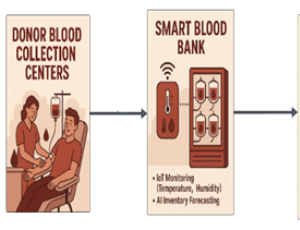
Primary CNS lymphoma (PCNSL) - Introducing to hippocampal dose-reduction whole brain radiotherapy (HDR-WBRT)
Kheng-Wei Yeoh, Fang Yue Yong, Charlene Kah Hie Wong, Ashley Li Kuan Ong, Thamizh Isai Swaminathan, Kwang Ping Chan, Muhammad Nur Hidayat Abdul Ghani, Kevin Lee Min Chua
Primary central nervous system lymphoma (PCNSL) is a rare and aggressive extranodal Non Hodgkin Lymphoma. Combined modality treatment with high-dose methotrexate (HD-MTX) followed by whole brain radiotherapy (WBRT) has been a commonly used treatment approach.
J Clin Exp Hematol, 2022, Volume Volume 1, Issue Issue 1, p16-19 | DOI: 10.46439/hematol.1.004
Non-canonical CAR-T cell-related toxicities: Emerging strategies and challenges
Martina Canichella, Paolo de Fabritiis
CAR-T cell therapy revolutionized the treatment of patients with relapsed or refractory B-cell hematologic malignancies, substantially altering their prognosis. Alongside its remarkable efficacy, however, this approach is frequently accompanied by treatment-related toxicities.
J Clin Exp Hematol, 2025, Volume Volume 4, Issue Issue 1, p17-21 | DOI: 10.46439/hematol.4.030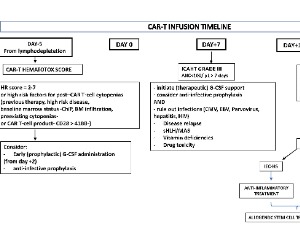
Activated phosphoinositide-3-kinase delta syndrome presenting with early onset (infantile) autoimmune thrombocytopenia
Amer Khojah, Ameera Bukhari PhD
Activated phosphoinositide 3-kinase delta syndrome (APDS) is a rare syndrome of immune dysregulation that is inherited in an autosomal dominant fashion and results in varying severity of the clinical phenotype. APDS is a result of a gain-of-function mutation in the gene PIK3CD, which codes for a catalytic subunit of the PI3K-Delta kinase.
J Clin Exp Hematol, 2022, Volume Volume 1, Issue Issue 1, p20-23 | DOI: 10.46439/hematol.1.005
Correlation of hemoglobin level and disease activity in rheumatoid arthritis, results from the kuwait registry for rheumatic diseases (KRRD)
Fatima Ali, Faisal Alsayegh, Ahmad Alsaber, Adeeba Alherz
Objectives: Anemia is a frequent extra-articular manifestation of rheumatoid arthritis (RA) and has been linked to increased disease activity and poorer outcomes. This study aimed to evaluate the association between hemoglobin (Hb) levels and RA disease activity in a Middle Eastern population.
J Clin Exp Hematol, 2025, Volume Volume 4, Issue Issue 1, p22-27 | DOI: 10.46439/hematol.4.031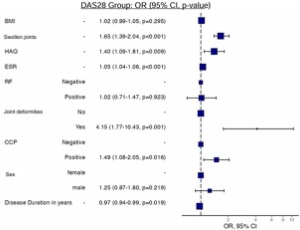
Gender disparity in the reticulocyte count of HIV-positive patients on HAART management in Ilorin
Pius O. Omosigho, Ayodele O. Ilesanmi, Lydia N. Asonye
Reticulocytes are immature red blood cells (RBCs). In the process of erythropoiesis (red blood cell formation), reticulocytes develop and mature in the bone marrow and then circulate for about a day in the bloodstream before developing into mature red blood cells.
J Clin Exp Hematol, 2024, Volume Volume 3, Issue Issue 1, p22-28 | DOI: 10.46439/hematol.3.014
A novel multiparameter comprehensive hemostasis assessment biosensor
Ye Jin, Brian Gao, Zhiquan Shu, Praveen K. Sekar
Rapid, accurate, and comprehensive assessment of hemostasis is of great importance in many clinical settings. Key hematological indices routinely assessed in bleeding patients or patients at risk for bleeding are coagulation function, platelets, and hematocrit. Current clotting assays are limited to a partial analysis of hemostasis (individual faceted clotting elements), thereby providing an incomplete assessment of bleeding and thrombotic risks and status.
J Clin Exp Hematol, 2022, Volume Volume 1, Issue Issue 1, p24-26 | DOI: 10.46439/hematol.1.006
Triclosan-induced hematological perturbations in freshwater Teleosts: Implications for ecotoxicological risk and biomarker development
Raj Sunu, G Prasad
Significant dose and time-dependent changes in important blood parameters, such as hemoglobin concentration, hematocrit value, erythrocyte count, and leukocyte profile, have been found in recent studies on the hematological consequences of triclosan (TCS) exposure in Oreochromis niloticus.
J Clin Exp Hematol, 2025, Volume Volume 4, Issue Issue 1, p28-30 | DOI: 10.46439/hematol.4.032
The tip of the reproductive screening iceberg: ‘Every mother and every fetus matters’
R Douglas Wilson, MD MSC
The basic maternity preventive, diagnostic, and treatment services support for the ‘beginning of life’ are routinely offered, as outlined in the ‘Every Mother and Every Fetus Matters’ manuscript. The routine maternity screening tests are important and necessary but if the fetal screening or imaging procedures identifies fetal pathology, the routine maternal screening tests are only the tip of the screening and diagnostic iceberg.
J Clin Exp Hematol, 2024, Volume Volume 3, Issue Issue 1, p29-34 | DOI: 10.46439/hematol.3.015
An overview of clinical, molecular, and therapeutic approaches to Niemann-Pick disease
Kamran Hosseini
In animal cells (especially humans), there is an enzyme called acid sphingomyelinase (ASM) (EC 3.1.4.12) which can break the large molecule of sphingomyelin and convert it into smaller structures of ceramide and phosphorylcholine.
J Clin Exp Hematol, 2024, Volume Volume 3, Issue Issue 1, p35-39 | DOI: 10.46439/hematol.3.016
How effective are antioxidants without fetal hemoglobin in tackling oxidative stress in sickle cell disease?
Yusuf Ishaya Dogonzo, Christopher Chimaobi Onyeabor
Sickle cell disorder (SCD) remains a disease of public interest, accounting for a significant number of deaths, especially in low and middle-income countries in Africa. Despite years of intensive studies, its cure remains a subject of ongoing investigation.
J Clin Exp Hematol, 2024, Volume Volume 3, Issue Issue 1, p40-43 | DOI: 10.46439/hematol.3.017
Acquired cutis laxa: Hematological insights and therapeutic implications in a paraneoplastic context
Joe Khodeir, Paul Ohanian
Acquired cutis laxa (ACL) is a rare dermatological disorder characterized by loose, sagging, and inelastic skin due to the progressive degradation of elastic fibers within the dermis. Unlike the congenital form of cutis laxa, which is present from birth and often linked to genetic mutations, ACL typically develops later in life and can be associated with various underlying conditions.
J Clin Exp Hematol, 2024, Volume Volume 3, Issue Issue 1, p44-53 | DOI: 10.46439/hematol.3.018
Commentary on “Beyond infantile hemangiomas: A glimpse into overlapping rare syndromes emphasizing the vigilant screening for PHACE and LUMBAR syndromes”
Marleine E. Negrón, Karla J. Martinez, Luis R. Berríos
Due to their complex etiology and pathogenesis, hemangioma-related syndromes, such as LUMBAR and PHACE, present diagnostic and therapeutic challenges. Despite advances, standardized diagnostic criteria, screening protocols, and treatment options still need to be developed. We report a rare case of a 1-month-old patient with nonspecific symptoms, including failure to thrive and poor feeding, associated with lumbosacral ulcers.
J Clin Exp Hematol, 2024, Volume Volume 3, Issue Issue 1, p54-59 | DOI: 10.46439/hematol.3.019
Artificial intelligence in hematology: A critical perspective
Kavya Singh, Anuradha Singh
The increasing prevalence of drug-resistant pathogens has highlighted the need for innovative approaches in drug discovery, including drug re-purposing. Artificial intelligence (AI) has emerged as a transformative tool in this endeavor, with the potential to revolutionize not only drug re-purposing for infectious diseases but also the field of hematology.
J Clin Exp Hematol, 2024, Volume Volume 3, Issue Issue 1, p60-66 | DOI: 10.46439/hematol.3.020
Cardiac toxicities of Bruton's tyrosine kinase inhibitors: The risk of pericarditis and cardiac tamponade
Thomas Erblich
Nearly a decade since the introduction of first-generation Bruton’s tyrosine kinase (BTK) inhibitors in the treatment of chronic lymphocytic leukaemia (CLL), their use has expanded with the second-generation agents zanubrutinib and acalabrutinib. These agents show high efficacy particularly in patients with TP53 mutations or del(17p).
J Clin Exp Hematol, 2024, Volume Volume 3, Issue Issue 1, p67-70 | DOI: 10.46439/hematol.3.021
Assessment of quality of life in people living with hemophilia: A case study of Yaoundé Hemophilia Treatment Centre, Cameroon
Aurélien Chendjou Kamela, Annick Mintya Ndoumba, Verdiane Mabopda, Kevin Romuald Nana Noumtchue, Dora Mbanya, Claude Tayou Tagny
Hemophilia is a rare, sex-linked congenital bleeding disorder caused by a mutation in the genes responsible for production of coagulation factor VIII (hemophilia A) or factor IX (hemophilia B), resulting in the inability of blood to clot. According to Stonbraker et al., hemophilia occurs in approximately 1 in 10,000 births, with hemophilia A being more common, representing 80-85% of cases.
J Clin Exp Hematol, 2024, Volume Volume 3, Issue Issue 1, p71-78 | DOI: 10.46439/hematol.3.022
Methionine adenosyltransferase 2A (MAT2A) inhibitors as single agents or in combination strategy for cancer therapy
Yi Kuang, Zhiyong Yu, Feng Zhou
Methionine adenosyltransferase 2A (MAT2A), one of the rate-limiting enzymes in the methionine cycle, primarily catalyzes methionine into S-adenosylmethionine (SAM). SAM is the global methyl-donor for transmethylation and biosynthesis reactions, which protein arginine N-methyltransferase 5 (PRMT5) utilizes for symmetric dimethylarginine (SDMA) posttranslational modifications.
J Clin Exp Hematol, 2024, Volume Volume 3, Issue Issue 1, p79-82 | DOI: 10.46439/hematol.3.023