

Introduction
The healthcare landscape worldwide is experiencing a significant shift, with the infusion of emerging technologies in the fundamental logistics operations. One of these innovations concerns integrating the Internet of Things (IoT) and unmanned aerial vehicles (UAVs), also referred to as drones, as a potential solution in filling unending gaps in the supply chain of medical supplies [1–3]. In this context, the recent study “Beyond Numbers: A Novel IoT and Drone Framework for Enhancing Healthcare Logistics” introduces a comprehensive and adaptable logistics model designed to address the complex needs of resource-constrained and infrastructure-deficient environments [4]. Although this framework's technical and operative opportunities are confirmed by the simulations used in the study, its direct implications concerning hematology are still underrepresented. Storing, maintaining, and transporting the blood and its components requires a highly precise, traceable, and responsive nature, which fits well within the capabilities of an IoT-integrated drone system [5,6]. These technologies facilitate time-sensitive logistics applied to the real-time environmental monitoring and adaptive routing to uphold the cold chain compliance [7,8]. This commentary aims to extend the original research by situating its relevance within hematology-focused healthcare logistics. It outlines the integration of IoT and the drone within the blood supply chain can be applied in practice, investigates how the application of IoT-drone may affect the ethical and regulatory aspects specific to transfusion medicine and gives recommendations on the directions of future research and implementation that will cater to the changing needs of hematological care [9,10]. Specifically, it introduces four key innovations:
- A domain-specific application of the IoT–drone logistics framework for the blood supply chain,
- An integrated model incorporating cold chain assurance using IoT-sensor-enabled thermal packaging and real-time monitoring,
- The use of AI-driven forecasting and blockchain-enabled traceability tailored to transfusion medicine, and
- A critical examination of ethical, regulatory, and equity challenges unique to hematology logistics.
These contributions go beyond simulation and system design to propose an actionable, ethically grounded, and technologically adaptive roadmap for enhancing transfusion services in routine and emergency contexts.
IoT Integration and Its Role in Hematology Logistics
Blood products are perishable and temperature-sensitive and require stringent cold chain maintenance from donor to recipient. The usual means of transportation are inadequate, especially when a natural disaster strikes, a city is overcrowded, or in a geographically remote area [3,11]. Meanwhile, the innovation provided by IoT sensors in this case can be considered a game changer in terms of a way to monitor the integrity of blood products throughout the entire transport chain, simultaneously temperature levels, humidity, and motion [5,12]. IoT-enabled data loggers affixed to blood storage containers can immediately alert logistics operators to temperature excursions, physical shocks, or unexpected delays, enabling rapid rerouting or corrective interventions. Such functionality is particularly critical in platelet-rich plasma and cryoprecipitate, where the slightest deviations from the recommended conditions can affect the therapeutic effect [13]. It has been found that red blood cells could go through hemolysis or biochemical breakdown when subjected to temperatures beyond a range of 2–6°C in the course of transport, making it crucial to consider continuous, precision observation [5]. The combination of the phase change material (PCMs) in transport containers that drones can use and IoT management creates a new and scalable solution to strengthen the cold supply chain. The ability of PCMs to sustain target temperatures for long durations under no external power source means that their application can be performed even in remote or other resource-constrained areas [14,15]. When such materials are paired with IoT feedback loops, drones can transport labile hematological material under stable and validated conditions, even during extreme conditions in weather or terrain. In addition to preservation, the data streams of IoT can be included in the blockchain-based systems and guarantee the maximum transparency and traceability of the blood supply chain. All of the data, such as temperature recordings and custody changes, can be documented irreversibly, which strengthens compliance with international regulations like those introduced by the World Health Organization [6–8].
Furthermore, IoT-cloud integration with hospital management systems (HMS) enables real-time inventory visibility, predictive demand forecasting, and intelligent dispatch prioritization based on urgency, proximity, and stock availability [16,17]. Pilot studies have demonstrated that such digital alignment can significantly reduce the outdating of blood products and support dynamic reallocation to high-need areas [18]. Table 1 demonstrates the application of hematology-specific IoT and drone technologies across blood supply chain functions. These technologies offer targeted storage, transport, monitoring, and demand forecasting benefits, potentially enhancing transfusion services' safety, speed, and equity.
|
Technology Component |
Function in Hematology |
Example Use Case |
Benefits to Hematology |
|
IoT Sensors |
Real-time monitoring of temperature, humidity, and location |
Monitoring platelet-rich plasma during transport |
Ensures cold chain integrity and prevents product spoilage [19] |
|
Drone Delivery (UAVs) |
Rapid transport of blood units to hard-to-reach or congested locations |
Emergency delivery to a rural trauma center |
Reduces delivery time, improves transfusion responsiveness [20,21] |
|
Cloud-based IoT Platforms |
Integration with Hospital Management Systems (HMS) for inventory updates |
Automated alert when the stock of O-negative units falls below the threshold |
Enables predictive restocking and reduces shortage risks [22] |
|
Blockchain Integration |
Secure, transparent tracking of blood unit chain-of-custody |
An immutable record of temperature and custody during shipment |
Enhances trust, regulatory compliance, and fraud prevention [23,24] |
|
AI Forecasting Models |
Predictive analytics for blood demand and routing efficiency |
Anticipating blood use during seasonal dengue outbreaks |
Reduces overstocking and outdating of critical components [25,26] |
|
PCM-Insulated Payloads |
Thermal protection during drone flight without active refrigeration |
Long-range delivery of red cells across arid zones |
Preserves viability and expands the reach of the blood logistics network [27] |
Drones in Blood Supply and Emergency Hematology Care
Timely access to blood products is critical in managing life-threatening conditions such as postpartum hemorrhage, acute anemia, traumatic injuries, and transfusion-dependent hematological disorders. Conventional transportation networks are frequently challenged by road congestion, natural disasters, and infrastructure limitations, scenarios where drones offer an agile and efficient alternative [28,29]. Unmanned aerial vehicles (UAVs) can circumvent terrestrial delays, enabling rapid, direct, and reliable delivery of blood components across both urban and remote settings. One of the most impactful case studies comes from Rwanda, where the government, in collaboration with Zipline, implemented UAVs to deliver blood products to hospitals in remote areas. Within the first year of deployment, emergency blood deliveries increased by 175%, and wastage rates declined significantly due to precision inventory distribution and just-in-time restocking mechanisms [2,10]. These outcomes underscore the viability of UAVs in strengthening national blood supply chain responsiveness. Building on such precedents, the IoT-enabled framework proposed by Lakhwani et al. [4] introduces real-time decision-making capabilities to elevate UAV functionality in hematology-specific logistics. This could translate into drones that dynamically adjust flight paths in response to updated weather data, roadblocks, or recipient facility readiness [30]. Such adaptability is particularly beneficial in complex healthcare systems where coordination is required across multiple hospitals, mobile blood units, and trauma centers.
In addition to emergencies, bloodstock redistribution between facilities is facilitated by the routine use of drones. Automated, drone-assisted rebalancing can mitigate situational overstocking or underutilization at one site. Using AI in drone scheduling systems will enable it to prioritize drones based on shelf-life sensitivity, clinical urgency, and travel efficiency. For example, platelet concentrates, which have a shorter shelf life, may be dispatched ahead of frozen plasma or red blood cell units to prevent expiration [26]. Technological advancements have further enhanced the biological compatibility of drone transport systems. New-generation UAVs include thermal insulation, vibration-dampening materials, and onboard cooling systems [31]. Constant monitoring of IoT will render adherence to WHO regulations regarding the storage and transportation of blood. UAVs, when equipped with temperature-stabilizing gel packs and micro-climate measuring sensors, can sufficiently manage the environmental conditions during more than 50 km of movement, even in the case of significant climate fluctuations. During mass casualties (in case of earthquakes, floods, or armed conflict, etc.), drone fleets can be easily activated and deployed to blood banks, field hospitals, or mobile care units, without the need for human operators. These systems ensure speed in the expansion of the delivery of blood supply and lower the risk exposure of the human personnel in risky areas. End-to-end visibility is a hallmark of real-time telemetry data transmitted to coordination centers to visibly check the status, temperature, and confirmation of delivery of units on the ground in a closed-loop, fail-loss logistic chain [27,31]. Figure 1 illustrates the IoT- and drone-enabled logistics system tailored for hematology. The framework emphasizes real-time monitoring, ethical traceability, predictive analytics, and last-mile delivery to optimize transfusion services across diverse healthcare settings.
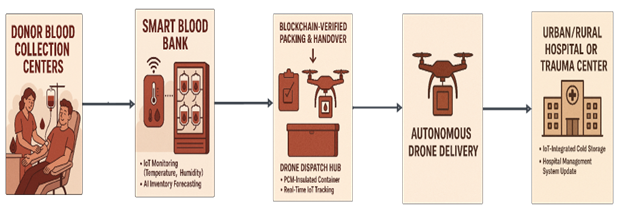
Figure 1. Drone-enabled IoT framework for blood supply chain in hematology logistics.
Challenges and Opportunities in Implementation
Although the potential of an IoT-integrated drone framework in healthcare logistics is substantial, a number of limitations should be overcome prior to the ability to employ these mechanisms on a massive scale in hematology systems. Such technical and ethical issues need multifaceted solutions among the healthcare institutions, policy-making, tech, and patient advocacy groups.
Technical and operational barriers
- Payload stability and capacity: Blood bags are highly sensitive to vibration, pressure fluctuations, and abrupt movements. Safe transit requires special transport systems in UAVs, such as the shock-absorbing material, temperature-stabilizing components, and the gyroscopic balancing [16]. In addition, the payload limits of most commercial drones do not allow carrying large numbers of blood units across long distances or even in large-scale emergencies [8].
- Regulatory compliance and airspace clearance: In most countries, civil aviation laws have yet to adapt to using drones in the medical field. It is also essential to create specific routes of medical drones and protocols of their operation [32]. Also, all the international and national requirements of safety of blood granted by the international organizations, like WHO guidelines on the cold chain, labeling, and traceability, will have to be electronically coded within the on-board as well as back-end of the drone [33].
- Infrastructure and Scalability: A functional drone-based logistics system demands considerable infrastructure investment. This includes drone launch hubs, charging stations, real-time monitoring interfaces, hospital information systems, and integration of blood bank databases. Without a unified digital architecture, scalability across regions or networks could be severely limited [34]
Ethical, legal, and social considerations
- Data privacy and consent: IoT-driven drone systems generate substantial volumes of real-time data, some of which may relate to patient conditions, donor identity, or hospital workflows. Powerful data privacy features, including encryption, anonymization, and restricting access, shall be applied to guarantee the integrity of the data and concur with regulations to keep the trust of the population [6,35]. Consent procedures must be transparent, and the data governance should specify who has ownership and the right to read or change the logs.
- Community acceptance and perception: The introduction of drones, particularly in rural or densely populated regions, can generate concerns related to surveillance, noise pollution, and safety. Engaging local communities from the outset through education, transparency, and participatory planning has been shown to improve trust and encourage broader acceptance of drone-based healthcare delivery [20,36].
- Equity and prioritization: Without proper oversight, there is a risk that technologically advanced healthcare systems will disproportionately benefit from drone logistics, leaving underserved clinics disadvantaged. A fair and ethical roll-out strategy must prioritize areas with the highest unmet hematological needs [37]. Public-private partnerships, tiered implementation plans, and regional equity metrics can ensure that technological innovation does not exacerbate existing disparities [38].
- Ethical logistics during crises: Delivery of blood and other essential medications through drones can save lives in emergencies, like during a pandemic, natural calamities, or war. Nevertheless, the logistical decisions that are made under the conditions of the insufficiency of resources have their ethical values. When the drone fleets are few, there should be explicit, ethical, informed, definitive frameworks that address prioritization. They are to be designed in collaboration with clinicians, ethicists, policymakers, and community representatives so that the element of transparency and justice in life-and-death decisions is ensured [32,36].
Future Directions and Hematology-Specific Innovations
To translate the promise of IoT-integrated drone logistics into real-world hematology care, targeted research and innovation are required across multiple interdisciplinary domains. As these technologies evolve, the convergence of artificial intelligence, advanced materials, predictive analytics, and decentralized digital systems will shape the next generation of blood supply chain management.
AI-Driven blood demand forecasting
Accurately forecasting blood demand remains one of the most persistent challenges in transfusion medicine. Recent developments in blood demand forecasting have increasingly leveraged artificial intelligence and optimization techniques to improve accuracy and operational planning in healthcare systems. Kwon et al. [39] developed an AI-based prediction model using national public health data, demonstrating significant improvements in demand estimation across blood types and geographic regions. Li et al. [18] analyzed advanced computational techniques such as ensemble learning, deep neural networks, and hybrid metaheuristics, highlighting their capacity to support robust decision-making in blood supply management. Complementing this, Wang et al. [40] applied predictive models specifically for blood component forecasting and validated their effectiveness through clinical datasets. On the optimization side, Hosseini-Motlagh et al. [41] introduced a robust optimization framework accounting for blood group compatibility and disruption risks in real-world settings, enhancing supply chain resilience. Traditional models, which often depend on historical usage data and periodic requisition logs, are limited in their responsiveness to sudden demand spikes, seasonal trends, or unforeseen crises. Recent studies suggest that machine learning (ML) and deep learning models can significantly improve demand forecasting by incorporating dynamic variables such as hospital admission patterns, scheduled surgeries, epidemiological trends, localized outbreaks, and environmental alerts [17,18]. These models could optimize drone dispatch schedules and resource allocation, reducing product wastage and emergency shortages, particularly for short-shelf-life components like platelets. Reinforcement learning approaches could also be employed to optimize drone routing in real time, factoring in constraints such as weather, donor availability, and drone battery life to ensure timely and efficient delivery [42]. Together, these studies represent a shift from traditional statistical models to intelligent, data-driven approaches that can address uncertainty, variability, and operational complexity in modern blood logistics systems.
Smart blood banks and inventory optimization
Integrating AI and IoT technologies opens the door to developing smart blood banks capable of autonomously managing inventory levels, monitoring expiration dates, and automating replenishment processes based on predictive analytics. These systems can also support collaborative blood inventory sharing across regional networks via cloud-based dashboards, allowing multiple facilities to redistribute rare blood types or near-expiry units. In this context, blockchain can play a pivotal role by offering immutable, tamper-proof tracking of every unit’s lifecycle from donation and storage to dispatch and transfusion, enhancing transparency and compliance with international guidelines.
Cold chain innovation through advanced materials
Ensuring cold chain integrity during drone delivery is critical for preserving the viability of labile blood products. Innovative thermal materials such as phase change materials (PCMs), aerogels, and nanocomposite insulators can extend the duration of temperature-controlled transport without relying on bulky refrigeration systems. In parallel, research is progressing toward adaptive cooling systems that autonomously adjust internal temperatures in response to altitude, ambient conditions, and payload mass. These units may be powered through onboard solar panels or kinetic energy harvesting, making them suitable for off-grid or disaster-affected zones [13,25].
Blockchain and decentralized logistics coordination
Blockchain technology offers a secure, decentralized infrastructure for real-time tracking of blood logistics data. It can provide tamper-proof documentation of blood unit origin, storage conditions, transfer history, and final delivery confirmation when integrated with IoT sensors. This level of transparency ensures regulatory compliance and builds public trust, especially in settings prone to counterfeit medical supplies or mislabeling [23,43]. Moreover, decentralized coordination among multiple regional blood centers can be enabled, allowing autonomous redistribution based on live inventory and demand fluctuations, bypassing bottlenecks in centralized systems [7,44].
Inclusive and scalable implementation models
For this technological paradigm to reach its full potential, pilot programs must be implemented in high-density urban centers and remote, underserved areas. These programs should account for local variables, including infrastructure quality, topography, healthcare accessibility, and socioeconomic context. Scalability will depend on forming multi-stakeholder partnerships involving public health authorities, NGOs, aviation regulators, and private technology developers. Cost-effective solutions such as modular drone hubs, open-source software platforms, and pooled procurement models can support deployment in low- and middle-income countries [3,45].
Limitations
While this commentary outlines a forward-looking framework for integrating IoT and drone technologies into hematology logistics, several limitations must be acknowledged.
- Simulation-based extrapolation: The proposed model builds conceptually on prior simulation studies [4], but real-world validation in hematology-specific use cases remains limited. Operational feasibility under diverse healthcare conditions, urban versus rural, low-resource versus high-tech, requires empirical testing.
- Technological variability: The performance of IoT devices, drone payload stabilization, and cold chain reliability may vary significantly depending on vendor, environmental factors, and regional infrastructure readiness. Assumptions regarding consistent connectivity, drone battery life, and payload endurance need cautious interpretation when scaling the system.
- Ethical and regulatory generalization: While ethical and legal considerations are discussed, the section draws on general frameworks that may not fully reflect national policy differences, especially in developing regions where aviation and data governance laws are still evolving.
- Lack of cost analysis: This paper does not include a cost-effectiveness analysis or economic feasibility model. Although cost-reduction potential is implied, capital investment, maintenance, training, and regulatory compliance costs for drone and IoT deployment are yet to be quantified.
- Focus on supply logistics: The commentary emphasizes logistics and technology but does not extensively address downstream clinical workflows, such as transfusion decision-making, crossmatching, or patient-level data integration, which are critical in hematology operations.
Conclusion
The integration of IoT and drone technologies is rapidly redefining the landscape of medical logistics. In hematology, where urgency, preservation, and traceability are paramount, their relevance is immediate and transformative. This commentary advances the foundational work by Lakhwani et al. [4] by translating a generalized IoT–drone logistics framework into a hematology-specific context. It introduces four core innovations: the application of real-time IoT monitoring and PCM-enhanced cold chain systems tailored to blood component preservation; the use of AI-driven forecasting models to anticipate transfusion demands and optimize drone dispatch; the incorporation of blockchain for secure, end-to-end traceability in the blood supply chain; and a comprehensive mapping of ethical, regulatory, and equity-focused challenges in implementing drone-based hematology logistics. These contributions move beyond theoretical modeling to propose actionable, technology-enabled interventions aligned with transfusion medicine's unique clinical and operational requirements. By focusing on emergency response and routine redistribution, this work highlights how smart, drone-enabled systems can address structural gaps in blood availability, particularly in low-resource, disaster-prone, or geographically isolated settings. However, the path to large-scale deployment necessitates rigorous pilot testing, inclusive design, interoperable data governance, and region-specific regulatory frameworks. As global health systems strive for more resilient and equitable care delivery, hematology benefits immensely from the convergence of IoT, AI, and UAVs. If deployed thoughtfully, these innovations can significantly reduce wastage, improve responsiveness, and deliver life-saving blood products with unprecedented speed and precision, ushering in a new era of intelligent, patient-centered logistics in transfusion services.
Acknowledgment
The author(s) express gratitude to the original authors of the focal article for initiating a critical conversation around IoT and drone applications in healthcare.
Conflict of Interest Statement
The author declares no conflict of interest related to this commentary.
Funding
No specific funding was received for this work.
References
2. Amukele T. Using drones to deliver blood products in Rwanda. Lancet Glob Health. 2022 Apr;10(4):e463–4.
3. Gunaratne K, Thibbotuwawa A, Vasegaard AE, Nielsen P, Perera HN. Unmanned aerial vehicle adaptation to facilitate healthcare supply chains in low-income countries. Drones. 2022 Oct 26;6(11):321.
4. Lakhwani TS, Sinjana Y, Kapoor AP. Beyond numbers: a novel IoT and drone framework for enhancing healthcare logistics. Discover Health Systems. 2025 Feb 24;4(1):19.
5. Kim YG, Kim NM, Jang CH, Kim HO, Kim JN. Inspection and evaluation of blood cold chain. The Korean Journal of Blood Transfusion. 2022 Apr 30;33(1):1–13.
6. Pinto RP, Silva BM, Inacio PR. A system for the promotion of traceability and ownership of health data using blockchain. IEEE Access. 2022 Aug 31;10:92760–73.
7. Sadri S, Shahzad A, Zhang K. Blockchain traceability in healthcare: Blood donation supply chain. In2021 23rd International Conference on Advanced Communication Technology (ICACT). IEEE; 2021 Feb 7. pp. 119–26.
8. Liu X, Barenji AV, Li Z, Montreuil B, Huang GQ. Blockchain-based smart tracking and tracing platform for drug supply chain. Computers & Industrial Engineering. 2021 Nov 1;161:107669.
9. Gupta P, Choudhury R, Kotwal A. Achieving health equity through healthcare technology: Perspective from India. J Family Med Prim Care. 2023 Sep;12(9):1814–7.
10. Nisingizwe MP, Ndishimye P, Swaibu K, Nshimiyimana L, Karame P, Dushimiyimana V, et al. Effect of unmanned aerial vehicle (drone) delivery on blood product delivery time and wastage in Rwanda: a retrospective, cross-sectional study and time series analysis. Lancet Glob Health. 2022 Apr;10(4):e564–9.
11. Rusnack MR. Accurate temperature representation of storage conditions of human tissue and blood products: A cold chain analysis. International Journal of Blood Transfusion and Immunohematology. 2021;11:1–6.
12. Ismail RD, Hussein HA, Salih MM, Ahmed MA, Hameed QA, Omar MB. The use of web technology and IoT to contribute to the management of blood banks in developing countries. Applied System Innovation. 2022 Sep 6;5(5):90.
13. Yakushiji F, Yakushiji K, Murata M, Hiroi N, Fujita H. Blood transportation using multi-vehicle systems; optimal blood transport temperature in terms of hemolysis. Hematol Transfus Int J. 2021 Feb 15;9(1):5-10.
14. Stierlin N, Risch M, Risch L. Current advancements in drone technology for medical sample transportation. Logistics. 2024 Oct 12;8(4):104.
15. Wazid M, Bera B, Mitra A, Das AK, Ali R. Private blockchain-envisioned security framework for AI-enabled IoT-based drone-aided healthcare services. InProceedings of the 2nd ACM MobiCom workshop on drone assisted wireless communications for 5G and beyond. 2020 Sep 25. pp. 37–42.
16. Nanda SK, Panda SK, Dash M. Medical supply chain integrated with blockchain and IoT to track the logistics of medical products. Multimed Tools Appl. 2023 Mar 4;82(21), 32917–39.
17. Ben Elmir W, Hemmak A, Senouci B. Smart platform for data blood bank management: forecasting demand in blood supply chain using machine learning. Information. 2023 Jan 5;14(1):31.
18. Li N, Pham T, Cheng C, McElfresh DC, Metcalf RA, Russell WA, et al. Blood demand forecasting and supply management: an analytical assessment of key studies utilizing novel computational techniques. Transfusion medicine reviews. 2023 Oct 1;37(4):150768.
19. Hamadneh S, Pedersen O, Alshurideh M, Al Kurdi B, Alzoubi HM. An investigation of the role of supply chain visibility into the Scottish blood supply chain. J. Legal Ethical & Regul. Isses. 2021;24:1.
20. Olatunji G, Isarinade TD, Emmanuel K, Olatunji D, Aderinto N. Exploring the transformative role of drone technology in advancing healthcare delivery in Africa; a perspective. Ann Med Surg (Lond). 2023 Sep 5;85(10):5279–84.
21. Lammers DT, Williams JM, Conner JR, Baird E, Rokayak O, McClellan JM, et al. Airborne! UAV delivery of blood products and medical logistics for combat zones. Transfusion. 2023 May;63 Suppl 3:S96–S104.
22. Hanaysha JR, Alzoubi HM. Investigating the impact of benefits and challenges of IOT adoption on supply chain performance and organizational performance: An empirical study in Malaysia. Uncertain Supply Chain Management. 2022;10(2):537–50.
23. Hawashin D, Mahboobeh DA, Salah K, Jayaraman R, Yaqoob I, Debe M, Ellahham S. Blockchain-based management of blood donation. Ieee Access. 2021 Dec 8;9:163016–32.
24. Le HT, Nguyen TT, Nguyen TA, Ha XS, Duong-Trung N. Bloodchain: a blood donation network managed by blockchain technologies. Network. 2022 Jan 13;2(1):21–35.
25. Varghese A, Thilak K, Thomas SM. Technological advancements, digital transformation, and future trends in blood transfusion services. International journal of advances in medicine. 2024 Mar;11(2):147.
26. Meneses M, Santos D, Barbosa-Póvoa A. Modeling the blood supply chain. European Journal of Operational Research. 2023;307(2):499–518.
27. De Silvestri S, Capasso PJ, Gargiulo A, Molinari S, Sanna A. Challenges for the routine application of drones in healthcare: A scoping review. Drones. 2023 Nov 21;7(12):685.
28. De Silvestri S, Capasso PJ, Gargiulo A, Molinari S, Sanna A. Challenges for the routine application of drones in healthcare: A scoping review. Drones. 2023 Nov 21;7(12):685.
29. Koshta N, Devi Y, Chauhan C. Evaluating barriers to the adoption of delivery drones in rural healthcare supply chains: preparing the healthcare system for the future. IEEE Transactions on Engineering Management. 2022 Oct 10;71:13096–108.
30. Meng Z, Yu K, Qiu R. Location-routing optimization of uav collaborative blood delivery vehicle distribution on complex roads. Complex & Intelligent Systems. 2024;10(6), 8127–41.
31. Zègre-Hemsey JK, Cheskes S, Johnson AM, Rosamond WD, Cunningham CJ, Arnold E, Schierbeck S, Claesson A. Challenges & barriers for real-time integration of drones in emergency cardiac care: Lessons from the United States, Sweden, & Canada. Resuscitation Plus. 2024 Mar 1;17:100554.
32. Mishra A, Manikandan T, SB VK. Ethical Foundation for Healthcare Drone. In: 2024 1st International Conference on Sustainable Computing and Integrated Communication in Changing Landscape of AI (ICSCAI). IEEE; 2024 Jul 4. pp. 1–6.
33. Rahman MS, Akter KA, Hossain S, Basak A, Ahmed SI. Smart blood query: a novel mobile phone based privacy-aware blood donor recruitment and management system for developing regions. In: 2011 IEEE Workshops of International Conference on Advanced Information Networking and Applications. IEEE; 2011 Mar 22. pp. 544–8.
34. Musamih A, Salah K, Jayaraman R, Arshad J, Debe M, Al-Hammadi Y, et al. A blockchain-based approach for drug traceability in healthcare supply chain. IEEE access. 2021 Jan 8;9:9728–43.
35. Savioz G. Navigating EU Privacy Law for Enhanced Data Protection in Vaccine Supply, Distribution, and Logistics Ethical Considerations and Practical Implication. In:Navigating Privacy, Innovation, and Patient Empowerment Through Ethical Healthcare Technology. IGI Global Scientific Publishing; 2025. pp. 255–86.
36. Wang N, Christen M, Hunt M. Ethical considerations associated with “humanitarian drones”: a scoping literature review. Science and engineering ethics. 2021 Aug;27(4):51.
37. Quynh NT, Son HX, Le TH, Huy HN, Vo KH, Luong HH, et al. Toward a design of blood donation management by blockchain technologies. InInternational Conference on Computational Science and Its Applications. Cham: Springer International Publishing; 2021 Sep 10. pp. 78–90.
38. Gera UK, Saini DK, Singh P, Siddharth D. IoT‐based UAV platform revolutionized in smart healthcare. Unmanned aerial vehicles for internet of things (IoT) concepts, techniques, and applications. 2021 Aug 24:277–93.
39. Kwon HJ, Park S, Park YH, Baik SM, Park DJ. Development of blood demand prediction model using artificial intelligence based on national public big data. Digit Health. 2024 Jan 17;10:20552076231224245.
40. Wang Y, Zhang W, Rao Q, Ma Y, Ding X, Zhang X, et al. Forecasting demands of blood components based on prediction models. Transfusion Clinique et Biologique. 2024 Aug 1;31(3):141–8.
41. Hosseini-Motlagh SM, Samani MR, Homaei S. Blood supply chain management: robust optimization, disruption risk, and blood group compatibility (a real-life case). Journal of ambient intelligence and humanized computing. 2020 Mar;11(3):1085–104.
42. Banik D, Ibne Hossain NU, Govindan K, Nur F, Babski-Reeves K. A decision support model for selecting unmanned aerial vehicle for medical supplies: context of COVID-19 pandemic. The International Journal of Logistics Management. 2023 Mar 14;34(2):473–96.
43. Campanile L, Iacono M, Marulli F, Mastroianni M. Designing a GDPR compliant blockchain-based IoV distributed information tracking system. Information Processing & Management. 2021 May 1;58(3):102511.
44. Yaqoob I, Salah K, Jayaraman R, Al-Hammadi Y. Blockchain for healthcare data management: opportunities, challenges, and future recommendations. Neural Computing and Applications. 2022 Jul;34(14):11475-90.
45. Fiedler M, Meissner S. IoT in practice: examples: IoT in logistics and health. In: Bassi A, Bauer M, Fiedler M, Kramp T, Kranenburg R, Lange S, et al., Editors. Enabling Things to Talk: Designing IoT solutions with the IoT Architectural Reference Model. Berlin, Heidelberg: Springer; 2013 Sep 21. pp. 27–36.