

Abstract
One of the major routes of human exposure to chemicals including environmental pollutants, cosmetics, consumer products, and many pharmaceuticals is via dermal absorption. Therefore, determination of the penetration of compounds through skin is paramount to toxicological, pharmaceutical and cosmetological research and development. The in vitro skin penetration studies measure the rate and extent of chemical absorption across the skin, its bioavailability to systemic circulation, and the degree of retention within stratum corneum/epidermis, dermis, and hypodermis (when preparation used skin with intact hypodermis) of skin. Determination of the presence of chemicals within different layers of skin helps in assessing the chemicals’ ability of continuous penetration for extended period of time after the cessation of dermal exposure. The traditional in vitro techniques, basic Bronaugh flow-through diffusion and Franz static diffusion cell system used to determine dermal penetration of chemicals have an inherent flaw, i.e., difficulty in mass balance of the applied test material, as a significant portion of material is evaporated from the skin during the course of the exposure and not captured. The lost portion of the applied dose is considered absorbed by the regulatory agencies (e.g., U.S. EPA and EFSA), artificially increasing systemic exposure and risk, which increases the complexity due to the fact that in vitro absorption is already slightly higher than in vivo absorption. Here we present a concept to modify the basic Bronaugh flow-through diffusion cell design to improve mass-balance for scientifically better studies and interpretation of the risk of chemicals from dermal absorption. Our aim is that the proposed modifications when applied by scientific community will generate the data for the validation of these improvements.
Keywords
In vitro dermal penetration, Dermal absorption, Mass balance of applied dose, Improvement to Bronaugh flow-through diffusion cell system
Introduction
A real and accurate assessment of the penetration of chemicals through intact human skin is not possible. This is because the use of human volunteers for this purpose is unethical and against the law and the dermal absorption in animals is not comparable to that of humans because of structural differences in the skin [1,2]. Animal skin, such as pig skin is closest to human skin with regard to both histological and physiological similarities with both skin types are comprised of stratum corneum, epidermis, and dermis and rat skin is more permeable; however, human skin is generally less permeable to chemicals than pig skin [3]. Additionally, use of animals in research is declining due to animal welfare concerns and emphasis on the use of alternative in silico and in vitro models. Therefore, use of in vitro techniques (e.g., ex vivo human, reconstructed human epidermis) for measuring dermal penetration has been proposed and promoted by many regulatory agencies [4–9].
In vitro dermal penetration studies are conducted using mostly human skin samples obtained from cadaver of the donors and in some cases skin from other animal species (e.g., rat, pig). These studies are conducted using static or flow-through diffusion cell systems (i.e., Franz static diffusion cell system, Bronaugh flow-through diffusion cell system). In both systems, chemicals are applied to excised skin mounted on the diffusion cell systems and exposure for 6 and 24 h. Receptor fluid samples are collected at regular intervals over the exposure period and penetration rate (Kp) at steady-state influx is determined. The residual (unabsorbed) chemical at the application surface is measured by washing, wiping, tape-stripping, and combination thereof. After removal of the residual dose from the skin surface, absorption is measured by summing the amount of chemical in the receptor fluid that remains inside the skin. A mass-balance of the applied chemical is determined by measuring chemical (i.e., radioactivity as radiolabeled chemical is often used for dermal penetration studies) recovered in receptor fluid, skin surface wash/wipe/tape-strip, skin residue, and diffusion-cell wash.
Dermal penetration of a large number of chemicals (all non-volatile chemicals) can be determined by the use of basic Bronaugh flow-through or Franz static diffusion cell system [10,11] with acceptable mass-balance of the applied dose (≥90%) (Figure 1). However, the mass-balance of the semi-volatile chemicals may remain <80% or even drop to <60% for highly volatile chemicals, which is below the acceptance levels of the regulatory agencies [12]. In some cases, use of a trapping agent at the top of the donor chamber increases the total mass-balance by 10–20% (Figure 2). Even the use of a trapping agent does not push the mass-balance to ≥90% for most of the semi volatile and volatile chemicals. Less than acceptable mass-balance may result in rejection of a dermal absorption study by a regulatory agency or total absorption is estimated by adding the non-recovered dose [13,14]. For this purpose, a modification to the Bronaugh flow-through diffusion cell system is proposed in this article which will improve dermal penetration studies by significantly improving mass-balance (likely ≥90%) of semi-volatile and volatile chemicals when used appropriately.
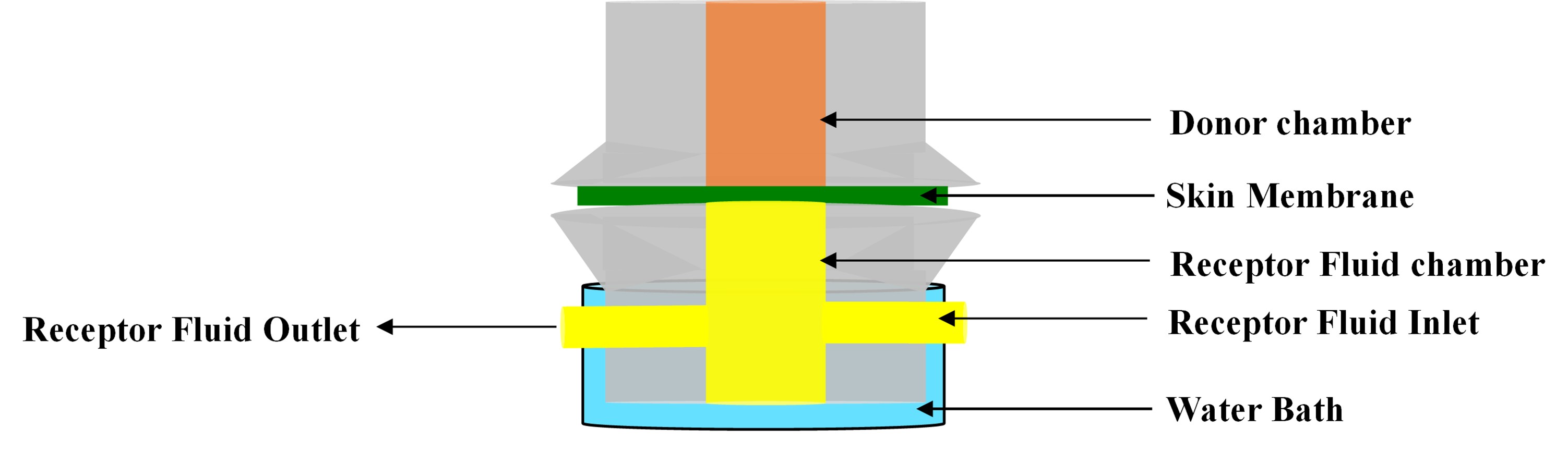
Figure 1. Diagram showing the basic design of the Bronaugh flow-through diffusion cell system.
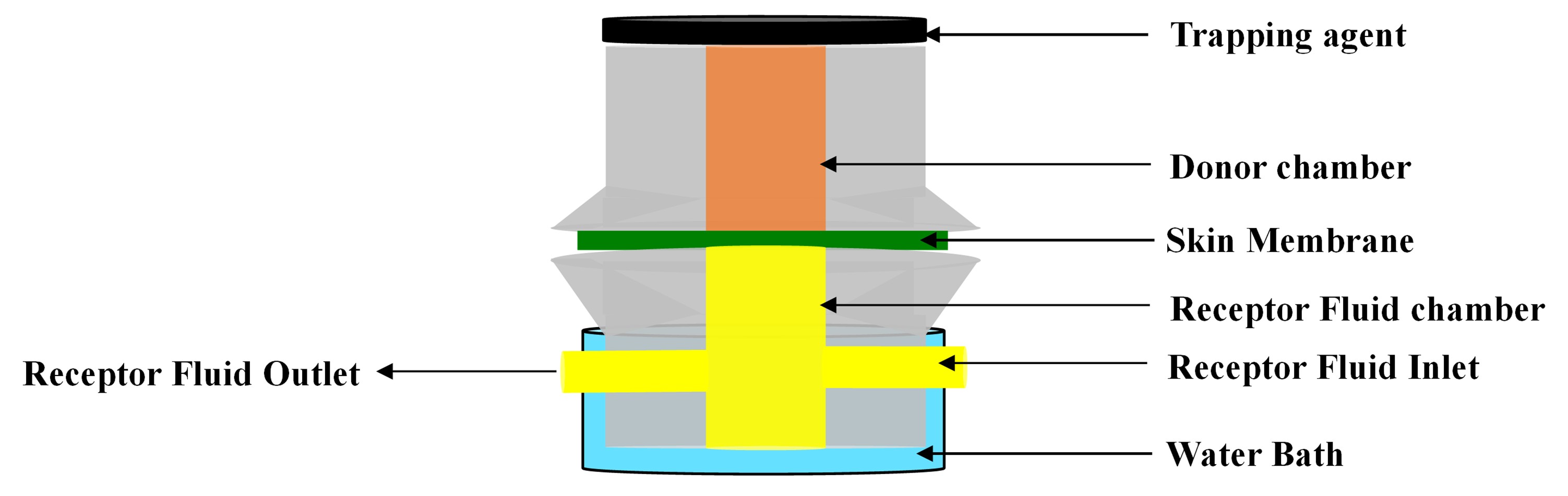
Figure 2. Diagram showing the passive use of occlusion/trapping devices to limit the loss of chemicals from the Bronaugh flow-through diffusion cell system; however, not eliminating the loss of chemical from the system due to leftover vapors in the headspace of the donor chamber.
Design of Bronaugh Flow-Through Diffusion Cell System
The basic Bronaugh flow-through diffusion cell design is shown in Figure 1. The instrument consists of two chambers equal in volumes that are separated by the skin membrane. The donor chamber faces the stratified portion of the skin (stratum corneum) where finite or infinite dose of a chemical is applied and its penetration through the skin is monitored by measuring the amount of chemical in the receptor fluid, at the other end of the skin. The receptor fluid, mimicking biological fluid (e.g., saline, or balanced salt solution, BSS), is continuously pumped beneath the skin at a slow rate (1–2 ml/h) and samples are collected using fraction collectors. The rate of penetration (Kp) of chemicals is measured when a steady-state penetration rate is achieved. This design works well for non-volatile chemicals; however, mass-balance of semi-volatile and volatile chemicals should be of concern as nothing prevents loss of the volatile chemical from evaporation from the system.
Earlier Modifications to Bronaugh Flow-Through Diffusion Cell System to Minimize the Loss of Chemicals from the System
In order to improve the mass-balance, the diffusion cell is occluded either by the use of parafilm, some other non-pervious material or by the application of a trapping agent (e.g., charcoal) [15,16] (Figure 2). Although the use of a barrier and/or trapping agent prevents the loss of volatilized chemicals from the diffusion system, it does not eliminate the loss. Some of the volatile chemicals may remain in the headspace of the donor chamber and escape when the barrier/trap is removed or when system is disassembled.
Proposed Modifications to Bronaugh Flow-Through Diffusion Cell System to Further Minimize the Loss of Chemicals from the System
In order to use Bronaugh flow-through diffusion cell system for in vitro dermal penetration studies of semi- and highly volatile-chemicals, modification to the basic design of Bronaugh follow-through diffusion cell is proposed. The modifications include, in addition to adding a suitable trapping agent (e.g., charcoal packed in porous material shown in Figure 2), boring a port into the donor chamber slightly above the dose volume level. The bored hole should be fitted with a small tube (~2 mm id, ~7 mm long) containing a one-way valve at the outer end as shown in Figure 3 restricting the flow of air from inside the donor chamber to outside the system. At the end of the study, prior to removing the trapping agent, a gentle stream of air should be pushed through the port forcing air inside the donor chamber containing vapors of the volatilized chemicals through the trapping agent. Forcing several volumes (equal to 6–7 headspace of the donor chamber) of air through the trapping agent will result in trapping virtually all volatile chemical present in the headspace increasing the mass-balance of the applied dose likely ≥90% [17,18]. The modified Bronaugh flow-through diffusion cells were used in mass-balance experiments using ethylene glycol [19], hexanediol, and cyclic siloxanes (data for hexanediol and cyclic siloxanes are not shown). Our intention with this publication is to have these proposed modifications available to the scientific community working in this area to generate additional validation data.
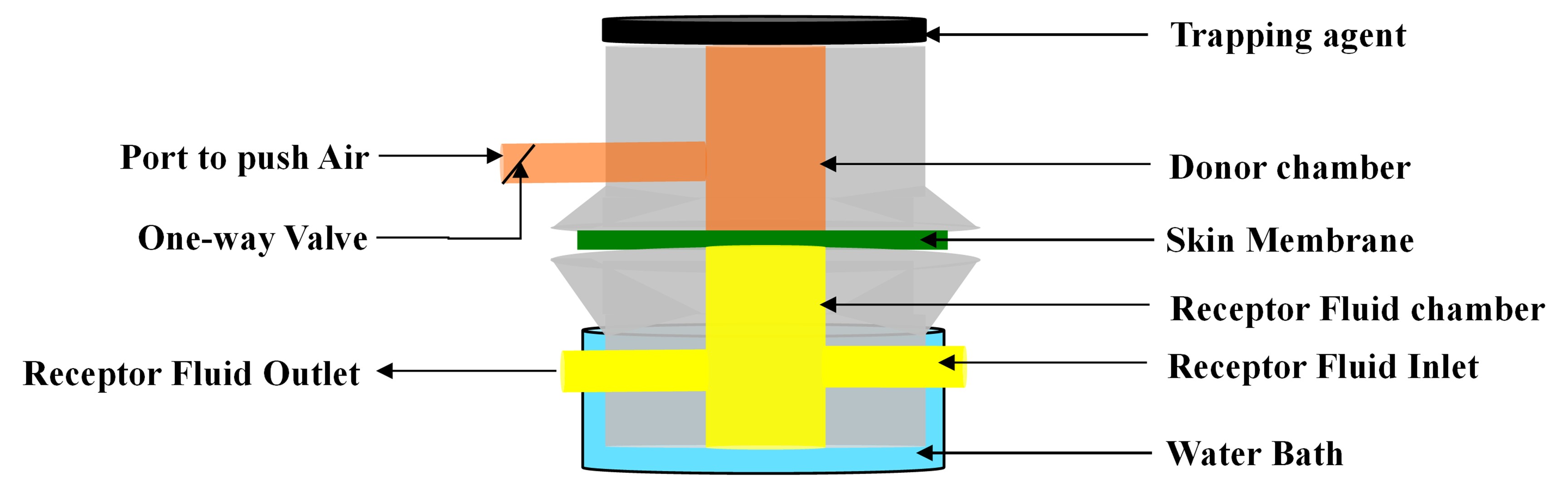
Figure 3. Diagram showing modification to the Bronaugh flow-through diffusion cell system to eliminate the loss of chemicals by volatilization due to forcing the remaining volatilized chemical in the headspace of the donor chamber through the trapping agent prior to dismantling the unit.
Acknowledgements
Authors are grateful to Ms. Jovanovic and engineers at the Dow Corning for taking the rough sketch of the concept on a plain paper to functional units to work and test the hypothesis.
References
2. Griffin P, Payne M, Mason H, Freedlander E, Curran AD, Cocker J. The in vitro percutaneous penetration of chiorpyrifos. Human & experimental toxicology. 2000 Feb;19(2):104–7.
3. Simon K, Bartsch N, Schneider L, van de Weijgert V, Hutzler C, Luch A, Roloff A. Polycyclic aromatic hydrocarbon skin permeation efficiency in vitro is lower through human than pigskin and decreases with lipophilicity. Environ Res. 2024 Aug 15;255:119118.
4. Scientific Committee on Consumer Safety. Basic criteria for the in vitro assessment of dermal absorption of cosmetic ingredients. SCCNFP/0750/03. Brussels: Eur. Comm; 2010:1–4. Available from: https://ec.europa.eu/health/scientific_committees/consumer_safety/docs/sccs_s_002.pdf
5. Organisation for Economic Co-operation and Development. Test No. 428: Skin Absorption: In Vitro Method. Paris: OECD Publishing; 2004. Available from: https://www.oecd.org/content/dam/oecd/en/publications/reports/2004/11/test-no-428-skin-absorption-in-vitro-method_g1gh4b52/9789264071087-en.pdf
6. EC (European Commission) (2004). Guidance document on dermal absorption. Brussels: European commission; 19 March, 2004. Available from: https://efsa.onlinelibrary.wiley.com/doi/pdf/10.2903/j.efsa.2012.2665
7. Dewhurst I, Samuels S, Leslie W. Proposal for a Revision of the Guidance Document on Dermal Absorption. EFSA Supporting Publications. 2010 May;7(5):52E.
8. Scientific Committee on Consumer Safety. Basic criteria for the in vitro assessment of dermal absorption of cosmetic ingredients. SCCS/1358/10. Eur. Comm: Brussels; 2010:1–4.
9. U.S. Food and Drug Administration. Maximal usage trials for topically applied active ingredients being considered for inclusion in an over-the-counter monograph: study elements and considerations [Internet]. Silver Spring (MD): FDA; 2019 May Available from: https://www.fda.gov/news-events/fda-brief/fda-finalizes-recommendations-studying-absorption-active-ingredients-topically-applied-otc-monograph.
10. Bronaugh RL, Stewart RF. Methods for in vitro percutaneous absorption studies IV: The flow-through diffusion cell. J Pharm Sci. 1985 Jan;74(1):64–7.
11. Franz TJ. Percutaneous absorption. On the relevance of in vitro data. Journal of Investigative Dermatology. 1975 Mar 1;64(3):190–5.
12. Bronaugh RL, Maibach HI. In Vitro Percutaneous Absorption: Principles, Fundamentals, and Applications. Boca Raton(FL): CRC Press; 2023.
13. European Food Safety Authority (EFSA), Buist H, Craig P, Dewhurst I, Hougaard Bennekou S, Kneuer C, et al. Guidance on dermal absorption. EFSA Journal. 2017 Jun;15(6):e04873.
14. Pieper C, Engel N, Wend K, Kneuer C, Martin S. In Vitro Human Dermal Absorption Studies on Pesticides in Complex Mixtures: Investigation of Guidance Criteria and Possible Impact Parameters. Toxics. 2024 Mar 28;12(4):248.
15. Spencer TS, Hill JA, Feldmann RJ, Maibach HI. Evaporation of diethyltoluamide from human skin in vivo and in vitro. Journal of Investigative Dermatology. 1979 Jun 1;72(6):317–9.
16. Reifenrath WG, Robinson PB. In vitro skin evaporation and penetration characteristics of mosquito repellents. Journal of Pharmaceutical Sciences. 1982 Sep 1;71(9):1014–8.
17. Jovanovic M, Saghir SA In vitro percutaneous absorption of neat and formulated 14C-1,2 hexanediol through human skin. The Dow Chemical Company; 2006.
18. Jovanovic MJ, Saghir SA. In vitro percutaneous absorption of neat and formulated 14C-ethylene glycol (14C-EG) through human skin using the Bronaugh diffusion cells. The Dow Chemical Company; 2008.
19. Saghir SA, Bartels MJ, Snellings WM. Dermal penetration of ethylene glycol through human skin in vitro. International Journal of Toxicology. 2010 May;29(3):268–76.