Loading


Journal of Cellular and Molecular Immunology
ISSN: 2833-1141
Latest Articles
The dichotomous role of A. muciniphila in CRC: from probiotic to postbiotic
Diana Diba Ara , Adel Noursina , Fatemeh Abbasi
We recently engaged with the systematic review by Soheilipour et al.[1], concludes that Akkermansia muciniphila primarily acts as a pathobiont in colorectal cancer (CRC) by exacerbating tumor progression. While the authors provide a comprehensive analysis of the bacterium's pathobiont potential (particularly its propensity to exacerbate colitis-associated tumorigenesis by degrading mucins in inflamed environments) we wish to underscore a pivotal therapeutic evolution: the transition from live probiotics to targeted postbiotics (defined as non-viable bacterial products or metabolic byproducts that confer a health benefit to the host).
J Cell Mol Immunol, 2026, Volume 5, Issue 1, p5-6 | DOI: 10.46439/immunol.5.041
Zika virus antibody patterns passed from mother to baby: insights from epitope-level mapping
Anderson Pereira Soares , Paolo Marinho de Andrade Zanotto
This commentary contextualizes the findings reported in Soares et al. (Scientific Reports, 2025), which investigated maternal–newborn humoral immune interactions during Zika virus (ZIKV) infection using epitope-level mapping. In that study, paired sera from mother–newborn dyads were analyzed using SPOT-synthesis peptide arrays spanning the ZIKV proteome, revealing a high qualitative overlap of antibody targets between mothers and neonates, alongside marked quantitative differences in signal intensity.
J Cell Mol Immunol, 2026, Volume 5, Issue 1, p1-4 | DOI: 10.46439/immunol.5.040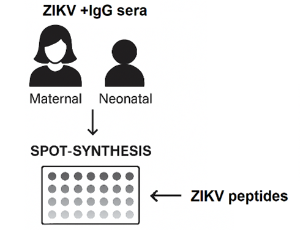
Integrative strategies combining oncolytic adenovirus, anti-PD-1, and chemotherapy in a 3D TNBC model
Mariangela Garofalo , Lukasz Kuryk
Triple-negative breast cancer (TNBC) is one of the most aggressive and treatment-resistant subtypes of breast cancer and is characterized by a lack of expression of estrogen receptors, progesterone receptors, and HER2, making targeted therapies ineffective [1,2]. The limited treatment options for TNBC primarily rely on chemotherapy, and while the addition of immune checkpoint inhibitors (ICIs), such as anti-PD-1 antibodies, has shown promise in other cancers, the response in TNBC has been modest [3,4]. This publication by Kuryk et al.
J Cell Mol Immunol, 2026, Volume 5, Issue 1, p7-9 | DOI: 10.46439/immunol.5.042
Modulating immunodominance through adjuvants and routes – A commentary on next-generation vaccine design for clinical trial
Zhuo Zhao
Immunodominance – the preferential recognition of certain epitopes – is a double-edged sword in vaccine development. While it enables strong responses against specific pathogens, it limits breadth and durability, especially against rapidly mutating viruses or bacteria.
J Cell Mol Immunol, 2026, Volume 5, Issue 1, p13-16 | DOI: 10.46439/immunol.5.044