Loading


Journal of Emerging Engineering Technologies
ISSN: 3071-2467
All Articles
Efficient Alzheimer’s disease classification using transfer learning with efficientNetV2S
Mojgan Askarizade
Alzheimer’s disease (AD) is a progressive neurodegenerative disorder that affects millions of individuals worldwide, leading to memory loss, cognitive decline, and functional impairments. Early and accurate detection of AD is critical for effective management and treatment planning. This paper presents an efficient approach for Alzheimer’s disease classification using a deep learning model based on the EfficientNetV2S architecture, leveraging transfer learning to enhance performance.
J emerg Eng tech, 2025, Volume Volume 1, Issue Issue 1, p1-12
Leveraging MCP servers for context-aware playwright automation in cloud environments
Baradwaj Bandi Sudakara
The evolution of software automation frameworks in the era of cloud computing and continuous delivery has redefined how quality assurance systems are designed and executed. Traditional test automation tools, while effective for isolated scenarios, lack the contextual adaptability required for dynamic, large-scale cloud ecosystems. Playwright, an advanced open-source testing framework, provides robust cross-browser and multi-platform automation, yet its native capabilities do not fully exploit the elastic nature of cloud infrastructure or the intelligent orchestration potential of distributed environments.
J emerg Eng tech, 2025, Volume Volume 1, Issue Issue 1, p13-18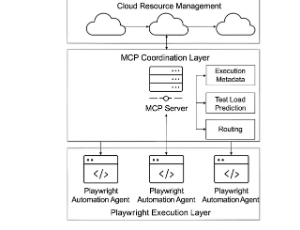
Strategic financial management and customer segmentation: A data-driven approach to business performance optimization
Muhtasib Sarker Tahsin, Raisul Islam Khan, Mohammad Yusuf Hossain
This research introduces a hybrid model designed based on an explainable and data-driven paradigm of predicting customer loss in an online shop. The model incorporates Convolutional Neural Network (CNN), Bidirectional Long Short-Term Memory (BiLSTM), along with Attention, and Multilayer Perceptron (MLP) branch to reflect the presence of both time-based and space-based correlation in customer behavioral data. The experiment relied on an open-access Kaggle e-commerce dataset consisting of 16 attributes and 10,000 customer records.
J emerg Eng tech, 2025, Volume Volume 1, Issue Issue 1, p19-37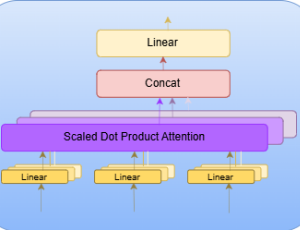
Pioneering the future: AI’s impact on civil engineering research
Ibrahim M. H. Alshaikh
The field of civil engineering is on the brink of a significant change. For centuries, our work has relied on physics, data, and experienced judgment. These foundations are still essential, but a powerful new partner has appeared: Artificial Intelligence (AI). It is no longer just a futuristic idea; AI is quickly evolving from a helpful tool into a key driver of innovation. We are at the dawn of a new era in which complex algorithms, rather than mere physical rules, will govern the planning, construction, and maintenance of our built environment.
J emerg Eng tech, 2025, Volume Volume 1, Issue Issue 1, p38-40
Concrete-filled steel tubes: The composite innovation ready to redefine modern infrastructure
Susheel Kumar Katariya
The global demand for stronger, smarter, and more sustainable infrastructure has placed unprecedented pressure on traditional structural systems. Modern construction must now support ever-taller buildings, longer-span bridges, high-capacity transportation corridors, and resilient lifeline structures capable of withstanding extreme loads and seismic events. While reinforced concrete and bare steel sections have served the engineering community for decades, the evolving complexity of today’s built environment calls for structural solutions that deliver superior performance, efficiency, and durability.
J emerg Eng tech, 2025, Volume Volume 1, Issue Issue 1, p41-42