Loading


Journal of Experimental and Molecular Pathology
ISSN: 3068-031X
Latest Articles
FEN1 drives small cell neuroendocrine carcinoma of the cervix progression and holds promise as a therapeutic target
Haixia Ma , Meiying Zhong , Kai Yang , Jianbing Liu
Small cell neuroendocrine carcinoma of the cervix (SCNECC) is a rare and clinically aggressive subtype of cervical cancer associated with a poor prognosis. To investigate its underlying pathological mechanisms and identify potential therapeutic targets, researchers have increasingly employed single-omics or multi-omics integrated analysis, including single-cell transcriptome sequencing, proteomics, whole-exome sequencing, and genomics.
J Exp Mol Pathol, 2026, Volume 3, Issue 1, p1-3 | DOI: 10.46439/pathology.3.010
Cancer of unknown primary site (CUP), practice-changing diagnosis and therapy in the molecular era: a commentary
Jeffery Russell , F. Anthony Greco
Cancer of unknown primary (CUP) is a clinicopathological syndrome of metastatic cancers without an identifiable anatomical primary site and has remained a diagnostic and treatment enigma for decades. Clinically occult primary tumor sites have been found by autopsies in about 75% of cases from more than twenty different sites [1], but some primaries are buried deep in tissues/organs and would require thousands of blind tissue sections to find.
J Exp Mol Pathol, 2026, Volume 3, Issue 1, p4-7 | DOI: 10.46439/pathology.3.011
Expanding the phenotype of bilateral Sturge-Weber syndrome associated with soft tissue hypertrophy and trichomegaly
Priyanka Kowe
Sturge-Weber Syndrome (SWS) is a rare congenital neurocutaneous disorder characterized by a facial port-wine stain (PWS), leptomeningeal vascular anomalies and ocular involvement, most commonly glaucoma. Bilateral SWS represents a clinically distinct and often more severe variant, frequently associated with bilateral glaucoma and complex intracranial findings.
J Exp Mol Pathol, 2026, Volume 3, Issue 1, p8-11 | DOI: 10.46439/pathology.3.012
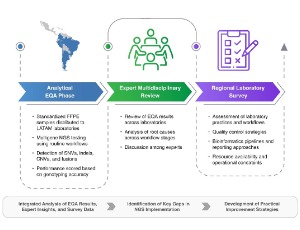
Strengthening the quality of multigene next-generation sequencing in Latin America: Key learnings from an external quality assessment on diagnostic accuracy and implementation
Fernanda Milanezi , Andrés Felipe Aristizábal , Ariane Falconi , Egon Álvarez , Esteban Barnafi , Fabiana Marcelino Meliso , Franco Doimi Garcia , Juliana Carla Rodrigues Marcellino , July Katherine Rodriguez Ariza , Melina Daniela Muñoz Bernart
Background: Multigene next-generation sequencing (NGS) has transformed molecular diagnostics in oncology over the past decade, increasingly replaced single-gene approaches such as Sanger sequencing.
J Exp Mol Pathol, 2026, Volume 3, Issue 1, p12-19 | DOI: 10.46439/pathology.3.013