

Abstract
Purpose: To describe clinical characteristics of Acanthamoeba keratitis from the Acanthamoeba –Fungal keratitis study.
Methods: The Acanthamoeba-Fungal keratitis study demonstrated that a significant number of co-infections do occur. Forty cases of Acanthamoeba were identified in the study; 19 of these did not have a co-infection. The observations regarding demographics, evolution of the disease, clinical presentations, clinical features etc., in this subgroup were catalogued and analysed.
Results: Except for one, all others were non-contact lens users. The clinical presentations, evolution of the various stages of Acanthamoeba keratitis, particularly with regard to duration, were noted to be substantially different from what is recorded in the literature. The staged evolution that is characteristically defined and used clinically to suspect Acanthamoeba was not observed. Epitheliitis and perineuritis were rarely observed. The most common presentation was stromal disease.
Conclusions: The clinical presentation of Acanthamoeba keratitis in non-contact lens wearers varies considerably from the observations made in contact lens related Acanthamoeba keratitis. Routine incorporation of non-nutrient agar in all cases of stromal keratitis - irrespective of the clinical presentation - would significantly improve identification of Acanthamoeba keratitis in non-contact lens wearers. Identification of more such cases using similar protocols would provide greater clarity in establishing the clinical features.
Keywords
Acanthamoeba, Acanthamoeba-Fungal keratitis study, Clinical features, Non-contact lens, lens
Research Article
Identified only in 1974 as an etiological agent of keratitis [1] and occurring primarily in contact lens wearers, Acanthamoeba keratitis (AK) occupies a unique niche in microbial keratitis because of its propensity to be misdiagnosed, the paucity of therapeutic options, as well as its recalcitrance to standard medical therapy. Moreover, the tendency of the organism to form cysts under adverse circumstances (that are resistant to amebicides and extremes of temperature) makes eradication of the infection very challenging.
The first case of Acanthamoeba keratitis in contact lens wearers was identified in 1985 [2]; subsequent infections were predominantly noted to affect contact lens wearers either as outbreaks or as individual cases [3,4]. Though Acanthamoeba keratitis accounts for only 5% of microbial keratitis in contact lens wearers, 80-85% of reported cases of Acanthamoeba keratitis are contact lens users [5]. Several preventive strategies, based on the lessons learnt from outbreaks of Acanthamoeba keratitis, have failed to stem the rising tide of contact lens related Acanthamoeba infections [6,7].
Most of what we know of Acanthamoeba keratitis is from the prism of knowledge acquired from dealing with contact lens related Acanthamoeba keratitis. The infection is therefore suspected in a symptomatic contact lens user or when one observes the classical 5 stages of Acanthamoeba keratitis as described by Elmer Tu, namely epitheliitis, epitheliitis with radial perineuritis, anterior stromal disease, deep stromal disease, and finally the classical ring infiltrate [8].
An understanding of the clinical presentation is critical to diagnosing Acanthamoeba keratitis. As described by Dart [5], punctate keratitis, dendritic figures and radial perineuritis are the more common presenting manifestations of AK in patients who have been symptomatic for less than a month. Ulceration, ring infiltrates and uveitis are more common after a period of 2 months. Limbitis can occur at any time in the disease process. Hypopyon, endothelial deposits, corneal melt, perforation, scleritis, glaucoma, and cataract are late manifestations. Radial perineuritis is considered pathognomonic of the condition. As discussed earlier, it is in the presence of these clinical features, the long duration of symptoms and/or a history of contact lens use, that the diagnosis is most often suspected or made.
Acanthamoeba keratitis in non-contact lens wearers does occur, is less frequently reported, and is very often unsuspected and consequently diagnosed late. Risk factors for non-contact lens related Acanthamoeba keratitis include trauma, and contact with contaminated water or soil [9,10]. Given the wide-spread distribution of the organism in the environment, the paucity of identified cases of Acanthamoeba raises questions – is there another dimension to the clinical presentation(s) of what we conventionally know as Acanthamoeba keratitis?
Methods
The Acanthamoeba – Fungal keratitis study was based on the premise that Acanthamoeba – fungal co-infections are more common than realised, since the organisms occur ubiquitously in similar environments; and that co-infections are not necessarily confined to contact lens users [11-13]. In this prospective clinico-microbiological diagnostic study, all patients with stromal infiltration irrespective of the provisional clinical diagnosis, were additionally screened for Acanthamoeba by the inclusion of non-nutrient agar in the microbiological work-up. The number of cases of Acanthamoeba keratitis identified increased significantly (Figure 1). Apart from the co-infections with bacteria or fungi, 19 cases of culture-positive Acanthamoeba were identified during the study period from August 2016 to December 2017. However, a substantial number of these cases did not possess the classical features of Acanthamoeba keratitis as described in the literature (Figure 2: Table).
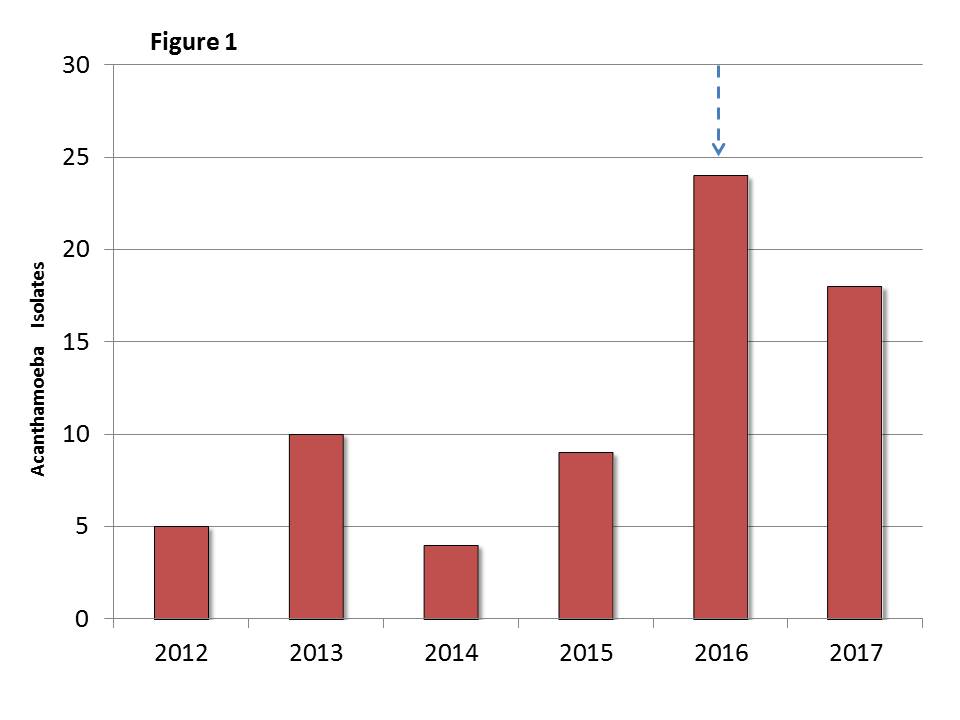
Figure 1: Year-wise number of Acanthamoeba isolates (including co-infections). ↓When non-nutrient agar (NNA) was included for all stromal keratitis work-ups.
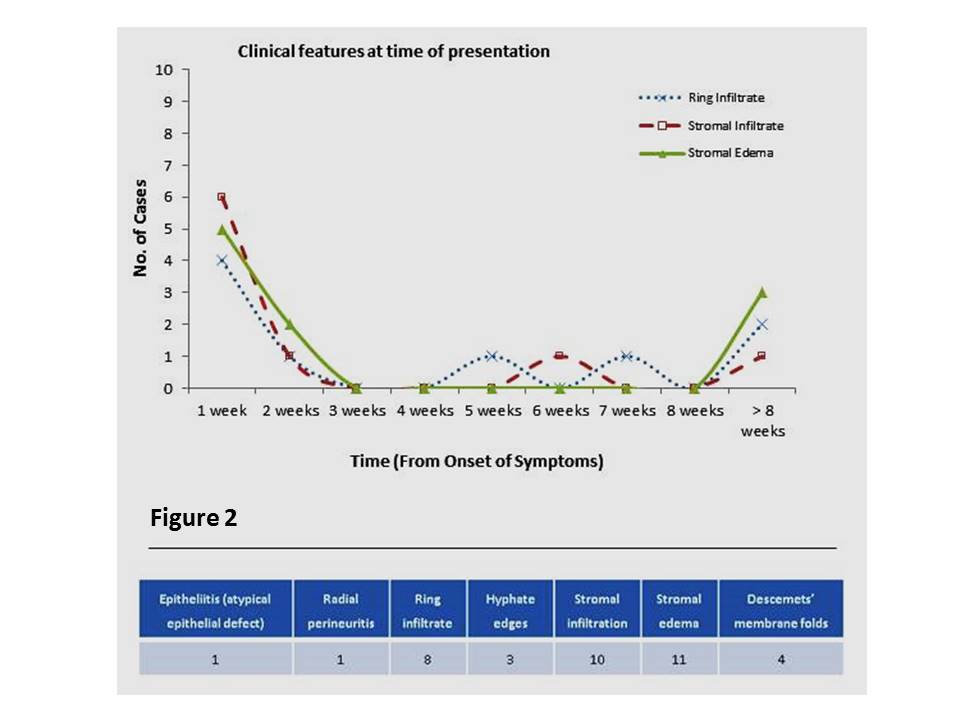
Figure 2: Clinical features at the time of presentation.
The nineteen cases of Acanthamoeba keratitis confirmed via culture positivity after the initiation of the Acanthamoeba – Fungal keratitis study (and not on the basis of clinical features) form the substance of this analysis. The demographics, epidemiology, microbiology work-up, and clinical features are presented.
Results
Of the 19 cases, 10 were male and 9 were female. The age group ranged from 13 years to 75 years. Only 12 patients had a clear-cut history of a potentially precipitating event. Ten patients had exposure to organic material (one patient was a contact lens user) and 2 to potentially contaminated water. One patient had a dry eye, another was HIV-positive, while 5 had no history of injury or discernable risk factors.
The time to presentation varied from 1- 60 days, with 14 patients presenting within one month; of which nine presented within a week. Only 4 patients presented after 4 weeks but within 2 months. The duration of symptoms was not known in 1 mentally-challenged patient.
Thirteen patients had prior therapy - of which 12 had antibiotics, antifungals or both. Of the 12, two patients additionally received antivirals and another two, steroids. One patient received only topical steroids.
Clinical features were analysed based on the presenting features, as well as on the presence or absence of features suggestive of Acanthamoeba keratitis (Figure 2: Table).
Only 3 of these patients were clinically diagnosed as Acanthamoeba keratitis. All others had features suggestive of a bacterial, fungal or viral infection - such as stromal edema, yellowish stromal infiltration, hyphate edges to the lesion etc. Several had features suggestive of both Acanthamoeba and bacterial or fungal keratitis, and thus the provisional diagnosis was not clear cut.
An analysis of the clinical features revealed only 2 patients with characteristics suggestive of the early stages of Acanthamoeba keratitis. Epitheliitis in the form of an epithelial defect with minimal underlying cellular infiltration was seen in one patient, while the other had perineuritis. Stromal infiltration and ring infiltrates were the most commonly seen features. Stromal edema, though not considered suggestive of Acanthamoeba keratitis, was a frequent observation; necessitating the inclusion of viral and/or bacterial keratitis in the provisional diagnosis. The combination of stromal edema with stromal infiltration also led to a consideration of bacterial keratitis, fungal keratitis or both. The classical ring infiltrate was seen in 3 patients, 2 others had hyphate edges, while the remaining ring infiltrates showed patchy anterior to midstromal or deep stromal infiltration.
All patients had smear examinations of corneal scrapings by Gram staining and/ or potassium hydroxide mount, as well as cultures of corneal scrapings on blood agar, non-nutrient agar and potato-dextrose agar. Only 6 cases of Acanthamoeba keratitis were identified on smear examinations. Of these, one in addition to the cysts, had hyphae, while another 2 had hyphae only. All were culture positive for Acanthamoeba on non-nutrient agar with E.coli overlay.
Discussion
Acanthamoeba keratitis is generally considered to be a gradually evolving infection, with a step wise progression; epithelial involvement is associated with early disease; while ring infiltrates and stromal infiltration are suggestive of late disease. In our cohort, 10 patients had stromal infiltration, either anterior or deep stromal disease, or both. However, with the exception of one case, all presented within 20 days. Ring infiltrates were seen in as little as seven days with the majority presenting well within a month; only 3 cases presented after a month, but within 60 days (Figure 2 and Figure 3).
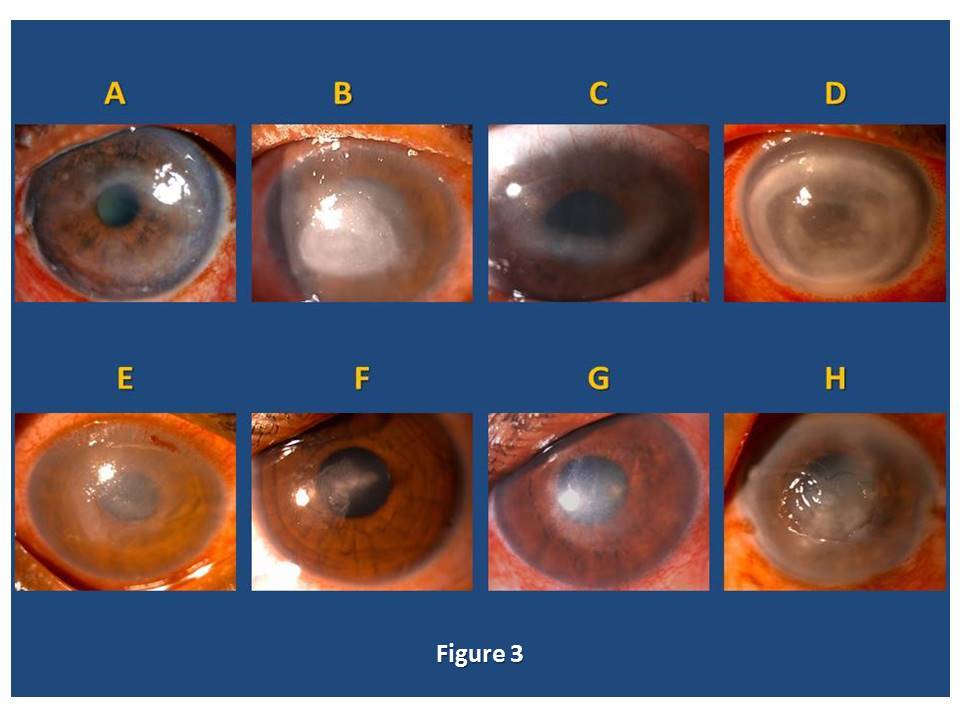
Figure 3: Clinical presentations at first visit (Duration from onset of symptoms).
A. Anterior stromal Ring infiltrate @ 7 days. B. Ring infiltrate w/ Stromal edema @ 30 days. C. Stromal infiltration w/ partial ring; in a quiet eye w/ overlying epithelial breakdown; Suggestive of dendritic ulceration @ unknown days. D. Ring infiltrate w/ full thickness stromal involvement @ 20 days. E. Anterior stromal infiltration w/ stromal edema @ 7 days. F. Anterior stromal infiltration @ 3 days. G. Stromal edema w/ Descemet’s membrane folds and keratic precipitates @ 60 days. H. Almost full thickness patchy stromal infiltration w/ Stromal edema @ 10 days.
A plausible explanation for the variation in presenting features between contact lens and non-contact lens users could be that in a contact lens user repeated microtrauma (potentially sustained at the time of insertion and removal of lenses) primarily results in breeching of the epithelial barrier and ingress of Acanthamoeba, perhaps in small numbers; thereby manifesting primarily as epithelial disease. With traumatic events as seen in non-contact lens users the organism could be introduced into the deeper layers of the cornea in much larger numbers, resulting in stromal keratitis directly, bypassing what we know as early disease. (Figure 3) depicts the predominant clinical presentations in this group of patients, and highlights the lack of correlation between observed features and duration of disease.
The initial therapy of these patients reflected the influence of the clinical findings. Only 6 patients with positive smears received anti-amoebicidal therapy at the first visit. The remaining received antifungal, antibacterial, or antiviral therapy - sometimes in combination. Appropriate therapy was instituted only after cultures were positive for Acanthamoeba in the remaining patients.
However, it is evident that Acanthamoeba keratitis at least in the tropics, or following trauma, or in non-contact lens users, has a different clinical presentation, appears to progress much more rapidly; perhaps bypassing what we know as early disease in most cases and shares features of fungal, bacterial and/ or viral keratitis; and often presents with a clinical picture suggestive of polymicrobial keratitis. The absence of classical clinical features, the very short duration of symptoms and rapid progression, should not preclude the inclusion of Acanthamoeba keratitis in the differential diagnosis.
Garg et al also suggest that non-contact lens related Acanthamoeba keratitis varies in some respects from what is observed with contact lens related Acanthamoeba keratitis. The authors report that disproportionate pain, radial keratoneuritis and ring infiltrates, were seen only in a small proportion of their cases (less than one third) and that most of their cases presented with diffuse infiltration suggestive of herpes simplex viral keratitis or fungal keratitis [14].
It is also evident that Acanthamoeba keratitis is much more frequent than the current perception. Once the study was initiated the number of cases of Acanthamoeba identified increased by almost –75%. The low percentage of identified cases in the spectrum of microbial keratitis probably arises from the index of suspicion being restricted to contact lens users, the undue emphasis on the staged, slow progression of the disease, or the presence of conventionally accepted classical features. It is also possible that the classically described features of Acanthamoeba keratitis are pathognomic primarily for contact lens derived infections. The variations we have seen could be attributed not only to the deeper introduction of the organisms but also due to a larger parasitic load at the time of trauma. Given the fact that the establishment of clinical findings that are suggestive of a particular pathogen as fungal or bacterial etc. were laid down in the literature long before Acanthamoeba keratitis was known as an entity and that the subsequent cataloguing of clinical signs of Acanthamoeba keratitis was primarily from contact lens wearers; it is definitely possible that there is a subset of Acanthamoeba keratitis which is unrecognised because of its rapid progression which mimics other forms of keratitis.
Financial Disclosures
The following Authors have no financial disclosures: Anita Raghavan, Nidhi Bhosale, Shaffie Baidwal, Prabhu Vijayaraghavan, Narendran Venkatapathy, and Ram Rammohan.
All Authors attest that they meet the current ICMJE criteria for authorship.
References
2. Moore MB, McCulley JP, Luckenbach M, Gelender H, Newton C, McDonald MB, et al. Acanthamoeba keratitis associated with soft contact lenses. American Journal of Ophthalmology. 1985 Sep 1;100(3):396-403.
3. Patel A, Hammersmith K. Contact lens-related microbial keratitis: recent outbreaks. Current Opinion in Ophthalmology. 2008 Jul 1;19(4):302-6.
4. Joslin CE, Tu EY, Shoff ME, Booton GC, Fuerst PA, McMahon TT, et al. The association of contact lens solution use and Acanthamoeba keratitis. American Journal of Ophthalmology. 2007 Aug 1;144(2):169-80.
5. Dart JK, Saw VP, Kilvington S. Acanthamoeba keratitis: diagnosis and treatment update 2009. American Journal of Ophthalmology. 2009 Oct 1;148(4):487-99.
6. Thebpatiphat N, Hammersmith KM, Rocha FN, Rapuano CJ, Ayres BD, Laibson PR, et al. Acanthamoeba keratitis: a parasite on the rise. Cornea. 2007 Jul 1;26(6):701-6.
7. Yoder JS, Verani J, Heidman N, Hoppe-Bauer J, Alfonso EC, Miller D, et al. Acanthamoeba keratitis: the persistence of cases following a multistate outbreak. Ophthalmic Epidemiology. 2012 Aug 1;19(4):221-5.
8. Tu EY, Joslin CE, Sugar J, Shoff ME, Booton GC. Prognostic factors affecting visual outcome in Acanthamoeba keratitis. Ophthalmology. 2008 Nov 1;115(11):1998-2003.
9. Acharya NR, Lietman TM, Margolis TP. Parasites on the rise: a new epidemic of Acanthamoeba keratitis. American Journal of Ophthalmology. 2007 Aug 1;144(2):292-3.
10. Radford CF, Minassian DC, Dart JK. Acanthamoeba keratitis in England and Wales: incidence, outcome, and risk factors. British Journal of Ophthalmology. 2002 May 1;86(5):536-42.
11. 11 Raghavan A, Baidwal S, Vijayaraghavan P, Rajeswari S, Rajaraman R, Venkatapathy N, et al. Diagnostic evaluation of co-occurrence of Acanthamoeba and fungi in keratitis: a preliminary report. Cornea. 2018 Feb 1;37(2):227-34.
12. Raghavan A, Bellamkonda P, Mendoza L, Rammohan R. Pythium insidiosum and Acanthamoeba keratitis in a contact lens user. BMJ Case Reports CP. 2018 Nov 1;11(1).
13. Raghavan A, Baidwal S, Venkatapathy N, Rammohan R. The Acanthamoeba–Fungal Keratitis Study. American Journal of Ophthalmology. 2019 May 1;201:31-6.
14. Srinivasan M, Burman S, George C, Nirmalan PK. Non-contact lens related Acanthamoeba keratitis at a tertiary eye care center in south India: Implications for eye care programs in the region. Medical Science Monitor. 2003 Apr 23;9(4):CR125-9.