

Abstract
There is currently a lack of access to evidence-based practice approaches for working with LGBTQ (lesbian, gay, bisexual, transgender, queer and questioning) youth, especially in terms of identifying and understanding the strength and structure of youths’ relational networks and enhancing their access to supportive resources. This article offers a commentary on the use of a modified ecomapping method as a potential practice strategy to assist providers in analyzing and addressing the support-related needs of LGBTQ youth, and encourages research to evaluate its effectiveness.
Keywords
LGBTQ youth, Ecomap, Practice, Support networks, Strategies
Introduction
In a recent issue of the Children and Youth Services Review, I published an article examining systems of support for LGBTQ youth transitioning from foster care to emerging adulthood [1]. The methodology I used to gather this data included in-depth interviewing combined with ecomapping techniques that I modified to identify the strength and structure of LGBTQ youths’ support networks. This process provided an opportunity for the youth, and myself, to identify and reflect on the quality and sources of their relationships, the resources and services they were receiving, and any significant unmet needs they were experiencing. As a natural extension of this work, I offer rationale for encouraging providers to use this modified version of ecomapping (i.e. the support systems ecomap for LGBTQ youth) as a key strategy for broadening supportive resources to this population. The need for future research to determine the effectiveness of this method is also discussed.
The Importance of Supportive Networks for LGBTQ Youth
Having access to supportive resources is a powerful protective factor, and has been tied to a number of positive health and wellbeing outcomes for children and youth. Studies document that youth who have strong relationships with caring adults (e.g., family members, teachers and counselors), and are linked to supportive resources and services (e.g., school and community events, youth groups), are more likely to experience healthy adjustment and functioning when compared to youth that lack such support [2-4]. Conversely, inadequate levels of support are correlated with a variety of health- and wellbeing-related concerns such as educational deficits (e.g., truancy, lower levels of educational achievement), economic vulnerability (e.g., unemployment, underemployment), socioemotional challenges (e.g., poor social skills, negative self-worth), and health difficulties (e.g., depression, obesity, cardiovascular disease). Finding effective strategies for expanding access to supportive environments may be especially vital for LGBTQ youth who experience higher levels of isolation, discrimination, and mistreatment, as well as a wide-array of health disparities (e.g., anxiety, depression, suicidality, homelessness, substance use disorders) when compared to their heterosexual and cisgender peers [5].
Modified Ecomapping as a Practice Approach for Working with LGBTQ Youth
Ecomapping is a methodology in which individuals are guided through the process of creating a graphic depiction of the relationships that comprise their support networks [6] and is an effective tool for documenting

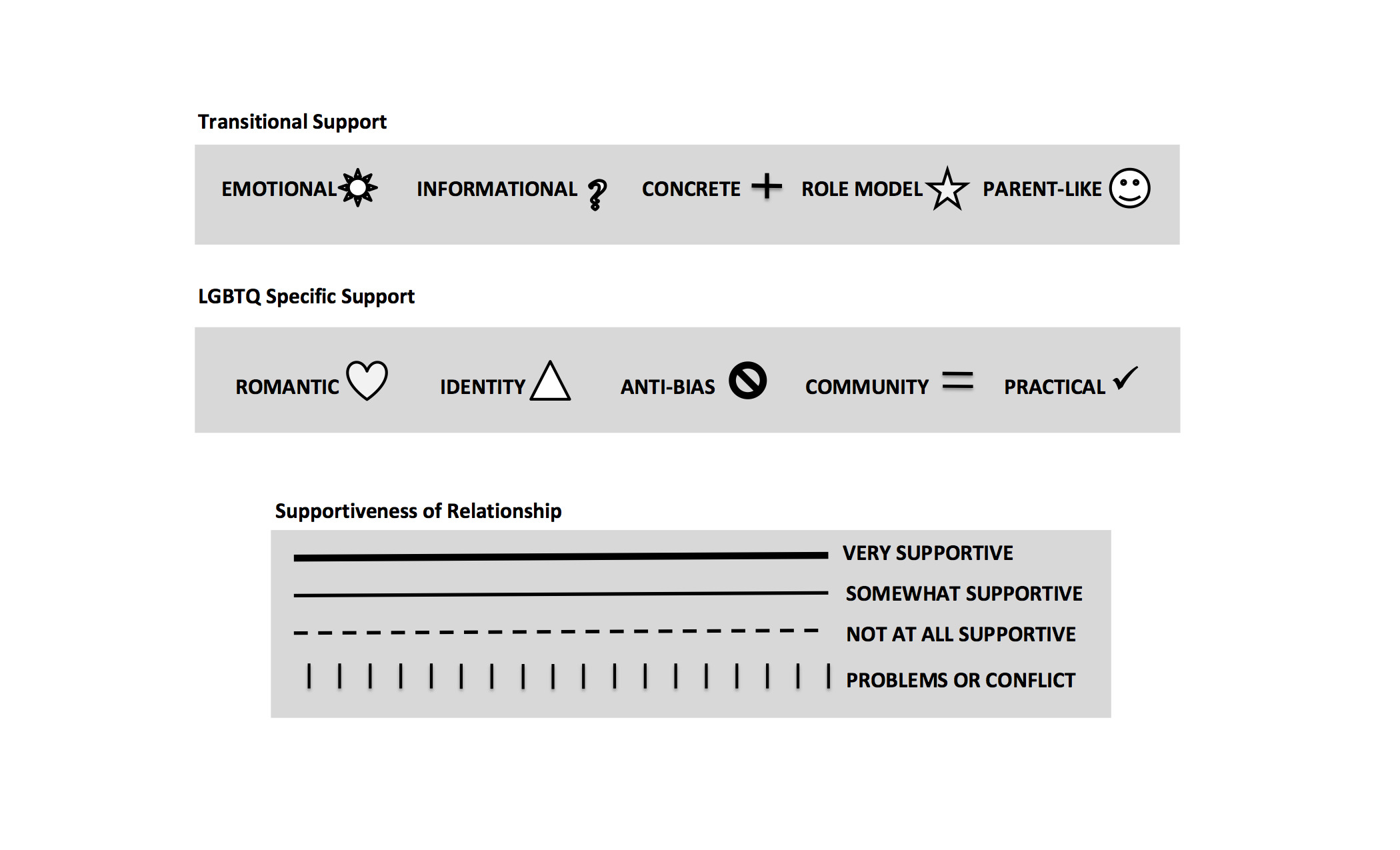
Figure 1: Support system ecomap for LGBTQ youth [5]
and evaluating sources of nurture and tension within an individual’s support system [7,8]. As an extension of this approach, researchers have made modifications to the original version of the ecomap, or combined them with other methods, to assess other network factors such as the proximality and distality of resources and relationships [9,10], the types of support provided [11], exposure to stressors [12], and more. Accordingly, the support systems ecomap for LGBTQ youth (see Figure 1) may offer a valuable framework for enabling providers to evaluate and enhance youth’s networks. More specifically, providers work together with youth to construct an ecomap that is reflective of their current support network, including the individuals in their lives that provide them with support, the quality of these relationships (very, somewhat, not-at-all supportive, conflicted), and the various types of support they are receiving from each person. Transitional support refers to the forms of assistance youth need (i.e. informational support) to successfully progress from adolescence to emerging adulthood (see Figure 2). LGBTQ-specific support refers to types of assistance that are distinct to LGBTQ youth. Once completed, ecomaps may be used to assist providers in assessing the multiple types and levels of support being provided to LGBTQ youth, and to identify areas where additional support is needed. Youth’s ecomaps may also be revisited and reconstructed, periodically, as a method for restructuring goals and evaluating progress towards strengthening certain types of support (Figures 1 and 2).

Figure 2: Types of support provided to LGBTQ youth [5].
Potential Benefits of Using the Modified Ecomap Model
Providers can do a great deal to assist LGBTQ youth in developing and maintaining healthy, supportive relationships, and to connect them to resources that are safe, appropriate, and affirming of who they are. In considering this, there are several potential advantages that may result from having providers use the support systems ecomap for LGBTQ youth. Perhaps most obviously, the model allows for focused knowledge-building in understanding the composition of youths’ supportive networks. Together, youth and providers have the opportunity to identify and explore the availability of support, as well as how existing positive relationships and resources may be maintained and enhanced. Co-constructing the ecomap also empowers youth to critically reflect on their own lives, independently and in collaboration with others, by teaching them to actively explore, identify, and address any resource and relational challenges that arise in their lives [13]. Additionally, this model may help to facilitate productive dialogue by increasing providers’ levels of competence and comfort in discussing identity-related issues with youth and fostering further trust between the youth and the provider [8]. This is especially salient for providers that may be unsure about how to approach discussions regarding youths’ developmental needs and experiences as sexual and/or gender minorities, particularly around sensitive topics such as LGBTQ identity and sexual health.
Evaluating the Modified Ecomap Model and Implications for Research
Evidence-based practice approaches are of central importance in addressing health disparities experienced by LGBTQ youth and providing them with access to high-quality care and support. Despite this need, few appraisal tools have been designed and evaluated for this purpose. To move forward, practice methodologies must be developed and tested to ensure they are effective at recognizing and responding to the disproportionate risks and developing needs of LGBTQ youth [14]. Although there has been some movement towards developing and researching practice approaches that are specifically designed to support this population [15,16], more work is needed if we are to make measurable, positive differences in the lives of LGBTQ youth. Evaluating the support systems ecomap for LGBTQ youth to determine whether these youth have adequate support networks in place, and what, if any, alterations are needed, may serve as another important step in beginning to fill this gap.
Acknowledgements
Funding for the development of the modified ecomapping model presented in this commentary was provided by the Eileeen Blackey Doctoral Fellowship Award to Dr. Paul from the National Association of Social Workers.
Author Contributions
June C. Paul conceived of the presented idea, developed the modified support system ecomap for LGBTQ youth, and wrote the manuscript. There were no other contributing authors.
References
2. Van Dam L, Smit D, Wildschut B, Branje SJ, Rhodes JE, Assink M, et al. Does natural mentoring matter? A multilevel meta‐analysis on the association between natural mentoring and youth outcomes. American Journal of Community Psychology. 2018 Sep;62(1-2):203-20..
3. Burwick A, Gates GJ, Baumgartner S, Friend D. Human services for low-income and at-risk LGBT populations: The knowledge base and research needs. OPRE Report 2014-79; 2014.
4. Hartman A. Diagrammatic assessment of family relationships. Social casework. 1978 Oct;59(8):465-76.
5. Paul JC. Exploring support for LGBTQ youth transitioning from foster care to emerging adulthood. Children and Youth Services Review. 2020 Dec 1;119:105481.
6. Ahrens KR, DuBois DL, Richardson LP, Fan MY, Lozano P. Youth in foster care with adult mentors during adolescence have improved adult outcomes. Pediatrics. 2008 Feb 1;121(2):e246-52.
7. Sanders J, Munford R, Liebenberg L. Positive youth development practices and better outcomes for high risk youth. Child abuse & neglect. 2017 Jul 1;69:201-12.
8. Mustanski B, Andrews R, Puckett JA. The effects of cumulative victimization on mental health among lesbian, gay, bisexual, and transgender adolescents and young adults. American Journal of Public Health. 2016 Mar;106(3):527-33.
9. Calix AR. Is the ecomap a valid and reliable social work tool to measure social support?. LSU Master's Theses. 2004; 3239
10. Ray RA, Street AF. Ecomapping: An innovative research tool for nurses. Journal of advanced nursing. 2005 Jun;50(5):545-52.
11. Early BP, Smith ED, Todd L, Beem T. The needs and supportive networks of the dying: An assessment instrument and mapping procedure for hospice patients. American Journal of Hospice and Palliative Medicine®. 2000 Mar;17(2):87-96.
12. de Souza ÍP, Bellato R, Araújo LF, Almeida KB. Genogram and eco-map as tools for understanding family care in chronic illness of the young. Texto & Contexto-Enfermagem. 2016 Oct 24;25.
13. Correa VI, Bonilla ZE, Reyes-MacPherson ME. Support networks of single Puerto Rican mothers of children with disabilities. Journal of Child and Family Studies. 2011 Feb 1;20(1):66-77.
14. Borja AP. Using the ecomap to explore children's phenomenology about their social worlds: A global cross-cultural analysis (Doctoral dissertation, Tulane University School of Science and Engineering). ProQuest;2015:10143946.
15. Permanency Innovations Initiative Evaluation Team. Findings from the RISE youth qualitative interviews. OPRE Report 2016-05; 2016. Report available online at https://files.lalgbtcenter.org/pdf/rise/Los-Angeles-LGBT-Center-RISE-Youth-Quantitative-Interview-Brief.pdf
16. Ryan C. Supportive families, healthy children: Helping families with lesbian, gay, bisexual and transgender children. San Francisco State University; 2009. Family education booklet available online at http://familyproject.sfsu.edu