

Abstract
The pediatric liver cancer hepatoblastoma (HBL) has a complex etiology which is not yet determined. In contrast to adult liver cancer hepatocellular carcinoma (HCC), pediatric HBL has a low rate of genetic mutations suggesting that other mechanisms play a critical role in development of this disease. A number of recent reports suggested that epigenetic alterations of gene expression are such mechanisms. The epigenetic regulation does not involve alterations in DNA sequence and includes a) methylation of DNA around promoters of genes; b) opening chromatin structure via modification of histones by chromatin remodeling proteins; c) methylation of mRNAs; and d) micro-RNA-mediated control of gene expression. The Liver Tumor Biology Group from Cincinnati Children’s Hospital has recently published two papers which shed light on the role of chromatin-remodeling proteins in epigenetic regulation of HBL. These papers demonstrate that a Poly (ADP-ribose) Polymerase 1 (PARP1)-dependent activation of oncogene transcription via opening DNA regions that are called Aggressive Liver Cancer Domains (ALCDs) is a key event in HBL pathophysiology. Moreover, these studies revealed that the inhibition of PARP1 in HBL-patient derived xenografts reduces tumor growth. In patients with aggressive HBL, PARP1-ALCDs pathway increases expression of HDAC1, Sp5 and oncogenic form of C/EBPα leading to formation of complexes-repressors and subsequent down-regulation of markers of hepatocytes and repression of tumor suppressor p21. This short communication summarizes the studies of the epigenetic remodeling of DNA in pediatric liver cancer by focusing on these two recent studies and on potential development of a therapy for treatments of children with HBL.
Short Communication
Enhanced transcription of oncogenes via opening Aggressive Liver Cancer Domains is an essential part of pediatric liver cancer pathogenesis. Eukaryotic genome has organized compact structure, in which genes are activated or repressed depending on the local modifications of histones and on binding of transcription factors to DNA which recruit RNA pol II for transcription of the genes. Given the low rate of genetic mutations in HBL [1,2], the Liver Tumor Biology Group at CCHMC has focused on the studies of the epigenetic-dependent mechanisms of HBL. Since the epigenetic mechanisms are based on protein-protein interactions and on post-translational modifications, a careful collection of specimens under conditions which prevent degradation of proteins and elimination of post-translational modifications is critical for such investigations. During last 7 years, Tumor Biology Group at CCHMC has collected a bio bank of fresh specimens of high quality which preserve the integrity of signaling pathways. The first studies have identified homologous chromosomal DNA regions in many key oncogenes. Since these regions are open in HBL with aggressive liver tumor, these regions were referred to as Aggressive Liver Cancer Domains, ALCDs [3]. Examination of mechanisms that open the ALCDs-containing oncogenes for transcription showed that PARP1-Ku70/80 complexes occupy ALCDs in aggressive HBL and that this occupancy correlates with open chromatin structures of ALCDs. Further studies revealed that ph-S6-p53 interacts with PARP [4]. As the result, ph-S6-p53 brings the PARP1-Ku70/80 complex to ALCDs which leads to opening of ALCD-containing oncogenes for transcription [4].
Since studies with specimens from HBL patients are mainly correlative, validation of the role of ALCDs in the HBL growth required usage of the additional in vivo systems. Therefore, the patient derived xenograft models, HBL-PDXs, were used to examine if PARP1-dependent activation of ALCDs is involved in development of pediatric liver cancer HBL. For these studies, the Liver Tumor Biology Group used HBL-PDXs that have been generated by Cairo’s group from five patients with aggressive HBL [5]. These HBL-PDXs were treated with an inhibitor of PARP1 Olaparib (OLA). OLA treatments have reduced PARP1-ALCDs-oncogenes pathway and significantly slowed down tumor growth of HBL [4]. In addition to studies with HBL-PDXs, it was also found that OLA inhibits proliferation of hepatoblastoma cells in tissue culture models via repression of PARP1-ALDCs axis [4].
One of the unexpected findings of the Liver Tumor Biology Group was the identification of biological activities of p53 which suggest that this tumor suppressor protein might display oncogenic activities. In the initial study of HBL specimens, it was found that p53 is elevated in sub-group of HBL patients with aggressive cancer and that the elevated p53 underwent post-translational modifications that changed its electrophoretic mobility [3]. Further studies found that JNK1/2 kinase is elevated in aggressive HBL and phosphorylates p53 at Ser6 [4]. Interestingly, the JNK1/2-ph-S6-p53-PARP1-ALCDs axis was also found in a group of patients with adult liver cancer HCC emphasizing essential role of this pathway in liver cancers. Moreover, pharmacological inhibition of JNK1/2 by SP600125 resulted in reduction of the ph-S6-p53-PARP1 complexes and in repression of ALCD-dependent oncogenes. Together with previous studies, these new findings showed that the development of pediatric liver cancer involves ph-S6-p53-PARP1-dependent activation of many oncogenes through opening the ALCDs (Figure 1, left).
The Role of ALCDs-HDAC1 Pathway in Pediatric Liver Cancer
Although ph-S6-p53-PARP1-ALCDs-dependent overexpression of oncogenes is essential for development of liver cancer, ALCDs are observed in other genes, activation of which might also contribute to HBL. One of these genes is Histone Deacetylase 1 (HDAC1). Previous reports showed that epigenetic silencing by histone deacetylases (HDAC) might be critical for development of liver cancer [6]. Consistent with this report, the elevation of HDAC1 was found in a large group of patients with HBL [7]. The search for ALCDs in the HDAC1 gene has found an ALCD located in the first intron, suggesting that HDAC1 might be also increased in HBL by ph-S6-p53-PARP1 pathway and therefore, its expression might be inhibited by OLA. To test this hypothesis, Rivas and colleagues have performed a molecular study of a fresh Bio Bank of HBL specimens which provided evidence for the role of PARP1-ALCDs-HDAC1 pathway in pediatric liver cancer [8]. It has been found that HDAC1 is elevated in a significant portion of the patients with HBL. It appears that HDAC1 forms complexes with two transcription factors: with oncogenic form of C/EBPα and with Sp5. Rivas and colleagues found that, in aggressive HBL, a tumor suppressor C/EBPα is converted into protein with oncogenic activities and that oncogenic activities of C/EBPα are associated with formation of de-ph-S190-C/EBPα-HDAC1 complexes and subsequent epigenetic silencing of markers of hepatocytes and repression of a family of organic cation transporters (Figure 1, right). Interestingly, this study has identified an HBL patient with aggressive tumor who had activated only Sp5/C/EBPα-HDAC1 pathway, while other main pathways of HBL, such as β-catenin, NRF2 and FXR/Gankyrin, were down regulated [8]. This finding suggests that activation of HDAC1 pathway plays a critical role in development of HBL and alone might be sufficient for progression of HBL.
Epigenetics and Cellular Origin of Aggressive HBL
Epigenetic changes in HBL have been reported long time ago [7]; however, until recently, it was not known if epigenetic alterations are involved in de-differentiation of liver cells into cancer cells. A previous report by Shin and colleagues showed that de-differentiation of hepatocytes into cancer cells is the cellular origin of liver cancer
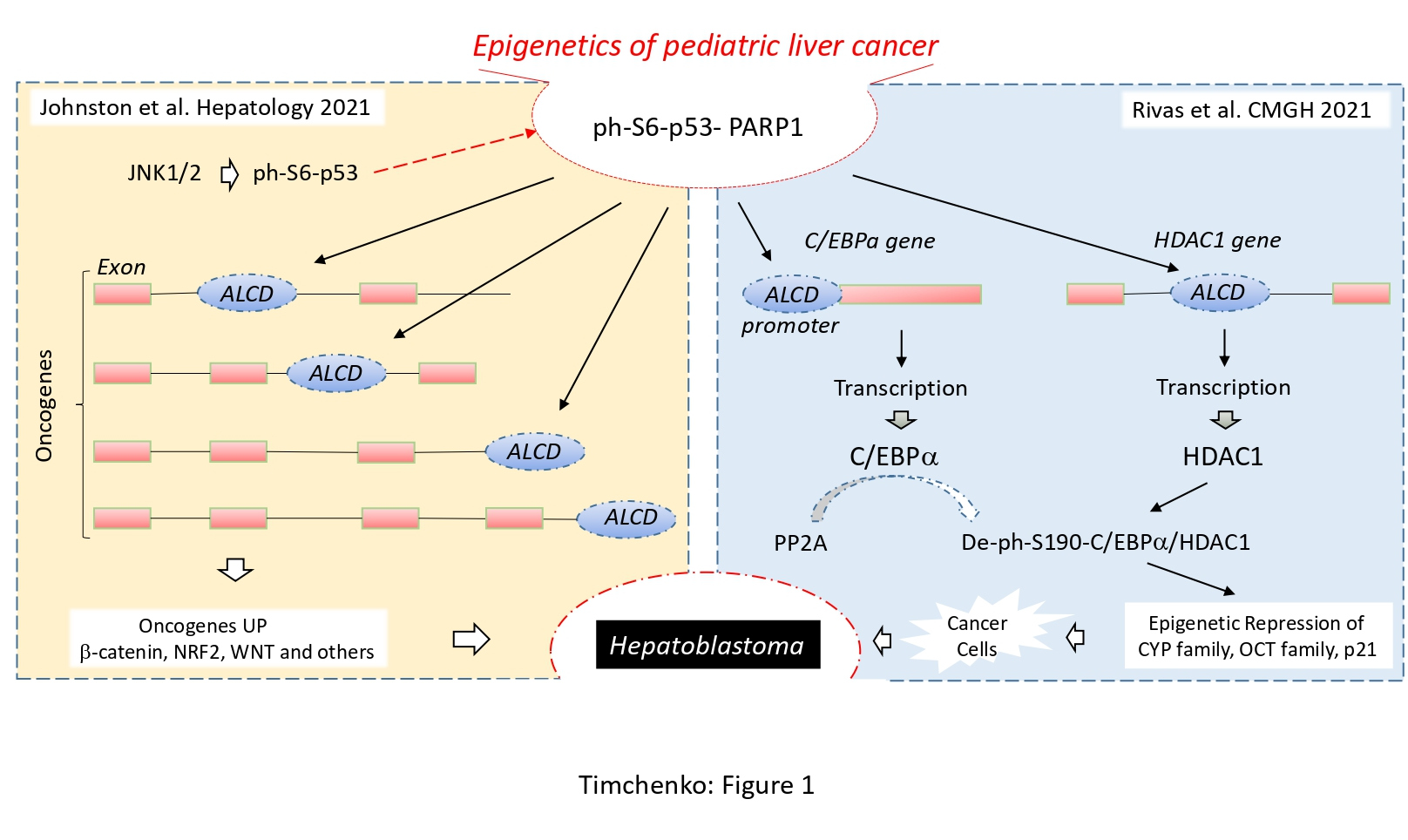
Figure1: A summary of studies of epigenetics in pediatric liver cancer that are recently published in two papers [4,8]. The central axis of epigenetics is associated with elevation of ph-S6-p53-PARP1 complexes and subsequent increase of oncogenes and epigenetic silencing of HDAC1-dependent liver genes. The left part summarizes data in paper published by Johnston and colleagues [4]; the right part summarizes results of paper by Rivas and colleagues [8].
[9]. The following study of S193A-C/EBPα mice, that mimic the oncogenic form of C/EBPα (de-ph-Ser190-C/EBPα in human protein), showed that S193A-C/EBPα mice develop liver cancer at young age [10]. The first step of development of liver cancer in these mice is the formation of pre-neoplastic nodules that contain large de-differentiating hepatocytes with intra-nuclear inclusions which are positive for stem cell marker DLK1 [10]. Searching for underlying mechanisms of the de-differentiation of hepatocytes into cancer cells in aggressive HBL, Rivas and colleagues found that the elevation of repressor complexes C/EBPα-HDAC1 and Sp5-HDAC1 is involved in appearance of de-differentiating hepatocytes. These complexes are abundant in large de-differentiating hepatocytes with intra-nuclear inclusions. The authors showed that, similar to livers of C/EBPα-S193A mice, the HBL patients with de-differentiating hepatocytes have elevated C/EBPα-HDAC1 complexes that repress markers of hepatocytes [8]. These studies suggest that the epigenetic-mediated reduction of marker of hepatocytes and repression of p21 are essential steps of de-differentiation of hepatocytes in cancer cells and development of liver cancer.
Potential Epigenetic-Based Approaches for the Treatments of Hepatoblastoma
The main characteristics of aggressive hepatoblastoma include metastases, chemo-resistance, relapse and invasions. Despite intensive studies, therapeutic approaches for aggressive HBL are not available. The recent reports from Liver Tumor Biology Group at CCHMC shed light on two critical epigenetic events in hepatoblastoma 1) activation of oncogenes via ALCD-dependent opening chromatin within these genes; and 2) repression of p21 and markers of hepatocytes by HDAC1-dependent mechanisms. These new findings open a door for further development of a therapy which can be based on the inhibition of abnormal epigenetic changes observed in HBL patients.
The challenging issues of the development of approaches based on the inhibition ALCDs, include the lack of genetically modified animal models that recapitulate features of HBL and the fact that ALCDs are observed in human genome, but are not found in mouse genome [3]. To overcome these issues, Johnston and colleagues used HBL-patient derived xenografts (HBL-PDXs) which were generated from patients with aggressive HBL [5]. It was shown that the HBL-PDXs preserve the PARP1-ALCDs-oncogenes pathway and grow fast after engraftment into mice. These models were treated with inhibitor of PARP1 OLA and tumor growth was monitored. Examination of 15 HBL-PDXs showed that the inhibition of PARP1 reduces tumor growth at 20-21 days after initiation of treatments. The reduction of tumor growth correlated with elimination of ph-S6-p53-PARP1 complexes [4]. The study of ALCD-dependent C/EBPα-HDAC1-CYP family pathway in OLA-treated PDXs revealed that treatment with OLA corrects this pathway [4,8]. These pre-clinical investigations suggest that OLA might be considered as a therapeutic approach for patients with HBL. However, the OLA-mediated inhibition of HBL was not complete (around 50%) suggesting the existence of additional mechanisms in HBL. These mechanisms might include activation of JNK1/2 and subsequent phosphorylation of p53 as well as an increase of HDAC1 activity which is independent on ALCDs. In fact, Rivas and colleagues found that the inhibitor of PP2A LB100 (which halts C/EBPα-HDAC1 pathway) and inhibitor of HDAC SAHA are able to inhibit proliferation of hepatoblastoma cells [8]. Figure 2 summarizes these recent studies of pharmacological inhibition of epigenetic pathways which might be potentially considered as therapeutic regimens. It is likely that the complete inhibition of HBL will require combination of the OLA, SP600125 and SAHA treatments to inhibit all three epigenetic pathways. The inhibitor of PP2A LB100 is another promising drug for correction of epigenetic changes in patients with HBL since LB100 specifically inhibits PP2A [11]. It is also important
https://www.Probiologists.com/public/assets/images/uploads/image-1734174452-1.jpg
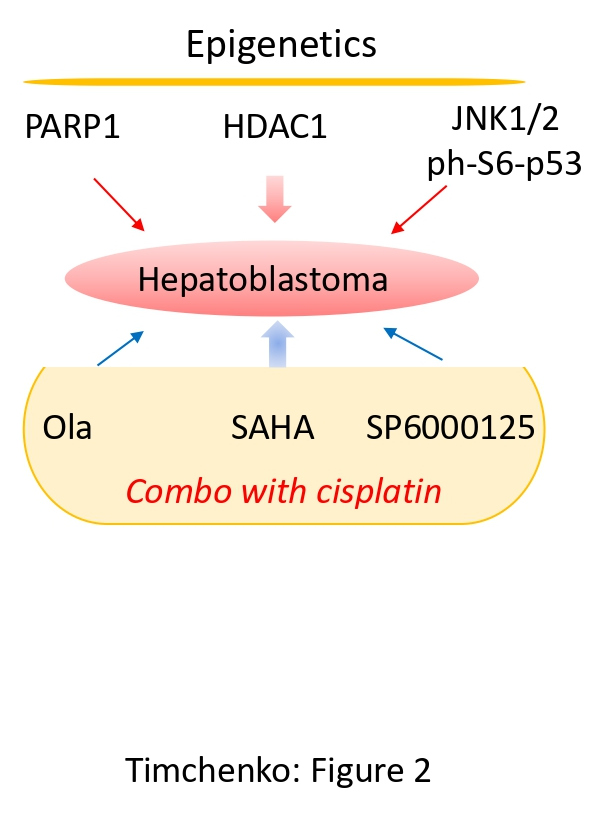
Figure 2: Epigenetics-based therapeutic approaches for treatments regimens for patients with hepatoblastoma.
that LB100 is used in clinical trials for relapsed solid tumors [12].
Identification of epigenetic mechanisms of aggressive HBL provides a background for generation of promising treatment regimens that have a potential to reduce cisplatin doses that are currently used for chemotherapy. The cisplatin-based chemotherapy has improved survival for children with HBL; however, the survived HBL patients have serious cisplatin-mediated side effects such as bilateral hearing loss, which has a devastating impact on child development [13]. It would be important to examine if a combination of cisplatin with one or two epigenetic inhibitors (OLA, SP600125 and SAHA) in the HBL-PDXs would reduce doses of cisplatin that are required for inhibition of tumor and, therefore, might reduce the side effects of cisplatin.
References
2. Cairo S, Armengol C, De Reyniès A, Wei Y, Thomas E, Renard CA, et al. Hepatic stem-like phenotype and interplay of Wnt/β-catenin and Myc signaling in aggressive childhood liver cancer. Cancer Cell. 2008 Dec 9;14(6):471-84.
3. Valanejad L, Cast A, Wright M, Bissig KD, Karns R, Weirauch MT, et al. PARP1 activation increases expression of modified tumor suppressors and pathways underlying development of aggressive hepatoblastoma. Communications Biology. 2018 Jun 11;1(1):1-3.
4. Johnston ME, II MP, Nicolle D, Gorse A, Gulati R, Kumbaji M, et al. Olaparib Inhibits Tumor Growth of Hepatoblastoma in Patient?Derived Xenograft Models. Hepatology (Baltimore, Md). 2021 Oct;74(4):2201.
5. Nicolle D, Fabre M, Simon?Coma M, Gorse A, Kappler R, Nonell L, et al. Patient?derived mouse xenografts from pediatric liver cancer predict tumor recurrence and advise clinical management. Hepatology. 2016 Oct;64(4):1121-35.
6. Hagelkruys A, Sawicka A, Rennmayr M, Seiser C. The biology of HDAC in cancer: the nuclear and epigenetic components. Histone Deacetylases: the Biology and Clinical Implication. 2011:13-37.
7. Beck A, Eberherr C, Hagemann M, Cairo S, Häberle B, Vokuhl C, et al. Connectivity map identifies HDAC inhibition as a treatment option of high-risk hepatoblastoma. Cancer Biology & Therapy. 2016 Nov 1;17(11):1168-76.
8. Rivas M, Johnston II ME, Gulati R, Kumbaji M, Aguiar TF, Timchenko L, et al. HDAC1-dependent repression of markers of hepatocytes and P21 is involved in development of pediatric liver cancer. Cellular and Molecular Gastroenterology and Hepatology. 2021 Jan 1;12(5):1669-82.
9. Shin S, Wangensteen KJ, Teta?Bissett M, Wang YJ, Mosleh?Shirazi E, Buza EL, et al. Genetic lineage tracing analysis of the cell of origin of hepatotoxin?induced liver tumors in mice. Hepatology. 2016 Oct;64(4):1163-77.
10. Cast A, Valanejad L, Wright M, Nguyen P, Gupta A, Zhu L, et al. C/EBP??dependent preneoplastic tumor foci are the origin of hepatocellular carcinoma and aggressive pediatric liver cancer. Hepatology. 2018 May;67(5):1857-71.
11. Hussain Y, Islam L, Khan H, Filosa R, Aschner M, Javed S. Curcumin–cisplatin chemotherapy: A novel strategy in promoting chemotherapy efficacy and reducing side effects. Phytotherapy Research. 2021 Aug 4.
12. Ho WS, Sizdahkhani S, Hao S, Song H, Seldomridge A, Tandle A, et al. LB-100, a novel Protein Phosphatase 2A (PP2A) inhibitor, sensitizes malignant meningioma cells to the therapeutic effects of radiation. Cancer Letters. 2018 Feb 28;415:217-26.
13. Chung V, Mansfield AS, Braiteh F, Richards D, Durivage H, Ungerleider RS, et al. Safety, tolerability, and preliminary activity of LB-100, an inhibitor of protein phosphatase 2A, in patients with relapsed solid tumors: An open-label, dose escalation, first-in-human, phase I trial. Clinical Cancer Research. 2017 Jul 1;23(13):3277-84.