

Abstract
Background and purpose: Nursing education historically relied on hospital-based apprenticeship models and physician-led diploma programs. While early milestones initiated the push toward professionalization, the acute demands of World War II fundamentally altered the structural trajectory of the field. This historical analysis examines how wartime pressures and the U.S. Cadet Nurse Corps contributed to shifting nursing education away from task-based hospital service and toward collegiate and competency-oriented frameworks.
Historical methodology and sources: Employing traditional historical methodology situated within a social nursing history framework, this study synthesizes primary archival evidence (including U.S. Public Health Service administrative files, 1943 Nurse Training Act documentation, official Cadet Nurse Corps reports, and institutional records), secondary historical literature detailing 20th-century nursing professionalization, and contemporary literature on curriculum design and clinical competency.
Principal historical findings: By accelerating diploma tracks, offering federal financial aid, establishing standardized collegiate criteria, and shifting core academic instruction into university settings, the U.S. Cadet Nurse Corps created institutional momentum for standardized academic training. These developments facilitated the postwar transition away from hospital-controlled student labor and laid structural groundwork for the expansion of collegiate nursing programs, including Associate Degree in Nursing (ADN) and Bachelor of Science in Nursing (BSN) pathways.
Contemporary implications: Tracing this historical trajectory demonstrates how wartime structural reforms established precedents for modern pedagogy, providing context for current competency-based education initiatives, baseline degree mandates, and the integration of academic theory with complex healthcare delivery.
Keywords
US Cadet Nurse Corps., Nursing Education, World War II, Competency-Based Education, Professionalization, Associate Degree in Nursing
Introduction
The American Association for the History of Nursing (AAHN) emphasizes that the study of nursing history provides a vital foundation for professional identity, encapsulating the values, ethics, knowledge, and leadership developed through clinical experience and education [1]. Examining historical milestones supports informed decision-making in contemporary healthcare administration and pedagogy. Understanding historical efforts to improve healthcare delivery broadens a clinician’s perspective and scope of practice, establishing continuity between past innovations and current standards [2,3].
While popular narratives often attribute the origin of professional nursing exclusively to Florence Nightingale’s relief efforts during the 1854 Crimean War, the evolution of nursing education is intertwined with broader global conflicts and socioeconomic shifts. Throughout early modern history, care was primarily delivered within home environments or religious orders through informal apprenticeships managed by monks, nuns, or deaconesses. As care moved into institutional settings, hospital-based diploma programs became the dominant framework. This model began formalizing in September 1872 when the New England Hospital for Women and Children in Boston—founded by Dr. Marie Zakrzewska—opened the first formal hospital-based nursing school in the United States, offering a one-year curriculum that produced early leaders such as Linda Richards and Mary Eliza Mahoney.
Although training schools expanded rapidly following the establishment of the Bellevue Hospital Training School in 1873, hospital-based programs increasingly prioritized low-cost student labor over academic instruction. To address institutional fragmentation and elevate professional standards, the National League for Nursing (NLN)—originally established as the American Society of Superintendents of Training Schools for Nurses—developed early standardized curriculum guidelines in the early 20th century [4]. However, wartime emergencies exposed the systemic limitations of relying on localized hospital apprenticeships to meet national healthcare needs.
During major national crises, critical shortages of medical personnel accelerated institutional responses, expanded the nursing workforce, and altered professional roles. The creation of the U.S. Cadet Nurse Corps under the U.S. Public Health Service (USPHS) during World War II marked a structural pivot in this evolution [5]. Understanding this historical transition provides critical context for modern educational paradigms, including the Associate Degree in Nursing (ADN), the Bachelor of Science in Nursing (BSN), and Competency-Based Education (CBE) frameworks championed by the American Association of Colleges of Nursing [6] and the American Nurses Credentialing Center [7].
To evaluate this transformative shift, this study addresses the following central historical research question: How did World War II and the U.S. Cadet Nurse Corps contribute to the transformation of American nursing education, accelerating its movement away from hospital-based apprenticeship models and toward collegiate and competency-oriented education?
Methodology
Historical research design
This study employs traditional historical methodology situated within a social nursing history framework. Social nursing history emphasizes the structural, institutional, and cultural forces shaping professional nursing over time. Rather than viewing educational changes in isolation, this design analyzes how wartime labor demands, legislative policies, and institutional partnerships altered the delivery and structure of nursing education. Using historical methodology serves to connect today’s past with tomorrow’s future [8].
Primary sources
The primary source evidence analyzed in this study encompasses public government records, legislative documents, official administrative reports, institutional archival holdings, and contemporary published materials from the World War II era. At the legislative level, the analysis relies on the official text and legislative history of the Nurse Training Act of 1943 (Public Law 74, 78th Congress, commonly known as the Bolton Act) [9]. To assess operational execution and federal policy, government administrative records from the U.S. Public Health Service (USPHS) Division of Nurse Education including administrative summaries, budget reports, and statistical publications document program operations spanning 1943 through 1948. Local implementation is examined through primary institutional holdings housed within the Adelphi University Archives and Special Collections in Garden City, New York, where administrative meeting minutes, recruitment logs, and student documentation detail the establishment of the nation's largest Cadet Nurse Corps unit [10]. Lastly, these organizational and legal sources are complemented by published oral histories of Cadet Nurses, wartime public relations records, recruitment posters, and Office of War Information media documentation, such as the promotional film Reward Unlimited.
Secondary sources
Secondary sources were selected to provide contextual frameworks and comparative depth. These include peer-reviewed historical monographs on 20th-century healthcare professionalization, published biographies, articles, books analyzing postwar educational reforms, institutional histories of academic nursing programs, and contemporary peer-reviewed nursing education literature addressing curriculum design, accreditation, and competency-based models.
Source selection and authentication
Primary and secondary sources were identified through systematic searches across academic databases including PubMed, CINAHL, JSTOR, and ProQuest Dissertations & Theses Global alongside physical archival holdings. All retrieved materials were evaluated using standard methods of historical criticism. External criticism was applied to verify the authenticity, authorship, provenance, and physical or digital integrity of archival documents and government reports, while internal criticism assessed the credibility, potential bias, logical consistency, and contextual accuracy of claims made within the primary texts. Finally, these sources were subjected to rigorous corroboration by cross-referencing federal statistics and administrative reports with institutional archival records, oral histories, and secondary literature to resolve discrepancies and minimize reporting bias.
Historical analysis
Data synthesis followed qualitative historical analysis. Primary and secondary evidence was cataloged chronologically and categorized conceptually into thematic nodes: workforce shortages, federal intervention, curricular acceleration, collegiate integration, postwar structural reforms, and pedagogical evolution. The analysis focused on identifying specific institutional and policy mechanisms that facilitated structural changes, maintaining a distinction between historical association and direct causal influence.
Ethical considerations
As this study relies exclusively on historical archival materials, public government documents, and previously published literature, formal Institutional Review Board (IRB) human subjects review was not required. Historical ethics were maintained by preserving the contextual integrity of archival source materials, properly attributing original authors and historical figures, and avoiding presentist interpretations of past events.
Evolution of Nursing Practice through Global Conflicts
Throughout American history, military health crises systematically highlighted the limitations of informal or localized nursing care, driving gradual shifts toward structured preparation. During the Revolutionary War (1776–1782), nursing care was largely unorganized, relying on soldiers' female relatives who provided basic domestic services such as sanitation, food preparation, and laundering, with no formal educational framework existing in the American colonies. European developments, such as the establishment of the Kaiserswerth Model in Germany by Pastor Theodor Fliedner in 1836, later provided early international examples of structured hospital training [11].
The Crimean War (1853–1856) served as a major catalyst for international professionalization. Florence Nightingale utilized empirical data and environmental statistics to demonstrate that military mortality at Scutari was driven primarily by preventable infectious disease rather than initial battlefield trauma [12]. Her implementation of rigorous sanitation, environmental controls, and administrative organization established foundational principles of modern public health and hospital design. Concurrently, Dr. Ignaz Semmelweis’s work on hand hygiene in obstetrical care reinforced the scientific foundation of sanitary practice.
During the American Civil War (1861–1865), formal accredited nursing programs remained absent in the United States. Care was delivered by volunteer societies, religious orders, and appointed administrators [13] such as Dorothea Dix, Superintendent of Army Nurses, alongside notable volunteer caregivers like Louisa May Alcott and Walt Whitman. The war highlighted severe sanitation deficiencies and prompted early organizational adjustments in military hospital layout [14].
By the Spanish-American War (1898), widespread outbreaks of yellow fever, malaria, and typhoid among troops highlighted the necessity of specialized clinical preparation. The rapid deployment of volunteer nurses during this conflict led directly to legislative advocacy by leaders such as Dr. Anita Newcomb McGee, resulting in the permanent establishment of the Army Nurse Corps in 1901 and the Navy Nurse Corps in 1908 [15].
World War I (1914–1918) further accelerated professionalization. Industrialized warfare and the 1918 influenza pandemic generated immense demand for clinical personnel. Over 22,000 Red Cross-recruited nurses served in military facilities, and the short-lived Army School of Nursing was established to provide standardized instruction. Although nurses were subject to military discipline and wore official uniforms, they were initially granted relative rank rather than full officer commissions.
The outbreak of World War II following the attack on Pearl Harbor on December 7, 1941, created an unprecedented workforce emergency. Strained by the Great Depression, civilian hospitals faced acute shortages as thousands of active nurses deployed overseas. In response, civilian nursing leaders organized the National Nursing Council for War Service to coordinate nationwide recruitment and formulate institutional solutions. Table 1 analyzes how successive military crises generated specific educational responses and long-term structural shifts in nursing education.
|
Historical Conflict (Years) |
Primary Historical Pressure / Shortage |
Educational Response & Historical Milestones |
Structural Mechanism & Long-Term Consequence |
|
Revolutionary War (1776–1782) |
Absolute lack of organized medical infrastructure; military reliance on domestic care. |
Domestic support by soldiers' families; no formal training programs. |
Established nursing as essential military support, setting preconditions for future formalization. |
|
Crimean War (1853–1856) |
High military mortality from infectious disease rather than combat trauma. |
Implementation of environmental sanitation, hygiene, and statistical tracking. |
Birthed modern professional nursing; shifted focus to data-driven environmental management. |
|
Civil War (1861–1865) |
Deplorable hospital sanitation; rapid surge of wounded soldiers. |
Appointment of administrative oversight (Dix); organized volunteer relief societies. |
Highlighted necessity of formal operational standards and professional oversight. |
|
Spanish-American War (1898) |
Devastating tropical disease outbreaks (malaria, yellow fever, typhoid). |
Rapid recruitment of contract volunteer nurses. |
Demonstrated need for permanent military nursing units; led to founding of Army (1901) and Navy (1908) Nurse Corps. |
|
World War I (1914–1918) |
Industrialized warfare casualties compounded by the 1918 flu pandemic. |
Recruitment of 22,000 Red Cross nurses; establishment of Army School of Nursing. |
Transitioned nursing toward a disciplined, regulated profession with relative military status. |
|
World War II (1939–1945) |
Global multi-front war; severe dual depletion of civilian and military nursing supply. |
Passing of 1943 Bolton Act; creation of U.S. Cadet Nurse Corps; accelerated curricula. |
Shifted financial and curricular oversight to federal/collegiate structures; laid groundwork for BSN and ADN expansion. |
The U.S. Cadet Nurse Corps
To mitigate the acute nursing shortage during World War II, Congresswoman Frances Payne Bolton introduced the Nurse Training Act of 1943 (Public Law 74, the Bolton Act), establishing the U.S. Cadet Nurse Corps. Administered by the USPHS under the direction of Lucile Petry Leone as the first woman to head a major division within the USPHS, the program operated with an initial federal appropriation of $65 million. The Cadet Nurse Corps provided enrolled students with full tuition coverage, books, customized uniforms, and monthly stipends. In exchange, cadets pledged to engage in essential military or civilian nursing service for the duration of World War II.
The program implemented significant structural changes in curriculum design. Traditional 36-month hospital diploma tracks were accelerated into 30 months of intensive theoretical and practical instruction, followed by a mandatory six-month "Senior Cadet" clinical internship. Senior Cadets were deployed directly into federal, military, or high-need civilian hospitals, immediately reinforcing healthcare staffing across the country [16,17].
Recruitment campaigns utilized national media, including radio broadcasts, print advertising, and public informational films such as Vanguard Films' Reward Unlimited (1944), which reached millions of moviegoers [18]. Non-discrimination clauses within the Bolton Act enabled recruitment across diverse demographics, offering access to African American, Asian American, and Native American women. Furthermore, approximately 200 Japanese American Nisei women incarcerated in War Relocation Authority camps were permitted to enroll in participating nursing schools.
Colleges and universities partnered with hospital training programs to expand academic housing and laboratory facilities. For example, Adelphi College (now Adelphi University) in Garden City, New York, then a higher education institution for women, capitalized on its insulated student demographic under President Paul Dawson Eddy to establish the largest Cadet Nurse Corps unit in New York State. Assisted by US Public Health Service (USPHS) consultant and surveyor Mildred Montag, Adelphi University archives note the establishment of its School of Nursing under the Nurse Training Act of 1943. Utilizing federal funds made available through the Lanham Act, the college constructed residence halls to accommodate housing demands, graduating over 2,500 nurses who entered civilian and military service. Notable graduates included Mary Dewar, a former community health educator and author; Claire Shulman, former Queens Borough President; and Helen Holmes Taylor, the program's first African American graduate.
Mechanisms linking the Cadet Nurse Corps to postwar nursing education
The Cadet Nurse Corps influenced postwar nursing education through several structural mechanisms rather than direct administrative succession. The Cadet Nurse Corps fundamentally transformed nursing education by shifting core academic instruction from clinical wards to university faculties, requiring participating hospital programs to affiliate with accredited higher education institutions for basic science coursework. This institutional transition was driven by federal subsidies that established a precedent for public investment in professional nursing education, demonstrating that public policy could effectively elevate educational standards and broaden access. Furthermore, the successful execution of an accelerated 30-month curriculum challenged the traditional assumption that three full years of service-based hospital apprenticeship were required to achieve clinical competence. By formally separating student learning from hospital service during academic instruction, the program reshaped expectations around student labor, laying the groundwork for postwar educators to advocate for true student status rather than hospital employee status.
The Development of Collegiate Pathways and the Associate Degree Program
Following World War II, healthcare leaders sought permanent solutions to recurring nurse shortages and structural deficiencies in hospital-based education. At the time, approximately 83 percent of nursing programs remained hospital-based diploma schools where students provided low-cost clinical labor.
A series of pivotal post-war reports catalyzed systemic educational reform across the nursing profession. In 1948, Esther Lucile Brown’s landmark report, Nurses for the Future, recommended integrating basic nursing education into colleges and universities, establishing a definitive distinction between professional and vocational practice. This movement gained empirical backing through Lucile Petry’s 1949–1950 U.S. Public Health Service ten-state survey, which culminated in Nursing Schools at the Mid-Century and exposed critical institutional variabilities to reinforce calls for standardized collegiate programs [19]. Complementing these findings, economist Eli Ginzberg and the Committee on the Function of Nursing published A Program for the Nursing Profession in 1949 [20]. By analyzing pervasive workforce inefficiencies, the Ginzberg Report advocated for a two-tiered system that formally separated baccalaureate-prepared professional nurses from practical nurses trained through shorter technical programs.
Concurrently, Dr. Mildred Montag addressed these workforce demands through her doctoral research at Teachers College, Columbia University, under the advisement of Dr. R. Louise McManus. In her 1951 dissertation, The Education of Nursing Technicians, Montag proposed a two-year collegiate curriculum housed within junior and community colleges. This model aimed to prepare technical nurses capable of providing direct patient care under the supervision of baccalaureate-prepared professional nurses. With a $110,000 grant from the Rockefeller Foundation, Montag established the Cooperative Research Project in Junior-Community College Education for Nursing (1952–1957). The project evaluated experimental two-year Associate Degree in Nursing (ADN) programs across seven community colleges and one hospital school. Published in 1959, the final evaluation demonstrated that ADN graduates performed effectively in clinical settings and passed state licensure examinations at rates comparable to traditional three-year diploma graduates. While Montag designed the ADN as a technical qualification distinct from the BSN, state licensing boards established a single licensure examination (NCLEX-RN) for both pathways. Consequently, ADN programs expanded rapidly across community colleges, becoming a widespread entry point into the registered nursing workforce [21–23]. Figure 1 summarizes the developmental steps of Montag's Cooperative Research Project.
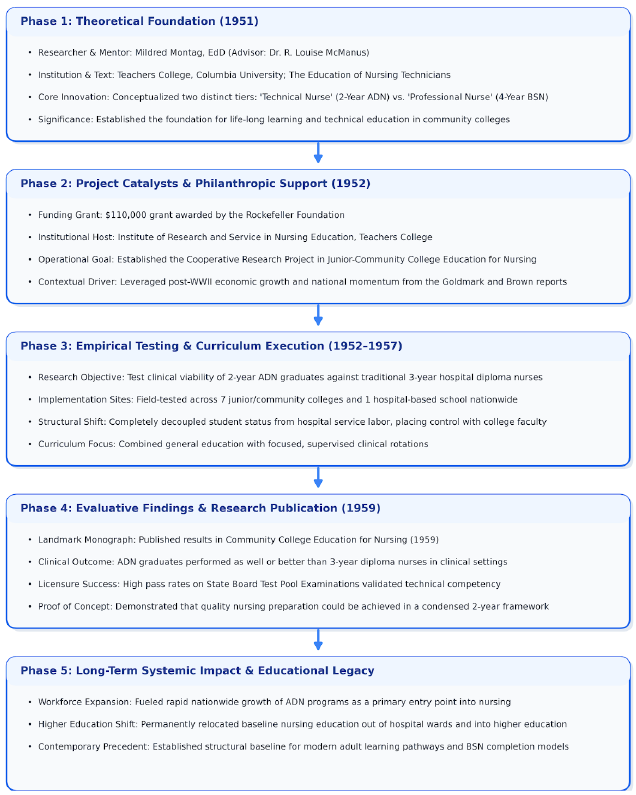
Figure 1. Summary of Mildred Montag’s cooperative research project (1952–1959).
Defining Competency-Based Education and Conceptual Continuity
To evaluate how historical developments relate to modern nursing education, Competency-Based Education (CBE) must be explicitly defined. CBE is an instructional framework that prioritizes a student's demonstrated mastery of specific, measurable learning outcomes and clinical behaviors over traditional time-in-seat or accumulated clock hours. At its core, competency-based education in nursing shifts the learning paradigm by prioritizing demonstrated mastery, ensuring assessments evaluate how effectively a student applies acquired knowledge within realistic clinical environments. Rather than tying curricular progression to arbitrary timeframes or mandatory seat hours, advancement is strictly grounded in explicit, measurable learning outcomes. Faculty gauge this growth through authentic clinical performance, relying on direct observation, clinical simulation, and objective metrics to evaluate critical clinical judgment. Crucially, this model maintains a strict separation of learning from service, guaranteeing that educational requirements are crafted solely to uphold rigorous academic standards rather than to satisfy institutional labor needs.
The evolution from hospital apprenticeships to modern CBE represents conceptual continuity rather than direct linear causation. The Cadet Nurse Corps demonstrated that clinical instruction could be condensed and structured around explicit learning objectives without compromising clinical safety. Postwar collegiate models further decoupled student training from hospital service labor. Contemporary frameworks of the AACN’s The Essentials: Core Competencies for Professional Nursing Education, operationalize these principles by defining entry-level and advanced competencies across ten primary domains [6]. Figure 2 illustrates the conceptual continuity linking historical labor shifts, federal crisis interventions, collegiate expansion, and modern competency frameworks.
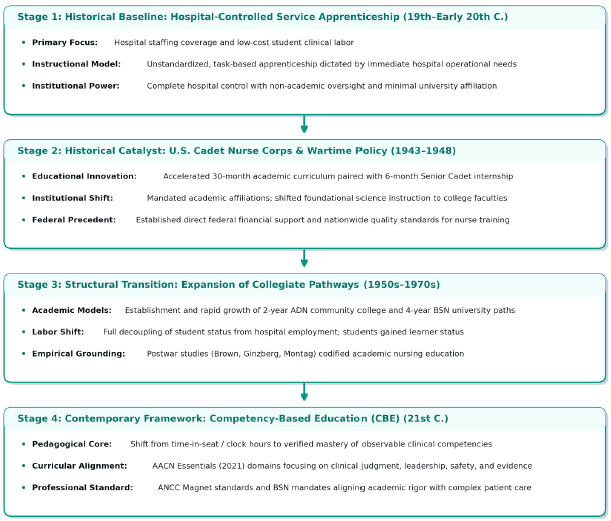
Figure 2. Conceptual evolution from service-based apprenticeship to competency-based education.
Discussion
Historical findings
The historical evidence demonstrates that World War II and the U.S. Cadet Nurse Corps served as structural catalysts in American nursing education [24,25]. Prior to 1943, hospital-based diploma programs dominated the educational landscape, using student labor to fulfill operational requirements. The Cadet Nurse Corps disrupted this model by introducing direct federal subsidies, establishing uniform curricular guidelines, and requiring academic affiliations. By accelerating diploma tracks into 30 months of formal study followed by a structured internship, the program demonstrated that collegiate-supervised education could prepare clinically competent nurses efficiently. These wartime mechanisms established administrative precedents that facilitated the postwar expansion of junior college (ADN) and university (BSN) programs [9].
Contemporary educational interpretation
Connecting these historical developments to modern pedagogy clarifies the origin of current educational standards. The 2021 AACN Essentials framework reflects a continuation of the long-term shift away from task completion toward outcome-based evaluation. Modern CBE models require students to demonstrate synthesis of theory, empirical evidence, and clinical judgment. Tracing this trajectory allows contemporary educators to contextualize current entry-to-practice discussions. As workforce studies associate higher proportions of BSN-prepared nurses with reduced inpatient mortality and improved failure-to-rescue rates [26], institutional standards such as the ANCC Magnet Recognition Program®, which mandates that 100% of nurse leaders and 80% of direct-care staff hold a BSN or higher—reflect ongoing efforts to align educational preparation with clinical complexity [27].
Policy and workforce implications
Historical analysis of federal interventions during World War II provides context for addressing modern workforce shortages. The Cadet Nurse Corps demonstrated that targeted federal funding, full tuition support, and structured public health service commitments can rapidly expand nursing educational capacity while broadening demographic access. Modern policy initiatives such as federally funded loan cancellation, grants for Accelerated Bachelor of Science in Nursing (ABSN) tracks, and public investments in nursing faculty development echo the structural design of the 1943 Bolton Act. Understanding the administrative mechanisms of past federal interventions can inform contemporary legislative strategies aimed at strengthening the healthcare workforce.
Limitations
While providing crucial insights into the evolution of nursing curricula, this historical analysis carries several methodological and contextual limitations that warrant consideration. Geographically, the investigation remains centered on the United States, limiting the direct generalizability of its findings to international health systems and higher education frameworks. This geographic scope is further shaped by archival selection bias, as official university and federal records predominantly capture administrative perspectives—inherently favoring successful program outcomes while underrepresenting operational friction, institutional failures, and student attrition. Compounding this challenge is the unequal survival of primary sources across eras; records detailing eighteenth- and early nineteenth-century nursing training are far less systemic than mid-twentieth-century federal files, resulting in variable evidentiary depth across time periods.
Analytically, interpreting historical educational shifts through contemporary frameworks like Competency-Based Education carries a risk of presentist bias. To mitigate this, care was taken to carefully distinguish historical operational mechanisms from modern conceptualizations. Finally, in keeping with historical methodology, this study establishes structural associations, temporal sequences, and institutional influences rather than direct experimental causality. The transition toward collegiate nursing was not driven by a singular event but rather emerged from a complex matrix of converging factors, including post-World War II economic growth, hospital modernization, and evolving public health policies.
Conclusion
The transition of American nursing education from hospital-controlled apprenticeship to collegiate academic preparation represents a major structural shift in modern healthcare. The urgent workforce demands of World War II and the creation of the U.S. Cadet Nurse Corps accelerated this evolution by demonstrating the efficacy of standardized, collegiate-affiliated curricula. By establishing federal funding mechanisms, encouraging diverse recruitment, and shifting foundational instruction into academic settings, the Cadet Nurse Corps laid groundwork for postwar educational developments, including Associate degree and Baccalaureate pathways.
Analyzing these historical developments provides essential context for modern educational reforms, including competency-based assessment and elevated degree standards. As healthcare systems navigate contemporary clinical complexities and workforce demands, historical precedents demonstrate that sustainable educational reform requires systematic policy support, structural standardization, and a clear alignment between academic preparation and clinical outcomes.
Acknowledgements
The author expresses their sincere gratitude to Brian McDonald and David Ranzan of the Adelphi University Archives and Special Collections for their research support. The author also wishes to thank Dr. Christine Kovner for her valuable advice and input during the early stages of this work.
References
2. D'Antoni P. Toward a History of Health Care: Repositioning the Histories of Nursing and Medicine. Bull Hist Med. 2022;96(3):285–308.
3. Matthias AD, Hundt B. The power of the past: A roadmap for integrating nursing history into the curriculum. J Prof Nurs. 2023 May-Jun;46:231–7.
4. Dobiesz VA, Schwid M, Dias RD, Aiwonodagbon B, Tayeb B, Fricke A, Pham P, Erickson TB. Maintaining health professional education during war: A scoping review. Med Educ. 2022 Aug;56(8):793–804.
5. U.S. Public Health Service. Records of the United States Cadet Nurse Corps. College Park (MD): National Archives at College Park; 1943–1948.
6. American Association of Colleges of Nursing. The essentials: Core competencies for professional nursing education. Washington (DC): American Association of Colleges of Nursing; 2021. Available from: https://www.aacnnursing.org/Portals/0/PDFs/Publications/Essentials-2026.pdf
7. American Association of Colleges of Nursing. The impact of education on nursing practice. 2024. Available from: https://www.aacnnursing.org/news-data/fact-sheets/impact-of-education-on-nursing-practice
8. Lewenson SB, Herrmann EK. Capturing nursing history: A guide to historical methods in research. New York, NY: Springer Publishing; 2008.
9. United States Public Health Service, Division of Nursing. The United States Cadet Nurse Corps (1943–1948) and other federal nurse training programs. Public Health Service Publication No. 38. Washington (DC): U.S. Government Printing Office; 1950.
10. Adelphi University Archives and Special Collections in Garden City, New York.
11. Dillard-Wright J. Telling a different story: Historiography, ethics, and possibility for nursing. Nurs Philos. 2023 May 24:e12444.
12. Aziz F. The Healing Art of Connecting with Patients. Switzerland: Springer; 2025.
13. Adrienne C. Healing a Divided Nation: How the American Civil War Revolutionized Western Medicine. Simon and Schuster; 2022 Aug 2.
14. Milbrath G. A new approach to preparing nurses for war: The Army school of nursing. Online Journal of Issues in Nursing. 2019;24(3):1–8.
15. López M, Mirón-González R, Castro MJ, Jiménez JM. Training of volunteer nurses during the Spanish Civil War (1936-1939): A historical study. PLoS One. 2021 Dec 31;16(12):e0261787.
16. Nurse Training Act of 1943, Pub. L. No. 78-74, 57 Stat. 153. 1943.
17. National Park Service. (n.d.). Cadet Nurse Corps. U.S. Department of the Interior. https://www.nps.gov
18. United States Office of War Information. Reward unlimited [film]. College Park (MD): National Archives and Records Administration; 1944. (Record Group 208).
19. Petry L. Basic nursing education. American Journal of Nursing. 1949. 49(11), 741–3.
20. Ginzberg E. A program for the nursing profession. New York, NY: Macmillan; 1949.
21. McAllister A. R. Louise McManus and Mildred Montag create the associate degree model for the education of nurses: the right leaders, the right time, the right place—1947 to 1959 [dissertation]. Ann Arbor (MI): ProQuest LLC; 2012.
22. Montag ML. The education of nursing technicians. New York, NY: G. P. Putnam's Sons; 1951.
23. Montag ML. Community college education for nursing: an experiment in technical education for nursing. New York (NY): McGraw-Hill; 1959.
24. Kalisch BJ, Kalisch PA. Nurses in American history. The Cadet Nurse Corps-in World War II. Am J Nurs. 1976 Feb;76(2):240–2.
25. Robinson TM. Cadet nurse stories: The call for and response of women during World War II. Indianapolis, IN: Sigma Theta Tau International Center Nursing Press; 2001.
26. Aiken LH. Baccalaureate nurses and hospital outcomes: more evidence. Med Care. 2014 Oct; 52(10):861–3.
27. American Nurses Credentialing Center. Magnet Recognition Program requirements [Internet]. Silver Spring (MD): American Nurses Credentialing Center; 2026 [cited 2026 Oct 15]. Available from: https://www.nursingworld.org/organizational-programs/magnet/