

Abstract
Pediatric congenital and acquired heart diseases contribute substantially to morbidity and mortality in low- and middle-income countries (LMICs), including Ethiopia, where access to pediatric cardiac services remains limited. Constrained infrastructure and financing, workforce shortages, fragmented referral systems, and limited longitudinal follow-up delay diagnosis and treatment and worsen inequities. Comorbid infection and malnutrition further complicate care delivery and outcomes.
We propose a tiered framework for integrating pediatric cardiac services into Ethiopia’s primary healthcare system. The model prioritizes early recognition, decentralized diagnostic capacity, structured referral pathways, telemedicine-supported specialist consultation, and continuity of long-term follow-up. Integration across primary, secondary, and tertiary levels can strengthen workforce capacity, enable task sharing, support quality improvement, and improve equitable access to care.
We also describe Ethiopia’s Pediatric Heart Initiative, a locally led implementation model that trains general pediatricians in basic echocardiography and provides ongoing virtual mentorship to expand regional pediatric cardiac capacity. This framework may offer a scalable approach for improving pediatric cardiovascular care in Ethiopia and other LMICs with similar health system constraints.
Keywords
Pediatric cardiac disease, Congenital heart disease, Health equity, Health system integration, Low- and middle-Income Countries (LMICs)
Introduction
Cardiovascular diseases remain the leading cause of morbidity and mortality worldwide with the greatest impact occurring in low- and middle-income countries (LMICs) [1]. Pediatric heart diseases include both congenital conditions present at birth and acquired conditions that develop later in life, such as rheumatic heart disease, cardiomyopathies, and cardiovascular manifestations of systemic diseases [2,3]. Congenital heart disease (CHD), the most common birth defect worldwide, has become increasingly survivable because of advances in diagnosis and treatment [4]. Consequently, the global population of individuals living with CHD has grown considerably across the lifespan. In 2023, an estimated 2.3 million infants were born with CHD worldwide, and approximately 16 million people were living with the condition [4]. Importantly, approximately 90% of affected infants are born in LMICs [5,6]. These countries, including Ethiopia, the second most populous country in Africa, bear a high burden of both congenital and acquired pediatric heart disease [2,7]. Children in LMICs face substantial barriers to timely diagnosis and effective management [3,5]. These barriers include infrastructure and financial constraints, shortages of trained healthcare personnel, weak referral systems that limit access to specialized care and long-term follow-up, and a high burden of comorbid conditions such as infection and malnutrition that further complicate disease management [2,3,8].
Congenital and Acquired Heart Disease Burden and Related Care in Ethiopia
There is a paucity of data on the prevalence of CHD in Ethiopia because of the absence of disease-specific registries and limited studies. Using a global CHD birth prevalence estimate of 8–10 per 1,000 live births, Ethiopia’s annual birth rate (2.7%) and the estimated total population (135 million), about 29,000–36,500 babies were born with CHD in Ethiopia in 2025 [6,7]. Among babies born with CHD, 25–30% have critical CHD (CCHD) that requires some form of intervention during infancy for survival and better long-term outcomes [6]. Hence, about 7,300–11,000 babies were born in 2025 in Ethiopia with CCHD that require either surgical or percutaneous interventions. Further, delayed diagnosis of over half of CHD cases (53% based on a study at the country’s largest public hospital in Addis Ababa) and subsequent poor outcomes underline the significant challenges posed by CCHD [9]. Factors contributing to unacceptably high rates of delayed diagnosis include inaccessibility of services, financial hardships, and healthcare system inefficiency [9,10].
Studies have also demonstrated that acquired heart diseases, particularly rheumatic heart disease (RHD), are significant public health issues among Ethiopian children and young adults [11–13]. In a systematic review and meta-analysis, the pooled prevalence of RHD among children and asymptomatic participants was 27/1,000 while it was 49.04/1,000 among cardiac patients [13]. These estimates suggest that RHD places a substantial disease burden on several million Ethiopians.
Despite significant morbidity and mortality from both congenital and acquired heart diseases among children, services to address these problems are limited (Table 1). The European Association for Cardio-Thoracic Surgery guidelines recommend one cardiac center for 4–6 million people for optimal cardiac surgical services [14]. While Ethiopia needs about 27 cardiac centers throughout the country based on this international standard, currently, cardiac surgical services for both adults and children are offered only at five local centers, all located in the capital city (Addis Ababa): a charity organization, two tertiary public hospitals, and two for-profit centers. There are only five cardiac surgeons and twenty pediatric cardiologists in the country. Owing to shortages of consumables and medical supplies, in addition to the limited number of centers and the small skilled workforce, more than 10,000 patients are on a waiting list for cardiac surgery and other interventions at the largest charity-based heart hospital in Addis Ababa. Importantly, most cardiac patients waiting for intervention are children (67%) and would benefit greatly from these services. Among the registered patients at the Cardiac Center of Ethiopia, only one-third of the eligible patients received surgical or percutaneous interventions, reflecting the large unmet need [15,16].
|
Demographic Variables |
Current Estimates |
|
Population estimate |
*135.5 million |
|
Birth prevalence of CHD |
8–10 per 1,000 live births |
|
Number of babies born with CHD/year |
29,000–36,500 |
|
Critical CHD requiring intervention during the first year of life |
7,300–11,000 infants |
|
Existing pediatric cardiac surgery centers in the country |
5 (2 public, 2 private, and 1 charity hospital); all located in Addis Ababa |
|
Pediatric cardiologists |
20 (1 per 6.8 million people) |
|
Cardiac surgeons (adult and pediatric) |
5 |
|
*Source: United Nations Population Fund (UNFPA), 2025 estimate [7]. |
|
Rationale for Integrating Pediatric Cardiac Care with Primary Health Care
Integrating pediatric cardiac care into primary health care (PHC) includes a range of high-impact interventions, such as early clinical recognition of cardiac signs, pulse oximetry screening for critical CHD, prevention and treatment of streptococcal pharyngitis, and establishment of efficient referral systems. It also requires capacity building and empowerment of primary healthcare workers through task shifting and task sharing, enabling them to provide basic services and connect patients to higher levels of care [17–19].
The Ethiopian health services are structured into a three-tier system with a well-established Health Extension Program (HEP) and the expanding national network of PHC facilities (Figure 1) [20]. This provides a unique opportunity to integrate essential pediatric cardiac services at community and first-contact levels. This approach aligns with national commitments to health system strengthening and the integration of noncommunicable disease care within maternal, newborn, and child health frameworks [21]. By shifting the emphasis from isolated tertiary care to a community-based continuum of care, meaningful and sustainable progress can be achieved. Currently, no structured, evidence-informed recommendations exist for developing high-quality pediatric cardiac care within Ethiopia’s health system. This framework therefore proposes a tiered model to improve pediatric cardiac clinical services in Ethiopia.
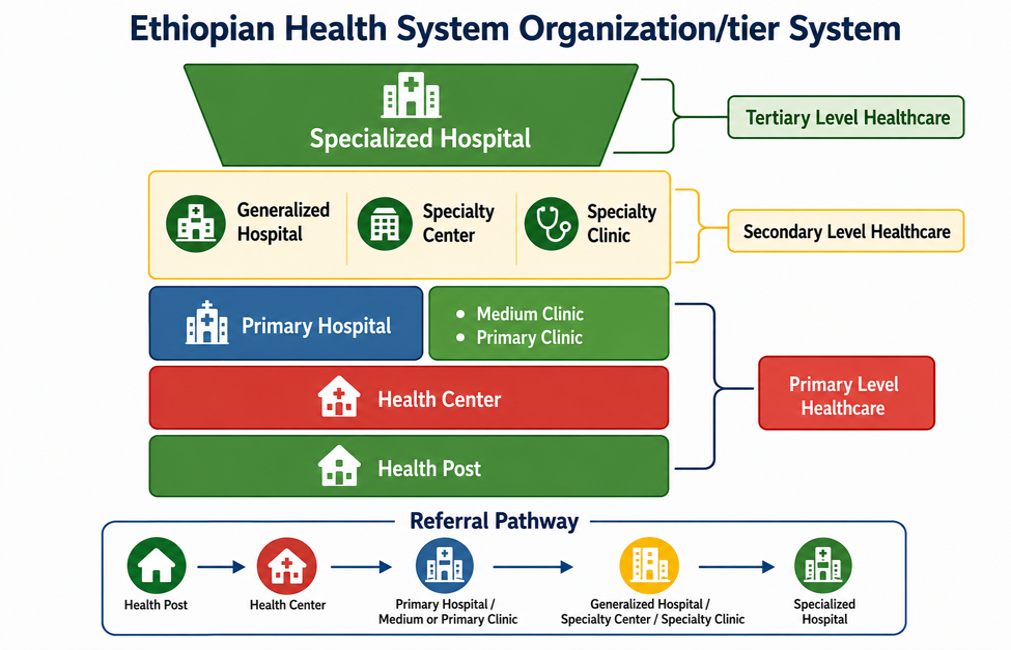
Figure 1. Adapted from: Federal Ministry of Health (FMOH). Health Sector Development Program IV, 2015, Addis Ababa20.
Integrating Pediatric Cardiac Services into Health Systems in LMICs
Patients with congenital or acquired heart disease require a structured continuum of care, often extending across the lifespan. Evidence from LMICs indicates that population-based approaches to CHD recognition and treatment across this continuum, supported by telemedicine, can improve access to care, enhance quality, and reduce overall infant mortality [22–26]. Even after surgical or percutaneous intervention, patients require lifelong follow-up [4,23].
Pediatric cardiac services should be delivered through an integrated, tiered health system in which service scope, infrastructure, workforce capacity, and quality indicators are aligned with the capabilities of each level of care (Table 2). This model can facilitate timely diagnosis, efficient referral, continuity of care, and equitable access to pediatric cardiac services, while strengthening health system capacity to address congenital and acquired heart disease among children in low-resource settings [23].
|
Level |
Services |
Requirements |
Indicators |
|
Primary care |
CHD screening; referral; community education |
Consultation space; basic examination equipment; workers trained in cardiac assessment |
Equipment readiness; screening and referral competency; adherence to RHD prophylaxis |
|
Secondary care |
Noninvasive diagnosis; stabilization; follow-up of stable patients |
ECG, echocardiography, chest X-ray, anticoagulation monitoring; essential medicines; trained pediatricians |
Diagnostic capacity; outcomes; pulse oximetry coverage; teleconsultation use |
|
Tertiary care |
Advanced diagnostics; inpatient, outpatient, emergency and ICU care; catheterization, surgery, lifelong follow-up |
Advanced imaging; laboratory and blood bank; cardiac ICU, catheterization and surgical facilities; multidisciplinary heart team; training platform |
Registry-based outcomes; infrastructure performance; workforce competency; access to advanced services |
|
Abbreviations: CHD: Congenital Heart Disease; ECG: Electrocardiography; ICU: Intensive Care Unit; RHD: Rheumatic Heart Disease |
|||
At the primary healthcare level, services should emphasize early CHD recognition, timely referral, and community education. This requires consultation space, basic clinical equipment, and health workers trained to identify common pediatric cardiac conditions. Quality monitoring should assess equipment availability, screening and referral competency, and adherence to long-term management, including secondary RHD prophylaxis.
At the secondary healthcare level, services should include noninvasive diagnosis, stabilization of critically ill children, and follow-up of stable patients. Facilities require electrocardiography, echocardiography, chest radiography, blood pressure and anticoagulation monitoring, and essential cardiovascular medications. General pediatricians should be trained in basic echocardiography and ECG interpretation. Quality indicators should track diagnostic capacity, patient outcomes, newborn pulse oximetry coverage, and teleconsultation use [22].
At the tertiary healthcare level, services should include advanced diagnostics, specialized inpatient and outpatient care, intensive care, catheterization, surgery, and lifelong follow-up, including transition to adult congenital heart disease services. These centers require advanced imaging, laboratory and blood bank support, cardiac intensive care units, catheterization laboratories, operating facilities, and multidisciplinary pediatric heart teams. As centers of excellence, they should support workforce training, research, and registry-based monitoring of outcomes, infrastructure performance, workforce competency, and equitable access.
Barriers to Improving Pediatric Cardiac Services in LMICs
A sustainable pediatric cardiovascular program depends on several interrelated foundations: adequate infrastructure, a skilled multidisciplinary workforce, reliable access to essential consumables and medical supplies, and coordinated referral and follow-up systems. In most low-resource settings, including Ethiopia, these elements remain underdeveloped, limiting the delivery of timely, high-quality pediatric cardiac care [3,23,25].
Delayed Diagnosis
Delayed diagnosis of congenital heart disease remains among the most significant barriers to care. Early detection is often limited by insufficient diagnostic equipment, inadequate health facility infrastructure, and a shortage of healthcare professionals trained in pediatric cardiac assessment. As a result, many children are diagnosed only after severe complications develop, reducing the likelihood of timely and effective intervention [5,9,10].
Fragmented Referral and Care Coordination
Weak referral systems and poor coordination across levels of care further hinder service delivery. Collaboration among governmental, private, and non-governmental healthcare providers remains fragmented, contributing to delayed referrals, inefficient use of resources, and reduced access to specialized cardiac services. These systemic gaps prolong treatment delays and contribute to poorer clinical outcomes [10,15,24].
Stabilization, Transport, and Peripheral Care
The stabilization and transport of critically ill infants and children present additional challenges. Many healthcare providers have limited training in stabilizing newborns and children before and during transfer, and the absence of a coordinated neonatal and pediatric transport network compromises safe referral to specialized centers. At peripheral facilities, inadequate infrastructure, limited diagnostic capacity, and shortages of trained personnel often result in suboptimal management, increasing the risk of preventable deterioration while children await definitive care [3,23,25].
Long-Term Follow-Up and Continuity of Care
Long-term management is further weakened by inadequate follow-up systems. Standardized follow-up protocols are not yet well integrated into the national healthcare system, and telemedicine platforms that could support remote monitoring, specialist consultation, and continuity of care remain underdeveloped [10,15]. Consequently, many children experience interruptions in care and delayed identification of complications after diagnosis or intervention [23,24].
Limited Local Evidence for Planning and Innovation
The limited availability of locally generated clinical research also constrains evidence-based planning and innovation. A shortage of high-quality local data restricts the development of context-specific policies, clinical guidelines, and service delivery models tailored to Ethiopia’s healthcare environment. Strengthening locally led research is therefore essential to guide sustainable improvements in pediatric cardiac care and to inform strategies that reflect the country’s needs, resources, and health system constraints [15].
The Pediatric Heart Initiative (PHI)
The Pediatric Heart Initiative (PHI) is a locally led model established to address Ethiopia’s critical shortage of pediatric cardiac services. Launched in March 2024 through collaboration between the Children’s Heart Fund of Ethiopia and the Global Heartcare Foundation, PHI aims to help regional public hospitals outside Addis Ababa develop sustainable pediatric cardiac programs. In the short term, the initiative strengthens pediatric services by training general pediatricians in basic transthoracic echocardiography to support screening and early detection of congenital and acquired heart disease. Core monitoring measures were established to evaluate program outcomes.
During implementation, PHI conducted site visits and engaged hospital administrative teams to secure institutional commitment. Participating hospitals also received an institutional assessment checklist and tailored recommendations to standardize pediatric cardiac services.
To date, 31 general pediatricians, including one participant from a neighboring country, have completed basic pediatric echocardiography training. Consultant pediatric cardiologists at the Cardiac Center of Ethiopia delivered the training in Addis Ababa using a locally developed standardized manual. After training, participants received structured mentorship through telemedicine, including virtual case consultations and continuing medical education sessions. Preliminary evaluations show encouraging improvements in pediatric cardiac care delivery at participating hospitals where trained pediatricians practice.
Limitations
This framework has several limitations. It is derived from published literature, international recommendations, and the authors’ clinical and programmatic experience rather than from prospective evaluation, and its effectiveness has not yet been formally tested. National estimates of CHD burden were extrapolated from global birth prevalence data and population projections because Ethiopia lacks disease-specific registries and may therefore under- or overestimate the true burden. Outcome data from the Pediatric Heart Initiative are preliminary and have not yet been systematically evaluated. Finally, differences in health system structure, financing, and political commitment across LMICs may limit the direct transferability of this model, and adaptation to local contexts will be required.
Conclusion
Despite the substantial burden of congenital and acquired heart disease in LMICs, pediatric cardiac services remain insufficiently developed. Inadequate infrastructure, limited equipment and resources, shortages of trained personnel, and weak referral systems continue to constrain timely, high-quality care. Integrating a continuum of pediatric cardiac care across primary, secondary, and tertiary levels of existing health systems offers a practical strategy to address these persistent gaps. Training, mentorship, and advocacy can strengthen local and regional capacity for pediatric cardiac service delivery in resource-limited settings. Sustained collaboration among governments, healthcare institutions, professional societies, and other stakeholders will be essential to developing equitable, high-quality, and sustainable pediatric cardiac care programs. Initiatives such as the Pediatric Heart Initiative may provide scalable models for expanding comprehensive cardiac services, strengthening workforce development, and advancing contextually relevant research. Together, these strategies offer a feasible and sustainable approach to reducing the substantial unmet need for pediatric cardiovascular care across LMICs.
Author Contribution Statement
All authors have contributed to the initial concept development of this work, participated in manuscript drafting, and were involved in the final editing and review of the manuscript. All authors have read and approved the final version.
Funding
None.
Conflicts of Interest
None.
References
2. Zühlke L, Mirabel M, Marijon E. Congenital heart disease and rheumatic heart disease in Africa: recent advances and current priorities. Heart. 2013 Nov;99(21):1554–61.
3. Saxena A. Status of Pediatric Cardiac Care in Developing Countries. Children (Basel). 2019 Feb 25;6(2):34.
4. Kumar RK, Di Cesare M, Shrikhande S, Pendrick E, Zheleva B, Adeoye M, et al. World Heart Report 2026: Congenital Heart Disease. Geneva: World Heart Federation; 2026. Available from: https://world-heart-federation.org/report2026/
5. Al-Shawki YMA. The Global Burden and Diagnostic Challenges of Undiagnosed Congenital Heart Disease in Resource-Limited Settings: A Comprehensive Review from 2019 to 2025. Res Rep Clin Cardiol 2026;17:558007.
6. Liu Y, Chen S, Zühlke L, Black GC, Choy MK, Li N, et al. Global birth prevalence of congenital heart defects 1970-2017: updated systematic review and meta-analysis of 260 studies. Int J Epidemiol. 2019 Apr 1;48(2):455–63.
7. United Nations Population Fund. World Population Dashboard: Ethiopia. New York: UNFPA; 2025 [cited 2026 May 21]. Available from: https://www.unfpa.org/data/world-population-dashboard
8. Zou Y, Wei S, Ren Q, Zhou T, Lu S, Li R, et al. Global Burden of Rheumatic Heart Disease (1990-2021), Attributable Risk Factors, and Future Projections. JACC Basic Transl Sci. 2026 Apr;11(4):101511.
9. Chaka TE, Ali HA, Tadele H. Delayed diagnosis of congenital heart diseases and associated factors in the largest tertiary hospital in Ethiopia. Cardiovasc Diagn Ther. 2025 Oct 31;15(5):955–65.
10. Choi S, Shin H, Heo J, Gedlu E, Nega B, Moges T, et al. How do caregivers of children with congenital heart diseases access and navigate the healthcare system in Ethiopia? BMC Health Serv Res. 2021 Feb 1;21(1):110.
11. Yadeta D, Hailu A, Haileamlak A, Gedlu E, Guteta S, Tefera E, et al. Prevalence of rheumatic heart disease among school children in Ethiopia: A multisite echocardiography-based screening. Int J Cardiol. 2016 Oct 15;221:260–3.
12. Gemechu T, Mahmoud H, Parry EH, Phillips DI, Yacoub MH. Community-based prevalence study of rheumatic heart disease in rural Ethiopia. Eur J Prev Cardiol. 2017 May;24(7):717–23.
13. Asfaw T. Prevalence of rheumatic heart disease in Ethiopia: A systematic review and meta-analysis. SAGE Open Med. 2023 Apr 29;11:20503121231169389.
14. Daenen W, Lacour-Gayet F, Aberg T, Comas JV, Daebritz SH, Di Donato R, et al; EACTS Congenital Heart Disease Committee. Optimal structure of a congenital heart surgery department in Europe. Eur J Cardiothorac Surg. 2003 Sep;24(3):343–51.
15. Argaw S, Genetu A, Vervoort D, Agwar FD. The state of cardiac surgery in Ethiopia. JTCVS Open. 2023 Mar 9;14:261–9.
16. Nasir M, Markos S, Mengistu M, Dejene K. Burden, spectrum, and treatment gaps in cardiac diseases in Ethiopia: an 11-year analysis of 10,999 patients at a National Charity Cardiac Center. BMC Res Notes. 2026 Apr 3;19(1):212.
17. World Health Organization. WHO Package of Essential Noncommunicable (PEN) Disease Interventions for Primary Health Care. Geneva: World Health Organization; 2020. Available from: https://www.who.int/publications/i/item/who-package-of-essential-noncommunicable-(pen)-disease-interventions-for-primary-health-care
18. Klassen SL, Okello E, Ferrer JME, Alizadeh F, Barango P, Chillo P, et al. Decentralization and Integration of Advanced Cardiac Care for the World's Poorest Billion Through the PEN-Plus Strategy for Severe Chronic Non-Communicable Disease. Glob Heart. 2024 Mar 27;19(1):33.
19. Abrams J, Watkins DA, Abdullahi LH, Zühlke LJ, Engel ME. Integrating the Prevention and Control of Rheumatic Heart Disease into Country Health Systems: A Systematic Review and Meta-Analysis. Glob Heart. 2020 Sep 14;15(1):62.
20. Federal Ministry of Health (Ethiopia). Health Sector Development Program IV. Addis Ababa: Federal Ministry of Health, 2015. Available from: https://extranet.who.int/countryplanningcycles/sites/default/files/planning_cycle_repository/ethiopia/ethiopia_hsdp_iv_final_draft_2010_-2015.pdf
21. Federal Ministry of Health (Ethiopia). Health Sector Medium Term Development and Investment Plan (HSDIP) 2016–2018 EFY (2023/24–2025/26). Addis Ababa: Federal Ministry of Health, 2023. Available from: https://extranet.who.int/cpcd/sites/default/files/public_file_repository/ETH_Ethiopia_Health-Sector-Development-and-Investment-Plan_2023-2026.pdf?
22. Nair SM, Hesslein PS, Zheleva B, Kumar RK. A population-based approach to congenital heart disease in Kerala, India. Pediatrics. 2025 Sep 1;156(Supplement 1):e2025070739G.
23. Hasan BS, Bhatti A, Mohsin S, Barach P, Ahmed E, Ali S, et al. Recommendations for developing effective and safe paediatric and congenital heart disease services in low-income and middle-income countries: a public health framework. BMJ Glob Health. 2023 May;8(5):e012049.
24. Kshettry VR, Kanchi M, Witt DR, Shetty DP. Bridging the cardiac care gap in sub-Saharan Africa: from short-term medical missions to sustainable solutions. Int J Cardiol Cardiovasc Dis. 2026;6(1):11–16.
25. Kumar RK. Delivering pediatric cardiac care with limited resources. Ann Pediatr Cardiol. 2014 Sep;7(3):163–6.
26. Kumar RK, Zheleva B, Hasan B. Confronting Global Inequity in Pediatric Cardiac Care: From Crisis to Opportunity. J Am Coll Cardiol. 2025 Dec 2;86(22):2161–3.