Loading


International Journal of Cardiology and Cardiovascular Diseases
ISSN: 2768-5640


Steven J Lavine
Professor
Washington University of St. Louis USA, USA
Featured Article
Mechanisms of troponin release into serum in cardiac injury associated with COVID-19 patients

Featured Article
High-resolution 3D fluorescent imaging of intact tissues
About this Journal
International Journal of Cardiology and Cardiovascular Diseases is an international publication which brings forth the latest developments and advancements related to cardiovascular disease. It is an open access, peer reviewed journal which objects cardiological community as audience on global level. The journal provides a legitimate source for current and significant information that is requisite for researchers aiming for novel breakthrough research as for cardiologists trying to best serve their patients.
Articles
Coronary artery fistulae in patients with hypertrophic cardiomyopathy
Myocardial ischemia with multifactorial pathogenesis is frequently noted in hypertrophic cardiomyopathy (HCM). Coronary artery fistulas (CAF) may be found in HCM but their contribution to myocardial ischemia has not been studied. From 1984 to 2022, 43 patients with HCM and CAF (age 6–82 years, mean 58; 58% male; 77% apical variant; 12% obstructive) were reported in medical literature. Single and multiple CAF were reported in 24 (56%) and 19 (44%), respectively. Overall, a total of 70 major epicardial coronary arteries were affected.
Bridging the cardiac care gap in sub-Saharan Africa: from short-term medical missions to sustainable solutions
Cardiovascular diseases (CVDs) are one of the leading causes of mortality in sub-Saharan Africa (SSA); however, access to sustainable cardiac care remains limited. The reliance on short-term medical mission-based interventions has not addressed the critical workforce and infrastructure gaps in the region.
Exploring the clinical impact of hyponatremia in hospitalized heart failure patients: a nationwide inpatient analysis
Hyponatremia, defined as a serum sodium concentration below 135 mmol/L, is the most frequent electrolyte abnormality in hospitalized patients and is particularly prevalent among those with heart failure (HF). It affects 15–30% of HF admissions and reflects advanced disease characterized by persistent congestion, heightened neurohormonal activation, and impaired renal water handling.
Evaluating the burden of iron deficiency in heart failure with reduced ejection fraction: a retrospective analysis using the NIS database
Introduction: Iron deficiency (ID), prevalent in 10.6% of heart failure with reduced ejection fraction (HFrEF) patients, has been linked to poorer clinical outcomes. The existing literature have provided insight into long-term impacts of the association, but the in-hospital outcomes remain unexplored. This study utilizes data from the National Inpatient Sample (NIS) to bridge this gap.
Spectrum of congenital coronary artery anomalies in hypertrophic cardiomyopathy: a systematic review
Myocardial ischemia is a frequent finding in hypertrophic cardiomyopathy (HCM) potentially resulting from microvascular dysfunction, extravascular compression, reduced coronary flow reserve, hemodynamic abnormalities, or concomitant atherosclerotic coronary artery disease (CAD). From June 1991 to October 2024, 40 congenital coronary artery anomalies (CCAA) were reported in 30 adults with HCM [age 18–87 (47.6 ± 19.7); 60% male; 37% obstructive; 20% apical variant].
Chronotropic efficiency: heart rate/oxygen uptake relation at VO2 peak in health and disease
The exercise heart rate (HR)/oxygen uptake (VO2) relationship, expressed as beats/metabolic equivalent (MET), represents chronotropic efficiency (CE), a widely cited “normal value” ~10 beats/MET. This analysis examined the range of beats/MET values observed at peak oxygen uptake (VO2peak) in patients with and without heart failure and the impact of superimposed atrial fibrillation (AF) versus sinus rhythm (SR).
A commentary on “Gender disparities in coronary artery disease: current state of affairs and future directions”
Coronary artery disease (CAD) is a significant health issue in the United States. Siddiqui and colleagues recently published a manuscript titled “Gender disparities in coronary artery disease: a review of factors influencing clinical outcomes,” which excellently describes the current state of affairs and outcomes of CAD between men and women.
Outcomes of cardiac myosin inhibitors in hypertrophic cardiomyopathy: an updated brief meta-analysis
Obstructive hypertrophic cardiomyopathy (HCM) is a common inherited cardiac disease occurring in approximately 1 in 500 adults worldwide, characterized by left ventricular outflow tract (LVOT) obstruction, symptoms of heart failure, and increased risk of sudden cardiac death.
Physical activity and exercise as a synergistic mediator of cardiovascular and mental resilience
Cardiovascular diseases (CVD) and mental disorders represent two of the most prevalent causes of global disability, contributing significantly to the escalating economic burden and high mortality rates worldwide [1–6]. Physical activity (PA) has emerged as a critical non-pharmacological intervention with a profound positive impact on both domains.
Mechanisms of troponin release into serum in cardiac injury associated with COVID-19 patients
In the early phases of the pandemic caused by the SARS-CoV-2 virus (severe acute respiratory syndrome coronavirus 2) the emphasis of diagnosis and treatment was on acute respiratory distress syndrome (ARDS).
High-resolution 3D fluorescent imaging of intact tissues
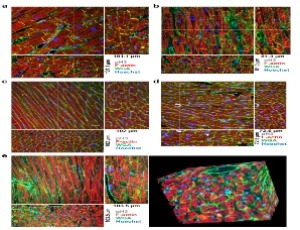
Histological analysis of fluorescently labeled tissues has been a critical tool to understand molecular organization in situ. However, assessing molecular structures within large cells and in the context of human organ anatomy has been challenging because it requires penetration of staining reagents and light deep into opaque tissues, while also conforming to the spatial constraints of high-resolution objective lenses.
Mechanisms of troponin release into serum in cardiac injury associated with COVID-19 patients
In the early phases of the pandemic caused by the SARS-CoV-2 virus (severe acute respiratory syndrome coronavirus 2) the emphasis of diagnosis and treatment was on acute respiratory distress syndrome (ARDS).
Mechanisms of troponin release into serum in cardiac injury associated with COVID-19 patients
In the early phases of the pandemic caused by the SARS-CoV-2 virus (severe acute respiratory syndrome coronavirus 2) the emphasis of diagnosis and treatment was on acute respiratory distress syndrome (ARDS).
High-resolution 3D fluorescent imaging of intact tissues
Histological analysis of fluorescently labeled tissues has been a critical tool to understand molecular organization in situ. However, assessing molecular structures within large cells and in the context of human organ anatomy has been challenging because it requires penetration of staining reagents and light deep into opaque tissues, while also conforming to the spatial constraints of high-resolution objective lenses.