

Abstract
Background: There are several surgical techniques for pterygium excision, with variable reported recurrence rates. This study aimed to identify, 1) The recurrence rate of sutureless pterygium excision with conjunctival autograft secured with Tisseel glue (Baxter International); 2) Whether recurrence rate was dependent on the grade of the operating surgeon; 3) The benefit of histopathological analysis of surgically excised pterygium tissue samples.
Methods: All pterygia cases performed within the corneal service at Bristol Eye hospital under a single supervising consultant, during the study period January 2012 to October 2018, were retrospectively reviewed. A clinically significant recurrence was defined as a pterygium that required further surgical excision during the study period. The surgical technique involved pterygium excision with the use of conjunctival autograft secured with Tisseel glue (Baxter International).
Results: 134 cases from 118 patients, were performed during the study period. The overall recurrence rate was 1.5% (2/132). The two recurrent cases had their initial procedure performed by a surgeon of non-consultant grade. Histopathological analysis of 101 of the 103 cases sent for histology, confirmed the features of the tissue to be consistent with the diagnosis of a pterygium.
Conclusions: This study supports the use of a conjunctival autograft using Tisseel glue (Baxter International) at the time of pterygium excision surgery in providing low recurrence rates with minimal complications and increased surgical efficiency. Recurrence may be dependent on the grade of operating surgeon. In the UK NHS setting of this study, histological analysis provided little additional benefit for this group of patients.
Keywords
Cystoid macular edema, Uveitis, Anti-TNF therapy, Tocilizumab
Introduction
Pterygia are a fibrovascular growth of the bulbar conjunctiva, with the potential to extend onto the cornea [1]. The prevalence can vary from 1-15% depending on patient geographic location, with risk factors including ageing and exposure to UV light [1]. Surgical excision is typically indicated if there is irritation, inflammation, reduced vision, encroachment of the visual axis, increasing astigmatism or due to cosmesis [2]. Interestingly, in an Australian population, 9.8% of presumed pterygium at surgical excision, were reported to be ocular surface squamous neoplasia on histopathological analysis [3], which may be a further indication for surgical excision in certain at-risk populations.
There are several surgical techniques with variable reported recurrence rates. The classical bare sclera technique has a particularly high recurrence rate of 24-89% [4]. Alternative approaches proposed as an attempt to reduce the recurrence rate by covering the bare sclera following the excision of the pterygium include the use of a conjunctival autograft, mitomycin C or amniotic membrane transplant. There are concerns regarding the safety of mitomycin C on the ocular surface [5] and in this unit, the use of mitomycin C is reserved for recurrent cases. The conjunctival autograft technique is considered to have the lowest recurrence rate [6-10].
In this unit, a conjunctival autograft secured with Tisseel glue (Baxter International), a fibrin sealant, is used in all primary cases. As discussed, this technique is considered optimal in reducing the rate of pterygium recurrence. Furthermore, the use of Tisseel glue (Baxter International), has the additional benefit of reduced surgical time and significantly lower post-operative discomfort, as compared to using sutures [11,12]. Outcomes for this technique have not previously been reported for this patient cohort. The study aims were thus threefold. 1) To identify the recurrence rate of pterygium excision with conjunctival autograft with the use of Tisseel glue (Baxter International), in a NHS UK hospital tertiary referral setting. 2) To consider whether recurrence rate is dependent on surgical grade. 3) To ascertain the benefit of histopathological analysis of presumed pterygium tissue samples in a UK setting.
Materials and Methods
All pterygia cases performed within the corneal service at Bristol Eye hospital under a single supervising consultant, during the study period January 2012 to October 2018, were retrospectively reviewed. This included all cases performed by the consultant surgeon as well as any supervised by the consultant but performed by more junior surgeons (registrars or fellows). Cases were identified using a search tool on an electronic medical record system (Medisoft). Histopathological reports for all cases that had been sent for analysis (performed at UHBristol Pathology Services) were reviewed using an electronic reporting system. A clinically significant recurrence was defined as a pterygium that recurred in the follow up period and required further surgery, or if the patient had a recurrence and was referred back to the unit for further surgical excision. Time elapsed since surgery was taken as the time of the surgical excision up to the point the data was extracted. Based on guidance from the Medical Research Council (http://www.hra-decisiontools.org.uk/ethics/), this study was classified as service evaluation and did not require ethical approval.
All patients who had surgical excision of the pterygium were initially seen in a corneal clinic, having been referred by either their GP or optician. All cases included were diagnosed clinically as a pterygium at the time of surgical listing. Surgical excision was typically performed under local anaesthesia. All cases were excised using the preferred surgical technique of the supervising consultant. The superior and inferior parts of the pterygium were incised using Westcott scissors to sclera, a pocket was created under the pterygium. Artery clips were used to clip the pterygium and by rotating the artery clips away from the cornea, the pterygium head was peeled off the cornea. The artery clips were then removed. Any remnants were scraped off the cornea using a crescent blade. The pterygium was then cut from its base and sent for histology. A tenonectomy was performed by dissecting under the remaining conjunctiva and removing the edge of the tenons. The recti muscle were not typically hooked in this technique, unless the pterygium was particularly large and impacting the muscle, as per the judgement of the operating surgeon. Cautery to any bleeding vessels was kept to a minimum. Measurements of the bare sclera were taken. Anti-metabolite (mitomycin C or 5-Fluoruracil), was not used for primary cases and in this unit their use is reserved for recurrent cases, as per the judgement of the operating surgeon.
A conjunctival autograft was taken from the superior conjunctiva covered by the eyelid, based on the measurements required. This was done using a subconjunctival injection of lignocaine, or with careful dissection alone, as per the judgement of the operating surgeon. The conjunctiva was cut at the edge of the limbus to include limbal tissue. A few drops of the fibrinogen component of Tisseel glue (Baxter International, the thicker liquid) was first applied to cover the bare sclera. The conjunctival autograft was then placed over the area using two suture-tying non-toothed forceps with the limbal tissue of the graft orientated in such a way that it matched the limbal area covered, with the epithelium facing upwards. The graft was then smoothed across to cover the bare sclera. The edges of the conjunctiva were then pulled across over the autograft to cover the edge. A few drops of the thrombin containing solution of Tisseel glue (Baxter International, the thinner solution) was then placed over the conjunctival autograft. Antibiotic drops (chloramphenicol 0.5%) and a large diameter bandage contact lens (18-20 mm) were then applied. The procedure was performed as a day case and the patient was discharged on the same day. The post-operative medication regime included steroid and antibiotic drops. Initially dexamethasone preservative free 0.1% four times daily for a month, followed by prednisolone acetate 0.5% four times daily for a further two months. Antibiotic drops in the form of either chloramphenicol 0.5% preservative free or levofloxacin 0.5% preservative free four times daily were given for the initial two weeks. The patient was reviewed at two weeks, for contact lens removal. In routine cases, the patient was reviewed again at 3 months and subsequently discharged if healed and no recurrence was noted.
Results
134 cases of pterygium excision with conjunctival autograft from 118 patients, were performed under the single supervising consultant, during the period January 2012 to October 2018 at Bristol Eye Hospital. The mean time elapsed since surgery was 45 months (range 0.87 – 102 months; median 43.8 months). Table 1 summarises the demographical characteristics of these cases. The plurality of cases was performed by the supervising consultant; 46.3% (62/134). The majority of cases (133/134) had no operative complications, one case (performed by locum consultant), had a buttonhole of the conjunctiva recorded as a complication at the time of surgery. The grade of the operating surgeon is summarised in Figure 1.
|
Age at time of procedure (mean ± SD) |
55.4 ± 15.5 (range 19-87 years) |
|
Gender |
Female = 62/134 Male = 72/134 |
|
Ethnicity |
White = 70/134 Afro-Caribbean = 5/134 Asian = 3/134 Other or not specified = 56/134 |
|
Eye |
Right = 77/134 Left = 57/134 |
|
Surgical procedure |
Pterygium excision with conjunctival autograft using Tisseel glue (Baxter International) = 134/134 Use of amniotic membrane to cornea = 1/134 Use of 5 fluorouracil = 1/134 Use of Mitomycin C = 1/134 |
|
Operative complications |
None = 133/134 Buttonhole of conjunctiva = 1/134 |
Table summarising the demographical characteristics of the 134 cases, including details of age, gender, ethnicity, eye, surgical procedure and operative complications.
The plurality of cases was performed by the supervising consultant (62/134; 46.3%). The remainder of cases were performed by a locum consultant (7/134; 5.2%), fellow (43/134; 32.1%) or registrar (this included any ophthalmology speciality trainee ST4 or above, 22/134; 16.4%).
14 of 134 cases had bilateral surgery (not a case of recurrence). 2 of the 134 cases were recurrent cases. This gave an overall recurrence rate of 1.5% (2/132). The features of the recurrent cases are summarised in table 2. All the recurrent cases had their initial procedure performed by a surgeon of non-consultant grade (fellow). Neither the consultant nor locum consultant had a recurrent case that required further surgical excision. Recurrence rate based on the initial grade of surgeon is shown in table 3.
|
|
Age at time of initial procedure |
Gender |
Ethnicity |
Grade of surgeon performing initial procedure |
Histological diagnosis of initial procedure |
Time between initial surgery and surgery for recurrence |
Grade of operating surgeon for 2nd procedure |
Histological analysis of 2nd procedure |
|
Recurrent case 1 |
62 |
Male |
White British |
Fellow |
Pterygium |
27.5 months |
Consultant |
Pterygium |
|
Recurrent case 2 |
44 |
Female |
Not stated |
Fellow |
No histology |
5 months |
Fellow |
Pterygium |
Table 2: Summary of the two cases of clinically significant recurrence.
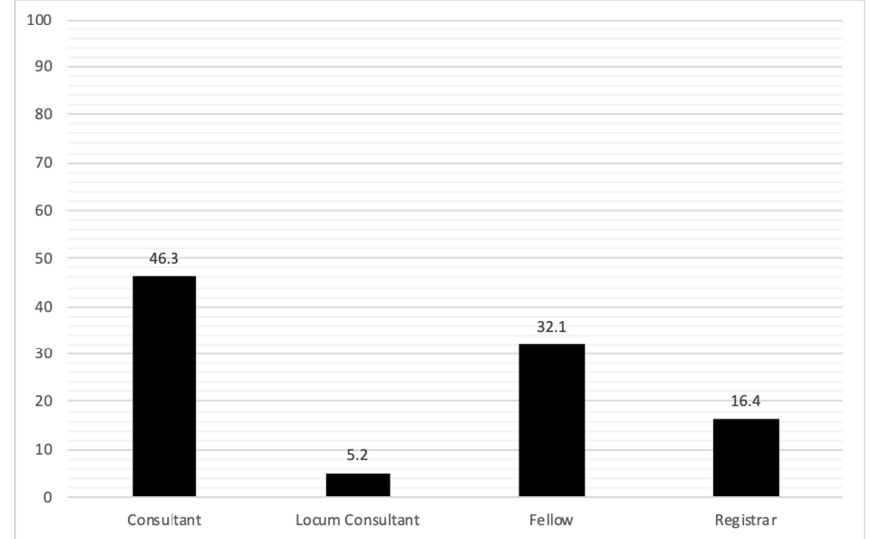
Figure 1: Graph summarising the percentage of cases performed by each surgical grade.
Clinically significant recurrence was defined as any case which required further surgical excision in the same location (medial or lateral) in the same eye. Mean age in recurrent cases was 53 years.
|
Grade of surgeon |
Number of recurrent cases |
Recurrence rate (%) |
|
Consultant |
0 of 62 cases |
0% |
|
Locum Consultant |
0 of 7 cases |
0% |
|
Fellow |
2 of 41 cases |
4.9% |
|
Registrar |
0 of 22 cases |
0% |
Recurrence rate of the 132 cases of primary pterygium excision with conjunctival autograft according to surgical grade. Note registrar included any speciality trainee ST4 or above. The overall recurrence rate was 2/132 cases (1.5%).
Samples were sent for histopathological analysis in the majority of cases (103 of 134 cases). Of those sent, two cases showed a further diagnosis in addition to a pterygium (Figure 2). Histopathological analysis of the remainder of cases sent for analysis (101 of 103), confirmed that the features of the sample sent were consistent with the diagnosis of a pterygium.
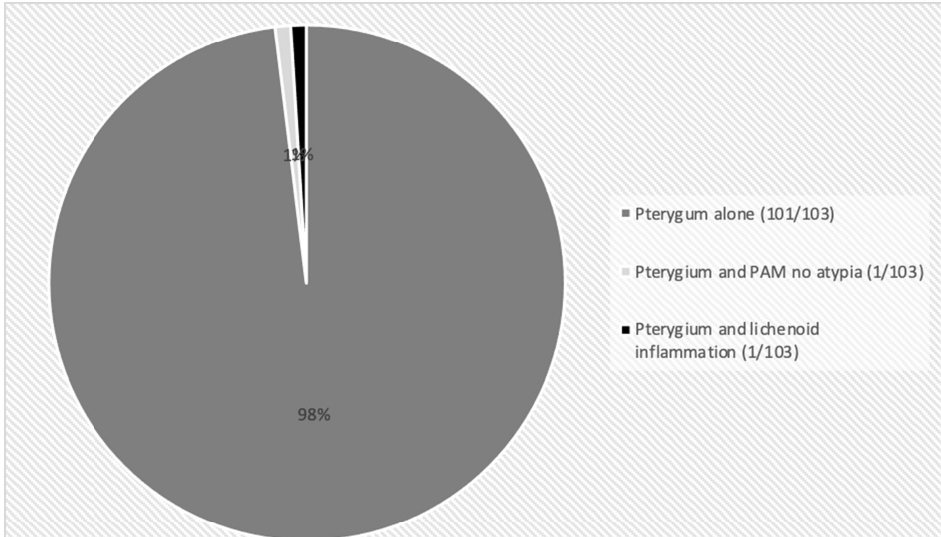
Figure 2: Pie chart summarising the histopathological characteristics of cases which were sent for histology.
Samples were not sent for histology in 31 of 134 cases (23%). Of the 103 cases sent for histology; 98% (101/103) gave a histological diagnosis of pterygium alone, 2% (2/103) gave a histological diagnosis of pterygium with a further diagnosis (lichenoid inflammation (1/103), primary acquired melanosis (PAM) without atypia (1/103).
Samples were not sent for histology in 31 of 134 cases (23%). Of the 103 cases sent for histology; 98% (101/103) gave a histological diagnosis of pterygium alone, 2% (2/103) gave a histological diagnosis of pterygium with a further diagnosis (lichenoid inflammation (1/103), primary acquired melanosis (PAM) without atypia (1/103). The exact histological summary of the case which showed lichenoid inflammation was “focal lichenoid inflammation, the significance of which is unclear. There is no evidence of conjunctival intraepithelial neoplasia”. The exact histological summary of the case showing primary acquired melanosis without atypia was “The features are in keeping with pterygium. In addition, basal pigmentation may represent primary acquired melanosis without atypia”.
Discussion
This study reports an overall low clinically significant recurrence rate of 1.5% for pterygium excision with conjunctival autograft using Tisseel glue (Baxter International), with a mean time elapsed since surgery of 45 months. There are several proposed techniques for pterygium excisional surgery, with variable reported recurrence rates. The classical bare sclera technique has a high reported recurrence rate of 24-89% [4], which is considered higher than that with amniotic membrane or conjunctival autograft [13] and is therefore no longer recommended. The use of a conjunctival autograft has been reported to have a lower recurrence rate than that with amniotic membrane graft [7]. This is also confirmed by further studies, including the recent study by Rock et al., which suggested the recurrence rate at 12 months for the conjunctival autograft technique using sutures to be 6.4%, compared to 14.7% for the amniotic membrane technique [14]. Amniotic membrane contains mitogenic factors, anti-inflammatory proteins and growth factors, which can suppress inflammation and stimulate wound healing [15]. The use of an amniotic membrane graft may therefore be useful if the conjunctival defect is large or if there is insufficient conjunctiva to cover the bare sclera. It may additionally be of use in cases which may require glaucoma surgery in future [16]. In this study, an amniotic membrane was used on the cornea in a single case where there was large corneal coverage of the pterygium. The amniotic membrane graft was used to assist with the healing of the corneal epithelial defect. Otherwise, based on the reported recurrence rates, a conjunctival autograft is generally recommended as is the practice in this unit.
The use of anti-metabolite adjuvants has also been described in the literature [17,18]. There are however concerns regarding the safety of these on the ocular surface [5], with reports of scleral melt [19]. Thus, in this unit the use of anti-metabolite adjuvants is not used in the case of primary pterygium excision. The authors generally reserve the use of an anti-metabolite to recurrent cases only. In this study 5-flurouracil or mitomycin C 0.02% were used in the two recurrent cases. The anti-metabolite is placed on the bare sclera at the time of the pterygium excision using soaked sponges for a short duration 30 seconds. The use of 5-flurouracil as a subconjunctival injection post-operatively has also been described for recurrent cases [20]. As described, in this study the use of a limbal-conjunctival autograft was used, that is limbal tissue was included and the orientation of the conjunctival autograft to the bare sclera was limbus to limbus. This technique is reported to have a lower recurrence rate compared to conjunctival autograft alone, where limbal tissue is not included in the autograft, without any reported limbal stem cell deficiency [21]. The low overall recurrence rate of 1.5% is therefore likely to be partly due to the surgical technique employed. Additionally, the post-operative medication regime involves an extended course of topical steroids for a total of three months. This may help reduce the recurrence rate by altering wound healing and inflammation.
As described, the technique used in this study and this unit, involves a sutureless method using Tisseel glue (Baxter International), which is a fibrin sealant. The use of fibrin glue for the fixation of conjunctival autograft was first described in 1993 [22]. The advantage of this technique over the use of conjunctival sutures, includes less post-operative inflammation and greater patient comfort with good reported outcomes [23-26]. However, the main concern in the literature with the use of a fibrin glue is graft stability [27]. In the authors experience, the use of the combination of the thick Tisseel glue (Baxter International) on the bare sclera along with the thin Tisseel glue (Baxter International) over the conjunctival autograft, with a bandage contact lens left on for the first one to two weeks, works very well and as seen in this study, no cases of graft dislocation were identified using this technique. Additionally, patients have greater post-operative comfort, with the added benefit of reduced surgical time of this technique, which is supported in the literature [12]. Furthermore, a higher expression of inflammatory cytokines is seen with the use of fibrin glue over sutures, which is thought to be responsible for an accelerated healing response [27], this may result in a lower recurrence rate.
Additional factors responsible for recurrence may include ethnicity of patient, with a higher reported recurrence in Hispanic and black patients [28]. Younger patients may also have a higher risk of recurrence [14,29]. As shown in table 2, one of the two cases of recurrence in this study, had white British ethnicity (the other case did not have ethnicity stated). The mean age for all cases was 55.4 years (table 1) the mean age of recurrent cases was 53 years (table 2). Ethnicity and age are therefore unlikely to have been contributing factors for the two recurrences seen in this study. Interestingly, the two cases of recurrence were performed by a surgeon of non-consultant grade (fellow). There were no cases of recurrence in this study, in the cases performed by either a consultant or locum consultant, or in cases performed by a registrar, the latter of which would typically be supervised by the supervising consultant. The plurality of cases was performed by a single consultant (Figure 1). Prior surgical experience in pterygium surgery is an important factor when considering recurrence rates [30]. Although the number of cases previously performed by the operating surgeon was not considered in this study, by definition more junior surgeons, are likely to have performed fewer previous cases than the consultant surgeon. Inadequate clearance of the pterygium, tissue handling, poor tenonectomy and poor sizing of the conjunctival autograft, leaving some bare sclera may be modifications of the surgical procedure performed by less experienced surgeons and this may account for the higher recurrence rate seen for cases performed by the fellows compared to the consultants (table 3).
A limitation of this current study is that the morphology of the initial pterygium was not considered. Previous reports suggest that pterygium with a more-fleshy morphology may have higher recurrence rates than atrophic ones [31]. A further limitation of this study is in the definition of recurrence. A ‘clinically significant’ recurrence was defined as that which required a further surgical excision during the study period. However, it is possible that there were cases that had a more subtle recurrence that did not desire or require any further surgery. In a recent study, 50% of the recurrent cases seen did not wish to have further surgical excision [32]. Additionally, if the surgery was done elsewhere in a different unit they would not have been included as a recurrent case. The mean time elapsed since surgery was 45 months (range 0.87 – 102 months; median 43.8 months). Given the time range, all recurrent cases may not have been accounted for in this study, if they occurred at a time frame outside the study period. It is suggested that the majority of recurrent cases will recur early; 90% within the first nine months [30], 97% within the first year [33,34]. In this study, the timing of the two cases that required re-surgical excision, were at five months and 27.5 months following the initial surgery (table 2). Due to the retrospective nature of this study, it was possible to review recurrence over a longer time period, from the point of data extraction to the point of initial surgery. Clinically however, the routine practice in uncomplicated pterygium surgery for this unit would be to review patients up to three months and if there were no concerns of recurrence to discharge patients at this point. For the purpose of this study to ensure all potential clinically significant recurrence cases were included, the measure of time elapsed since surgery was used to include all cases that required further surgical excision outside the usual follow-up time period.
A further aim of this study had been to consider the benefit of histopathological analysis in the diagnosis of pterygium. As seen in Figure 2, 103 of 134 cases had samples sent to histology for analysis. Histological analysis of the majority of these cases (98%) confirmed the presence of a pterygium alone. Two cases only, showed additional changes. One case showed lichenoid inflammation in addition to pterygium and one case showed primary acquired melanosis without atypia in addition to pterygium. Further surgery or treatment was not required in either of these cases and both were discharged after several months of monitoring without any complications or recurrence. In this study within a UK setting, there is likely to be a lower risk of ocular surface neoplasia. Additionally, all cases listed would have first been assessed by a corneal surgeon. Any clinically suspicious case for ocular surface neoplasia would have had a different type of surgery (excisional biopsy with double freeze cryotherapy) and would not have been included in this study. A question arises therefore, whether histological analysis of all clinically diagnosed pterygium cases is required at time of surgery. In certain populations with higher exposure to UV light, histological analysis may certainly be of greater value and interestingly, 9.8% of presumed pterygium at surgical excision in an Australian population, were reported to be ocular surface squamous neoplasia on histopathological analysis [3]. In the UK setting, with lower UV exposure and increasing focus on the opportunity cost of investigations, the additional benefit of histopathological of a clinically diagnosed pterygium requires further consideration.
In conclusion, this study supports the use of a sutureless technique using conjunctival autograft secured with the fibrin sealant, Tisseel glue (Baxter International), at the time of pterygium excision surgery in providing low recurrence rates with minimal complications and increased surgical efficiency. Recurrence rate is likely to be dependent on prior surgical experience and surgeon grade. Histological analysis provided little additional benefit in this group of patients.
Disclosures
There are no conflicts of interest. Not previously published. Based on guidance from the Medical Research Council (http://www.hra-decisiontools.org.uk/ethics/), this study was classified as service evaluation and did not require ethical approval.
References
2. Detorakis ET, Spandidos DA. Pathogenetic mechanisms and treatment options for ophthalmic pterygium: trends and perspectives. International Journal of Molecular Medicine. 2009 Apr 1;23(4):439-47.
3. Hirst LW, Axelsen RA, Schwab I. Pterygium and associated ocular surface squamous neoplasia. Archives of Ophthalmology. 2009 Jan 12;127(1):31-2.
4. Jaros PA, DeLuise VP. Pingueculae and pterygia. Survey of Ophthalmology. 1988 Jul 1;33(1):41-9.
5. Mastropasqua L, Carpineto P, Ciancaglini M, Gallenga PE. Long term results of intraoperative mitomycin C in the treatment of recurrent pterygium. British Journal of Ophthalmology. 1996 Apr 1;80(4):288-91.
6. Chan TC, Wong RL, Li EY, Yuen HK, Yeung EF, Jhanji V, et al. Twelve-year outcomes of pterygium excision with conjunctival autograft versus intraoperative Mitomycin C in double-head pterygium surgery. Journal of Ophthalmology. 2015 Feb 25;2015.
7. Clearfield E, Muthappan V, Wang X, Kuo IC. Conjunctival autograft for pterygium. Cochrane Database of Systematic Reviews. 2016(2).
8. Fernandes M, Sangwan VS, Bansal AK, Gangopadhyay N, Sridhar MS, Garg P, et al. Outcome of pterygium surgery: analysis over 14 years. Eye. 2005 Nov;19(11):1182-90.
9. Kawasaki S, Uno T, Shimamura I, Ohashi Y. Outcome of surgery for recurrent pterygium using intraoperative application of mitomycin C and amniotic membrane transplantation. Japanese Journal of Ophthalmology. 2003 Nov 1;47(6):625-6.
10. Luanratanakorn P, Ratanapakorn T, Suwan-apichon O, Chuck RS. Randomised controlled study of conjunctival autograft versus amniotic membrane graft in pterygium excision. British Journal of Ophthalmology. 2006 Dec 1;90(12):1476-80.
11. Karalezli A, Kucukerdonmez C, Akova YA, Altan-Yaycioglu R, Borazan M. Fibrin glue versus sutures for conjunctival autografting in pterygium surgery: a prospective comparative study. British Journal of Ophthalmology. 2008 Sep 1;92(9):1206-10.
12. Zloto O, Greenbaum E, Fabian ID, Simon GJ. Evicel versus tisseel versus sutures for attaching conjunctival autograft in pterygium surgery: A prospective comparative clinical study. Ophthalmology. 2017 Jan 1;124(1):61-5.
13. Kaufman SC, Jacobs DS, Lee WB, Deng SX, Rosenblatt MI, et al. Options and adjuvants in surgery for pterygium: a report by the American Academy of Ophthalmology. Ophthalmology. 2013 Jan 1;120(1):201-8.
14. Röck T, Bramkamp M, Bartz-Schmidt KU, Röck D. A retrospective study to compare the recurrence rate after treatment of pterygium by conjunctival autograft, primary closure, and amniotic membrane transplantation. Medical Science Monitor: International Medical Journal of Experimental and Clinical Research. 2019;25:7976.
15. Röck T, Bartz-Schmidt KU, Landenberger J, Bramkamp M, Röck D. Amniotic membrane transplantation in reconstructive and regenerative ophthalmology. Annals of Transplantation. 2018;23:160.
16. Prabhasawat P, Barton K, Burkett G, Tseng SC. Comparison of conjunctival autografts, amniotic membrane grafts, and primary closure for pterygium excision. Ophthalmology. 1997 Jun 1;104(6):974-85.
17. Fonseca EC, Rocha EM, Arruda GV. Comparison among adjuvant treatments for primary pterygium: a network meta-analysis. British Journal of Ophthalmology. 2018 Jun 1;102(6):748-56.
18. Zeng W, Liu Z, Dai H, Yan M, Luo H, Ke M, Cai X. Anti-fibrotic, anti-VEGF or radiotherapy treatments as adjuvants for pterygium excision: a systematic review and network meta-analysis. BMC Ophthalmology. 2017 Dec 1;17(1):211.
19. Safianik B, Ben-Zion I, Garzozi HJ. Serious corneoscleral complications after pterygium excision with mitomycin C. British Journal of Ophthalmology. 2002 Mar 1;86(3):357-8.
20. Said DG, Faraj LA, Elalfy MS, Yeung A, Miri A, Fares U, et al. Intra-lesional 5 fluorouracil for the management of recurrent pterygium. Eye. 2013 Oct;27(10):1123-9.
21. Al Fayez MF. Limbal-conjunctival vs conjunctival autograft transplant for recurrent pterygia: a prospective randomized controlled trial. JAMA Ophthalmology. 2013 Jan 1;131(1):11-6.
22. Cohen RA, McDonald MB. Fixation of conjunctival autografts with an organic tissue adhesive. Archives of Ophthalmology. 1993 Sep 1;111(9):1167-8.
23. Daponte PL, Cigna A, Lescano O, Sipowicz F, Peña B, Abud G, et al. Conjunctival autograft with fibrin glue for pterygium: a long term recurrence assessment. Medical Hypothesis, Discovery and Innovation in Ophthalmology. 2019;8(4):272.
24. Kumar S, Singh R. Pterygium excision and conjunctival autograft: A comparative study of techniques. Oman Journal of Ophthalmology. 2018 May;11(2):124.
25. Ozdamar Y, Mutevelli S, Han U, Ileri D, Onal B, Ilhan O, et al. A comparative study of tissue glue and vicryl suture for closing limbal-conjunctival autografts and histologic evaluation after pterygium excision. Cornea. 2008 Jun 1;27(5):552-8.
26. Yan B, Peng L, Peng H, Zhou S, Chen B. Modified Sutureless and Glue-Free Method Versus Conventional Sutures for Conjunctival Autograft Fixation in Primary Pterygium Surgery: A Randomized Controlled Trial. Cornea. 2019 Nov 1;38(11):1351-7.
27. Wang X, Zhang Y, Zhou L, Wei R, Dong L. Comparison of fibrin glue and Vicryl sutures in conjunctival autografting for pterygium surgery. Molecular Vision. 2017;23:275.
28. Campagna G, Adams M, Wang L, Khandelwal S, Al-Mohtaseb Z. Comparison of pterygium recurrence rates among different races and ethnicities after primary pterygium excision by surgeons in training. Cornea. 2018 Feb 1;37(2):199-204.
29. Kim KW, Kim JC. Current approaches and future directions in the management of pterygium. International Journal of Ophthalmology. 2018;11(5):709-11.
30. Ti SE, Chee SP, Dear KB, Tan DT. Analysis of variation in success rates in conjunctival autografting for primary and recurrent pterygium. British journal of ophthalmology. 2000 Apr 1;84(4):385-9.
31. Tan DHT, Chee SP, Dear K, Lim AS. The effect of morphology on pterygium recurrence in controlled trial comparing conjunctival autografting with bare sclera excision. Archives of Ophthalmology 1997 Oct;115(10):1235-40.
32. Yadav AR, Bhattad KR, Sen PA, Jain EB, Sen A, Jain BK. Outcome of different techniques of pterygium excision with conjunctival autografting in pediatric population: Our experience in central India. Indian Journal of Ophthalmology. 2015 Jun;63(6):491-5.
33. Hirst LW, Sebban A, Chant D. Pterygium recurrence time. Ophthalmology. 1994 Apr 1;101(4):755-8.
34. Yang Y, Pi M, Xu F. Observation of long-term efficacy of corneal limbal conjunctival autografts in microscopy treatments of pterygium. Eye Science. 2013 Jun 1;28(2):73-8.