

Abstract
Background: Laparoscopic appendectomy is a commonly performed procedure, with surgeons having a choice of instruments to close the appendiceal stump. Recent studies have shown slight variability in operating room time by device, with similar clinical outcomes. The purpose of this study is to examine differences in selection of closure technique between hospitals and individuals, surgical time by device, cost differences, and the effect on time and cost when an energy device is added.
Methods: A patient database was created to examine the choice of technique for appendiceal stump closure, specifically endoscopic stapler, polymer locking clip, or a ligating loop. The use of energy devices was also examined. Acquisition costs of different disposable devices were determined. The study included 56 surgeons at four hospitals over a seven-year period.
Results: A total of 7,042 cases were included in the complete-case multivariable analysis. The most common technique in the adjusted cohort to close the appendiceal stump was with a stapler (70.4%), followed by endoloops (15.3%) and then polymer locking clips (Hem-o-Lok) (14.3%). Energy devices were used in 37.1% of cases, most commonly with a stapler. Choice of closure device and inclusion of an energy device varied by hospital and by surgeon. The study found that cases performed with an endoscopic stapler took the longest at 34.1 minutes, followed by polymer locking clips at 27.2 minutes and loops at 25.0 minutes. Closure-device use was associated with operative time overall after multivariable adjustment (Wald χ²[2]= 6.24, p = 0.044). Stapler use was associated with additional time compared to polymer locking clips (p = 0.030). However after Holm adjustment, pairwise comparisons were not statistically significant. The use of an energy device did not result in a decrease in operating time (adjusted difference = +0.94 minutes, p = 0.60). Financial cost of disposable instruments between closure techniques varied from $37 to over $1,500.
Conclusions: In this study, staplers were the most popular method to close the appendiceal stump, although they were more expensive than loops and polymer locking clips and did not result in shorter OR times. Addition of an energy device did not decrease OR times. Significant cost savings could be realized if surgeons switched to a more economical method of stump closure such as polymer locking clips.
Keywords
Appendectomy, Practice variation, Value-based care
Introduction
Appendectomy is the most common emergency abdominal surgery in the United States, with approximately 300,000 cases performed annually [1]. The most common indication is acute appendicitis, and more than 95% of these cases are performed using a laparoscopic approach [2]. When it comes to closing the appendiceal stump, surgeons have a choice of technique and instruments, including an endoscopic stapler (stapler), loop ligatures (endoloops) or polymer locking clips (clips). Often, but not always, an energy device is utilized.
Studies from 2020 to 2025 have yielded a variety of results regarding benefits of one device over another, most of these being smaller studies with a few hundred patients [3–6]. Four recent meta-analyses have been published which concluded that polymer locking clips were slightly faster than endoloops [7–10]. Other studies have shown the stapler to be faster than either endoloops or polymer locking clips [11,12]. A meta-analysis showed complication rates are similar among devices [13]. Energy device use has been associated with shorter operative times, likely due to faster division of the mesoappendix and improved hemostasis [14,15].
Intermountain Health is a large, not-for-profit healthcare system headquartered in Salt Lake City, Utah, with 33 hospitals in seven states. In 2024 alone, surgeons working at Intermountain facilities performed more than 3,200 appendectomies. Surgeons are able to indicate in the Doctor’s Preference Card which instruments they would prefer to use for an appendectomy operation; there are no restrictions on this privilege.
The purpose of this study was not to contribute to the existing literature regarding clinical outcomes such as complication rates or length of stay. These issues have been addressed in other studies and found to be equivalent [13]. The purpose was to examine the device selected by a surgeon when given an unrestricted choice, an issue not addressed in prior studies. Reasons for which a surgeon selects a particular device could include perceived ease of use or shortening the OR time. This study examines the relative frequency of different closure methods for the appendiceal stump, and how that frequency varied between hospitals and individual surgeons. In addition, the average time of each closure technique was measured. Also assessed were the effects of age, perforation and Body Mass Index (BMI) on surgical time and device selection. Device use was also tracked by year and by hospital and by individual surgeon. The frequency of use of energy devices was also measured, as well as their effect on the operative time. Finally, the financial impact of different techniques and instrument choices was measured, along with projected savings in acquisition costs should the most economical method be widely adopted.
Methods
Institutional Review Board approval was obtained from Intermountain Health (IRB #1053065, dated 5/5/2025), with a waiver of informed consent due to the retrospective nature of the study. Patient data were de-identified and handled in accordance with Intermountain Health privacy and confidentiality requirements.
Intermountain Health maintains an Enterprise Data Platform (EDP) that contains comprehensive clinical and financial data for each patient. A study database was constructed from the EDP with assistance from a Technical Data Analyst in Intermountain Health's Department of Surgery. This study looked at laparoscopic appendectomy cases performed over a seven-year period (January 1, 2018 to December 31, 2024) by 56 surgeons at four different Intermountain hospitals. Some but not all of the physicians in the study were Intermountain employees; others practiced in independent groups. Hospital 1 was a larger community hospital with 395 beds and 50,000 emergency room (ER) visits per year, while Hospital 2 was a tertiary referral center and teaching hospital with general surgery residents, with over 500 beds and 90,000 ER visits annually. Hospitals 3 and 4 were smaller community hospitals, each with about 90 beds and 30,000 ER visits a year. All study hospitals are located within a 50-mile radius of each other in a large urban/suburban setting where 16 hospitals serve a population of close to 2 million people.
The initial dataset included all cases at the four hospitals scheduled for laparoscopic appendectomy and consisted of 9,431 cases. This was subsequently refined to include only cases of acute appendicitis. There were 1,055 initial exclusions including appendectomies performed for indications other than acute appendicitis, such as incidental appendectomies (e.g., those requested by a gynecologist during surgery for endometriosis, where operative time for the appendectomy could not be isolated from the total procedure time). Also excluded were interval appendectomies, cases involving ileocecectomy or other bowel resections, cases where alternative pathologies were discovered (e.g., tubo-ovarian abscess), cases booked for appendectomy but where another procedure was performed (e.g., percutaneous drainage only), and elective appendectomies for appendiceal masses or suspected chronic appendicitis. This reduced the number of potential cases to 8,376.
Of these 8,376 procedures, 454 had no documented stump-closure method and were excluded from the closure-device analysis. The remaining 7,922 procedures had at least one documented closure device, including 513 procedures in which multiple closure devices were recorded. Cases with multiple devices were excluded from the study, as sometimes a switch in devices was made based on intraoperative findings and therefore would not reflect the initial choice. Within this eligible cohort, 353 procedures had missing BMI and seven had BMI values outside the prespecified range. On further review of the database, there were 7 surgeons who had a single case. These surgeons were removed from the study as analysis of their choices and times would not yield any useful information. The final adjusted model included 7,042 procedures performed by 56 surgeons.
For each case, three time intervals were recorded: operating room time (‘wheels in’ to ‘wheels out’), anesthesia start and stop times, and surgical time from incision to closure. Surgical time, as documented by the circulating nurse, was used for all analyses in this study. Approximately 250 charts were manually reviewed to verify operative times and instrument usage. An identified issue involved cases extending past midnight, where automated time calculations erroneously spanned from the earliest to latest timestamp. For example, a procedure from 23:45 to 00:15 was recorded as 23.5 hours rather than 30 minutes. These times were manually corrected. All cases with surgical times of 60 minutes or longer were individually reviewed to confirm eligibility. For these extended time operations, multi-procedure cases were excluded, while the remainder were confirmed by the dictated operative report as technically complex due to factors such as severe inflammation, aberrant anatomy, or adhesions from prior surgeries.
Surgical instruments (staplers, endoloops, polymer locking clips, and energy devices) were identified using their unique Reference Numbers in the EDP for intraoperative tracking. A challenge arose from a mid-study vendor change, necessitating repeated instrument searches with updated Reference Numbers. Energy devices evaluated included the Harmonic™ shears (Ethicon), LigaSure™ device (Medtronic), and Sonicision™ device (Medtronic), also identified by their unique Reference Numbers.
Although specific costs vary slightly between facilities and over time, the following were average acquisition costs for instruments during the study:
Polyglactin (Polysorb TM) Endoloop TM (Ethicon): $19
Polydioxanone (PDS) Endoloop TM (Ethicon): $194
Cartridge of six polymer locking clips (Hem-o-lock TM): $37
Endoscopic stapler (handle plus two staple loads): $414
Sonicision TM (Medtronic): $320
LigaSure TM device (Medtronic): $480
Harmonic TM scalpel (Ethicon): $1,115
To evaluate differences in operative time associated with closure-device use, multivariable linear regression was performed with surgical time, defined as incision-to-closure time in minutes, as the dependent variable. Stapler, endoloops, and polymer locking clip use were represented by separate binary indicators. The model adjusted for age, BMI, sex, perforation, energy-device use, robotic approach, hospital, and calendar year. Standard errors were clustered by surgeon to account for correlation among procedures performed by the same surgeon. The overall association between closure-device use and surgical time was evaluated using an omnibus Wald test. Pairwise contrasts between closure devices were subsequently calculated, with Holm adjustment applied to control for multiple comparisons. All tests were two-sided, and p <0.05 was considered statistically significant.
Results
This study included 7,042 cases of appendectomies by 56 surgeons over a seven-year period from four different hospitals. Each surgeon operated only at a single hospital. Hospital 1 had 2,109 cases, Hospital 2 had 2,026 cases, while Hospitals 3 and 4 had 1,455 and 1,452 cases respectively. Of the patients, 52.6% were male and 47.4% were female. Ages ranged from 1 (a single case) to 90 and over (five cases). Mean age was 33.0 years with a standard deviation of 15.4 and a standard error of 0.2. Overall, 1.5% of the patients were aged 12 or younger, while 0.9% were aged 80 or older. Not included in the study were two nearby pediatric hospitals, resulting in an age distribution in this study that was skewed more to the right than otherwise would be expected for a general population. Perforation, as subjectively determined by the operating surgeon and dictated and subsequently coded as such, was present in 10.8% of cases. Robotic operations started in 2023 and accounted for only 1.9% of procedures. Of the 139 robotic appendectomy cases, all but 3 occurred at Hospital 4, one of the smaller community facilities.
The predominant appendiceal stump closure method was a stapler used in 70.4% of cases (n = 4,957), followed by endoloops in 15.3% (n = 1,078) and locking polymer clips at 14.3% (n = 1,007) (Figure 1). An energy device was used in 37.1% of cases, most commonly with the stapler. From 2018 to 2024, the device selection by year had only slight variation (Figure 2).
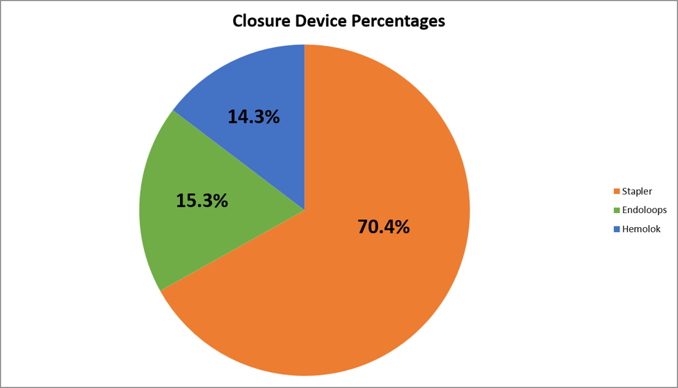
Figure 1. Closure method distribution in appendectomy, all hospitals.
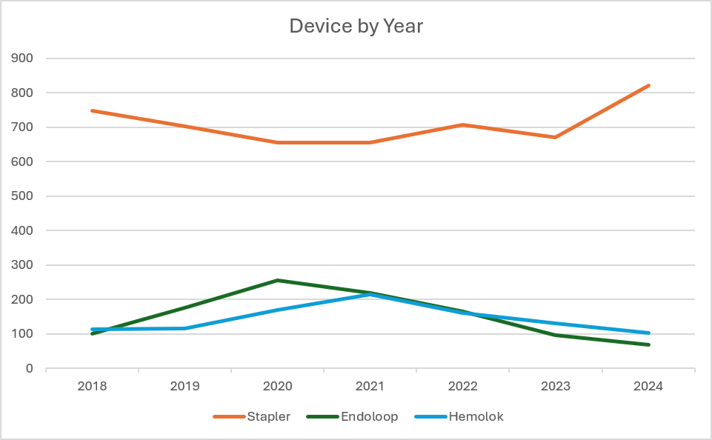
Figure 2. Closure technique and energy device use by year, 2018–2024, all hospitals.
Device selection varied considerably both by hospital and by individual surgeon. In other words, not each hospital or surgeon had an exact 70.4/15.3/14.3 percentage split. Hospital 1 used the stapler in 70.3% of cases, the endoloops in 29.7% of cases, with no polymer locking clip cases. Hospital 2 used the stapler for 99.9% of cases, endoloops 0.1% of cases, with no polymer locking clip cases. Hospital 3 employed the stapler for 44.2% of cases, endoloops for 13.7% of cases, and the polymer locking clips for 42.1% of cases. Hospital 4 had a profile somewhat similar to Hospital 3, with the stapler used 55.5% of the time, endoloops 17.4% of the time, and polymer locking clips for 27.1% of cases (Table 1).
|
Hospital |
Stapler |
Endoloops |
Polymer Locking Clips |
|
1. Large community hospital |
70.3% |
29.7% |
0 |
|
2. Tertiary referral hospital |
99.9% |
0.1% |
0 |
|
3. Smaller community hospital |
44.2% |
13.7% |
42.1% |
|
4. Smaller community hospital |
55.5% |
17.4% |
27.1% |
Closure technique and energy device use also varied tremendously among the 56 physicians in the study. For example, Surgeon A, who did 267 appendectomies, used the stapler and an energy device in 100% of their cases. By contrast, Surgeon B (107 appendectomies) used the stapler 98% of the time but only used the energy device in 10% of cases. Surgeon C (250 cases) did 80% of cases with endoloops, with an energy device used in 92% of cases. Surgeon D (130 cases) used endoloops in 92% of cases but only used an energy device in 5 cases. Surgeon E (405 cases) used polymer locking clips in 90% of cases and a stapler in 9% but only used an energy device in 1% of their cases. Surgeon F (392 cases) worked at the same hospital as Surgeon E and had a very similar device profile (Table 2).
|
Surgeon |
n |
Stapler |
Endoloops |
Polymer Locking Clips |
Energy Device |
|
A |
267 |
100% |
0 |
0 |
100% |
|
B |
107 |
98% |
2% |
0 |
10% |
|
C |
250 |
20% |
80% |
0 |
92% |
|
D |
130 |
8% |
92% |
0 |
4% |
|
E |
405 |
9% |
1% |
90% |
1% |
|
F |
392 |
11% |
1% |
88% |
2% |
The surgical time of cases, defined by incision to closure, is shown in Figure 3. The median time was 29.0 minutes while the mean time was 31.7 minutes, with a standard error of 0.2 minutes and a standard deviation of 13.3 minutes. Given that the graph has a long tail to the right, a better measure of deviation may be Interquartile Range (the middle 50% of cases), which was from 23 to 37 minutes.
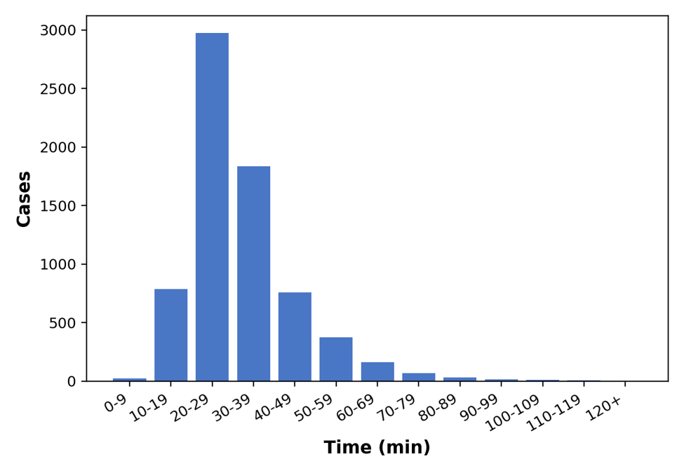
Figure 3. Time of all cases in minutes.
The mean surgical times by closure device varied as follows: For the stapler, the mean time was 34.1 minutes (SD = 14.0, SE = 0.2), while for polymer locking clips it was 27.2 minutes (SD = 8.3, SE = 0.3), and then 25.0 minutes for loops (SD = 10.2, SE = 0.3) (Figure 4).
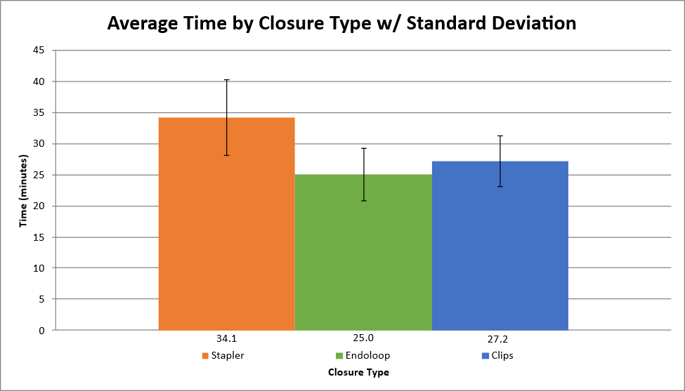
Figure 4. Operative time by closure device.
In multivariable least-squares regression adjusted for energy-use device, perforation, age, BMI, sex, robotic approach, hospital and calendar year, the closure-device indicators were jointly associated with operative time (omnibus Wald χ²[2] = 6.24, p = 0.044). Staplers took longer than polymer locking clips (p = 0.030) and staplers versus endoloops approached significance (p = 0.051). There was no significant time difference between endoloops and polymer locking clips (p = 0.709).
Pairwise adjusted contrasts then compared stapler with endoloop, endoloop with polymer locking clips, and stapler with polymer locking clips. The Holm method was used to account for the three comparisons. None of the pairwise differences remained statistically significant after adjustment. Nevertheless, the adjusted point estimates were higher for staplers than for endoloops (difference, 5.08 minutes; Holm-adjusted p = 0.101) and polymer locking clips (difference, 4.12 minutes; Holm-adjusted p = 0.091). Operative time did not differ appreciably between endoloops and polymer locking clips (difference, −0.97 minutes; Holm-adjusted p = 0.710).
Interestingly, the addition of an energy device did not have a statistically significant effect on surgical times. In unadjusted analyses, procedures involving an energy device had a mean operative time of 30.7 minutes compared with 32.5 minutes for procedures without an energy device. After adjusting for closure device, perforation, age, BMI, sex, robotic approach, hospital and calendar year, energy device use had an adjusted difference of +0.94 minutes (CI -2.57 to 4.46, p = 0.599).
Analysis of the data yielded additional interesting results. Cases in which perforation was present took about 9 minutes longer compared to non-perforated cases (95% CI 5.53 – 8.60, p < 0.001). Device selection in perforated cases showed a slight increase in use of staplers, with a slight decrease in use of endoloops and polymer locking clips. However, this was not statistically significant. Device use also varied by age, with pediatric patients more likely to get endoloops and patients age 15 and up more likely to get staplers or polymer locking clips.
Both BMI and age were independently associated with longer operative time. After multivariable adjustment, each additional 10 years of age was associated with an additional 0.65 minute of operative time (95% CI 0.38 – 0.92, p <0.001). Each additional 5 kg/m2 of BMI was associated with an increase in operative time of 1.45 minutes (95% CI 1.16 – 1.74, p <0.001). From a BMI of 20 to 49, device selection was reasonably constant while patients with a BMI of 50 or greater were more likely to have use of the stapler rather than polymer locking clips.
Regarding the acquisition costs of closure devices and energy devices: The least expensive option was the polymer locking clips, with a cost of $37 per case. Polysorb endoloops were relatively inexpensive at $19 each ($38 for 2) but surgeons in this study preferred PDS endoloops, which cost $388 for 2. A stapler handle plus two loads cost $414 while the addition of an energy device added anywhere from $320 to $1,115 to the expense of the case (Table 3). The acquisition cost of instruments for appendiceal stump closure therefore varied from $37 per case to over $1,500 per case, making the polymer locking clips alone the most economical choice. It should be noted that only 8 out of 1,007 clip cases used an energy device.
|
Closure Device |
No energy device |
With Sonicision (add $320) |
With Ligasure (add $480) |
With Harmonic (add $1115) |
|
Polymer locking clips |
$37 |
$357 |
$517 |
$1152 |
|
Endoloops |
$388 |
$708 |
$868 |
$1503 |
|
Stapler |
$414 |
$734 |
$894 |
$1529 |
Discussion
In this large, multi-center study of 7,042 laparoscopic appendectomies performed across four hospitals within an integrated health system, there was substantial variation in appendiceal stump closure techniques and energy device utilization, resulting in a wide range of disposable costs. Despite this heterogeneity, surgical times were similar between techniques. Although staplers took several minutes longer than polymer locking clips or endoloops, comparisons were not statistically significant after Holm adjustment. Similar to other studies, staplers were the most expensive device. Polymer locking clips remained the cheapest option. The use of expensive adjunctive energy instruments did not confer a measurable time saving. These findings present an opportunity for significant instrument acquisition cost reduction without compromising clinical performance.
The widespread use of energy devices warrants particular scrutiny. In our study, advanced bipolar and ultrasonic instruments were frequently utilized even in routine appendectomy cases, despite adding $320–$1,115 per case in cost. Importantly, energy device use was not associated with reductions in surgical time, contradicting findings from prior studies that suggested these tools improve efficiency. Given that the median operative time across all cases was only 29.0 minutes, such devices appear unnecessary for the majority of cases. Their selective use may be appropriate for complex scenarios, such as dense inflammation, adhesions or challenging vascularity, but routine deployment offers no apparent measurable value.
One of the most striking findings of this study is the degree to which individual surgeon preference, rather than patient characteristics or operative complexity, drove device selection. Although the patient cohort included a broad range of ages and body compositions, these demographic factors did not influence the closure strategy. Instead, device use was clustered distinctly by surgeon and hospital, mirroring localized practice patterns rather than evidence-based decision-making. Given that many surgeons selected staplers almost all or 100% of the time, clearly staplers are not reserved for only difficult cases. (As mentioned above, for perforated cases and high BMI patients, there was a slight but not statistically significant increase in the use of a stapling device.) Device selection may be a result of familiarity with one method, the result of one’s training, or perceived superiority of one device over another.
This variation was not benign: acquisition costs differed more than forty-fold between the least and most expensive approaches, with per-case costs for closure devices ranging from $37 for polymer locking clips alone to more than $1,500 when staplers and energy devices were combined.
When extrapolated to annual case volumes, the financial implications of these findings are substantial. Within the Intermountain Health system of 33 hospitals, more than 3,200 laparoscopic appendectomies were performed in 2024. Standardizing closure techniques to a low-cost option such as polymer locking clips, rather than combinations of staplers and energy devices, could yield annual savings for disposable items exceeding $2 million. Importantly, this reduction in spending would not result in a change in operative efficiency. Rather, it reflects the elimination of unnecessary variation, which is a core principle of value-based medical care.
Many efforts have already been undertaken to provide better value-based surgical care through reduction of unwarranted surgical variation and adoption of the most effective and efficient techniques. Agency, capacity, and evidence have been identified as the three main driving factors for unwarranted variation in care. While patient agency is unlikely a factor in this situation, surgeon preferences (surgeon agency) can be implicated. In the case of the hospitals involved in our study, there were no financial consequences, positive or negative, tied to instrument choices. Without consequences, surgeons are likely to choose whichever instrument they prefer without regard to the relative cost. Capacity can also be implicated as surgeon training by residency can vary widely with most future surgeons (residents) adopting the preferences of the surgeons they train under. Facilities may also carry a limited supply of different instruments based on historic use which further encourages specific instrument preferences. The last possibility, that surgeons fail to follow evidence appropriately, leading to lack of uniformity, is another area that warrants further investigation. Each of these factors individually, or a combination thereof, could explain why this study found staplers to be the dominant instrument [16].
Study Limitations
This is a retrospective study, and results may have been different if the study was prospective and surgeons were aware that their device selection was being observed and recorded. However, this may have led to confounding of results through the Hawthorne effect [17]. Also, prospective studies may require a signed patient consent, which can be difficult to obtain for emergency surgeries, and could result in far fewer subjects.
The technical difficulty in completing an appendectomy can be influenced by multiple factors, including patient BMI, the presence of adhesions, severe inflammation, the finding of perforation, tissue friability and anatomic variation such as a retrocecal appendix. This study did control for BMI and perforation, with findings including increased operative time but no significant change in device selection. The other potentially confounding factors listed above were not accounted for, as this would require every surgeon to record intraoperative findings in the exact same manner. One surgeon’s ‘severe inflammation’ or ‘multiple adhesions’ may not be mentioned by another surgeon. What constitutes a difficult case is highly subjective and therefore difficult to measure objectively.
This study did not evaluate clinical outcomes, such as wound infections which usually do not show up until several days after the operation. Most appendectomies are completed as an outpatient procedure. The patient may then be lost to follow-up or postoperatively see a surgeon who is not an employee of Intermountain Health. Non-Intermountain surgeons have their own clinics with a plethora of different electronic medical record systems that were not available to include in the database generated for this study.
One of the four hospitals in the study was a teaching hospital that had general surgery residents. A possible confounding factor is that residents who are learning surgical techniques may take longer to complete a case than experienced surgeons. However, when controlled by hospital, the time taken to complete cases was similar in the teaching hospital versus the three non-teaching hospitals.
Another limitation is clinical significance. For example, endoloops in this study are quicker to use compared to polymer locking clips by an unadjusted difference of 2.2 minutes, or a difference of 0.97 minutes after the Holm adjustment. A time savings of that little magnitude between devices is unlikely to matter to the patient, the OR staff, or the overall costs of the encounter.
The cost of materials changed over the seven-year period and were more expensive at the beginning of the study than its conclusion. Some of the devices, such as the Harmonic Scalpel, were in use the first few years of the study but then were phased out. Calculations for potential savings were made using the latest (lower) prices, otherwise potential savings would have been larger than stated. In addition, the overall cost of the operations and patient stays in hospital were not calculated. Non-measured items include operating room costs, instrument reprocessing costs and complication costs. This study measured only the acquisition cost of the closure devices, and so no conclusions can be drawn as to whether or not the total cost of the patient encounter was impacted.
Not examined in this study were the financial implications of robotic appendectomies. As more and more surgeons utilize a robotic platform for an increasing variety of cases, the financial calculations will change. Also not examined was the use of an energy device alone to close the appendiceal stump, a technique employed by some surgeons [18] but not by any in this study.
Finally, this study was conducted within a single system (Intermountain Health of Utah) and its findings may not be generalized to other institutions with different surgical cultures or device availability. Multicenter studies from diverse practice settings may determine if similar patterns of variation and therefore opportunities for potential cost savings exist elsewhere.
Conclusion
Our findings suggest that surgeon preference, rather than clinical complexity, appears to be an important contributor to device selection in laparoscopic appendectomy. However, surgeon preference may not be the sole explanation for the observed variation, due to the presence of confounding factors such as appendiceal perforation or patient BMI. Acquisition costs differed more than forty-fold between the least and most expensive closure strategies. Standardizing closure techniques to low-cost, equally effective options such as polymer locking clips alone could, without compromising operative performance, yield substantial system-wide savings. Given the high volume of appendectomies performed each year, reducing unwarranted and expensive practice variation represents a feasible and high-impact opportunity to improve value in surgical care.
Acknowledgements
The authors wish to thank Nick Green and Candi Fournier, RN, for their assistance with this research project.
Declarations
Author contributions
Thomas Gerber-data curation and analysis, Conner Jenkins-data curation and analysis, Devon McBee-data curation and analysis, Ethan Nelson-data curation and analysis, Yahia Rashed-data curation and analysis, Pawan Sajnani-data curation and analysis, David Sant-data analysis, Robert Patterson-conceptualization, formal analysis, writing – original draft and review & editing.
Funding sources and financial support
This research did not receive any specific grant from funding agencies in the public, commercial or not-for-profit sectors.
Conflict of interest statement/disclosures
All the authors declare that they have no conflict of interest and no potential for personal gain with respect to this research project.
Ethics approval
This research Project was approved by the Intermountain Health Institutional Review Board, which includes ethical considerations in the review process.
Declaration of generative AI
None of the authors used generative AI in the preparation of this manuscript.
References
2. Di Saverio S, Podda M, De Simone B, Ceresoli M, Augustin G, Gori A, et al. Diagnosis and treatment of acute appendicitis: 2020 update of the WSES Jerusalem guidelines. World J Emerg Surg. 2020 Apr 15;15(1):27.
3. Yaron R, Hagai S, Nayyera T, Nili G, Shai KD, Shmuel A. Appendiceal stump closure in laparoscopic appendectomy: one endoloop vs. two endoloops vs. two endoclips-does it matter? Langenbecks Arch Surg. 2023 Jul 10;408(1):270.
4. Kim S, Jeon BH, Cho SS, Shin US, Moon SM. Clinical outcomes of locking polymeric clip for laparoscopic appendectomy in patients with appendicitis: a retrospective comparison with loop ligature. Ann Coloproctol. 2022 Apr;38(2):160–5.
5. Ergun S, Ozcan P, Gunaydin FI, Ozdemir E, Soylu Yalıman S, Pekmezci Y, et al. Comparison of three different methods for stump closure in laparoscopic appendectomy: Endoloop, Hem-o-lok clip, and endostapler. Ulus Travma Acil Cerrahi Derg. 2024 Nov;30(11):795–801.
6. Lee KY, Lee J, Park YY, Oh ST. Advantages of using a polymeric clip versus an endoloop during laparoscopic appendectomy in uncomplicated appendicitis: a randomized controlled study. World J Emerg Surg. 2023 Jun 29;18(1):39.
7. Poon SHT, Law SY, Lai ATY. Clips closure versus endoloop ligation in laparoscopic appendectomy: a systematic review and meta-analysis of comparative studies. Ann Med Surg (Lond). 2023 Sep 6;85(10):5011–21.
8. Kumar A, Mustafa MS, Shafique MA, Haseeb A, Rangwala HS, Kumar H, Rangwala BS, Raja A, Raja S, Ali SMS. Comparison of polymeric clip and endoloop in laparoscopic appendectomy: A systematic review and meta-analysis. Surgery. 2024 Nov;176(5):1329–36.
9. Najah Q, Makhlouf HA, Abusalah MA, Aboelkhier MM, Rashed MA, Kashbour M, et al. Effectiveness of different appendiceal stump closure methods in laparoscopic appendectomy a network meta-analysis. Langenbecks Arch Surg. 2024 Sep 5;409(1):270.
10. Makaram N, Knight SR, Ibrahim A, Patil P, Wilson MSJ. Closure of the appendiceal stump in laparoscopic appendectomy: A systematic review of the literature. Ann Med Surg (Lond). 2020 Aug 4;57:228–35.
11. White C, Hardman C, Parikh P, Ekeh AP. Endostapler vs Endoloop closure of the appendiceal stump in laparoscopic appendectomy: Which has better outcomes? Am J Surg. 2021 Aug;222(2):413–6.
12. Ekestubbe L, Forssten MP, Forssten SP, Bass GA, AlHussaini Y, Mohseni S. Techniques for Mesoappendix Division and Appendiceal Stump Closure: A Comparative Review. Am Surg. 2026 Aug;92(8):2038–53.
13. Mannu GS, Sudul MK, Bettencourt-Silva JH, Cumber E, Li F, Clark AB, et al. Closure methods of the appendix stump for complications during laparoscopic appendectomy. Cochrane Database Syst Rev. 2017 Nov 13;11(11):CD006437.
14. Elsayed WA, Elhadi SA, Gad D, Mohamed HM, Elsaid T, Omar MF, et al. Effectiveness of different appendiceal stump closure methods in laparoscopic appendectomy in children: A systematic review and network meta-analysis. World J Gastrointest Surg. 2025 Nov 27;17(11):112182.
15. Borkar N, Sharma C, Mohanty D, Singha SK. A Systematic Review and Meta-Analysis of Harmonic Scalpel Versus Conventional Techniques of Appendiceal Stump Closure in Laparoscopic Appendicectomy. Cureus. 2022 Sep 3;14(9):e28759.
16. Sutherland K, Levesque JF. Unwarranted clinical variation in health care: Definitions and proposal of an analytic framework. J Eval Clin Pract. 2020 Jun;26(3):687–96.
17. Demetriou C, Hu L, Smith TO, Hing CB. Hawthorne effect on surgical studies. ANZ J Surg. 2019 Dec;89(12):1567–76.
18. Juan HL, Nicolas AM, Daniela CL, Lineth OM, María RA, Camila RM, et al. Use of a Bipolar Device (LigaSure) to Seal the Appendiceal Stump in Pediatric Laparoscopic Appendectomy: 10-year Latin-American Experience. J Pediatr Surg. 2023 Aug;58(8):1471–75.