

Abstract
While a vast literature has shown that population aging reduces productivity and slows down economic growth, the evidence on the impact of aging on business cycles’ volatility is scarce. Population aging compromises the effectiveness of fiscal and monetary policy and affects the labor market’s dynamics, which may lead to increased macroeconomic volatility. However, economic agents’ behavioral changes due to increased longevity may produce more stable business cycles. Building on a previous study, this article shows that while output volatility grows as the population ages, consumption and investment volatility drops. This seemingly contradictory result arises because of the impact of aging on the labor market’s dynamics.
Keywords
Business cycles, Population aging, Demographics
Introduction
Population aging largely results from the growth in life expectancy and decreasing fertility ratios. Greater access to health care, scientific innovations, information dissemination, improved access to schooling, and growing participation of women in labor markets have led to these demographic changes.
Over the past decade, several countries have experienced significant increases in old-age dependency ratios[1], particularly those with higher income levels (Figure 1). Japan and Italy had the highest ratio in the world by 2019: 45% and 36%, respectively. Among upper-middle income countries, Bulgaria has stood out with an old-age dependency ratio of 33% by 2019, more than twice the median ratio of its counterparts in the same income level. Likewise, Sri Lanka’s old-age dependency ratio of 16% in 2019 was the highest among lower-middle income countries.
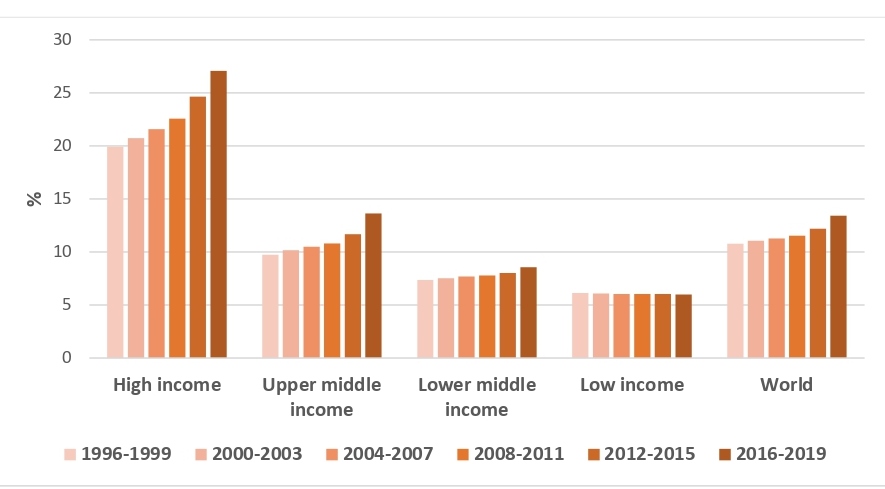
Figure 1: Median Old-Age Dependency Ratio, by Income Level (Source: World Bank 2021).
The literature relating population aging with macroeconomic performance has mainly focused on economic growth [1,2]. Studies associating aging and business cycles’ volatility have mostly aimed at developing life cycle or dynamic stochastic general equilibrium models with demographic features [3,4]. Empirical evidence on the short-run impacts of aging has been scarce and limited to analyzing few countries’ labor market changes [5].
This paper updates our previous research on the impact of aging on business cycles’ volatility [6]. The paper verifies whether the reduced macroeconomic volatility arising from economic agents’ behavioral changes due to population aging outweighs the adverse impact of aging on the effectiveness of fiscal and monetary policies, financial stability, and labor markets’ dynamics.
Assessing the short-run macroeconomic impacts of aging is important for the design of government stabilization policies. Using data from 146 countries between 1996 and 2019[2], the evidence presented here confirms the results of our earlier manuscript [6]. Increases in longevity reduce consumption and investment volatility, but changes in labor market dynamics overshadow the stabilizing effects of economic agents’ behavioral changes and lead to greater output volatility.
Besides this introduction, the paper has three more sections. The second section briefly discusses the possible links between aging and macroeconomic stability. The third section describes the data and the empirical strategy. The fourth section presents the estimation results and the concluding remarks.
[1]The old-age dependency ratio is defined as the number of individuals aged 64 and above, divided by the number of persons aged between 15 and 64, in percentage terms.
[2]The choice of countries was based on data availability, but the sample included countries with different income levels and characteristics, which should yield robust results.
Why Population Aging Matters to Macroeconomic Stability?
The overall impact of aging on macroeconomic volatility is theoretically inconclusive because the lower consumption and investment volatility brought by economic agents’ behavioral changes due to aging is offset by the detrimental effects of aging on labor turnover, on financial markets’ stability, and on the government’s ability to use countercyclical macroeconomic policies (Figure 2). This section discusses each of these links between population aging and business cycles’ volatility.
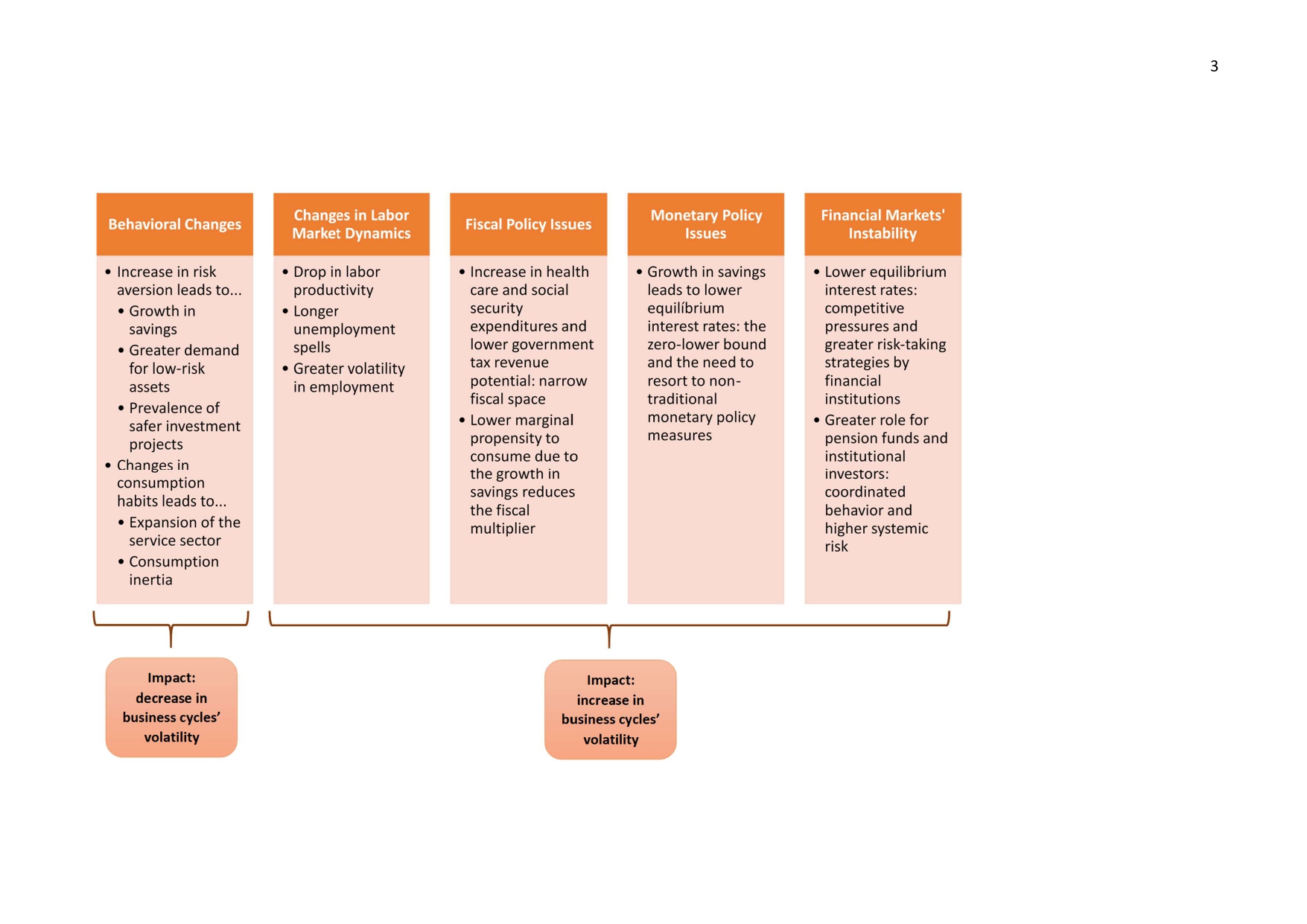
Figure 2: Impacts of Population Aging on Macroeconomic Volatility
Increases in longevity alter economic agents’ consumption habits and risk tolerance. Aging leads to greater consumption inertia because older individuals are less likely to change their preferences as products and processes evolve [7,8]. The elderly also shifts their demand toward leisure, assistance, and medical care, while reducing housing and transportation expenditures [9]. Thus, the size of the service sector in the economy grows as the population ages. Because service activities fluctuate less than manufacturing, aging may bring smoother business cycles [10,11].
The increase in risk aversion due to aging may also bring macroeconomic stability. Greater life expectancy leads individuals to save more and to focus on low-risk assets, as they attempt to smooth consumption over a longer time span [12,13]. Besides reducing consumption volatility, increases in economic agents’ risk aversion may also promote lower investment volatility: Bluedorn and Martin [8] show that older entrepreneurs tend to engage in safer investment projects.
On the contrary, changes in the labor market’s dynamics may lead to greater business cycles’ volatility. As individuals grow old, the loss of cognitive and processual abilities reduces productivity. Thus, older workers are more likely to get fired during recessions and to face longer unemployment spells [14]. Thus, population aging may lead to protracted recessions and greater employment volatility.
Aging also renders fiscal and monetary policies less effective. Fiscal policy is compromised by the growth in health care and social security expenditures and by the loss in tax revenue associated with aging [15]. Basso and Rechedi [16] also point out that the fiscal multiplier tends to decline when increased longevity stimulates savings, reducing fiscal policy’s ability to influence economic activity.
Monetary policy has limited intervention space in low-interest rates scenarios, which are likely to prevail as savings increase [3,17]. As equilibrium interest rates move toward the zero-lower bound, monetary tools normally used to promote stability are rendered ineffective during recessions. Because interest rates are too low to reduce any further, monetary authorities are left to resort to unconventional interventions.
Finally, population aging may contribute to greater financial instability. The quest for more sustainable public finances has spurred social security reforms in many countries. The consequent proliferation of pension funds and greater availability of resources to financial markets may fuel instability if financial institutions aggressively compete for these resources and undertake risky strategies [18,19].
Data and Method
The empirical analysis is based on cross-section data from 146 countries over the 1996-2019 period [20]. Because of the presence of outliers, bootstrap quantile regression and the MM-estimator proposed by Yohai [21] were used to estimate the following equation:
σVi=β1+β2OLDi+β3Xi+μi+ui (1)
where σVi represents the indicator of macroeconomic volatility of country i, i = 1, 2, 3..., 146; V indexes production (σYi), consumption (σCi), investment (σIi) or employment (σEi); OLDi represents the indicator of population aging; Xi is a matrix of control variables; and ui,t is the error term.
The band-pass filter proposed by Christiano and Fitzgerald [22] was used to estimate the cyclical components of production, consumption, investment, and employment between 1996 and 2019. This bandpass filter has greater precision than the traditional HP filter used in the business cycles literature[1]. The variable σVi represents the standard deviation of the cyclical component in the referred period.
The main indicator of population aging is represented by the ratio of the number of individuals aged 50 years and above to the country’s total population (OLD) [2]. Although the traditional definition of elderly includes individuals older than 64 years, the median life expectancy of some countries included in the sample lies below this age limit. Thus, using the traditional definition would restrict the number of countries included in the analysis.
Three other indicators were used as measures of population aging or demographic features: the median values of the old-age dependency ratio (DEP), the prime-aged savers ratio (PAS), and the volatile-aged labor force share (VALAB). PAS is defined as the ratio of prime-aged individuals (ages 45-64) to the working-age population (ages 15-64). Prime-aged individuals tend to expand their savings as their life expectancy increases, which may lead to lower consumption and investment volatility [23].
VALAB is measured by the ratio of the population aged 15-29 and 60-64 years old to the working-age population. According to Jaimovich and Siu [3], macroeconomic volatility should increase as this ratio grows because workers at an early age and older workers face greater employment volatility.
Figure 3 presents preliminary evidence that population aging appears to be related to reduced volatility in output, consumption, and investment, and increased volatility in employment. Percentile-share histograms by quantiles of DEP or PAS yield results that are similar to OLD, but the outcome by quantile of VALAB is not as clear[3]. Output, consumption, and investment volatility seem to increase as VALAB grows, while employment volatility surprisingly appears to diminish.
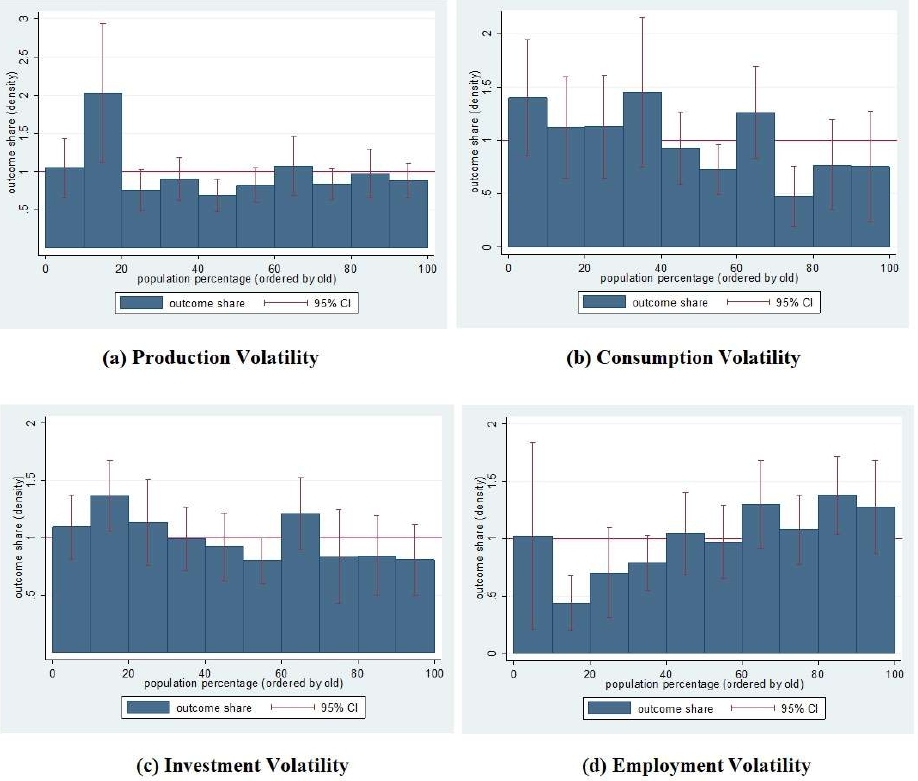
Figure 3: Macroeconomic Volatility and Population Aging, by Quantile of OLD.
Based on the empirical business cycles’ literature, the control variables included an indicator of financial depth, measures of monetary and fiscal policy effectiveness, the degree of international openness, exchange rate volatility, and a proxy for productivity shocks [24-26][4]. Financial development promotes macroeconomic stability by reducing the external finance premium and increasing credit availability to robust investment projects. Monetary and fiscal policy indicators assess whether countercyclical macroeconomic policies help smooth business cycles. International openness proxies for an economy’s exposure to international shocks, while the indicator of exchange rate volatility gauges the importance of stable exchange rates for investment and consumption behavior. Lastly, the indicator of productivity shocks controls for the impact of technological and institutional changes on the economy.
[1]A band-pass filter is a linear transformation of a time-series which leaves unaltered the components of the data that lies within a certain band of frequencies and eliminates the other. The filter isolates the component of the time-series with periods of oscillation between a lower and an upper bound, which represent the minimum and the maximum duration of a business cycle. In this work, we used the lower and upper bound as defined by Christiano and Fitzgerald (2003): 1.5 and 8 years for annual data.
[2]OLDi is this ratio’s median value during the 1996 – 2019 period.
[3]These additional distribution graphs are available upon request.
[4]Appendix 1 describes how to calculate these variables.
Discussion
The impact of population aging on business cycles’ volatility is theoretically ambiguous. Increases in longevity modify economic agents’ behavior: consumers become more risk-averse and increase their savings to cope with longer life expectancy; consumption habits become more conservative and shift towards the service sector; firms’ managers direct their investment strategies toward safer projects as their tolerance to risk also reduce. All these behavioral changes contribute to a more stable economic environment.
Yet, there are other channels through which aging brings greater business cycles’ volatility. The use of countercyclical fiscal policy becomes limited as greater health care and social security expenditures pressure government budgets. The effectiveness of traditional instruments of monetary policy reduces because equilibrium interest rates fall to extremely low levels. Productivity is also hurt by aging, leading to longer unemployment spells among older workers in the aftermath of recessions.
The results indicate that aging leads to greater cyclical volatility in production but reduced volatility in consumption and investment (Table 1). This seemingly contradictory result likely reflects the changes in labor market dynamics as evidenced by the positive and robust relationship between aging and employment volatility. Because of their lower productivity, the likelihood of job separations during recessions is higher among older individuals. Stock and Watson [14] and Neumark and Button [27] have shown that economic recoveries tend to get sluggish as the population ages, which leads to greater volatility in employment and production.
|
|
MM ESTIMATOR |
Bootstrap Quantile Regression |
||||||
|
σY |
σc |
σI |
σE |
σY |
σc |
σI |
σE |
|
|
OLD |
0.0001 |
-0.00011* |
-0.0004** |
0.0002*** |
0.0001 |
-0.0001 |
-0.0004* |
0.0002*** |
|
(0.0001) |
(0.00006) |
(0.0002) |
(0.00003) |
(0.0001) |
(0.0001) |
(0.0002) |
(0.00003) |
|
|
DEP |
0.00011 |
-0.0002* |
-0.0005* |
0.0002*** |
0.00014** |
-0.0001 |
-0.0004 |
0.0002*** |
|
(0.00008) |
(0.0001) |
(0.0003) |
(0.00003) |
(0.00006) |
(0.0001) |
(0.0003) |
(0.00004) |
|
|
PAS |
0.008 |
-0.014* |
-0.052** |
0.019*** |
0.018* |
-0.016* |
-0.048* |
0.018*** |
|
(0.007) |
(0.008) |
(0.022) |
(0.003) |
(0.010) |
(0.009) |
(0.029) |
(0.003) |
|
|
VALAB |
-0.016** |
0.010 |
0.061** |
-0.022*** |
-0.023** |
0.010 |
0.048 |
-0.024*** |
|
(0.008) |
(0.009) |
(0.028) |
(0.004) |
(0.010) |
(0.014) |
(0.030) |
(0.006) |
|
|
# obs. |
146 |
124 |
130 |
146 |
146 |
124 |
130 |
146 |
|
The table displays only the estimated coefficients of the demographic variables (complete estimation results are available upon request). Standard errors are in parenthesis (***p<0.01; **p<0.05; *p<0.1). |
||||||||
The response of employment volatility is statistically significant and economically relevant. Consider the sample median values of OLD and DEP. A 10.0% increase in OLD would raise employment volatility by 8.4% and output volatility by 2.0%, while a similar increase in DEP would raise employment and output volatility by 1.2% and 4.9%, respectively. The impact of aging is significantly more representative in countries at advanced stages of population aging. For example, a 10% increase in OLD would cause output and employment volatility in the United States to grow by 5.8% and 13.9%, respectively. In Japan, output and employment volatility would, in turn, expand by 6,8% and 76,2%, respectively.
Output and employment volatility appears to be positively related to PAS; an unexpected result given that prime-aged savers often experience more stable employment. Guimarães and Tiryaki [6] found a similar outcome, which they attribute to increased financial instability brought by population aging. Financial institutions respond to the growth in savings and lower equilibrium interest rates by increasing their risk exposure.
VALAB exhibits a negative and robust association with output and employment volatility, a result also found by Guimarães and Tiryaki [6]. This puzzling result may have arisen because of this variable’s definition. The volatile-aged labor force includes individuals aged 15-29 and 60-64 years old, but the life expectancy of several countries in the sample lies below 60 years. Thus, this variable may not be accurately capturing population aging.
Consumption volatility falls as longevity increases, although this result not as statistically significant as those of the output and employment regressions. The estimations show that a 10% increase in OLD would reduce the median consumption volatility by 0.9%. The impact would be greater in countries such as the United States and Japan, where consumption volatility would fall by 12.2% and 35.7%, respectively. This negative association may be due to behavioral issues: as individuals’ life expectancy grows, risk aversion rises and consumption habits change [9,12]. Savings increase to allow consumption smoothing over longer horizons, and demand for health services, elderly care, and leisure activities rise, expanding the service sector’s participation in the economy. Both of these side effects of behavioral changes likely reduce consumption volatility.
The negative link between investment volatility and population aging may be also explained by behavioral changes: since older entrepreneurs are likely more risk-averse and experienced, their business ventures tend to be more successful [8]. Thus, the prevalence of older entrepreneurs possibly leads to lower investment volatility. The estimation results are robust and show that a 10.0% increase in OLD reduces the median investment volatility by 1.5%. The impact is again more significant in countries at advanced stages of aging: a 10% increase in OLD would reduce investment volatility in the United States and Japan by 9.5% and 18.6%, respectively.
The results additionally show that an increase in the share of prime-aged savers leads to a fall in consumption and investment volatility, a result previously found by Cubeddu et al. [23] and Guimarães and Tiryaki [6]. The volatile-aged labor share is in turn positively related to consumption and investment volatility, but this outcome is statistically less robust.
Thus, population aging mainly affects short-run macroeconomic performance through its impact on labor market dynamics. The lower productivity associated with aging leads to greater employment and output volatility, as older individuals face a greater likelihood of job separations during recessions and worse prospects of getting rehired as the economy rebounds. Planning labor market initiatives aimed at lowering the cost of recessions is therefore paramount. Particularly, public policies that promote active aging, assist individuals to grow older healthier, and provide subsidies for lifelong learning and investment in skills may reduce the loss in productivity due to aging.
References
2. Aksoy Y, Basso HS, Smith RP, Grasl T. Demographic structure and macroeconomic trends. American Economic Journal: Macroeconomics. 2019 Jan; 11(1):193-222.
3. Sudo N, Takizuka Y. Population Aging and the Real Interest Rate in the Last and Next 50 Years: A Tale Told by an Overlapping Generations Model. Macroeconomic Dynamics. 2020 Dec;24(8):2060-103.
4. Jones C. Aging, secular stagnation and the business cycle. International Monetary Fund; 2018 Mar 23.
5. Jaimovich N, Siu HE. The young, the old, and the restless: Demographics and business cycle volatility. American Economic Review. 2009 Jun;99(3):804-26.
6. Guimarães SD, Tiryaki GF. The impact of population aging on business cycles volatility: International evidence. The Journal of the Economics of Ageing. 2020 Oct 1; 17:100285.
7. Carpenter SM, Yoon C. Aging and consumer decision making. Aging and Decision Making. 2015 Jan 1:351-70.
8. Bluedorn AC, Martin G. The time frames of entrepreneurs. Journal of Business Venturing. 2008 Jan 1; 23(1):1-20.
9. Banks J, Blundell R, Levell P, Smith JP. Life-Cycle Consumption Patterns at Older Ages in the United States and the United Kingdom: Can Medical Expenditures Explain the Difference?. American Economic Journal: Economic Policy. 2019 Aug; 11(3):27-54.
10. Alcalá F, Sancho I. Output composition and the US output volatility decline. Economics Letters. 2004 Jan 1; 82(1):115-20.
11. Moro A. Structural change, growth, and volatility. American Economic Journal: Macroeconomics. 2015 Jul; 7(3):259-94.
12. Dohmen T, Falk A, Golsteyn BH, Huffman D, Sunde U. Risk attitudes across the life course. Economic Journal. 2017; 127(605): 95-116.
13. Kopecky J. An aging dynamo: demographic change and the decline of entrepreneurial activity in the United States. SSRN 2907198. 2017 Nov 26.
14. Stock JH, Watson MW. Disentangling the Channels of the 2007-2009 Recession. National Bureau of Economic Research; 2012 May 17.
15. Auerbach AJ. Societal aging: Implications for fiscal policy. Tokyo: Institute for Monetary and Economic Studies, Bank of Japan; 2012 Apr.
16. Basso HS, Rachedi O. The young, the old, and the government: demographics and fiscal multipliers. Bank of Spain Working Paper, 2018.
17. Carvalho C, Ferrero A, Nechio F. Demographics and real interest rates: Inspecting the mechanism. European Economic Review. 2016 Sep 1; 88:208-26.
18. Imam P. Demographic shift and the financial sector stability: the case of Japan. Journal of Population Ageing. 2013 Dec 1; 6(4):269-303.
19. Alda M. The relationship between pension funds and the stock market: Does the aging population of Europe affect it?. International Review of Financial Analysis. 2017 Jan 1; 49:83-97.
20. World Bank. World development indicators 2010. The World Bank; 2010 Apr 19.
21. Yohai VJ. High breakdown-point and high efficiency robust estimates for regression. The Annals of Statistics. 1987 Jun 1:642-56.
22. Christiano LJ, Fitzgerald TJ. The band pass filter. international economic review. 2003 May; 44(2):435-65.
23. Cubeddu ML, Krogstrup S, Adler G, Rabanal MP, Dao MC, Hannan MS, et al. The External Balance Assessment Methodology: 2018 Update. International Monetary Fund; 2019 Mar 19.
24. Karras G, Song F. Sources of business-cycle volatility: An exploratory study on a sample of OECD countries. Journal of Macroeconomics. 1996 Sep 1; 18(4):621-37.
25. Da Silva GF. The impact of financial system development on business cycles volatility: cross-country evidence. Journal of Macroeconomics. 2002 Jun 1; 24(2):233-53.
26. Gumus I, Taşpınar ZT. Real exchange rate volatility and business cycles in emerging market economies. Economics Letters. 2015 Sep 1; 134:127-9.
27. Neumark D, Button P. Age discrimination and the great recession. FRBSF Economic Letter. 2014; 10(1-5).