

Commentary
Adult neurons in the mammalian central nervous system (CNS) fail to regenerate after injury due to a number of factors including the reduced intrinsic growth capacity together with the hostile environment of the injured CNS microenvironment [1-4]. However recent studies have shown that modifying the intrinsic growth capacity through a number of cell signalling pathways can promote regeneration of adult CNS neurons. For example, intrinsic factors such as cyclic adenosine monophosphate (cAMP), mammalian target of rapamycin (mTOR), and the repressors phosphatase and tensin homolog (PTEN) and suppressor of cytokine signalling 3 (SOCS3) promote CNS axon regeneration [5-7]. The observation that cAMP and mTOR activity are developmentally downregulated and new protein synthesis is suppressed after mTOR inactivation probably explains why some axons do not normally regenerate in the mature CNS.
The retina is an extension of the CNS and optic nerve injury leads to the same problems in terms of neuronal survival and axon regeneration as other parts of the CNS. However, recent studies have demonstrated that inflammatory stimulation, such as oncomodulin [8-10], activation of the JAK/STAT3 pathway [11-13], transcriptional repressors, such as Kruppel-like factors (KLFs) [14,15], Sox11 [16], c-Myc [17], activation of the PTEN/mTOR pathway [18-21], codeletion of PTEN/SOCS3 [5], and activation of BMP4/Smad1 pathway [22], pigment epithelium-derived factor (PEDF) [23-25], and glycogen synthase kinase-3 (GSK3) all promote the survival and regeneration of approximately 10% of all retinal ganglion cell (RGC) axons in the murine retina [19]. It seems apparent that no matter what the regenerative strategy in the optic nerve, <10% of RGC survive and regenerate their axons [26,27].
The discovery of the dependence of different subsets of RGC upon specific neurotrophic factor (NTF) combinations implies that phenotypically diverse neurons will require different combinations of NTF for survival and regeneration and eventual re-innervation of appropriate targets. For example, there are over ~30 different types of RGC in the murine retina, which are classified by morphology, gene expression, physiology and regularity of spacing in the retina [19]. The intrinsically photosensitive (ip) RGCs (ipRGCs), contain a range of concentrations of the photosensitive pigment, melanopsin G, giving their variable properties [28,29]. Five types of ipRGC, M1-M5, have been described with varied morphological, molecular and physiological properties and occupy the innermost region of the ganglion cell layer (GCL) juxtaposed to the inner plexiform layer (IPL). These ipRGC have extensive dendritic ramifications that terminate in the ON, OFF and ON/OFF sub-laminae of the IPL [30,31]. M1 ipRGC are strongly melanopsin+ and mainly subserve pupillary reflexes and entrainment of the circadian clock [32-34]. M4 ipRGC resemble αRGC in that they have a large somata, expansive dendritic fields ramifying in the ON sub-laminae of the IPL and similar physiological properties [19,33,35,36]. Only M1 and αRGC preferentially survive axotomy but only 2.5% of surviving RGC regenerate their axons, >90% of which are derived from αRGC [19]. Therefore, finding alternative signalling pathways to promote RGC axon regeneration in non-ipRGC/αRGC is a key priority to restore function after optic nerve injury.
With this in mind, we investigated the involvement of the GSK3 pathway after optic nerve injury in RGC survival and axon regeneration (Figure 1). GSK3 is a multifunctional serine/threonine kinase, originally described in mammals with homologs being present in all eukaryotes [37,38]. It inactivates glycogen synthase, an enzyme that regulates the synthesis of glycogen and two homologs are encoded in mammals: GSK3α and GSK3β. GSK3 has diverse functions, including regulation of cell fate, protein synthesis, glycogen metabolism, cell mobility, transformation, proliferation and survival [37,38]. The two isoforms of GSK3 are not functionally identical and redundant, despite sharing a high degree of similarity and functional overlap. For example, GSK3β plays a prominent role in the CNS and regulates neuronal development, neurogenesis, neuronal migration, differentiation and survival. GSK3beta is constitutively active in resting cells and undergoes rapid phosphorylation, which regulates its function. Phosphorylation at tyrosine 216 (Tyr216) confers full activity of GSK3β, whilst phosphorylation of serine 9 (Ser9) inhibits GSK3β activity. Ser9 phosphorylation is the most common regulatory mechanism for GSK3β, with many kinases including p70 S6 kinase, extracellular signal-regulated kinases (ERKs), p90RSK (also called MAP-MAP kinase-1), protein kinase B (also called Akt), certain isoforms of protein kinase C (PKC) and cyclic AMP-dependent protein kinase (protein kinase A, PKA), phosphorylating Ser9.

Figure 1: Crosstalk of neurotrophin and BMP signalling in RGCs. Neurotrophins (NTs) act on tyrosine kinase
Neurotrophins (NTs) act on tyrosine kinase (Trk) receptors and activates phosphatidylinositol kinase (PI3K) activity that converts phosphatidylinositol (4,5) bisphosphate (PIP2) to phosphatidylinositol (3,4,5) triphosphate (PIP3), an effect that is reversed by phosphatase and tensin homolog deleted on chromosome 10 (PTEN). PIP3 then activates phosphatidylinositol-dependent protein kinase 1 (PDK1) and Akt, inhibiting tuberous sclerosis complex (TSC1/2). TSC1/2 can stimulate the Ras homolog enriched in the brain (Rheb) to upregulate mTOR activity. Akt also inhibits GSK3β, which in turn disinhibits CREB-mediated NT transcription, adenomatous polyposis col (APC), and collapsing response mediator protein 2 (CRMP2) to promote growth cone assembly. Bone morphogenetic proteins (BMPs) normally signal through C-terminal phosphorylation of small mothers against decapentaplegic homolog 1 (Smad1), which then makes nuclear entry and regulates transcription of downstream axogenic growth programs (e.g. Extracellular signal-related kinase 1 (Erk1) and Erk2). NT such as brain-derived neurotrophic factor (BDNF) can activate intra-axonal translation of Smads which are then translocated to the soma to be activated by BMP signalosomes, connecting retrograde signalling of BDNF and BMP.
The role of GSK3 in CNS axon regeneration, including optic nerve regeneration, is controversial. Some report that GSK3 activity is required for axonal growth or myelin disinhibition, whist others report that the opposite is true [39-43]. These reported differences may be due to factors including cell types studies, neuronal age, the axon environment and the fact that GSK3 has diverse functions in nerve regeneration. Collapsin response mediator protein 2 (CRMP2), which is normally inhibited by GSK3-mediated phosphorylation, promotes microtubule polymerisation and myelin disinhibition, whilst microtubule associated protein 1B, is directly phosphorylated by GSK3 and promotes axon growth. In addition, expression of non-physiological levels of either isoforms of GSK3, mainly GSK3β, may be detrimental since compensation by GSK3α and vice-versa can occur. Indeed, peripheral nerve regeneration was accelerated by elevated GSK3 activity using the phosphorylation resistant GSK3αS21A/βS9A [GSK3(α/β)S/A] double knock-in mouse strains, an effect which was based on phosphorylated MAP1B-associated inhibition of microtubule detyrosination and subsequent increase in microtubule dynamics in axonal growth cones. Using this transgenic mouse plus RGC specific GSK3α and GSK3β knockout mice, elevation of GSK3 activity in GSK3S/A mice was compromised whilst GSK3β knockout mice potentiated inflammatory-stimulation-mediated RGC axon regeneration [43]. Rapamycin-mediated inhibition of mTOR has no effect on GSK3β activation, but inhibition of GSK3β activates mTOR in cultured dorsal root ganglion neurons, probably by releasing the tuberous sclerosis complex 1 (TSC1) from direct GSK3β-dependent activation [44].
Therefore, we hypothesised that suppression of GSK3β activity in RGC may enhance RGC survival and axon regeneration. We showed that knockdown of GSK3β using translationally relevant short interfering RNA (siRNA; siGSK3β) in adult mixed retinal cultures promoted significant RGC survival and the number of RGC with neurites (i.e. growth initiation) but did not affect neurite length (i.e. neurite elongation), effects that were sensitive to Rapamycin (i.e. mTOR-mediated) [45]. In agreement with this, knockdown of GSK3β in vivo promoted significant RGC survival and modest RGC axon regeneration. Our study therefore suggested that GSK3β not only promoted RGC survival but also axon regeneration.
The role of GSK3β in promoting neuroprotection is controversial, with a dual regulation identified suggesting that GSK3β not only promotes the intrinsic apoptotic pathway but also inhibits the extrinsic apoptotic pathway (Figure 2) [46-53]. In the intrinsic apoptotic pathway, GSK3 is pro-apoptotic and acts on Bax, Bim and Bid causing mitochondrial depolarisation and release of cytochrome c which then activates apoptosis. Conversely, GSK3 prevents death inducing signalling complex (DISC) formation and prevents apoptosis by the extrinsic pathway. In addition, inhibition of GSK3β not only protects against glutamate-induced NMDA-receptor-mediated toxicity but also suppresses the up-regulation of pro-apoptotic dynamin-related protein (Drp1) in the retina [54-56]. Lithium-induced inhibition of GSK3β also protects against axotomy-induced RGC death, despite enhancing mTOR activity, an effect that was sensitive to Rapamycin and mediated through phosphorylated S6 (pS6) [5,57]. Interestingly, most pS6+ RGC are melanopsin+ ipRGC and hence are resistant to apoptosis, suggesting that inhibition of GSK3β likely mediates neuroprotection of non-ipRGCs.
Despite the role of GSK3β in axon regeneration being controversial, our results demonstrated that inhibition of GSK3β is important for both RGC growth initiation and axon elongation. Others have shown that inhibition of GSK3β after nerve growth factor activation of the PI3K-Akt pathway was required for axon growth, but our study agrees with the observation that Akt-induced phosphorylation of GSK3β may not be the sole determinant of GSK3β activity [58]. GSK3β is a key axogenic factor and regulates ntf gene expression and phosphorylation of axon growth substrates such as the nuclear factor of activated T cells (NFAT), CREB and β-catenin [59-61]. Our results demonstrated that inhibition of GSK3β altered pCRMP2 levels downstream of RhoA/ROCK whilst others have shown that inactivation of CRMP2 inhibits microtubule polymerisation resulting in axon growth cone collapse [62-64]. Although MAP1B is normally activated after GSK3β-dependent phosphorylation, leading to axon growth cone advance [61,65], our results showed that MAP1B did not play a major role in siGSK3β-dependent RGC axon regeneration.
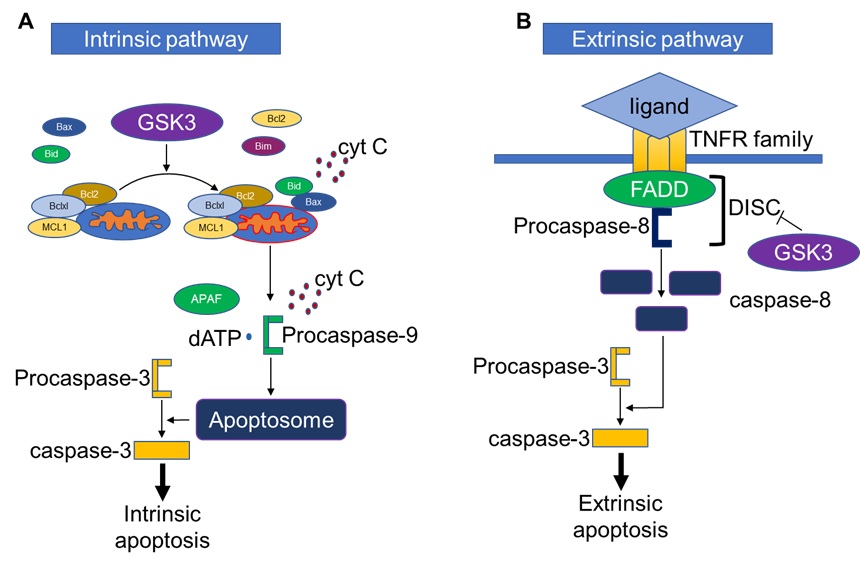
Figure 2: GSK3 has opposite effects in the intrinsic and extrinsic apoptotic pathways.
A. Mitochondria lose their integrity and release cytochrome C (cyt C) which then bind to apoptotic protease activating factor (APAF), adenosine triphosphate (ATP) and procaspase-9, forming the apoptosome and activation of the intrinsic death pathway. GSK plays a pro-apoptotic role by activating the formation of the apoptosome and eventual apoptosis. B. Ligand binding to tumor necrosis factor receptor (TNFR) family such as TNFR, Fas, death receptor (DR)4 and DR5 all activate trimerization of the receptor to which Fas-associated death domain (FADD) and procaspase-8 can bind. This promotes the formation of the death inducing signalling complex (DISC), leading to activation of effector caspases and completion of extrinsic apoptosis. GSK3 inhibits the formation of the DISC by associating with death receptor and so prevents activation of the extrinsic apoptotic pathway.
GSK3β also regulates axon growth cone microtubule dynamics and is implicated in growth cone collapse induced by CNS myelin- and scar-derived inhibitory molecules [66,67]. Although RGC growth is normally inhibited by myelin associated axon growth inhibitory molecules such as myelin associated glycoprotein (MAG), Nogo and chondroitin sulphate proteoglycans (CSPG), inhibition of GSK3β reversed RGC neurite outgrowth in the presence of inhibitor concentrations of Nogo-peptide substrates, thus agreeing with previous observations [68,69]. Conversely, overexpression of GSK3β attenuates myelin-dependent axon growth inhibition whilst GSK3β inhibitors neither promotes nor represses neurite outgrowth in the presence of CNS axon growth inhibitors [41]. These seemingly discrepant studies can be reconciled by a model where inhibition of GSK3β can both enhance and prevent axon growth depending on the substrates involved [70].
Many substrates of GSK3 normally require phosphorylation by a distinct kinase, an event called priming, before they can be phosphorylated by GSK3. Some of the substrates of GSK3 regulate microtubule assembly at the growth cone. These include APC and CRMP2, which are primed substrates, and GSK3 phosphorylation abrogates their microtubule binding affinity [50,71]. Dephosphorylated CRMP2 and APC are enriched in the growth cone and promote axon formation and NT-induced axon growth [71,72]. whilst inhibition of GSK3 activity specifically towards primed substrates [73,74] results in reduced CRMP2 phosphorylation and increased axon outgrowth [70]. In contrast, MAP1b is an unprimed substrate, which can be phosphorylated by GSK3 [75], promoting microtubule dynamics and allow efficient probing of the intracellular space and their ability to respond to extracellular signals, all of which are essential for axon growth [65,76]. Thus, a working model proposes that preferential suppression of GSK3 activity towards primed substrates promotes axon growth, whereas inhibition towards unprimed substrates blocks axon growth (Figure 3) [70]. In this way, GSK3 can coordinate essential properties of axonal microtubules to ensure optimal microtubule assembly in axons during axon regeneration.

Figure 3. Differential regulation of GSK3 substrates during axon regeneration
During axon regeneration, GSK3 activity towards primed substrates is blocked while its activity towards unprimed substrates is preserved. Inhibition of GSK3 activity towards collapsin response mediator protein (CRMP) 2 and adenomatosis polyposis coli (APC) allows CRMP2 and APC to bind microtubules, thereby increasing microtubule polymerization and stability. In contrast, GSK3’s activity towards microtubule-associated protein (MAP) 1b is preserved in the growth cone and maintains microtubules in a dynamic state, promoting axon growth.
GSK3 can also regulate axon regeneration by transcriptional control via the β-catenin and NFAT transcription factors. For example, Wnt3a induces axon growth from developing sensory neurons via accumulation of β-catenin and subsequent activation of TCF4 [77]. Since CREB is a well-established transcription factor downstream of neurotrophins, deletion of CREB in Creb null mice display impaired axon growth [78]. Neurotrophins and netrins also induce the transcription of axon growth prompting genes triggering nuclear translocation of NFAT, which is required for axon growth [79].
In conclusion, it is clear that the activity of GSK3 is controlled via protein-protein interactions and considering the number of substrates that interact with GSK3, the regulation appears complex and dynamic. Some substrates of GSK3 require priming before they can be phosphorylated by GSK3 while others do not require priming, adding to its complexity but also its specificity. Further work will be required to determine the contribution of GSK3 in CNS neuroprotection and axon regeneration.
References
2. Goldberg JL. Intrinsic neuronal regulation of axon and dendrite growth. Current Opinion in Neurobiology. 2004 Oct 1;14(5):551-7.
3. Tang F, Dent EW, Kalil K. Spontaneous calcium transients in developing cortical neurons regulate axon outgrowth. Journal of Neuroscience. 2003 Feb 1;23(3):927-36.
4. Cafferty WB, McGee AW, Strittmatter SM. Axonal growth therapeutics: regeneration or sprouting or plasticity?. Trends in Neurosciences. 2008 May 1;31(5):215-20.
5. Sun F, Park KK, Belin S, Wang D, Lu T, Chen G, et al. Sustained axon regeneration induced by co-deletion of PTEN and SOCS3. Nature. 2011 Dec;480(7377):372-5.
6. Verma P, Chierzi S, Codd AM, Campbell DS, Meyer RL, Holt CE, et al. Axonal protein synthesis and degradation are necessary for efficient growth cone regeneration. Journal of Neuroscience. 2005 Jan 12;25(2):331-42.
7. Smith PD, Sun F, Park KK, Cai B, Wang C, Kuwako K, et al. SOCS3 deletion promotes optic nerve regeneration in vivo. Neuron. 2009 Dec 10;64(5):617-23.
8. Yin Y, Cui Q, Li Y, Irwin N, Fischer D, Harvey AR, et al. Macrophage-derived factors stimulate optic nerve regeneration. Journal of Neuroscience. 2003 Mar 15;23(6):2284-93.
9. Yin Y, Cui Q, Gilbert HY, Yang Y, Yang Z, Berlinicke C, et al. Oncomodulin links inflammation to optic nerve regeneration. Proceedings of the National Academy of Sciences. 2009 Nov 17;106(46):19587-92.
10. Leon S, Yin Y, Nguyen J, Irwin N, Benowitz LI. Lens injury stimulates axon regeneration in the mature rat optic nerve. Journal of Neuroscience. 2000 Jun 15;20(12):4615-26.
11. Leibinger M, Andreadaki A, Fischer D. Role of mTOR in neuroprotection and axon regeneration after inflammatory stimulation. Neurobiology of Disease. 2012 May 1;46(2):314-24.
12. Leibinger M, Andreadaki A, Diekmann H, Fischer D. Neuronal STAT3 activation is essential for CNTF-and inflammatory stimulation-induced CNS axon regeneration. Cell death & disease. 2013 Sep;4(9):e805.
13. Muller A, Hauk TG, Leibinger M, Marienfeld R, Fischer D. Exogenous CNTF stimulates axon regeneration of retinal ganglion cells partially via endogenous CNTF. Mol Cell Neurosci. 2009;41(2):233-46.
14. Moore DL, Blackmore MG, Hu Y, Kaestner KH, Bixby JL, Lemmon VP, et al. KLF family members regulate intrinsic axon regeneration ability. Science. 2009 Oct 9;326(5950):298-301.
15. Moore DL, Apara A, Goldberg JL. Kruppel-like transcription factors in the nervous system: novel players in neurite outgrowth and axon regeneration. Molecular and Cellular Neuroscience. 2011 Aug 1;47(4):233-43.
16. Norsworthy MW, Bei F, Kawaguchi R, Wang Q, Tran NM, Li Y, et al. Sox11 Expression Promotes Regeneration of Some Retinal Ganglion Cell Types but Kills Others. Neuron. 2017;94(6):1112-20 e4.
17. Belin S, Nawabi H, Wang C, Tang S, Latremoliere A, Warren P, et al. Injury-induced decline of intrinsic regenerative ability revealed by quantitative proteomics. Neuron. 2015 May 20;86(4):1000-14.
18. Park KK, Liu K, Hu Y, Smith PD, Wang C, Cai B, et al. Promoting axon regeneration in the adult CNS by modulation of the PTEN/mTOR pathway. Science. 2008 Nov 7;322(5903):963-6.
19. Duan X, Qiao M, Bei F, Kim IJ, He Z, Sanes JR. Subtype-specific regeneration of retinal ganglion cells following axotomy: effects of osteopontin and mTOR signaling. Neuron. 2015 Mar 18;85(6):1244-56.
20. Huang Z, Wang W, Ma J, Li B, Chen J, Yang H. mTOR signaling pathway differently regulates central and peripheral axon regeneration. Acta Biochimica et Biophysica Sinica. 2017 Aug 1;49(8):689-95.
21. Guo C, Cho KS, Li Y, Tchedre K, Antolik C, Ma J, et al. IGFBPL1 Regulates Axon Growth through IGF-1- mediated signaling cascades. Scientific reports. 2018 Feb 1;8(1):1-3.
22. Thompson A, Berry M, Logan A, Ahmed Z. Activation of the BMP4/Smad1 Pathway Promotes Retinal Ganglion Cell Survival and Axon Regeneration. Investigative ophthalmology & visual science. 2019 Apr 1;60(5):1748-59.
23. Vigneswara V, Berry M, Logan A, Ahmed Z. Pigment epithelium-derived factor is retinal ganglion cell neuroprotective and axogenic after optic nerve crush injury. Investigative ophthalmology & visual science. 2013 Apr 1;54(4):2624-33.
24. Vigneswara V, Esmaeili M, Deer L, Berry M, Logan A, Ahmed Z. Eye drop delivery of pigment epithelium-derived factor-34 promotes retinal ganglion cell neuroprotection and axon regeneration. Molecular and Cellular Neuroscience. 2015 Sep 1;68:212-21.
25. Vigneswara V, Ahmed Z. Long-term neuroprotection of retinal ganglion cells by inhibiting caspase-2. Cell death discovery. 2016 Jun 13;2(1):1.
26. Berry M, Ahmed Z, Lorber B, Douglas M, Logan A. Regeneration of axons in the visual system. Restorative neurology and neuroscience. 2008 Jan 1;26(2, 3):147-74.
27. Berry M, Ahmed Z, Morgan-Warren P, Fulton D, Logan A. Prospects for mTOR-mediated functional repair after central nervous system trauma. Neurobiology of disease. 2016 Jan 1;85:99-110.
28. Li S, Yang C, Zhang L, Gao X, Wang X, Liu W, et al. Promoting axon regeneration in the adult CNS by modulation of the melanopsin/GPCR signaling. Proceedings of the National Academy of Sciences. 2016 Feb 16;113(7):1937-42.
29. Provencio I, Jiang G, De Grip WJ, Hayes WP, Rollag MD. Melanopsin: An opsin in melanophores, brain, and eye. Proceedings of the National Academy of Sciences. 1998 Jan 6;95(1):340-5.
30. Berson DM, Dunn FA, Takao M. Phototransduction by retinal ganglion cells that set the circadian clock. Science. 2002 Feb 8;295(5557):1070-3.
31. Warren EJ, Allen CN, Brown RL, Robinson DW. Intrinsic light responses of retinal ganglion cells projecting to the circadian system. European Journal of Neuroscience. 2003 May;17(9):1727-35.
32. Berson DM, Castrucci AM, Provencio I. Morphology and mosaics of melanopsin-expressing retinal ganglion cell types in mice. Journal of Comparative Neurology. 2010 Jul 1;518(13):2405-22.
33. Ecker JL, Dumitrescu ON, Wong KY, Alam NM, Chen SK, LeGates T, et al. Melanopsin-expressing retinal ganglion-cell photoreceptors: cellular diversity and role in pattern vision. Neuron. 2010 Jul 15;67(1):49-60.
34. Schmidt TM, Alam NM, Chen S, Kofuji P, Li W, Prusky GT, et al. A role for melanopsin in alpha retinal ganglion cells and contrast detection. Neuron. 2014 May 21;82(4):781-8.
35. Estevez ME, Fogerson PM, Ilardi MC, Borghuis BG, Chan E, Weng S, et al. Form and function of the M4 cell, an intrinsically photosensitive retinal ganglion cell type contributing to geniculocortical vision. Journal of Neuroscience. 2012 Sep 26;32(39):13608-20.
36. Sonoda T, Lee SK, Birnbaumer L, Schmidt TM. Melanopsin Phototransduction Is Repurposed by ipRGC Subtypes to Shape the Function of Distinct Visual Circuits. Neuron. 2018 Aug 22;99(4):754-67.
37. Grimes CA, Jope RS. The multifaceted roles of glycogen synthase kinase 3beta in cellular signaling. Progress in neurobiology. 2001 Nov 1;65(4):391-426.
38. Doble BW, Woodgett JR. GSK-3: tricks of the trade for a multi-tasking kinase. Journal of cell science. 2003 Apr 1;116(7):1175-86.
39. Dill J, Wang H, Zhou F, Li S. Inactivation of glycogen synthase kinase 3 promotes axonal growth and recovery in the CNS. Journal of Neuroscience. 2008 Sep 3;28(36):8914-28.
40. Guo X, Snider WD, Chen B. GSK3β regulates AKT-induced central nervous system axon regeneration via an eIF2Bε-dependent, mTORC1-independent pathway. Elife. 2016 Mar 14;5:e11903.
41. Alabed YZ, Pool M, Tone SO, Sutherland C, Fournier AE. GSK3β regulates myelin-dependent axon outgrowth inhibition through CRMP4. Journal of Neuroscience. 2010 Apr 21;30(16):5635-43.
42. Gobrecht P, Leibinger M, Andreadaki A, Fischer D. Sustained GSK3 activity markedly facilitates nerve regeneration. Nature communications. 2014 Jul 31;5(1):4561.
43. Leibinger M, Andreadaki A, Golla R, Levin E, Hilla AM, Diekmann H, et al. Boosting CNS axon regeneration by harnessing antagonistic effects of GSK3 activity. Proceedings of the National Academy of Sciences. 2017 Jul 3;114(27):E5454-63.
44. Inoki K, Ouyang H, Zhu T, Lindvall C, Wang Y, Zhang X, et al. TSC2 integrates Wnt and energy signals via a coordinated phosphorylation by AMPK and GSK3 to regulate cell growth. Cell. 2006 Sep 8;126(5):955-68.
45. Almutiri S, Berry M, Logan A, Ahmed Z. Non-viral-mediated suppression of AMIGO3 promotes disinhibited NT3-mediated regeneration of spinal cord dorsal column axons. Scientific reports. 2018 Jul 16;8(1):1-5.
46. Jacobs KM, Bhave SR, Ferraro DJ, Jaboin JJ, Hallahan DE, Thotala D. GSK-3β: A Bifunctional Role in Cell Death Pathways. International journal of cell biology. 2012;2012.
47. Armstrong JS. Mitochondrial membrane permeabilization: the sine qua non for cell death. Bioessays. 2006 Mar;28(3):253-60.
48. Hoeflich KP, Luo J, Rubie EA, Tsao MS, Jin O, Woodgett JR. Requirement for glycogen synthase kinase-3beta in cell survival and NF-kappaB activation. Nature. 2000 Jul;406(6791):86-90.
49. Schwabe RF, Brenner DA. Role of glycogen synthase kinase-3 in TNF-alpha-induced NF-kappaB activation and apoptosis in hepatocytes. American Journal of Physiology-Gastrointestinal and Liver Physiology. 2002 Jul 1;283(1):G204-11.
50. Song L, Zhou T, Jope RS. Lithium facilitates apoptotic signaling induced by activation of the Fas death domain-containing receptor. BMC neuroscience. 2004 Dec 1;5(1):20.
51. King TD, Bijur GN, Jope RS. Caspase-3 activation induced by inhibition of mitochondrial complex I is facilitated by glycogen synthase kinase-3beta and attenuated by lithium. Brain research. 2001 Nov 16;919(1):106-14.
52. Turenne GA, Price BD. Glycogen synthase kinase3 beta phosphorylates serine 33 of p53 and activates p53's transcriptional activity. BMC cell biology. 2001 Dec 1;2(1):12.
53. Somervaille TC, Linch DC, Khwaja A. Growth factor withdrawal from primary human erythroid progenitors induces apoptosis through a pathway involving glycogen synthase kinase-3 and Bax. Blood. The Journal of the American Society of Hematology. 2001 Sep 1;98(5):1374-81.
54. Liang MH, Chuang DM. Regulation and function of glycogen synthase kinase-3 isoforms in neuronal survival. Journal of Biological Chemistry. 2007 Feb 9;282(6):3904-17.
55. Chuang DM, Wang Z, Chiu CT. GSK-3 as a Target for Lithium-Induced Neuroprotection Against Excitotoxicity in Neuronal Cultures and Animal Models of Ischemic Stroke. Frontiers in Molecular Neuroscience. 2011 Aug 9;4:15.
56. Wu JH, Zhang SH, Gao FJ, Lei Y, Chen XY, Gao F, et al. RNAi screening identifies GSK3beta as a regulator of DRP1 and the neuroprotection of lithium chloride against elevated pressure involved in downregulation of DRP1. Neuroscience letters. 2013 Oct 25;554:99-104.
57. Wu MM, Zhu TT, Wang P, Kuang F, Hao DJ, You SW, et al. Dose-dependent protective effect of lithium chloride on retinal ganglion cells is interrelated with an upregulated intraretinal BDNF after optic nerve transection in adult rats. International journal of molecular sciences. 2014 Aug;15(8):13550-63.
58. McManus EJ, Sakamoto K, Armit LJ, Ronaldson L, Shpiro N, Marquez R, et al. Role that phosphorylation of GSK3 plays in insulin and Wnt signalling defined by knockin analysis. The EMBO journal. 2005 Apr 20;24(8):1571-83.
59. Fuentealba LC, Eivers E, Ikeda A, Hurtado C, Kuroda H, Pera EM, et al. Integrating patterning signals: Wnt/GSK3 regulates the duration of the BMP/Smad1 signal. Cell. 2007 Nov 30;131(5):980-93.
60. Gregory MA, Qi Y, Hann SR. Phosphorylation by glycogen synthase kinase-3 controls c-myc proteolysis and subnuclear localization. Journal of Biological Chemistry. 2003 Dec 19;278(51):51606-12.
61. Woodgett JR. Molecular cloning and expression of glycogen synthase kinase-3/factor A. The EMBO journal. 1990 Aug 1;9(8):2431-8.
62. Kim NG, Xu C, Gumbiner BM. Identification of targets of the Wnt pathway destruction complex in addition to beta-catenin. Proceedings of the National Academy of Sciences. 2009 Mar 31;106(13):5165-70.
63. Xu C, Kim NG, Gumbiner BM. Regulation of protein stability by GSK3 mediated phosphorylation. Cell cycle. 2009 Dec 15;8(24):4032-9.
64. Fuentealba LC, Eivers E, Geissert D, Taelman V, De Robertis EM. Asymmetric mitosis: Unequal segregation of proteins destined for degradation. Proceedings of the National Academy of Sciences. 2008 Jun 3;105(22):7732-7.
65. Zhou FQ, Snider WD. Cell biology. GSK-3beta and microtubule assembly in axons. Science. 2005 Apr 8;308(5719):211-4.
66. Owen R, Gordon-Weeks PR. Inhibition of glycogen synthase kinase 3beta in sensory neurons in culture alters filopodia dynamics and microtubule distribution in growth cones. Molecular and Cellular Neuroscience. 2003 Aug 1;23(4):626-37.
67. Eickholt BJ, Walsh FS, Doherty P. An inactive pool of GSK-3 at the leading edge of growth cones is implicated in Semaphorin 3A signaling. The Journal of cell biology. 2002 Apr 15;157(2):211-7.
68. Beaulieu JM. Not only lithium: regulation of glycogen synthase kinase-3 by antipsychotics and serotonergic drugs. International Journal of Neuropsychopharmacology. 2007 Feb 1;10(1):3-6.
69. Beaulieu JM, Gainetdinov RR, Caron MG. Akt/GSK3 signaling in the action of psychotropic drugs. Annual review of pharmacology and toxicology. 2009 Feb 10;49:327-47.
70. Kim WY, Zhou FQ, Zhou J, Yokota Y, Wang YM, Yoshimura T, et al. Essential roles for GSK-3s and GSK-3-primed substrates in neurotrophin-induced and hippocampal axon growth. Neuron. 2006 Dec 21;52(6):981-96.
71. Yoshimura T, Kawano Y, Arimura N, Kawabata S, Kikuchi A, Kaibuchi K. GSK-3beta regulates phosphorylation of CRMP-2 and neuronal polarity. Cell. 2005 Jan 14;120(1):137-49.
72. Zhou FQ, Zhou J, Dedhar S, Wu YH, Snider WD. NGF-induced axon growth is mediated by localized inactivation of GSK-3beta and functions of the microtubule plus end binding protein APC. Neuron. 2004 Jun 24;42(6):897-912.
73. Frame S, Cohen P. GSK3 takes centre stage more than 20 years after its discovery. Biochemical Journal. 2001 Oct 1;359(1):1-6.
74. Frame S, Cohen P, Biondi RM. A common phosphate binding site explains the unique substrate specificity of GSK3 and its inactivation by phosphorylation. Molecular Cell. 2001 Jun 1;7(6):1321-7.
75. Trivedi N, Marsh P, Goold RG, Wood-Kaczmar A, Gordon-Weeks PR. Glycogen synthase kinase-3beta phosphorylation of MAP1B at Ser1260 and Thr1265 is spatially restricted to growing axons. Journal of Cell Science. 2005 Mar 1;118(5):993-1005.
76. Dent EW, Gertler FB. Cytoskeletal dynamics and transport in growth cone motility and axon guidance. Neuron. 2003 Oct 9;40(2):209-27.
77. Lu W, Yamamoto V, Ortega B, Baltimore D. Mammalian Ryk is a Wnt coreceptor required for stimulation of neurite outgrowth. Cell. 2004 Oct 1;119(1):97-108.
78. Vo N, Goodman RH. CREB-binding protein and p300 in transcriptional regulation. Journal of Biological Chemistry. 2001 Apr 27;276(17):13505-8.
79. Graef IA, Wang F, Charron F, Chen L, Neilson J, Tessier-Lavigne M, et al. Neurotrophins and netrins require calcineurin/NFAT signaling to stimulate outgrowth of embryonic axons. Cell. 2003 May 30;113(5):657-70.