

Abstract
Skin conditions due to sun exposure have been thoroughly researched over the years. However, they are typically discussed as leisure-related rather than in the context of occupational injury. With this in mind, this commentary discusses World Health Organization (WHO) infographics that reframe ultraviolet radiation in the context of workplace-associated skin injury, highlights implications for occupational safety policy and dermatologists, and calls for the recognition of sun protection as personal protective equipment (PPE).
Keywords
Cancer, Dermatology, Occupational, Radiation, Ultraviolet
Introduction
Globally, billions of people are exposed to ultraviolet radiation as part of their work.[1] While sun-related skin conditions have been thoroughly researched, they have frequently been framed in terms of leisure activities [2–4]. However, this framing overlooks UV radiation as an occupational risk, which recent initiatives of the World Health Organization (WHO) have highlighted.
A large-scale systematic review by the WHO and International Labor Organization (ILO) estimates that 28% of all working people have duties in the sun [1]. These data, drawn from 188 countries, include workers in occupations that the ILO classifies as exposed to ultraviolet radiation. Some examples include outdoor laborers, architects, window cleaners, and deck crews. This report also estimates that occupational exposure to sunlight increases the risk of non-melanoma skin cancer by 60% [1].
The WHO also publishes educational resources to make health information more understandable. This information is both well regarded scientifically and readily accessible en masse across a variety of platforms.
Recent WHO infographics have addressed ultraviolet exposure and reframed its dangers in the context of the workplace. A series of three graphics published in 2023 communicates the risks of UV exposure and disease development and highlights sun exposure as an occupational safety hazard [5–7]. These infographics mark a shift in the tone of sun-related injury away from being purely recreational. This commentary discusses this series, its messaging and implications.
Discussion
Visual messaging within who infographics
The infographics in this series (Figures 1-3) highlight their message with four shared semiotic techniques: the salience of the sun, the reddened skin, the magnification of lesions and the use of color motifs. While the text in these images does well to explain the meaning, the visual features serve to highlight the message by communicating through visual design techniques.
In each figure, the sun is high in the image, shown with rays beaming down, and is given salience with its increased size, contrasting color, and prominent placement within each piece. The sun’s rays also add directional cues guiding the viewers’ eyes from the sun to the skin of the exposed workers.
Throughout these images, the skin of the exposed workers is depicted as erythematous. The reddened color directs the viewer’s eyes to commonly unprotected areas of potential injury. These sites of occupational exposure are then magnified within inset panels for closer inspection.
The insets highlight the appearance of skin lesions and establish them as a focal point for the viewer. The lines connecting the reddened areas to the inset lesions serve as vectors that continue the compositional movement from exposed sites to depictions of skin cancer. This directly connects the dots for the viewers.
These vectors direct cause-and-effect analyses and encode the consequences of skin exposure within the figures’ discourse. Also noteworthy, each of the figures contains a yellow-orange color motif, repeated colors that guide the viewers’ attention. The yellow-orange sun is echoed in the workers, whether through their clothing or in objects representative of their occupation.
The portrayal of a fish processor in Figure 1 directs the attention away from sun exposure within a leisure framework. While leisure is depicted within this figure, these subjects are afforded less salience in the image plane through their depiction as smaller and their placement in the periphery. The fish processor’s clothing and the product of labor reflect the color in the sun and rays. This reinforces the intent to guide the viewers’ gaze toward the worker, rather than the other figures clothed in muted tones. Depicting a fish processor also highlights the variety of industries in which workers may be exposed to UV.
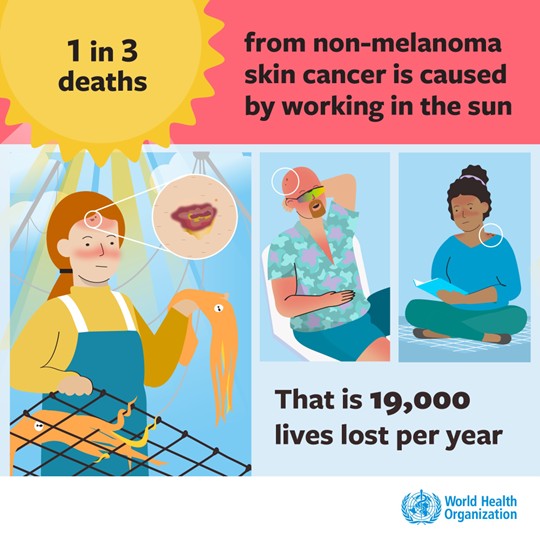
Figure 1. Portrays a fish processor, another person sitting on a chair, and a third person sitting on a blanket reading a book. Each person depicted in this graphic presents with a skin lesion either amplified via magnified inset or circled. The text reads, “1 in 3 deaths from non-melanoma skin cancer is caused by working in the sun. That is 19,000 lives lost per year.” Figure reproduced from World Health Organization (WHO) licensed under CC BY-NC-SA 3.0 IGO.
The second figure in this collection, Figure 2, portrays a worker wearing a hardhat, a high-visibility vest, and holding a sledgehammer. Each of these depicted elements effectively identifies the figure as a construction worker. This links construction to an increased risk of exposure. In a departure from Figure 1, this work has no portrayal of leisure-based activities. This shifts the definition of who is at risk of sun exposure right before the viewers’ eyes: workers, not sunbathers. Used again to highlight the connection between exposure and occupation, a yellow-orange color motif steers the viewers’ eye from the sun to the hardhat. This reiterates the link between UV exposure and construction work.
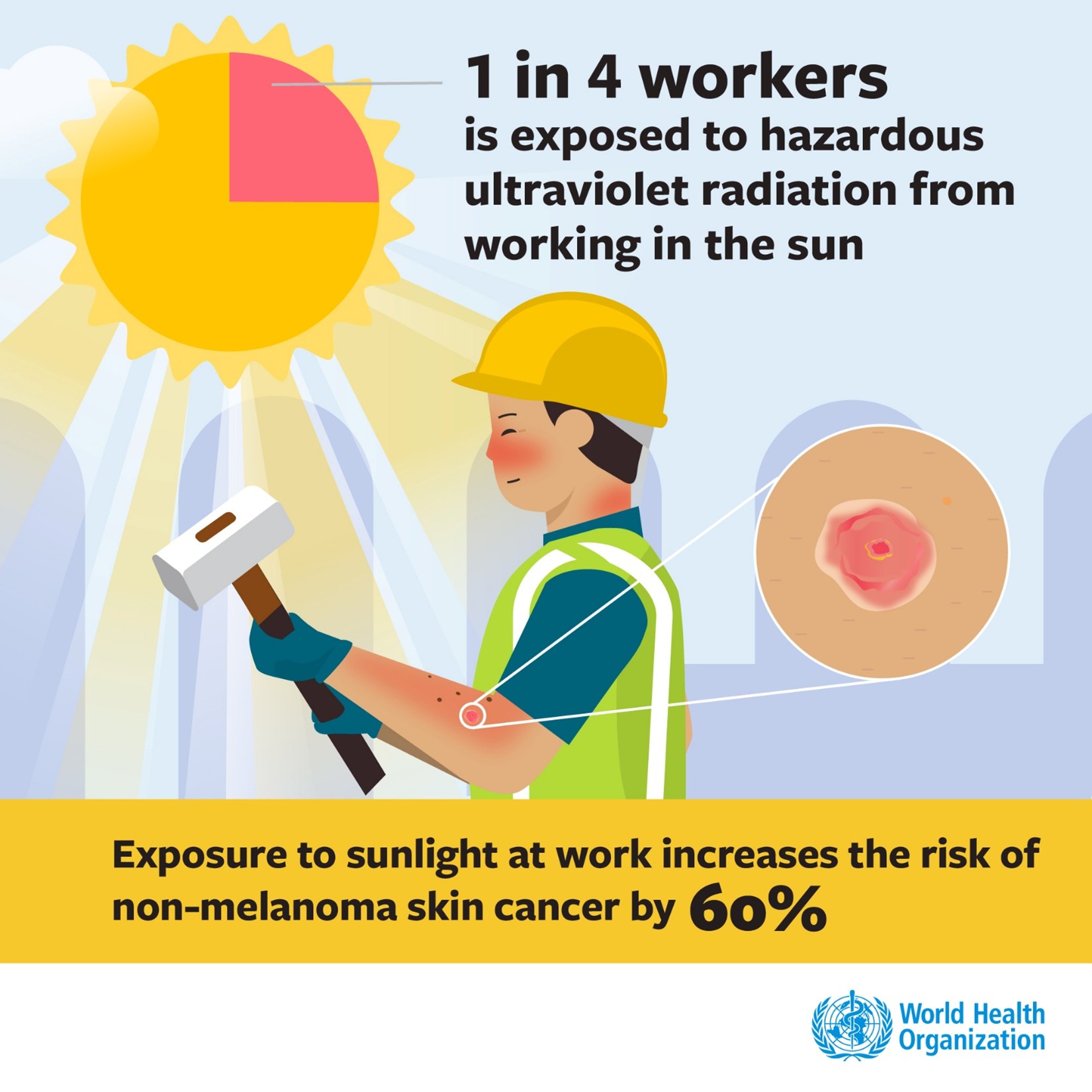
Figure 2. Shows a person wearing a high-visibility safety vest, a hardhat, and holding a sledgehammer. This person is depicted with a skin lesion on their arm with a magnified inset showing larger detail. The text states, “1 in 4 workers is exposed to hazardous ultraviolet radiation from working in the sun. Exposure to sunlight at work increases the risk of non-melanoma skin cancer by 60%.” Figure reproduced from World Health Organization (WHO) licensed under CC BY-NC-SA 3.0 IGO.
In Figure 3, an agricultural worker is portrayed holding a tool of cultivation and a bushel of wheat. Both objects further the emphasis placed on sun exposure as a hazard to the worker. The hoe and bushel of wheat are iconic symbols of agricultural labor: they are instantly recognizable and firmly tied to cultivation work. This use of iconography engages viewers more deeply with the piece, drawing on their own mental framework of what fieldwork entails. This connection may deepen understanding and enhance meaning. Similar to Figures 1 and 2, this work uses a color motif to emphasize the close link between the sun and agricultural labor through the bushel of wheat’s reiteration of the sun’s color.
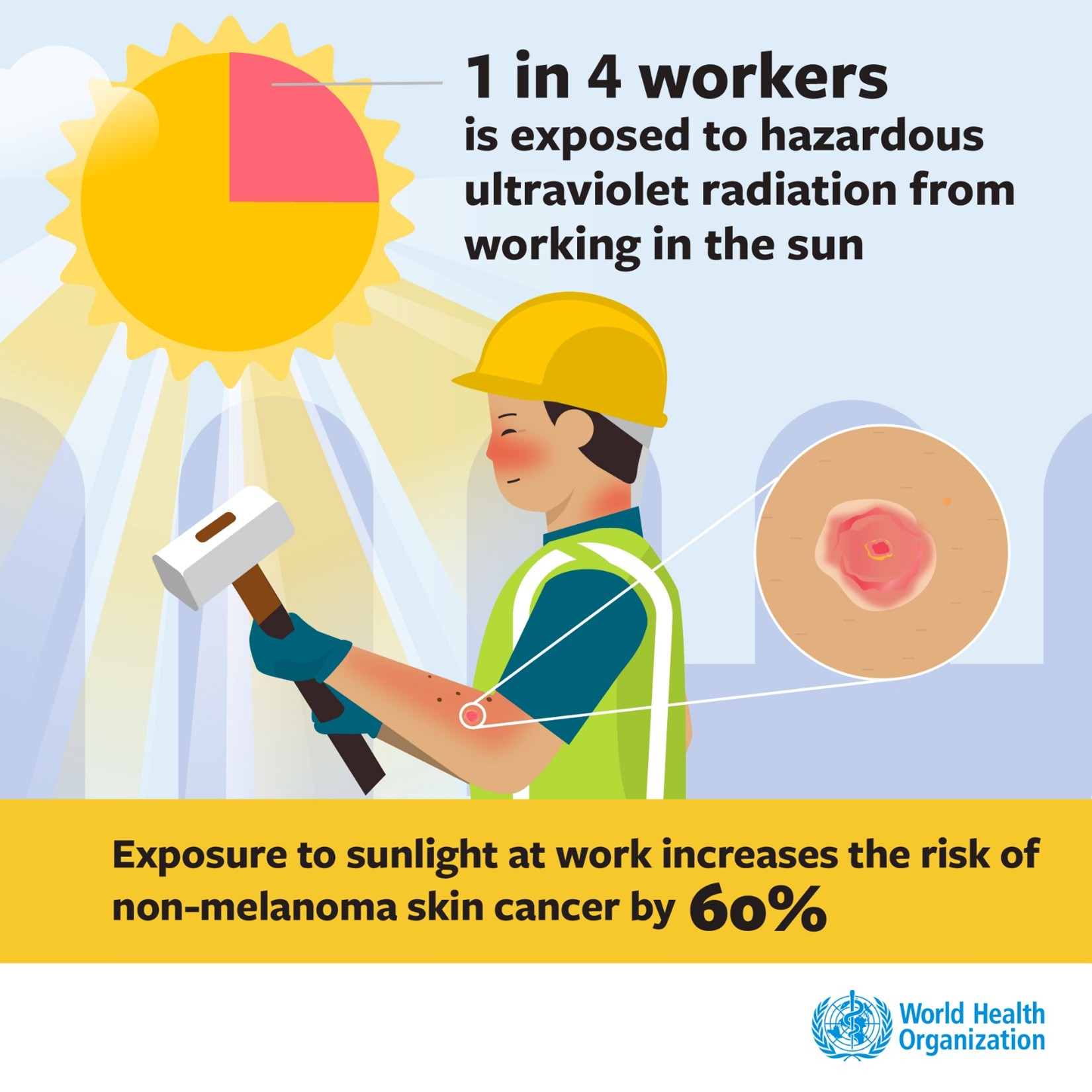
Figure 3. Portrays a person holding a cultivation tool and carrying a bushel of wheat. The person is portrayed with a lesion on the arm highlighted by a magnified inset. The text says, “Non-melanoma skin cancer caused by sunlight at work is particularly high among men and people aged 55 years or older.” Figure reproduced from World Health Organization (WHO) licensed under CC BY-NC-SA 3.0 IGO.
Reframing UV exposure as an occupational hazard
These infographics serve to shift the frame of injury due to sun exposure. Historically, UV dermal insult has been associated with leisure activity such as beachside recreation or the use of tanning beds in spa settings [3]. In a similar manner, public perception of dermatology often elicits images of cosmetics. This potentially detracts from dermatology’s seriousness as a medical specialty [8]. This historic framing of dermatology within leisurely contexts obscures the role of dermatological treatment in managing serious medical conditions.
Agricultural engineers, farmers, police officers, athletes, and other outdoor workers, for example, face a higher risk of UV exposure as part of their daily duties. This reality stands in stark contrast to the glamourization of a sun-kissed tan [4].
By reframing sun exposure as a workplace hazard, the WHO does two things: it removes the blame of sun exposure from a personal or modifiable choice, and it places a protective obligation into the hands of the employer. Importantly, these infographics make a marked departure from the more repetitive educational material urging patients to apply sunscreen and cover their skin when possible.
A reframing of sun exposure as an occupational hazard also has socioeconomic implications. Workers who spend long hours in the sun may belong to lower income brackets and therefore experience financial hardship by covering work-related expenses such as sunscreen or wide-brimmed hats [9]. Rather than placing that burden on workers, sunscreen, hats, and similar sun-protective interventions should be considered PPE and provided at the jobsite. Socioeconomic implications
Cost to workers is an important issue. A few studies assessing the cost of sunscreen and sun-protective clothing exist, though they do not explicitly quantify usage and cost to workers. One study estimated consumer willingness to pay at approximately $30 per month [10] and another survey reported that consumers currently pay an estimated $80 to $330 a year on sun protection [11].
High costs limit sunscreen use, with multiple studies demonstrating lower utilization among people of lower socioeconomic status [9,11,12]. Although these data provide a baseline, the studies are limited by small and homogenous populations, recalled rather than actual costs, projected rather than actual use, and unclear integration of non-sunscreen protection data.
Despite these limitations, these estimates still illustrate the financial burden associated with sun protection. Estimates for the most cost-efficient generic sunscreen are $0.60 per ounce [12]. A minimum of one ounce is recommended for covering all non-clothed areas of the body, such as the arms, face, and neck [13]. To stay protected, reapplication is necessary: every two hours in general or approximately hourly for those who are sweating [13].
Taken together, these estimates show that an outdoor worker in a 40-hour workweek who reapplies one ounce of sunscreen every hour would require roughly 40 ounces of sunscreen per week. Even using the least expensive generic sunscreen at roughly $0.60 per ounce would cost around $24 weekly, or $96 monthly. Adequate sun protection for outdoor workers thus represents a significant expense.
The challenges of recognizing workplace hazards
While occupational safety policies are not a novel intervention, hazards in the context of imminent risk may be more tightly regulated. Occupational skin safety often focuses on immediate hazards as well; chemical burns are prevented with gloves and lab coats, but long-term sun exposure may be overlooked. By focusing on immediate dangers, the risk for slower developing disease and injury may be underrecognized.
Unlike imminent occupational hazards such as lacerations, burns, and falls, workplace-associated UV skin injury may take decades to manifest [14]. This long latency period creates unique regulatory challenges. The delayed onset of disease may undermine the role of safety regulation and dilute the urgency of prevention of skin cancer. Additionally, the association of dermatology with cosmetics may downplay the potential severity of skin conditions and hinder their recognition as serious health threats in the setting of occupational safety.
Looking forward
These challenges necessitate future research and policymaking efforts. A gap remains when it comes to understanding and preventing workplace-associated UV skin injury and the dermatological scope of occupational safety needs further evaluation. Studies assessing disease incidence in different professions in which sun exposure is routine would provide valuable insight into prevention of workplace-associated UV skin injury [14].
Interventional studies on employer-provided sunscreen as PPE are needed to determine efficacy. In theory, a randomized study in which one group of agricultural workers receives the recommended amount of sunscreen, and another receives a non-protective lotion could quantify the difference in skin cancer incidence. In practice, however, such a study could raise ethical concerns about withholding prophylactic interventions and would be further complicated by the long latency of some UV-related diseases.
Conclusion
These WHO infographics may be primarily designed for patient education and the communication of key information, but they also call both occupational safety officials and dermatologists to action. The call to occupational safety policymakers is simple: more research and regulation is needed to guide the future of workplace-associated UV skin injury and improve employee health. Dermatologists can aid in this process by advocating for the use of sunscreen, hats, and shade as PPE. While legislation and implementation can be a lengthy process, dermatologists can immediately integrate workplace-associated UV risk into history taking, counsel patients on sun protection strategies tailored to their work duties, and document occupationally related skin conditions to support future research.
Conflicts of Interest
None declared.
Funding
N/A.
Acknowledgement
N/A.
Author Contributions Statement
Jonathan de Rothewelle was responsible for the commentary’s design and analysis as wells as drafting and revising the manuscript.
Permissions Statement
Figures cited from the World Health Organization and used under the Creative Commons Attribution-NonCommercial-ShareAlike 3.0 IGO license (CC BY-NC-SA 3.0 IGO).
References
2. Yoo JJ, Kim HY. Perceived risk of sunless tanning product use and its relationship to body satisfaction. IJMS. 2012 Aug 1;4(4):13.
3. Gulliver K. The Meaning of Tanning. JSTOR Daily. Published online April 27, 2023. Available from: https://daily.jstor.org/the-meaning-of-tanning/.
4. Symanzik C, John SM. Sun protection and occupation: Current developments and perspectives for prevention of occupational skin cancer. Front Public Health. 2022 Dec 23;10:1110158.
5. World Health Organization. 1 in 4 Workers Is Exposed to Hazardous Ultraviolet Radiation from Working in the Sun. Geneva: WHO; 2023. Available from: https://www.facebook.com/WHO/posts/16-billion-adults-are-exposed-to-potentially-deadly-solar-uv-radiation-%EF%B8%8F-while-w/759396316219761/.
6. World Health Organization. Non-Melanoma Skin Cancer Caused by Sunlight at Work Is Particularly High Among. Geneva: WHO; 2023. https://www.facebook.com/WHO/posts/-did-you-know-deaths-from-non-melanoma-skin-cancer-caused-by-sunlight-at-work-ar/759468232879236/.
7. World Health Organization. 1 in 3 Deaths from Non-Melanoma Skin Cancer Is Caused by Working in the Sun. Geneva: WHO; 2023. Available from: https://www.facebook.com/WHO/posts/nearly-1-in-3-deaths-from-non-melanoma-skin-cancer-is-caused-by-working-under-th/759468682879191/.
8. Brezinski EA, Harskamp CT, Ledo L, Armstrong AW. Public perception of dermatologists and comparison with other medical specialties: results from a national survey. J Am Acad Dermatol. 2014 Nov;71(5):875–81.
9. Sauer J. Sunscreen Cost and Its Effect on Skin Cancer in Low-Income Communities: A Systematic Review. In: Research Posters. Rowan University Libraries; 2024. doi:10.31986/issn.2689-0690_rdw.stratford_research_day.198_2024.
10. Hanna H, Patel S, Kundu RV. Cost and quality in consumer sunscreen preferences. Arch Dermatol Res. 2023 May;315(4):925–31.
11. Weig EA, Tull R, Chung J, Brown-Joel ZO, Majee R, Ferguson NN. Assessing factors affecting sunscreen use and barriers to compliance: a cross-sectional survey-based study. J Dermatolog Treat. 2020 Jun;31(4):403–5.
12. Fernandez K, Schneider J, Moore D, Wu BV, Johal A, Wei ML. Affordability matters: A cross-sectional study on sunscreen cost and application amount. J Am Acad Dermatol. 2025 May;92(5):1103–4.
13. American Academy of Dermatology. How to apply sunscreen. Des Plaines: American Academy of Dermatology; 2025; Available from: https://www.aad.org/public/everyday-care/sun-protection/shade-clothing-sunscreen/how-to-apply-sunscreen.
14. Tsai KY, Dlugosz AA. Carcinogenesis and Skin. In: Kang S, Amagai M, Bruckner AL, Enk AH, Margolis DJ, McMichael AJ, et al., Editors. Fitzpatrick’s Dermatology. 9th edn. Ohio: McGraw-Hill Education LLC; 2019.