Loading


Dermatology Journal
ISSN: 2769-240X
All Articles
Invited commentary on “Greening the office: Saving resources, saving money, and educating our patients
Loren C Shkolnik, FNP, David P Fivenson, MD
This commentary highlights the key points in the recent article by Blum et al. [1] that advocates for medical practices to adapt conservation measures to reduce waste and lower their carbon footprints. Healthcare in the United States produces considerable amounts of pollutants into the air, water, and soil. It is both a significant challenge and an opportunity for healthcare to reduce its carbon footprint. Medical offices, surgical centers and hospitals are responsible for 10% of chemicals that produce smog and 10% of greenhouse gasses [2]. Estimates show that the amount of greenhouse gasses and smog production from healthcare, among other factors, contributes to 405,000 years of disability-adjusted lives lost annually in the United States [2].
Dermatol J, 2021, Volume Volume 1, Issue Issue 1, p1-3 | DOI: 10.46439/derma.1.001
Cutis verticis gyrata: A novel approach utilizing intradermal hyaluronidase injections
Luke Godwin, Aleksandra Brown, Chad Johnston, Alexandra Taylor, Leila Parsa
Background: Cutis verticis gyrata (CVG) is characterized by excessive skin folding on the scalp and can be classified into primary essential, primary nonessential, and secondary. While most cases are asymptomatic, some patients seek treatment due to cosmetic concerns. The primary objective of this case study was to evaluate the efficacy of intradermal hyaluronidase for cutis verticis gyrata of the scalp in the presented patient.
Dermatol J, 2025, Volume Volume 2, Issue Issue 1, p1-5 | DOI: 10.46439/derma.2.006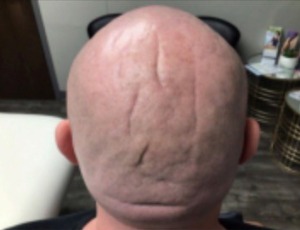
Addressing structural inequality in dermatology – where do we go from here?
Vidhatha Reddy BA, Sungat K Grewal MD, Anna Tomz, Patrick K Lee MD
Prior to this particular incident, racial and ethnic disparities in vaccination, incidence, morbidity, and mortality rates of COVID-19 in the United States [2-6] raised concerns that systemic inequality was further contributing to disparities in American healthcare during one of the most devastating pandemics in modern day history. While the issue of structural inequality is not new, many physicians may be unaware of its presence or potentially uncomfortable with how it can be addressed despite wanting the best possible outcomes for their patients.
Dermatol J, 2021, Volume Volume 1, Issue Issue 1, p4-5 | DOI: 10.46439/derma.1.002
Cutaneous viral warts – can retinoids change routine management?
Meital Oren-Shabtai, Moshe Lapidoth, Daniel Mimouni, Assi Levi
Cutaneous viral warts (CVW) are a common condition encountered by many physicians of different disciplines. CVW can be self-limiting, especially in the pediatric population, although spontaneous regression could be prolonged and last months to years. However, treatment is sought by many who are unwilling to wait for spontaneous clearance, by those who do not experience such resolution and for reasons of preventing infections of other individuals. Aesthetic and functional discomfort caused by CVW and the possible risk of malignancy further favors treating these lesions.
Dermatol J, 2021, Volume Volume 1, Issue Issue 1, p6-7 | DOI: 10.46439/derma.1.003
Ultraviolet radiation as workplace exposure: World Health Organization infographics
Jonathan de Rothewelle
Skin conditions due to sun exposure have been thoroughly researched over the years. However, they are typically discussed as leisure-related rather than in the context of occupational injury.
Dermatol J, 2025, Volume Volume 2, Issue Issue 1, p6-10 | DOI: 10.46439/derma.2.007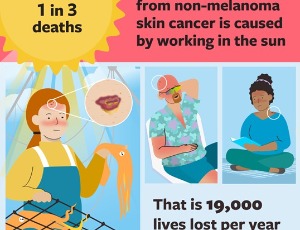
Upregulation of long noncoding RNA growth arrest-specific 5 mediates pro-inflammatory mechanisms of diabetic wound healing impairment
Shaquia Idlett-Ali, Kenneth Liechty, Junwang Xu
Unresolved inflammatory processes contribute to impaired healing in diabetic wounds, with increasing evidence implicating persistent pro-inflammatory macrophage polarization as a driver of chronic inflammation and delayed wound closure. Previous investigations aimed to uncover the role of regulatory RNAs in macrophage polarization and to understand how aberrant expression patterns contribute to wound healing impairment, with the goal of identifying novel therapeutic targets for promoting normal wound healing progression. In the Journal of Investigative Dermatology, Hu et al. reveal a role of the tumor suppressor, long noncoding RNA (lncRNA) Growth Arrest-Specific 5 (GAS5), in regulating macrophage polarization.
Dermatol J, 2021, Volume Volume 1, Issue Issue 1, p8-10 | DOI: 10.46439/derma.1.004
Beyond toxicology: Aryl hydrogen receptor role in physiology
Wei Dai, Ziyue Kou
Aryl hydrocarbon receptor (AHR) was initially discovered as a cellular protein involved in the detoxification of xenobiotic compounds. Recently, Kou and Dai [1] wrote a concise review on AHR, summarizing advances in several important areas of mammalian physiology including cardiovascular, gastrointestinal, integumentary, nervous, and immunomodulatory systems. Given the importance of AHR and our increased understanding of its physiological roles, it is necessary to highlight a few key aspects of AhR in normal development and metabolic homeostasis that have not been extensively discussed.
Dermatol J, 2021, Volume Volume 1, Issue Issue 1, p11-12 | DOI: 10.46439/derma.1.005