Loading


Archives of Clinical Toxicology
ISSN: 2692-8280
Most Read Articles
RAD51 Inhibitor Reverses Etoposide-Induced Genomic Toxicity and Instability in Esophageal Adenocarcinoma Cells
Chengcheng Lia , Jiangning Zhao , Subodh Kumar , Chandraditya Chakraborty , Srikanth Talluri , Nikhil C. Munshi , Masood A. Shammas
In normal cells, homologous recombination (HR) is strictly regulated and precise and plays an important role in preserving genomic integrity by accurately repairing DNA damage. RAD51 is the recombinase which mediates homologous base pairing and strand exchange during DNA repair by HR. We have previously reported that HR is spontaneously elevated (or dysregulated) in esophageal adenocarcinoma (EAC) and contributes to ongoing genomic changes and instability. The purpose of this study was to evaluate the impact of RAD51 inhibitor on genomic toxicity caused by etoposide, a chemotherapeutic agent.
Arch Clin Toxicol, 2020, Volume 2, Issue 1, p3-9 | DOI: 10.46439/toxicology.2.006]
Non-alcoholic fatty liver disease: Role of PNPLA3 and its association with environmental chemicals
Shakil A Saghir , Ata Abbas , Saleh Alfuraih , Ajay Sharma , Jean Latimer , Yadollah Omidi , Rais Ansari
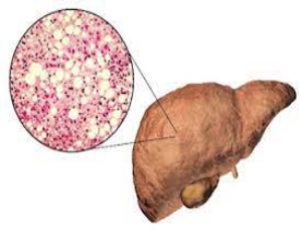
Non-alcoholic fatty liver disease (NAFLD) represents an escalating global health concern. Its prevalence varies significantly across different regions, in Asia it ranges from 30-32%, with notably higher prevalence in the Middle East. Europe reports a prevalence of 27-33%, while North America shows a range of 35-48%.
Arch Clin Toxicol, 2024, Volume 6, Issue 1, p21-32 | DOI: 10.46439/toxicology.6.029
Non-alcoholic fatty liver disease: Role of nuclear receptor superfamily members and approaches to treatment
Siddique Rezan Mohammed , Shakil A Saghir , Saleh Alfuraih , Abdulaziz Khalid Salamatullah , Faisal Fahad Alnefaie , Samirah Khan , Syed A. A. Rizvi , Rais Ansari
Non-alcoholic fatty liver disease (NAFLD) is an increasing health problem when left untreated. NAFLD is defined as accumulation of fat in 5% of the hepatocytes. NAFLD can convert into non-alcoholic steatohepatitis (NASH) which is defined as inflammatory NAFLD. Both NAFLD and NASH are observed in individuals suffering from metabolic syndrome and type 2 diabetes (T2D).
Arch Clin Toxicol, 2024, Volume 6, Issue 1, p48-61 | DOI: 10.46439/toxicology.6.031