Loading


Journal of Cancer Biology
ISSN: 2692-7896
Most Cited Articles
Machine learning methods for prostate cancer diagnosis
Abedalrhman Alkhateeb, Govindaraja Atikukke, Luis Rueda
Prostate cancer (Pca) is one of the most common cancers among men worldwide. The current screening methods lack effectiveness such as prostate-specific antigen (PSA) and Magnetic resonance imaging (MRI), and some others come with pain such as biopsy. Understanding the genomic behavior of the disease may play a key part in designing more effective, accurate, and less invasive diagnosis measures. Pca has many clinical features to describe the spread and the aggressiveness of the tumor including Gleason score, TNM staging system, and the location of the tumor in the prostate gland which is known as laterality.
J Cancer Biol, 2020, Volume 1, Issue 3 | DOI: 10.46439/cancerbiology.1.014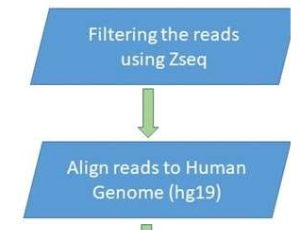
Implications of the USP10-HDAC6 axis in lung cancer - A path to precision medicine
Xiaohong Mary Zhang, Navnath Gavande, Prahlad Parajuli, Gerold Bepler
Lung cancer is the leading cause of cancer death among both men and women in the United States. Because lung cancer is genetically heterogeneous, tailored therapy alone or in combination with chemotherapy would increase patient overall survival as compared with the one-size-fits-all chemotherapy. TP53-mutant lung cancer accounts for more than half of all lung cancer cases and is oftentimes more aggressive and resistant to chemotherapy. Directly targeting mutant p53 has not yet been successful, so identification of novel therapy targets and biomarkers in the TP53-mutant lung cancer is urgently needed to increase the overall survival in this subgroup.
J Cancer Biol, 2021, Volume 2, Issue 1, p1-5 | DOI: 10.46439/cancerbiology.2.015
Cyclin A2 and Ki-67 proliferation markers could be used to identify tumors with poor prognosis in African American women with breast cancer
Desta Beyene, Tammey Naab, Victor Apprey, Luisel Ricks-Santi, Ashwini Esnakula, Mustafa Qasim, Matthew George, Karen G Minoza, Robert L Copeland Jr, Carolyn Broome, Yasmine Kanaan
Eight protein biomarkers (ER, PR, HER2, Cyclin A2, Cytokeratin 5, Vimentin, Bcl2, and Ki-67) were evaluated using tissue microarrays (TMAs) and immunohistochemistry (IHC). The IHC results from TMAs were analyzed by both supervised and unsupervised clustering methods. The predictive clusters for the supervised and unsupervised methods were compared for agreement with the empirical classification. Kappa values were used to determine the overall percent correct clusters and agreement between specific clusters.
J Cancer Biol, 2023, Volume 4, Issue 1, p3-16 | DOI: 10.46439/cancerbiology.4.048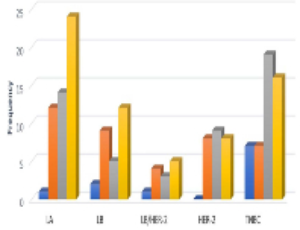
Role of H3K9 demethylases in DNA doublestrand break repair
Hee-Young Jeon, Arif Hussain, Jianfei Qi
H3K9 demethylases can remove the repressive H3K9 methylation marks on histones to alter chromatin structure, gene transcription and epigenetic state of cells. By counteracting the function of H3K9 methyltransferases, H3K9 demethylases have been shown to play an important role in numerous biological processes, including diseases such as cancer.
J Cancer Biol, 2020, Volume 1, Issue 1, p10-15 | DOI: 10.46439/cancerbiology.1.003
Tumor biomarkers from discovery to clinical practice
Malik Suleman Naseem
A tumor marker is a chemical that acts as a tumor indication. Tumor biomarkers are undefined in origin, but they indicate the existence of a certain tumor. The detection of a specific tumor is aided by an increase or decrease in the concentration of marker concentrations. Gene expression arrays, proteomic technologies, and high-throughput sequencing are some of the current methods for detecting cancer.
J Cancer Biol, 2022, Volume 3, Issue 1, p19-32 | DOI: 10.46439/cancerbiology.3.039
Cryoablation is a safe alternative to surgery for low-risk breast cancer
Khan SY, Chu V, Melkus MW, Layeequr Rahman R
Cryoablation of breast cancer offers an alternative to surgery for women who are not ideal surgical candidates. It is a minimally invasive procedure that has already had success in fibroadenoma treatment with good tumor reduction and cosmesis. The findings of cryoablation as treatment for early-stage, low-risk breast cancer has been previously discussed in the recently published article ‘Cryoablation: A promising non-operative therapy for low-risk breast cancer’.
J Cancer Biol, 2021, Volume 2, Issue 1, p22-24 | DOI: 10.46439/cancerbiology.2.018
COVID-19 in patients with and without cancer: Examining differences in patient characteristics and outcomes
Nihal E. Mohamed, Emma KT. Benn, Varuna Astha, Qainat N. Shah, Yasmine Gharib, Holden E. Kata, Heather Honore-Goltz, Zachary Dovey, Natasha Kyprianou, Ashutosh K. Tewari
This study examines differences between patients with and without cancer in patient demographic and clinical characteristics and COVID-19 mortality and discusses the implications of these differences in relation to existing cancer disparities and COVID-19 vulnerabilities. Data was collected as a part of a retrospective study on a cohort of COVID-19 positive patients across Mount Sinai Health System from March 28, 2020 to April 26, 2020. Descriptive, comparative, and regression analyses were applied to examine differences between patients with and without cancer in demographic and clinical characteristics and COVID-19 mortality and whether cancer status predicts COVID-19 mortality controlling for these covariates using SAS 9.4. Results showed that, of 4641 patients who tested positive for COVID-19, 5.1% (N=236) had cancer.
J Cancer Biol, 2021, Volume 2, Issue 1, p25-32 | DOI: 10.46439/cancerbiology.2.019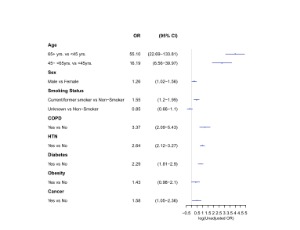
Precision medicine and immunotherapy advances transforming colorectal cancer treatment
Tamer A. Addissouky, Ibrahim El Tantawy El Sayed, Majeed M. A. Ali, Mahmood Hasen Shuhata Alubiady, Yuliang Wang
New stool DNA panels and blood-based assays offer non-invasive options for early CRC detection, though require further validation. Immuno- and targeted therapies matched to tumor molecular profiles have transformed metastatic CRC treatment. Pembrolizumab elicits durable responses in mismatch repair-deficient tumors, and anti-EGFR antibodies cetuximab/panitumumab improve outcomes for left-sided RAS/RAF wild-type CRC. Larotrectinib and entrectinib are highly active in NTRK fusion-positive CRC. Research focusing on new immunotherapies, leveraging the microbiome, and combining multi-omics data to enable precision medicine holds promise. Disparities across groups remain a challenge.
J Cancer Biol, 2024, Volume 5, Issue 2, p38-43 | DOI: 10.46439/cancerbiology.5.063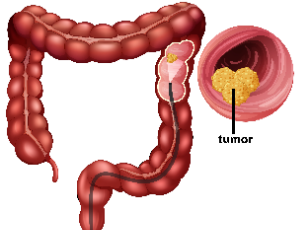
Chromatin dynamics: Nucleosome occupancy and sensitivity as determinants of gene expression and cell fate
Jane Benoit, Mahdi Khadem Sheikhbahaei, Jonathan Dennis
The nucleosome, consisting of ~150bp of DNA wrapped around a core histone octamer, is a regulator of nuclear events that contributes to gene expression and cell fate. Nucleosome organization at promoters and their associated remodeling events are important regulators of access to the genome. Occupancy alone, however, is not the only nucleosomal characteristic that plays a role in genome regulation. Nucleosomes at the transcription start sites (TSSs) of genes show differential sensitivity to micrococcal nuclease (MNase) and this differential sensitivity is linked to transcription and regulatory factor binding events.
J Cancer Biol, 2021, Volume 2, Issue 2, p51-55 | DOI: 10.46439/cancerbiology.2.024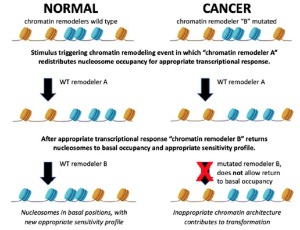
Plasma oncology - Physical plasma as innovative tumor therapy
Matthias B. Stope
In medical diagnostics, complex physical techniques are state of the art and everyday clinical practice would be unthinkable without them. But also, in the field of therapeutic interventions there are several physical procedures. For example, ionizing radiation is used in oncology and non-ionizing radiation in dermatological (UV light) and photodynamic therapies (laser). Similarly, electrosurgical and laser procedures are well established in surgery.
J Cancer Biol, 2020, Volume 1, Issue 2, p53-56 | DOI: 10.46439/cancerbiology.1.010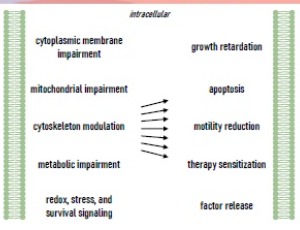
Co-infection, re-infection and genetic evolution of SARS-CoV-2: Implications for the COVID-19 pandemic control
Wagner Gouvêa dos Santos
The identification of new mutations in SARS-CoV-2 and their roles in the viral fitness towards evolution and survival to face the selective pressure imposed by the human host immune response have become the target of great attention recently. As result, concerns related to the emergence of novel variants with more transmissibility and pathogenic potential have led many countries to apply more restrictive measures to avoid increase in the number of infections and collapse of healthcare systems.
J Cancer Biol, 2021, Volume 2, Issue 3, p56-61 | DOI: 10.46439/cancerbiology.2.025
Can electronic-cigarette vaping cause cancer?
Moon-shong Tang, PhD, Yen-Len Tang, MD
The relative safety of E-cigarette (E-cig) has been an emerging topic in the public domain as well as the medical and scientific communities as vaping associated health problems arose. While there were significant amounts of intelligent discussions and opinions on the benefits and deleterious effects of E-cig vaping, there is a lack of solid evidence of the fundamental biochemical and biological effects of E-cig aerosol and nicotine.
J Cancer Biol, 2021, Volume 2, Issue 3, p68-70 | DOI: 10.46439/cancerbiology.2.027
Immuno-oncologic care during COVID-19: Challenges and opportunities for improving clinical care and investigation
Kristen Spencer, Eric A. Singer, Eugenia Girda
Cancer care has been greatly impacted during the COVID-19 pandemic. The number of cases and deaths caused by the COVID-19 pandemic continues to escalate throughout the United States and the world. Worldwide, over 150 million people have been diagnosed with the coronavirus and more than 3 million have died.
J Cancer Biol, 2021, Volume 2, Issue 3, p75-82 | DOI: 10.46439/cancerbiology.2.029
Breaking malignant nuclei as a non-mitotic mechanism of taxol/paclitaxel
Elizabeth R. Smith, Xiang-Xi Xu
Discovered in a large-scale screening of natural plant chemicals, Taxol/paclitaxel and the taxane family of compounds are surprisingly successful anti-cancer drugs, used in treatment of the majority of solid tumors, and especially suitable for metastatic and recurrent cancer. Paclitaxel is often used in combination with platinum agents and is administrated in a dose dense regimen to treat recurrent cancer.
J Cancer Biol, 2021, Volume 2, Issue 4, p86-93 | DOI: 10.46439/cancerbiology.2.031