Loading


Journal of Pain Research and Management
ISSN: 3067-9427
Latest Articles
The involvement of nitrergic pathway in the peripheral antinociceptive action of epoxyeicosatrienoic acids (EETs)
Flávia C.S. Fonseca , Walace C.P. Barra , Daniel P.D. Machado , Douglas L. de Almeida , Danielle D. Aguiar , Bárbara F.G. de Queiroz , Andrea C. Perez , Thiago R.L. Romero , Igor D.G. Duarte
Our group has described the nitrergic pathway as a key analgesic mechanism of drugs and as part of the endogenous control of peripheral inflammatory pain. Studies have shown that epoxyeicosatrienoic acids (EETs) can activate different isoforms of nitric oxide synthase, leading to nitric oxide release and subsequent vasodilation.
J Pain Res Manag, 2026, Volume 2, Issue 1, p1-9 | DOI: 10.46439/Painresearch.2.014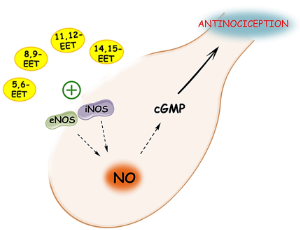
Antinociceptive effect of N,N-dimethyltryptamine (DMT) involving serotonergic, opioidergic, cannabinoidergic, and nitrergic systems in PGE2-induced hyperalgesia in rats
Flávia C.S. Fonseca , Daniel P.D. Machado , André D. Cavalcante , Andrea C. Perez , Thiago R.L. Romero , Igor D.G. Duarte
N,N-dimethyltryptamine (DMT) is an alkaloid structurally similar to serotonin that acts on serotonergic receptors. This study aimed to evaluate the effects of DMT on peripheral nociception and explore its possible mechanisms of action. Male Wistar rats underwent a mechanical paw pressure test, with hyperalgesia induced by intraplantar injection of prostaglandin E2 (PGE2; 2 µg/paw).
J Pain Res Manag, 2026, Volume 2, Issue 1, p10-18 | DOI: 10.46439/Painresearch.2.015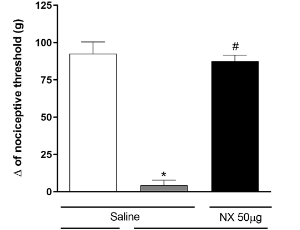
AI enhances clinicians managing surgical causes of pain
Hazim Abdul Rahman Alhiti
AI has become increasingly important in surgery due to its potential to enhance precision, efficiency, and patient outcomes. AI enhances clinicians' ability to manage surgical causes of pain in several impactful ways.
J Pain Res Manag, 2026, Volume 2, Issue 1, p19-21 | DOI: 10.46439/Painresearch.2.016
From subjective scores to structured stratification: development of the Objective Pain Assessment Scale (OPAS): a clinical observation
Paul Dranichnikov
Pain assessment remains a fundamental yet challenging component of clinical practice. The Visual Analog Scale (VAS) is widely used pain assessment tool in research and clinical practice; however, reliance on a unidimensional self-reported numeric score risks oversimplifying a complex and multidimensional experience.
J Pain Res Manag, 2026, Volume 2, Issue 1, p22-27 | DOI: 10.46439/Painresearch.2.017
Physical activity and quality of life in statin users
Vimal Tyagi , Sajjan Pal
We read with interest the article by Mert Er et al., “Physical activity and quality of life in statin users,”. The topic is clinically important given persistent concerns regarding statin-associated muscle symptoms (SAMS) and their potential impact on adherence and lifestyle behaviors. However, several conceptual and methodological considerations warrant closer examination.
J Pain Res Manag, 2026, Volume 2, Issue 1, p28-29 | DOI: 10.46439/Painresearch.2.018
Comment on “Fibromyalgia, perfectionism, and interpersonal style: Further evidence for a person-centered approach”
Xin Zhang
We read with interest the article by Maes et al. examining perfectionism and other-directed interpersonal styles in women with fibromyalgia (FM) compared with women with rheumatoid arthritis (RA). The study addresses a clinically relevant question and is commendable for attempting to move beyond a purely symptom-centered account of FM. The reported between-group differences are notable, and the topic is timely given the growing interest in person-centered formulations of FM.
J Pain Res Manag, 2026, Volume 2, Issue 1, p30-31 | DOI: 10.46439/Painresearch.2.020
Spinal epidural abscess causing cauda equina syndrome after lumbar medial branch radiofrequency ablation
Ahmed Elfaioumy , Karim Salem , Bhavesh Raithatha
Spinal epidural abscesses after lumbar facet joint injections are rare but can cause rapid neurological deterioration. We describe a man in his 70s who developed severe lower back pain, fever, urinary retention, saddle anesthesia, and worsening paraparesis within two weeks of undergoing lumbar medial branch radiofrequency ablation for facet-mediated pain.
J Pain Res Manag, 2026, Volume 2, Issue 1, p32-34 | DOI: 10.46439/Painresearch.2.021