

Abstract
Background: Retinopathy of prematurity (ROP), a leading cause of childhood blindness, occurs in premature babies. Several factors like perinatal infection, inflammation, hypoxia, hypercapnia, higher oxygen support etc. have been attributed to the cause. Identifying the potentially modifiable risk factors will contribute to making preventive strategy.
Objective: To identify the frequency and risk factors of ROP in premature babies.
Methodology: This prospective observational study was conducted in the Department of Neonatology of BSMMU after approval from the institutional review board over a period of twelve months. Infants born <35 completed weeks, weighing <2000 g admitted in NICU are included in this study. After enrollment, screening for ROP was done at 20 days for the baby -gestational age of ≤ 30 weeks or birth weight ≤ 1200 g and at 30 days for the baby- gestational age ≤ 35 weeks or birth weight ≤ 2000g. ROP screening test was done by a pediatric ophthalmologist with indirect Ophthalmoscope. The outcome measures were the frequency and risk factors of ROP.
Results: Between 2021 and 2022, 154 infants born ≤ 35 weeks gestation, weighing ≤ 2000 g were screened for ROP. Among the studied cases 30 (19.5%) patients had ROP. Among the 30 patients, 16 (53.33%) had AP-ROP, 3 (10%) had plus disease and 3 (10%) had stage IV (6.67%) ROP. Among the newborns diagnosed with ROP, 23 (76.67%) required treatments. Among them, Inj. Avastin was given to 18 (78.26%) patients, 5 (21.7%) needed Laser therapy but none of them required surgery. Univariate analysis showed risk of ROP was significantly higher in lower gestational age and lower birth weight group. Frequency of sepsis, duration of oxygen support, need for CPAP, hospital stay, and Intraventricular hemorrhage (IVH) were significantly higher among ROP group. Antenatal corticosteroid significantly lowered the risk of ROP. Multivariate analysis also showed that antenatal corticosteroid had protective effect against ROP and prematurity, lower birth weight, sepsis, longer duration of oxygen therapy, and longer duration of hospital stay increased the risk of ROP.
Conclusions: This prospective observational study showed frequency of ROP was 19.5%. Prematurity, lower birth weight, lack of antenatal-corticosteroid, sepsis, longer duration of oxygen support, and longer hospital stay are some potential risk factors of developing ROP.
Keywords
ROP, Prematurity, Risk factor
Introduction
Retinopathy of prematurity (ROP) is one of the major emerging but preventable causes of childhood blindness. ROP is a disease of premature babies. Over the past decade, perception of pathogenesis of ROP has improved tremendously. The condition was initially introduced by Terry in 1942 as retrolental fibroplasia [1]. As neonatal intensive care advances, the chances of survival of premature baby have been increased, therefore the incidence of ROP is also increasing [2]. ROP’s incidence has varied considerably over the years. After the first introduction of ROP, the incidence was high in the 1940s and 1950s mainly as a consequence of the use of unmonitored supplemental oxygen. As survival of extremely premature infants improved over the last few decades and despite better methods of monitoring oxygen supplementation, a rising incidence of ROP reemerged. In the last decade or so, an increasing frequency of ROP blindness has been documented in low-income countries where neonatal care is rapidly improving. Studies suggest that ROP is becoming an important cause of blindness in China, Southeast and South Asia, Latin America, and Eastern Europe – especially in urban centers of newly industrializing countries [3,4]. ROP is characterized by abnormal neovascular development in the retina of premature infants. These abnormal blood vessels are fragile and can leak or bleed, scarring the retina and pulling it out of position. This causes tractional retinal detachment, which is the main cause of visual impairment and blindness in ROP [5]. The stages of ROP describe the ophthalmoscopic findings at the junction between the vascularized and avascular retina; stage 1 is a faint demarcation line, stage 2 is an elevated ridge, stage 3 is an extraretinal fibrovascular tissue, stage 4 is a subtotal retinal detachment, while stage 5 is a total retinal detachment. In addition, plus disease, which indicates significant vascular dilation and tortuosity observed at the posterior retinal vessels, may be present at any stage and reflects the increased blood flow through the retina [6]. Multiple reasons are associated for developing ROP and its complex pathogenesis is yet not fully understood [7]. Some factors have shown consistent and significant association with ROP: low gestational age, low birth weight, low APGAR score and prolonged exposure to supplementary oxygen following delivery [8]. Some other factors like perinatal infection, inflammation, hypoxia, hyperoxia, hypercapnia, repeated blood transfusion and slow weight gain in postnatal period are associated with increased incidence of ROP [9,10]. Antenatal steroid administration is associated with a reduced risk of ROP development and progression to severe ROP [11]. Exclusive human, maternal milk feeding since birth may prevent ROP of any stage in VLBW infants in the NICU [12]. There are two sequential phases in the development of ROP. In 1st phase, cessation of normal retinal vascularization and in 2nd phase, there is abnormal neovascularization of retinal vessels. Neonatal infection and inflammation trigger production of proinflammatory cytokines that are responsible for abnormal retinal angiogenesis [5,10]. Identification of potentially modifiable risk factors and early intervention to address them can significantly decrease the frequency of ROP. Studies have shown that ROP can be prevented by reducing preterm birth and some action needs to be taken for postnatal optimum clinical measures. A systematic review described infection prevention, targeting oxygen saturation, judicious blood transfusion, nutritional interventions care may reduce the incidence of ROP [13]. Development of any stage of ROP can be decreased by lowering oxygen saturation but it increases the chances of mortality. Reduction of any stage of ROP is possible by rapid advancement of parenteral nutrition but it is not applicable in case of severe ROP [13]. However, there is paucity of data in terms of frequency and risk factors of ROP in Bangladesh. So, the aim of this study was to determine the frequency of ROP and identify the risk factors in a tertiary care hospital of Bangladesh.
Methodology
Patients and study design
This prospective observational study was conducted in the Department of Neonatology of BSMMU after approval from the institutional review board over a period of eighteen months. Between 2021 and 2022, infants born ≤ 35 weeks gestation, weighing ≤ 2000 g were enrolled for the study. Criteria for exclusion were the presence of major congenital malformations, severe perinatal asphyxia and newborn died before 1st ophthalmological examination. After admission, all patients received standard neonatal care as per NICU protocol of BSMMU. Enrolled newborns were screened for ROP. Screening was done at 20 days for the baby -gestational age of ≤ 30 weeks or birth weight ≤ 1200g and at 30 days for the baby- gestational age ≤ 35 weeks or birth weight ≤ 2000g.
ROP screening test of eligible baby was done by a pediatric ophthalmologist with indirect Ophthalmoscope. The assigned Ophthalmologist was informed beforehand regarding eligible baby by duty doctors of Neonatal Intensive Care Unit (NICU) and screening date was taken from Ophthalmologist. ROP Screening was performed in NICU. On screening day, dilatation of the pupils was done by instilling one drop of Tropicamide and Phenylephrine sterile eye drops three times at 15 minutes intervals in one hour prior to ophthalmic examination, by duty doctor of NICU. After the final procedure of ROP screening, detailed note was written and next follow up screening plan was made. After the procedure some minor irritation occurred in babies’ eye like swelling, redness, conjunctival hemorrhage, and excessive cry due to pain. It was addressed properly, and medication was given if any problem occurred and follow up was done by duty doctors at half an hour interval to find out whether new problems occurred or decreased.
Primary and secondary outcomes
The primary outcome was the development of ROP. Secondary outcomes include ROP stages, need for treatment, feeding intolerance, mortality, patent ductus arteriosus, intraventricular hemorrhage, necrotizing enterocolitis, sepsis and duration of hospital stay.
Sample size and statistical analysis
After collection, data were entered into a personal computer then edited, analyzed, plotted, and were presented in tables; categorical variables were analyzed by using the Chi square test and continuous variables were analyzed by t test. Data was analyzed using the statistical package for social sciences (SPSS) version 25. P value <0.05 was considered as a level of significance. The relation between dependent and independent variables was evaluated by regression model adjusted for gestational age, birth weight, sepsis, duration of oxygen supplementation etc.
Results
A total of 154 preterm newborns meeting the inclusion criteria were studied. Among them 30 (19.5%) developed ROP (Table 1, Figure 1).
|
Retinopathy of prematurity |
Frequency (n) |
Percentage (%) |
|
Yes |
30 |
19.5 |
|
No |
124 |
80.5 |
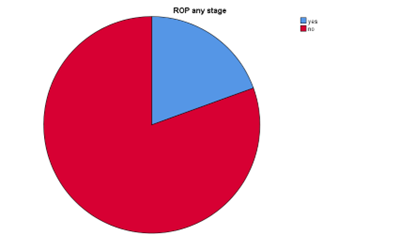
Figure 1. Frequency of ROP.
The baseline characteristics of the newborns with ROP and without ROP are shown in Table 2. Here mean gestational age and mean birth weight were lower among ROP group showing statistically significant difference. Gestational age category and birth weight category also showed significant difference. No difference in gender distribution, frequency of multiple births, and mode of delivery.
|
|
ROP group, n=30 |
No-ROP group, n=124 |
p-value |
|
Gestational age, week, mean ± SD |
30.20 ± 2.145 |
32.26 ± 1.599 |
0.003 |
|
26-32 weeks, n (%) >32-34 weeks, n (%) >34 weeks, n (%) |
28 (93.3) 2 (6.7) 0 (0) |
66 (53.2) 54 (43.5) 4 (2.6) |
0.012 |
|
Birth weight, g, mean ± SD |
1278.00 ± 201.360 |
1512.19 ± 239.723 |
0.001 |
|
600-1500 g, n (%) 1500-1800 g, n (%) ≥ 1800 g - ≤ 2000g, n (%) |
28 (93.3) 2 (6.7) 0 (0) |
58 (46.8) 52 (41.9) 14 (11.3) |
0.006 |
|
Male, n (%) |
14 (46.7) |
58 (46.8) |
0.612 |
|
Multiple births, n (%) |
8 (26.7) |
42 (33.9) |
0.419 |
|
Cesarean delivery, n (%) |
16 (53.3) |
92 (74.2) |
0.113 |
Maternal antenatal completed dose of corticosteroid showed to be protective against developing ROP (p=0.003). Other maternal factors like Diabetes mellitus, infection, hypertension did not show any significant difference in between ROP and no-ROP group (Table 3).
|
|
ROP group, n= 30 |
No-ROP group, n=124 |
p value |
|
Maternal DM, n (%) |
6 (20.0) |
44 (35.5) |
0.202 |
|
Maternal infection, n (%) |
4 (13.3) |
24 (19.4) |
0.453 |
|
Maternal hypertension, n (%) |
22 (73.3) |
68 (54.8) |
0.249 |
|
ACS, n (%) Completed dose None or incomplete dose |
18 (60) 12 (40) |
34 (27.4) 90 (72.6) |
0.017 |
Among the 30 patients, 16 (53.33%) had AP-ROP, 3 (10%) had plus disease, 3 (10%) had stage IV (6.67%) ROP, 2 (6.67%) had stage I ROP, and 2 (6.67%) had stage II ROP. Frequency of others stages of ROP were 1 in each stage (Table 4).
|
Stages of ROP |
Frequency (n) |
Percentage (%) |
|
Stage I |
2 |
6.67 |
|
Stage II |
2 |
6.67 |
|
Stage III |
1 |
3.33 |
|
Stage IV |
3 |
10 |
|
Stage V |
1 |
3.33 |
|
AP-ROP |
16 |
53.33 |
|
Plus disease |
3 |
10 |
Among the newborns diagnosed with ROP, 23 required treatments. Among them Inj. Avastin was given to 18 (78.26%) patients, 5 (21.7%) needed laser therapy but none of them required surgery (Table 5).
|
Treatment |
Frequency (n) |
Percentage (%) |
|
Treatment required, n (%) |
23 |
76.67 |
|
Inj. Avastin, n (%) |
18 |
78.26 |
|
Laser therapy, n (%) |
5 |
21.7 |
|
Surgery |
0 |
0 |
There is significant difference in the duration of respiratory support (6.49 ± 4.87 vs 13.588 ± 11.543; P ≤ 0.001) and need for CPAP between ROP and no-ROP group (Table 6).
|
Characteristics |
ROP group (n=30) |
No-ROP group (n=124) |
p value |
|
Duration of Oxygen, mean ± SD |
19.53 ± 9.326 |
8.85 ± 7.884 |
0.001 |
|
Need for CPAP, n (%) |
22 (73.3) |
56 (45.2) |
0.046 |
|
Need for HHFNC, n (%) |
04 (13.3) |
24 (19.4) |
0.453 |
|
Need for Mechanical ventilation, n (%) |
10 (33.3) |
34 (27.4) |
0.435 |
Development of sepsis, duration of hospital-stay, IVH, acute kidney injury was more in ROP group, and it was statistically significant. The presence of PDA, NEC, anemia, shock, ionotrops requirement and DIC did not show any significant difference (Table 7).
|
|
ROP group, n= 30 |
No-ROP group, n=124 |
p value |
|
Late onset neonatal Sepsis, n (%) |
26 (86.7) |
60 (48.4) |
0.009 |
|
PDA, n (%) |
8 (26.7) |
10 (8.1) |
0.066 |
|
IVH, n (%) |
12 (40) |
8 (6.5) |
0.003 |
|
NEC, n (%) |
8 (26.7) |
18 (14.5) |
0.267 |
|
Anemia, n (%) |
20 (66.7) |
50 (40.3) |
0.086 |
|
Need for blood transfusion, n (%) |
20 (66.7) |
50 (40.3) |
0.086 |
|
Shock, n (%) |
16 (53.3%) |
44 (35.5) |
0.245 |
|
Requirement of inotropes, n (%) |
12 (40%) |
42 (33.9) |
0.765 |
|
DIC, n (%) |
6 (20.0 %) |
14 (11.3) |
0.399 |
Duration of hospital stay was significantly higher among the ROP group. But there was no significant difference in overall outcome like discharge, LAMA, or death (Table 8).
|
|
ROP group, n= 30 |
No-ROP group, n=124 |
p value |
|
Hospital-stay, days, mean ± SD |
23.60 ± 8.043 |
12.90 ± 7.188 |
<0.001 |
|
Outcome, n (%) Discharge with advice Discharge on request Left against medical advice Death |
20 (66.7) 4 (13.3) 0 6 (20.0) |
100 (60.6) 8 (5.2) 6 (4.8) 10 (8.1) |
0.331 |
Binary logistic regression analysis of different risk factors of ROP showed lower gestational age, lower birth weight, lack of antenatal corticosteroid, sepsis, duration of oxygen therapy, and duration of hospital stay were significantly associated with development of ROP (Table 9).
|
Variable |
p value |
Exp (B) |
95% C.I. |
|
|
Lower |
Upper |
|||
|
Gestational age |
0.011 |
2.531 |
1.240 |
5.165 |
|
Birth weight |
0.048 |
1.560 |
1.36 |
2.007 |
|
Ante natal corticosteroid |
0.016 |
29.226 |
1.899 |
449.856 |
|
Late onset neonatal sepsis |
0.049 |
0.490 |
1.36 |
24.833 |
|
Continuous positive airway pressure |
0.858 |
1.206 |
0.155 |
9.397 |
|
Duration of oxygen support (days) |
0.018 |
1.871 |
1.859 |
2.188 |
|
Duration of hospital stay (days) |
0.048 |
0.570 |
0.326 |
0.996 |
|
IVH |
0.127 |
5.571 |
0.615 |
50.446 |
Discussion
ROP is a disorder of retinal vascular development in preterm infants. It continues to be a significant complication in preterm neonates despite advances in neonatal care and remains a major cause of childhood blindness worldwide. In this study we evaluated the risk factors for ROP in a cohort of preterm infants. We found an occurrence of any stage ROP of 19.5% which is similar to what has previously been reported [14]. But this was less than that reported in many other studies; 24% in India [15], 29.2% in Singapore, and 32.4% in Pakistan [16]. However, it is higher than the study done in Beijing which involved infants with gestational age of 34 weeks and birth weight up to 2 kg and reported a prevalence of 10.8%. In fact, epidemiological and cohort studies reported a ROP rate ranging from 23.2 to 48.5%, with differences mainly due to different criteria for selecting studied populations [17]. In our study, low-gestational age, low birth weight, lack of antenatal corticosteroid, sepsis, duration of oxygen therapy, need for CPAP, IVH, AKI and duration of hospital stay were found to be risk factors for development of ROP independently. However, sex, mode of delivery, birth weight, respiratory distress syndrome, patent ductus arteriosus, intraventricular hemorrhage, shock, need for inotropes, HHHFNC and mechanical ventilation were nonsignificant risk factors by using univariate analysis. One of the significant risk factors for development of ROP were low-gestational age and low-birth weight, as shown in many studies. In our study, we demonstrated the role of gestational age and/or birth weight as risk factors for ROP as shown in previous studies. As regards the effect of low-gestational age on occurrence of ROP, we found it one of the most important risk factors in ROP. This was in agreement with the results of studies done by Yang et al. [18], and Fortes et al. [19] This was explained by immaturity of vascularization that induces an increased susceptibility of the retina to oxidative damage and to a number of perinatal factors which include hyperoxia and hypoxia, blood transfusions, and sepsis [19]. We found that low birth weight was a significant factor for the development of ROP which was in agreement with many studies which reported that lower birth weight was significantly associated with development of ROP, and explained that by more susceptibility for oxygen therapy, prolonged ventilation, sepsis, and blood transfusion in very low birth weight infants [20]. Neonatal sepsis is among the most frequently identified risk factors for ROP. It has been suggested that perinatal infection and inflammation may play important roles in ROP. In this study, we found that sepsis was significantly associated with the development of ROP. This was in agreement with Vinekar et al., which may be due to the effect of endotoxins on retinal blood vessels [21]. On the other hand, this was in disagreement with the results of Chaudhari et al., and Smith [22]. A New York state cohort study reported that the presence of neonatal sepsis was associated with an elevated risk of ROP. The Extremely Low Gestational Age Newborns (ELGAN) study also revealed that late bacteremia is an independent risk factors for ROP [23]. Duration of oxygen therapy was an independent risk factor for the development of ROP. We found a significant relationship between the occurrence of ROP and the use of oxygen therapy. On the other hand, Palmer et al., reported that oxygen therapy was a non-significant factor for occurrence of ROP. They reported that ROP may develop in cases that did not receive oxygen therapy [22]. Some studies reported that a duration of oxygen therapy more than 7 days was a significant risk factor for development of ROP. In our study we also found it significant which was in agreement with the results of Nair et al. [24]. We found that use of CPAP was significantly associated with development of ROP, but HHHFNC or mechanical ventilation were nonsignificant risk factors for ROP and similar findings were seen in some studies [4]. However, others observed that ventilatory support and CPAP were significantly associated with development of ROP. Several studies have found that, like traditional mechanical ventilation, the need for nasal CPAP also increases the risk of ROP [24]. In univariate analysis we found that the occurrence of any grade IVH increased the risk of ROP. This correlation was also reported by Yau et al. [25], while Chung et al. [26] found that IVH was correlated with the progression of ROP. This correlation can be explained by similar aspects of ROP and IVH pathogenesis, such as the vascular immaturity of retina and germinal matrix, and the role of oxidative stress induced by blood flow and oxygen delivery fluctuations which could promote hypoxic-ischemic and re-perfusion injuries and the development of these complications. Longer length of initial hospital stay has been associated with higher rates of ROP. The association between length of hospital stay and ROP, however, may arise because length of stay is related to illness burden, with most ill infants requiring the longer hospital stays. In our study we also found higher duration of hospital stay as a risk factor for developing ROP. Other risk factors including respiratory distress syndrome, patent ductus arteriosus, shock didn’t show significant relationship with the occurrence of ROP. Similarly, Taqui et al., [16] reported insignificant relation between ROP and patent ductus arteriosus but observed a significant relation between respiratory distress syndrome and the development of ROP and related this to the fact that systemic hypoxia results in retinal hypoxia and more need for oxygen therapy. On the other hand, Freitas et al., [27,28] reported a significant relation between ROP development and patent ductus arteriosus, intraventricular hemorrhage, and hypotension. Antenatal corticosteroid use has been recommended for pregnancies 24 to 34 weeks gestation with threatened premature delivery to decrease the risk of RDS and neonatal death in premature neonates [11]. In our study completed courses of ACS showed significant reduction in frequency of ROP. In other studies ACS (dexamethasone) has been reported to be associated with decreased incidence of ROP. However, Smith et al. have reported that single or multiple courses of ACS were not protective for the development of severe ROP [5]. In multivariate logistic regression analysis, it was confirmed that low gestational age, sepsis, and duration of hospital stay were significant risk factors for development of ROP. These results suggest that effective strategies for preventing premature birth, sepsis, and standardizing the use of respiratory support can contribute in decreasing the risk of ROP in very preterm infants.
Limitation of the Study
- Exact scheduled ROP screening at day 20/ 30 could not be maintained in all patients but deviation from scheduled date were within 2-3days in studied cases.
- All ROP screening was not done by same pediatric ophthalmologist.
Conclusions
This prospective observational study showed frequency of ROP was 19.5%. Prematurity, lower birth weight, lack of antenatal-corticosteroid, sepsis, longer duration of oxygen support and longer hospital stay are some potential risk factors of developing ROP.
References
2. Wheatley CM, Dickinson JL, Mackey DA, Craig JE, Sale MM. Retinopathy of prematurity: recent advances in our understanding. Arch Dis Child Fetal Neonatal Ed. 2002;87(2):696-700.
3. Hong EH, Shin YU, Cho H. Retinopathy of prematurity: a review of epidemiology and current treatment strategies. Clin Exp Pediatr. 2022;65(3):115-26.
4. Mitsiakos G, Papageorgiou A. Incidence and factors predisposing to retinopathy of prematurity in inborn infants less than 32 weeks of gestation. Hippokratia. 2016;20(2):121-6.
5. Smith LEH. Pathogenesis of retinopathy of prematurity. Semin Neonatol. 2003;8(6):469-73.
6. Molinari A, Weaver D, Jalali S. Classifying retinopathy of prematurity. Community Eye Heal. 30(99):55-6.
7. Pivodic A, Holmström G, Smith LEH, Hård A-L, Löfqvist C, Al-Hawasi A, et al. Prognostic Value of Parenteral Nutrition Duration on Risk of Retinopathy of Prematurity: Development and Validation of the Revised DIGIROP Clinical Decision Support Tool. JAMA Ophthalmol. 2023 Aug 1;141(8):716-24.
8. Alajbegovic-Halimic J, Zvizdic D, Alimanovic-Halilovic E, Dodik I, Duvnjak S. Risk Factors for Retinopathy of Prematurity in Premature Born Children. Med Arch (Sarajevo, Bosnia Herzegovina). 2015;69(6):409-13.
9. Akther M, Tabrez M, Choudhury N, Moni S, Dey S, Jahan I, et al. Postnatal weight gain as a predictor of retinopathy of prematurity in preterm babies. J Clin Neonatol. 2022;11(2):102.
10. Cavallaro G, Filippi L, Bagnoli P, La Marca G, Cristofori G, Raffaeli G, et al. The pathophysiology of retinopathy of prematurity: An update of previous and recent knowledge. Acta Ophthalmol. 2014;92(1):2-20.
11. Yim CL, Tam M, Chan HL, Tang SM, Au SCL, Yip WWK, et al. Association of antenatal steroid and risk of retinopathy of prematurity: A systematic review and meta-Analysis. Br J Ophthalmol. 2018;102(10):1336-41.
12. Hornik CP, Fort P, Clark RH, Watt K, Benjamin DK, Smith PB, et al. Early and late onset sepsis in very-low-birth-weight infants from a large group of neonatal intensive care units. Early Hum Dev. 2012;88(SUPPL.2):1-13.
13. Fang JL, Sorita A, Carey WA, Colby CE, Hassan Murad M, Alahdab F. Interventions to prevent retinopathy of prematurity: A meta-analysis. Pediatrics. 2016;137(4):e20153387.
14. Hakeem A, Mohamed G, Othman M. Retinopathy of prematurity: A study of prevalence and risk factors. Middle East Afr J Ophthalmol. 2012;19(3):289-94.
15. Murthy KR, Benakappa N. Analysis of risk factors for the development of retinopathy of prematurity in preterm infants at a tertiary referral hospital in South India. 2006;13(3):147-51.
16. Chaudhry TA, Hashmi FK, Salat MS, Khan QA, Ahad A, Taqui AM, et al. Retinopathy of prematurity: An evaluation of existing screening criteria in Pakistan. Br J Ophthalmol. 2014;98(3):298-301.
17. Chen Y, Li XX, Yin H, Gilbert C, Liang JH, Jiang YR, et al. Risk factors for retinopathy of prematurity in six neonatal intensive care units in Beijing, China (Retraction in: British Journal of Ophthalmology (2008) 92:8 (1159)). Br J Ophthalmol. 2008;92(3):326-30.
18. Yang CY, Lien R, Yang PH, Chu SM, Hsu JF, Fu RH, et al. Analysis of incidence and risk factors of retinopathy of prematurity among very-low-birth-weight infants in North Taiwan. Pediatr Neonatol. 2011;52(6):321-6.
19. Fortes Filho JB, Eckert GU, Procianoy L, Barros CK, Procianoy RS. Incidence and risk factors for retinopathy of prematurity in very low and in extremely low birth weight infants in a unit-based approach in southern Brazil. Eye. 2009;23(1):25-30.
20. Weinberger B, Laskin DL, Heck DE, Laskin JD. Oxygen toxicity in premature infants. Toxicol Appl Pharmacol. 2002;181(1):60-7.
21. Vinekar A, Dogra MR, Sangtam T, Narang A, Gupta A. Retinopathy of prematurity in Asian Indian babies weighing greater than 1250 grams at birth: ten year data from a tertiary care center in a developing country. Indian J Ophthalmol. 2007 Sep-Oct;55(5):331-6.
22. Group C. 15-Year Outcomes Following Threshold Retinopathy of Prematurity. Arch Ophthalmol. 2005;123(3):311.
23. O’Shea TM, Allred EN, Dammann O, Hirtz D, Kuban KCK, Paneth N, et al. The ELGAN study of the brain and related disorders in extremely low gestational age newborns. Early Hum Dev. 2009;85(11):719-25.
24. Nair A, El Ballushi R, Anklesaria BZ, Kamali M, Talat M, Watts T. A Review on the Incidence and Related Risk Factors of Retinopathy of Prematurity Across Various Countries. Cureus. 2022;14(11):e32007.
25. Yau GS, Lee JW, Tam VT, Liu CC, Chu BC, Yuen CY. Incidence and risk factors for retinopathy of prematurity in extreme low birth weight Chinese infants. Int Ophthalmol. 2015;35(3):365–73.
26. Hsu Y-C, Pan C-Y, Lin Y-H, Lin M-C, Wang T-M. The Association between Duration of Postnatal Weight Loss and Neurodevelopment Outcomes in Very Low Birth Weight Infants. Pediatr Neonatol. 2022 Jan;63(1):33-40.
27. Freitas AM, Mörschbächer R, Thorell MR, Rhoden EL. Incidence and risk factors for retinopathy of prematurity: A retrospective cohort study. Int J Retin Vitr. 2018;4(1):1-8.
28. Hoque MM. Effectiveness of KMC on Success of Breast feeding in Preterm Low Birth Weight Neonate. Acad J Pediatr Neonatol. 2017;3(4):AJPN.MS.ID.555617.