

Abstract
Background: lack of knowledge and awareness of COVID-19 and radiation safety among healthcare professionals will adversely affect their health and the patients’ safety due to unnecessary radiation exposure and rapid spread of COVID-19. The purpose of this study is to evaluate the knowledge and the awareness of both domains; COVID-19 and radiation awareness in one survey study.
Materials and Methods: A prospective cross-sectional online survey study was conducted among UAE healthcare professionals. The survey questionnaire included two sections; knowledge and awareness level of COVID-19 disease and radiation safety awareness.
Results: A total of 254 participants agreed to participate in the study, with the majority of them were females (70%) and average age of 37. Most of the respondents scored more than 76% in both sections (COVID-19 & radiation safety). According to the job title of the participants, the pharmacy job category scored higher than the other jobs for COVID-19 section while the radiology job category scored higher than the other jobs for the radiation knowledge section (P<0.05). There was a significant correlation between work experience, COVID-19 scores and Radiation awareness scores (r=0.18, r=0.16, P<0.05, respectively). Linear regression analysis showed that job title and received awareness sessions among other factors can significantly predict the COVID-19 and the radiation safety awareness levels (P<0.05).
Conclusion: The overall knowledge and awareness levels of the COVID-19 and radiation safety are acceptable. However, more radiation safety awareness sessions are recommended with an emphasis on the MRI subject.
Keywords
COVID-19, Radiation safety, Awareness, Healthcare, Imaging
Introduction
In December 2019 in China, a new coronavirus called SARS-CoV-2 (COVID-19) associated with respiratory system disease started to spread rapidly between people. Then, the virus outbreak reached all over the world and has been declared as a global pandemic by the world health organization (WHO). The most common symptoms of the disease include cough, fever and fatigue. However, some patients may suffer from other symptoms like nausea, diarrhea and headache. The virus can be transmitted when contacting infected persons through respiratory droplets. The average time between the viral infection to the onset of the symptoms is about 6 days but can last for 14 days. According to the WHO, more than 50 COVID-19 vaccines are currently in trials and will be available as soon as safety and effectivity are confirmed [1-4].
Since the beginning of the pandemic, strict COVID-19 prevention and control procedures and policies were applied across the healthcare services to protect staff and patients from the disease and to control the spread of the virus. For example, screening of visitors and quarantine of the healthcare professionals (HP) with notable symptoms were applied [5].
Healthcare professionals are at high risk of getting infected as they work on the frontline in direct contact with patients. According to the reported statistics, more than 90,000 health workers have been infected with COVID-19 worldwide [6]. As COVID-19 considered as a highly contagious disease, nurses among the health workers who work very closely with patients require appropriate training and education to protect themselves [7].
In addition to nurses, Radiology staff duty is on the frontline as well to fight against the COVID-19 outbreak. They are in direct contact with the patients for positioning and scanning. They should be well trained and provided with adequate awareness sessions to practice the protection methods [8].
Moreover, dentists in the clinics are at high risk of COVID-19 infection. Due to the close contact with patients for treatment or diagnosis, the viral transmission is inevitable. Therefore, a study was conducted in Jordan to evaluate the level of COVID-19 awareness, perception, and attitude among Jordanian dentists. It was recommended that related practice guidelines to be shared with all registered dentists to improve the overall awareness [9].
In addition, lack of COVID-19 awareness among HP, will result in rapid spread of the virus. A study was performed to investigate the knowledge and perceptions about COVID-19 for the HP. The study suggested urgent educational intervention to increase the awareness level [10]. Another study from India included more than 1000 HP to assess their COVID-19 awareness level. For the safety of the training students and the staff, educational interventions and training programs on infection control practices were suggested [11].
Accordingly, personal protective equipment (PPE) is recommended to be worn by the HP to protect themselves from COVID-19. They may include gloves, goggles, face shields and gowns. The facemask is considered one of the most important equipment for keeping the working environment clean and safe [12].
On the other hand, the medical radiation applications have been used extensively for diagnostic purposes mainly by the radiology staff. However, the role has extended to include most health professions such as surgical procedures and different treatments. Accordingly, an acceptable level of radiation knowledge and awareness is required for HP in order to avoid the radiation hazards caused by the ionizing radiation [13].
It was estimated that radiation induced cancer has led to 100-250 deaths per year because of the medical radiation exposure in the UK. An awareness study was conducted among doctors to estimate the radiation dose received by patients. The results showed that most of the doctors lack the basic knowledge though a radiation protection course was provided [14].
Regarding the radiation safety, International Commission on Radiological Protection (ICRP) depends on three standards for radiation protection and safety: Justification, optimization and dose limitation. By reducing the exposure time, increasing the distance and providing the patient with the protective shield, the radiation safety can be achieved for both staff and patient [15,16].
Therefore, there are many studies have been conducted to evaluate the radiation awareness among HP [13,14,17]. Most of them indicated poor knowledge level. A study was conducted in Thailand among anesthesia personnel and surgical subspecialists indicated lack of knowledge about radiation hazards and protection, and recommended continuing medical education.
Based on the literature, HP should have an acceptable awareness level of COVID-19 disease and the radiation safety as most of them can be exposed to both risks from radiation hazard and COVID-19 infection.
Therefore, the purpose of this study is it to evaluate the knowledge and the awareness of both domains. To our knowledge, this is first study that covers and combines both topics (COVID-19 and radiation awareness) among the same respondents in one survey study. The results of this study will help in identifying strengths and weaknesses, and improving the current rules and regulations to enhance the overall performance among the HP.
Materials and Methods
This prospective cross-sectional online survey study was approved by the research ethical commit-tee of the institution to be conducted among UAE healthcare professionals. In this study, an online questionnaire (Appendix A) was utilized and developed based on published information regarding COVID-19 awareness and radiation safety and obtained from the WHO website and relevant literature [2,18].
The questionnaire was created online and sent out to the participants through different social media platforms, to be filled and submitted electronically. It was divided into 4 sections. The first section included the consent form to explain the research purpose and the objectives to the participants, to obtain their approval to proceed and complete the questionnaire. The second section is about the demographic information such as gender and age. The third section included multiple choice questions (MCQs) regarding the knowledge and awareness level of COVID-19 disease such as symptoms and diagnostic tests. The fourth section evaluates the radiation safety awareness using Yes/No questions regarding ionizing and non-ionizing imaging modalities. The value of 1 was assigned to the correct answer and 0 for the wrong answer. Then, the mean scores were calculated and compared between different groups.
Statistical validation
For statistical analysis, ANOVA and Student’s t test were used to compare the significant difference between the groups at a significance level of 0.05. Categorical variable such as gender, job and degree were expressed as proportions. Pearson’s correlation coefficient test was used to test the correlation between the variables. Finally, the linear regression was used to find the significant predictors of the awareness level. The analysis was performed using SPSS (Statistical package for the social sciences) software.
Results
Demographic information
A total of 254 participants completed the questionnaires. The percentage of the females (70%) was more than the males (30%). The age of the participants ranged from 20 to 64 with a mean value of 37. Regarding the participant location, 52% of the participants were from the capital city (Abu Dhabi) while 48% were located outside the capital. The majority were physicians (30%) followed by the nurses (23%) and the minority were the physiotherapists (2%). For the academic degrees, Bachelor degree was reported as 56% while 8% and 25% were reported for the Diploma and the Master degree respectively. 81% from the respondents work for the public sector while 19% are from non-public sector. Most of the participants (96%) received information regarding the COVID-19 awareness while only 72% received information regarding the radiation awareness.
Gender’s scores of COVID -19 and radiation awareness sections
The male participants scored higher than the females in both COVID-19 and radiation awareness sections as shown in Table 1. There was no significant difference for the COVID-19 awareness section (P>0.05). On the other hand, there was a significant difference for the radiation awareness section (P<0.05).
|
|
Gender |
N |
Mean |
Std. Deviation |
P value |
|
COVID-19 score |
Female |
177 |
0.8512 |
0.16522 |
0.113 |
|
Male |
77 |
0.8853 |
0.13588 |
|
|
|
Radiation score |
Female |
177 |
0.7288 |
0.26093 |
0.001 |
|
Male |
77 |
0.8474 |
0.22997 |
|
Study level’s scores of COVID-19 and radiation awareness sections
According to the study level of the participants, the doctorate level scored higher than the other degrees in both COVID-19 and radiation awareness sections while Diploma level scored the lowest as shown in Table 2 and Figure 1. There was as significant difference for COVID-19 scores (P<0.05) while the difference was not significant for the radiation section (P>0.05).
|
|
|
N |
Mean |
Std. Deviation |
P value |
|
COVID-19 score |
Diploma |
20 |
0.7917 |
0.18634 |
0.000 |
|
Bachelor |
143 |
0.8392 |
0.15997 |
|
|
|
Master |
64 |
0.8984 |
0.13807 |
|
|
|
Doctorate |
27 |
0.9444 |
0.11323 |
|
|
|
Radiation score |
Diploma |
20 |
0.7125 |
0.29553 |
0.190 |
|
Bachelor |
143 |
0.7483 |
0.25950 |
|
|
|
Master |
64 |
0.7813 |
0.26911 |
|
|
|
Doctorate |
27 |
0.8519 |
0.15901 |
|
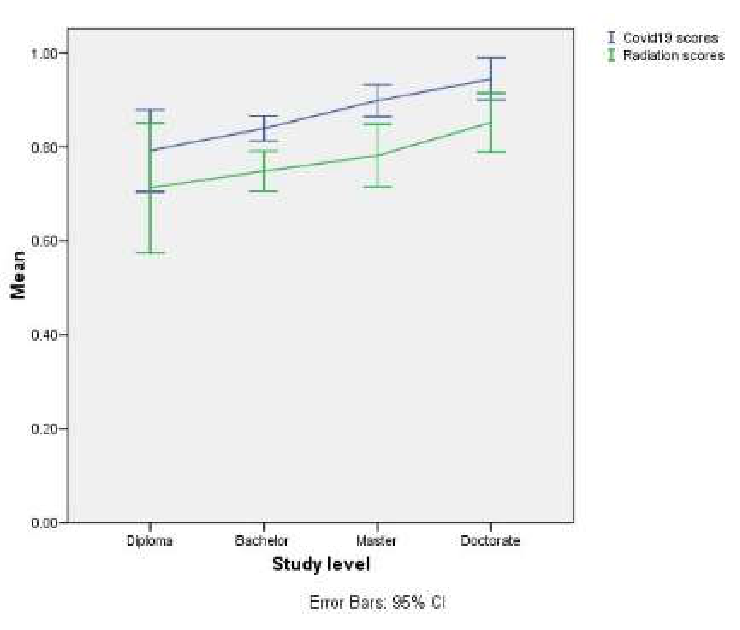
Figure 1. Degrees and me an scores of COVID-19 and radiatio n awareness.
Job percentages
The highest percentage belongs to the physicians and the lowest belongs to the physiotherapists as shown in Table 3.
|
Profession |
Radiology |
Physiotherapy |
Physician |
Pharmacy |
Paramedic |
Nursing |
Medical laboratory |
Dietitian |
Dentistry |
Total |
|
N |
48 |
5 |
76 |
23 |
7 |
59 |
11 |
6 |
19 |
254 |
|
Percent |
18.9 |
2 |
29.9 |
9.1 |
2.8 |
23.2 |
4.3 |
2.4 |
7.5 |
100 |
Job title’s scores of COVID-19 and radiation awareness sections
According to the job title of the participants, the pharmacy job scored higher than the other jobs in COVID-19 section while Dietitian job scored the lowest as shown in Tables 4 and 5. There was as significant difference for COVID-19 scores (P<0.05) and for the radiation scores (P<0.05), where radiology job scored higher than the other jobs.
|
COVID-19 score |
||||||||||
|
Profession |
Radiology |
Physiotherapy |
Physician |
Pharmacy |
Paramedic |
Nursing |
Medical laboratory |
Dietitian |
Dentistry |
|
|
N |
48 |
5 |
76 |
23 |
7 |
59 |
11 |
6 |
19 |
|
|
Mean |
0.7743 |
0.8333 |
0.9123 |
0.9783 |
0.7381 |
0.8898 |
0.8485 |
0.7222 |
0.7544 |
|
|
Std. Deviation |
0.19597 |
0.11785 |
0.11377 |
0.05739 |
0.08909 |
0.15038 |
0.11677 |
0.17213 |
0.1402 |
|
|
P value |
0.00 |
|||||||||
|
Radiation score |
|||||||||
|
Profession |
Radiology |
Physiotherapy |
Physician |
Pharmacy |
Paramedic |
Nursing |
Medical laboratory |
Dietitian |
Dentistry |
|
N |
48 |
5 |
76 |
23 |
7 |
59 |
11 |
6 |
19 |
|
Mean |
0.8438 |
0.8 |
0.8355 |
0.6413 |
0.5357 |
0.7458 |
0.5455 |
0.4167 |
0.8026 |
|
Std. Deviation |
0.21027 |
0.20917 |
0.20229 |
0.3092 |
0.3934 |
0.22501 |
0.40028 |
0.2582 |
0.21375 |
|
P value |
0.00 |
||||||||
Correlation test
Using Pearson’s correlation test, there was a significant correlation between work experience, COVID-19 scores (r=0.18, P<0.05) and radiation scores (r=6, P<0.05). There was poor correlation between COVID-19 and radiation awareness scores (r=0.06, P>0.05)
Sector type’s scores of COVID-19 and radiation awareness sections
The public sector participants scored higher than non-public participants as shown Table 6. However, there was no significant difference for COVID-19 and the radiation sections (P>0.05).
|
|
Sector type |
N |
Mean |
P value |
|
COVID-19 score |
Non-Public |
47 |
0.8759 |
0.490 |
|
Public |
207 |
0.8583 |
|
|
|
Radiation score |
Non-Public |
47 |
0.7340 |
0.366 |
|
Public |
207 |
0.7717 |
|
Address scores of COVID-19 and radiation awareness sections
Residents outside the capital scored higher than the capital as shown in Table 7. However, there was a significant difference for COVID-19 section (P<0.05) while no significant difference for the radiation section (P>0.05).
|
|
Address |
N |
Mean |
P value |
|
COVID-19 score |
Outside Capital |
122 |
0.8893 |
0.007 |
|
Abu Dhabi Capital |
132 |
0.8359 |
|
|
|
Radiation score |
Outside Capital |
122 |
0.7766 |
0.481 |
|
Abu Dhabi Capital |
132 |
0.7538 |
|
COVID-19 awareness scores
COVID-19 awareness scores were categorized into 3 levels; low (0-0.05), moderate (0.51-0.75) and high (0.76-1) level. The highest number of the participants scored in the high-level category as shown in Table 8.
|
Level |
N |
Percent |
|
Low |
16 |
6.3 |
|
Moderate |
47 |
18.5 |
|
High |
191 |
75.2 |
|
Total |
254 |
100.0 |
Regarding individual questions of the COVID-19 awareness section, the highest mean score was for the question related to the first reporting country while the lowest mean score was for the question related to the risk factors of COVID-19 as shown in Table 9.
|
|
N |
Minimum |
Maximum |
Mean |
Std. Deviation |
|
COVID-19 belongs to: |
254 |
0 |
1 |
0.86 |
0.349 |
|
COVID-19 was first reported in : |
254 |
0 |
1 |
1.00 |
0.063 |
|
COVID-19 most common symptom is: |
254 |
0 |
1 |
0.96 |
0.204 |
|
The risk factors of COVID-19 may include: |
254 |
0 |
1 |
0.61 |
0.488 |
|
COVID-19 prevention way may include: |
254 |
0 |
1 |
0.91 |
0.282 |
|
The most common used tool for COVID-19 diagnosis is: |
254 |
0 |
1 |
0.83 |
0.376 |
Radiation awareness scores
Radiation awareness scores were categorized into 3 levels; low (0-0.05), moderate (0.51-0.75) and high (0.76-1) level. The highest number of the participants scored in the high-level category as shown in Table 10.
|
Level |
N |
Percent |
|
Low |
65 |
25.6 |
|
Moderate |
81 |
31.9 |
|
High |
108 |
42.5 |
|
Total |
254 |
100.0 |
Regarding individual questions of the radiation awareness section, the highest mean score was for the question related to the safety of US while the lowest mean score was for the question related to the safety of MRI as shown in Table 11.
|
|
N |
Minimum |
Maximum |
Mean |
Std. Deviation |
|
|
Do you think Ionizing radiation exposure can induce cancer? |
254 |
0 |
1 |
0.81 |
0.392 |
|
|
Do you think X-ray is a harmful form of radiation |
254 |
0 |
1 |
0.77 |
0.423 |
|
|
Do you think Ultrasound is a safe form of radiation |
254 |
0 |
1 |
0.85 |
0.353 |
|
|
Do you think MRI is a harmful form of radiation |
254 |
0 |
1 |
0.63 |
0.485 |
|
Participants who received radiation awareness information scored higher than participants who did not receive it. There was a significant difference between the groups (p<0.05) as shown in Table 12.
|
|
Have you received information about radiation safety? |
N |
Mean |
Std. Deviation |
P value |
|
Radiation score |
No |
70 |
0.6000 |
0.31103 |
0.000 |
|
|
Yes |
184 |
0.8274 |
0.20189 |
|
Prediction factors
Using the linear regression as a prediction test, radiation score section can be significantly predicted by the job title and the received radiation awareness factors (p<0.05). On the other hand, COVID19 score section can be significantly predicted by the study level and the address factors (p<0.05). The data are summarized in Table 13.
|
Dependent factor: COVID-19 score |
Dependent factor: Radiation score |
||
|
Factor |
P value |
Factor |
P value |
|
Gender |
0.065 |
Gender |
0.395 |
|
Age |
0.219 |
Age |
0.512 |
|
Study level |
0.577 |
Study level |
0.004 |
|
Job title |
0.041 |
Job title |
0.863 |
|
Work experience (years) |
0.374 |
Work experience (years) |
0.38 |
|
Sector type |
0.291 |
Sector type |
0.463 |
|
Address |
0.282 |
Address |
0.021 |
|
Have you received information about radiation safety? |
0 |
Have you received information about COVID19 safety procedures? |
0.175 |
Discussion
The purpose of this research was to assess the awareness level of COVID-19 and radiation safety among healthcare professionals. As they work in healthcare facilities, it is possible that they can be exposed to both risks. Therefore, they should be aware and knowledgeable about COVID-19 and radiation hazards to protect themselves and the patients.
The sector type of the job did not impact the awareness level between public and non-public hospitals which reflects the consistent guidelines in the hospitals across the UAE.
Regarding the academic degrees, the doctorate degree holders scored higher than the other degrees. This is concurrent with similar study findings indicated health professionals with a degree level of education were two times more likely to be aware than that of a diploma level [5].
According to our findings, the number of the physicians (30%) was higher than other professions which is similar to another study’s findings among HP reported that the most (65%) of the participants were physicians [19].
For COVID-19 awareness, the pharmacists achieved the highest level. This is consistent with the important role of the pharmacists in supporting the local health emergency preparedness and response management [20].
On the other hand, the highest knowledge of radiation safety was scored for the radiology staff. This is because of their work experience that requires them to know about radiation safety. Dentists showed a high radiation awareness as well. As they prescribe the examinations, they should have sufficient knowledge about radiation to justify the benefits of the dental x-ray images over the potentials risks and to explain the possible radiation effects to the patients [21].
In general, the majority of the HP (42%) scored in the high awareness level category (more than 76%). In contrast, a Turkish study found that most of physicians, nurses and technicians have insufficient knowledge in relation to radiation and health risks [17].
Regarding individual imaging modality safety questions, the results showed that the highest knowledge score (85%) was for the question related to Ultrasound (US) being a safe imaging modality. This is can be related to the fact the US is used most frequently as a safe imaging technique for the pregnancy tests [22]. However, the least scored (63%) question was about MRI being a harmful type of radiation. This reflects that some of the participants thinks of the MRI as the x-ray imaging (ionizing radiation).
Overall, we found that the majority of the participants scored in the high category awareness level for both domains (COVID-19 and Radiation safety). This indicates that most of the participants have received awareness information.
To our knowledge, this is the first study of its kind to evaluate both COVID-19 and radiation awareness among HP in the same survey. This can provide a baseline for future related studies. However, a larger sample size was expected to be included but due to the current pandemic, it was difficult to contact the staff in person to reach out more participants. Nevertheless, the current study provided an insight into the current level of awareness among HP and the knowledge gaps that require further attention.
Conclusions
In this study, the overall knowledge and awareness level of the participants regarding the COVID-19 and radiation safety was acceptable. However, lack of knowledge in some imaging areas such as MRI and the variation in the awareness level among HP were observed. This require further continuing medical education and training programs in radiation safety to improve the overall performance and awareness among the HP.
Acknowledgments
The authors would like to thank the Radiography and Medical Imaging senior students (Maitha Awad, Jamila Khalifa, Mouza Khalifa, Reem Saif, Nouf Alyafei) for providing help during the research.
Conflicts of Interest and Sources of Funding
No conflicts of interest or sources of funding are declared.
References
2. World Health Organization. Question and answers hub on COVID-19 and related health topics. World Health Organization. Available: https://www.who.int/emergencies/diseases/novel-coronavirus-2019/question-and-answers-hub. Accessed: December 22, 2020.
3. Mossa-Basha M, Meltzer CC, Kim DC, Tuite MJ, Kolli KP, et al. Radiology department preparedness for COVID-19: Radiology scientific expert review panel. Radiology. 2020; 296(2):E106-12.
4. Chandy PE, Nasir MU, Srinivasan S, Klass D, Nicolaou S, Babu SB. Interventional Radiology and COVID-19: evidence-based measures to limit transmission. Diagnostic and Interventional Radiology. 2020 May;26(3):236.
5. Abebe A, Mekuria A, Balchut A. Awareness of health professionals on covid-19 and factors affecting it before and during index case in North Shoa zone, Ethiopia, 2020. Infection and Drug Resistance. 2020;13:2979.
6. Mantovani C. Over 90,000 health workers infected with COVID-19 worldwide: Nurses group. Reuters. 2020. Available at: https://www.usnews.com/news/world/articles/2020-05-06/over-90-000-health-workers-infected-with-covid-19-worldwide-nurses-group. Accessed December 22, 2020.
7. Huang L, Lin G, Tang L, Yu L, Zhou Z. Special attention to nurses’ protection during the COVID-19 epidemic. Crit Care, 24:120.
8. Niu Y, Xian J, Lei Z, Liu X, Sun Q. Management of infection control and radiological protection in diagnostic radiology examination of COVID-19 cases. Radiation Medicine and Protection. 2020 Jun 1;1(2):75-80.
9. Khader Y, Al Nsour M, Al-Batayneh OB, Saadeh R, Bashier H, Alfaqih M, et al. Dentists’ awareness, perception, and attitude regarding COVID-19 and infection control: cross-sectional study among Jordanian dentists. JMIR Public Health and Surveillance. 2020;6(2):e18798.
10. Bhagavathula AS, Aldhaleei WA, Rahmani J, Mahabadi MA, Bandari DK. Knowledge and perceptions of COVID-19 among health care workers: cross-sectional study. JMIR Public Health and Surveillance. 2020 Apr 30;6(2):e19160.
11. Modi PD, Nair G, Uppe A, Modi J, Tuppekar B, Gharpure AS, et al. COVID-19 awareness among healthcare students and professionals in Mumbai metropolitan region: a questionnaire-based survey. Cureus. 2020 Apr;12(4):e7514.
12. Repici A, Maselli R, Colombo M, Gabbiadini R, Spadaccini M, Anderloni A, et al. Coronavirus (COVID-19) outbreak: what the department of endoscopy should know. Gastrointestinal Endoscopy. 2020 Jul 1;92(1):192-7.
13. Khamtuikrua C, Suksompong S. Awareness about radiation hazards and knowledge about radiation protection among healthcare personnel: A quaternary care academic center–based study. SAGE Open Medicine. 2020 Jan;8:2050312120901733.
14. Shiralkar S, Rennie A, Snow M, Galland RB, Lewis MH, Gower-Thomas K. Doctors’ knowledge of radiation exposure: questionnaire study. BMJ. 2003 Aug 14;327(7411):371-2.
15. Frane N, Bitterman A. Radiation Safety and Protection. 2020. StatPearls Publishing, Treasure Island, FL, USA.
16. Wrixon AD. New ICRP recommendations. Journal of Radiological Protection. 2008 May 22;28(2):161.
17. Yurt A, Çavuşoğlu B, Günay T. Evaluation of awareness on radiation protection and knowledge about radiological examinations in healthcare professionals who use ionized radiation at work. Molecular Imaging and Radionuclide Therapy. 2014 Jun;23(2):48.
18. Stogiannos N, Fotopoulos D, Woznitza N, Malamateniou C. COVID-19 in the radiology department: what radiographers need to know. Radiography. 2020 Aug 1;26(3):254-63.
19. Elhadi M, Msherghi A, Alkeelani M, Zorgani A, Zaid A, Alsuyihili A, et al. Assessment of healthcare workers’ levels of preparedness and awareness regarding COVID-19 infection in low-resource settings. The American Journal of Tropical Medicine and Hygiene. 2020 Aug;103(2):828.
20. Torloni MR, Vedmedovska N, Merialdi M, Betran AP, Allen T, Gonzalez R, et al. Safety of ultrasonography in pregnancy: WHO systematic review of the literature and meta‐analysis. Ultrasound in Obstetrics and Gynecology: The Official Journal of the International Society of Ultrasound in Obstetrics and Gynecology. 2009 May;33(5):599-608.
21. Furmaniak KZ, Kołodziejska MA, Szopiński KT. Radiation awareness among dentists, radiographers and students. Dentomaxillofacial Radiology. 2016 Oct;45(8):20160097.
22. Torloni MR, Vedmedovska N, Merialdi M, Betran AP, Allen T, Gonzalez R, et al. Safety of ultrasonography in pregnancy: WHO systematic review of the literature and meta‐analysis. Ultrasound in Obstetrics and Gynecology: The Official Journal of the International Society of Ultrasound in Obstetrics and Gynecology. 2009 May;33(5):599-608.