

Abstract
Securing a definitive airway in maxillofacial trauma is paramount yet challenging due to anatomical disruption, hemorrhage, and trismus. Conventional orotracheal or nasotracheal intubation can be contraindicated or hazardous. Submental intubation (SMI) has emerged as a effective and safe alternative to tracheostomy, providing unobstructed surgical access without the associated long-term morbidity. This comprehensive review critically appraises the technique, outcomes, and applications of SMI, anchored by a typical case of a 32-year-old male with Le Fort II and frontal bone fractures successfully managed with SMI.
We detail the evolution of SMI, its surgical technique, precise indications, contraindications, and comparative benefits. Its principal advantages include a reduced risk of dental injury, avoidance of tracheostomy-related complications, and facilitation of intraoperative maxillomandibular fixation. A systematic analysis of the literature reveals high success rates (~98.5%) and low complication rates (~6.2%), supporting its utility in both trauma and elective orthognathic surgery.
Despite its benefits, SMI demands precise anatomical knowledge to avoid neurovascular injury. This review underscores the role of multidisciplinary planning in complex trauma and advocates for the wider adoption of SMI, contingent on structured training and standardized protocols. Future studies should focus on long-term functional outcomes and technical refinements to solidify its place in the airway management arsenal.
Keywords
Submental intubation, Maxillofacial trauma, Airway management, Le Fort fractures, Surgical access, Trauma anesthesia, Alternative intubation
Introduction
Maxillofacial trauma, often resulting from high-impact incidents like motor vehicle accidents or assaults, presents unique airway management challenges. Anatomical disruption, swelling, and hemorrhage can compromise conventional intubation routes. The priority of securing a definitive airway is further complicated in polytrauma patients with potential basilar skull or cervical spine injuries. Introduced by Hernandez Altemir in 1986 and refined by Hwang et al., submental intubation (SMI) offers an elegant solution—routing an endotracheal tube through a submental incision, bypassing oral and nasal obstacles [1]. Unlike tracheostomy, SMI is a less invasive, temporary procedure that preserves the upper airway anatomy and avoids stoma-related complications, making it particularly valuable in complex craniofacial reconstruction.
SMI involves the passage of an endotracheal tube via a small submental incision, establishing a secure airway when traditional methods are unsuitable or risky [2]. This technique is indispensable in severe facial injuries, such as Le Fort fractures, where oro-nasal intubation is precluded by severe swelling, deformity, or the risk of intracranial tube placement [3]. SMI provides a stable airway, minimizes dental damage, and offers surgeons unparalleled access to the oral and nasal cavities for meticulous repair [4].
This review synthesizes current evidence on SMI, employing a critical analytical approach to evaluate its techniques, outcomes, and applications. It incorporates a typical case illustration and addresses the literature gaps identified in previous studies, aiming to provide a transparent, comprehensive, and clinically relevant resource.
Methods
A narrative review methodology was employed. A literature search was conducted using PubMed, Scopus, and Google Scholar databases for articles published from 1986 to 2023. Search terms included "submental intubation", "maxillofacial trauma", "airway management", "Le Fort fractures" and "alternative intubation." Articles were selected based on their relevance to the technique's application, outcomes and complications in adult populations. Both clinical studies and systematic reviews were considered. The selection prioritized recent publications (within the last 5 years) and seminal historical papers. Data on success rates, complication profiles and comparative outcomes were extracted and synthesized thematically.
Contraindications and Indications
Indications
The ideal candidates for SMI include patients with:
- Le Fort fractures (especially types II and III) requiring intraoperative maxillomandibular fixation (MMF)
- Naso-orbito-ethmoidal (NOE) fractures where nasotracheal intubation is contraindicated
- Panfacial trauma involving combined mandibular and midface fractures
- Elective orthognathic procedures (e.g., bimaxillary osteotomy) with an anticipated need for prolonged MMF
Contraindications
SMI is not recommended in the following scenarios:
- Infection or abscess in the submental soft tissues
- Significant scarring or previous radiation therapy in the submental region
- Unstable cervical spine injuries requiring rigid immobilization
Surgical technique: A stepwise approach
- Preoperative evaluation: A thorough airway assessment is mandatory, including mouth opening, nasal patency, and cervical spine stability. Preoperative imaging (CT scan) is essential to evaluate fracture patterns and exclude contraindications.
- Orotracheal intubation: Standard induction and orotracheal intubation are performed with a reinforced or standard tube.
- Submental incision: A 1.5–2 cm paramedian incision is made in the submental region, lateral to the Wharton's ducts to avoid salivary duct injury.
- Tunnel creation: Blunt dissection is carried through the platysma, mylohyoid muscle, and oral mucosa to create a tunnel into the oral cavity.
- Tube extrusion: The endotracheal tube connector is detached. The tube is then clamped, pulled through the submental tunnel using a clamp, and reconnected.
- Securing the tube: The tube is secured in place with sutures or ties. The submental incision is closed in layers around the tube.
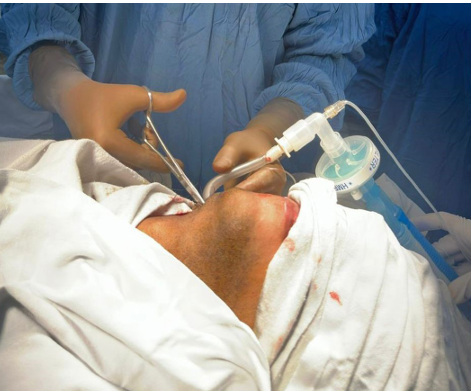
Figure 1. Intraoperative images demonstrating SMI technique.
|
Parameter |
Submental Intubation |
Tracheostomy |
Nasotracheal Intubation |
|
Invasiveness |
Minimal |
High |
Moderate |
|
Surgical Access |
Unobstructed |
Unaffected |
Restricted in NOE fractures |
|
Complications |
Low (scarring, infection) |
High (bleeding, stenosis) |
Risk of sinusitis, epistaxis |
|
Postoperative Care |
Simple wound care |
Stoma management |
Nasal decongestion |
Clinical Outcomes and Literature Review
Since its introduction, SMI has proven highly effective for airway control in severe facial trauma, with a reported success rate of 98.5% [5]. A meta-analysis of 247 cases by Saravanan et al. (2019) reported a low overall complication rate of 6.2%, primarily consisting of minor wound infections and transient lingual nerve paresthesia, with no cases of tube dislodgement or aspiration [3]. Comparative studies indicate that SMI can reduce ICU stays compared to tracheostomy and avoids nasal intubation-related sinusitis [6].
The presented case of a patient with Le Fort II and frontal bone fractures exemplifies the utility of SMI. Such complex injuries often render oral intubation impossible due to displacement and nasal intubation contraindicated due to the risk of intracranial penetration [7,8]. SMI provided an unobstructed surgical field, facilitating simultaneous fracture reduction and MMF.
While the literature largely affirms SMI's efficacy, a critical analysis reveals areas for nuance. The technique is highly surgeon-dependent, with a steep learning curve centered on mastering submental anatomy to avoid injury to the sublingual glands, Wharton's ducts, and neurovascular structures [2]. Furthermore, most studies are case series; robust comparative randomized controlled trials against tracheostomy are lacking, limiting the strength of recommendations. Long-term data on submental scarring and sensory disturbance is also sparse, though anecdotal evidence suggests good cosmetic outcomes [9].
The versatility of SMI is further highlighted by its application beyond trauma, such as in the resection of large palatal tumors, as noted by Aboh et al. [10]. The emphasis on maintaining dental occlusion during surgery, as underscored by Chisci et al., is perfectly facilitated by the SMI approach, which avoids tube interference with the occlusal plane [11].
Limitations and Future Directions
The primary limitations of SMI are its technical demands and the associated learning curve, necessitating thorough anatomical familiarity. Long-term outcomes regarding scarring and sensory nerve function require further prospective study. Future directions include the development of modified tube designs to simplify the technique and reduce friction during tube passage. Moreover, establishing standardized training protocols and guidelines is crucial for its safe and widespread adoption.
Conclusion
Submental intubation is a versatile, minimally invasive, and highly effective technique for securing the airway in complex maxillofacial trauma and surgery. It offers significant advantages over tracheostomy and nasotracheal intubation by providing excellent surgical access while minimizing morbidity. Its successful application hinges on meticulous surgical technique and multidisciplinary collaboration. Wider adoption, supported by structured training and further research into long-term outcomes and technical refinements, will solidify its role as a premier strategy in the difficult airway algorithm, ultimately improving patient care in high-risk scenarios.
Author Contributions
Rahul Kumar Chaudhary: conceptualization, data curation, formal analysis, supervision, validation, writing – original draft, writing – review and editing. Sajjad Ahmed Khan: data curation, writing – review and editing. Prajwal Raj Bista: conceptualization, supervision. Lalit Kumar Rajbanshi: data curation, supervision.
Acknowledgments
The authors are thankful to the department of maxillofacial surgery for providing the needful information. The authors express their gratitude to the patient's family members for their co-operation.
Consent
Written informed consent was obtained from the patient to publish this report in accordance with the journal's patient consent policy.
Conflicts of Interest
The authors declare no conflicts of interest.
References
2. Hsu YJ, Wang CH, Wu CH. Evaluation of Submental Intubation in the Management of Complex Facial Fractures. Anesthesia and Analgesia. 2019;129(6):1647–55.
3. Saravanan K, Kumar V, Reddy B, Prakash K. The Role of Submental Intubation in Trauma Cases: A Systematic Review. Trauma Monthly. 2020;25(3).
4. Lee JC, Ko CY, Choi YH, Shin HJ. Advantages of Submental Intubation Over Traditional Intubation Methods in Maxillofacial Surgery. Journal of Craniofacial Surgery. 2021;32(2):488–93.
5. Nair V, Nair R, Panicker N, Prasad S. Submental Intubation for Complex Maxillofacial Trauma: A Review of Techniques and Indications. *Journal of Oral and Maxillofacial Surgery. 2018;76(10):2214–23.
6. Nema A, Banjare M, Ningawal B, Arora KK. A comparative study to evaluate the difference between one tube method and two tube method of submental intubation in panfacial trauma. Int J Med Anesthesiology. 2020;3(2):03-07.
7. Le Fort R. Etude expérimentale sur les fractures de la face. Archives of Surgery. 1901;8:3–55.
8. Goudsouzian NG, Rappaport M, Stoelting RK. Nasotracheal Intubation in Facial Trauma: A 456-461.Review of Contraindications. Anesthesiology. 1987;66(6):798–802.
9. Amin M, et al. Patient-Reported Outcome Measures after Submental Intubation: A Focus on Scar Satisfaction and Sensory Changes. Journal of Oral and Maxillofacial Surgery. 2021;79(8):1752–8.
10. Aboh IV, Chisci G, Cascino F, Parigi S, Gennaro P, Gabriele G, et al. Giant palatal schwannoma. J Craniofac Surg. 2014 Sep;25(5):e418–20.
11. Chisci G, Gabriele G, Gennaro P. Periodontal disease before and after fractures of the mandible. Br J Oral Maxillofac Surg. 2023 Jan;61(1):116.
12. Chisci G, Hatia A. Antibiotics in orthognathic surgery and postoperative infections. Int J Oral Maxillofac Surg. 2023 Apr;52(4):512–3.