Loading


Clinical Research in Oncology
ISSN: 3071-2378
Latest Articles
Measurable residual disease as a surrogate endpoint for overall survival in acute myeloid leukemia: a call to action
Marie-Helene Blanchet Zumofen , Vicky Huang , Kathryn Matt , Neerav Monga , Thomas Prebet , Thomas J. Prior , Bourras-Rezki Bengoudifa , Brenda Chyla , Carole Longson , Beate Wulff , Reshma Patel , Daniel Lopes de Menezes
The standardization and implementation of new endpoints are crucial for the development of novel therapeutic agents. These endpoints help streamline clinical development while maintaining high standards of care for innovative treatments, ultimately leading to improved patient outcomes.
Clin Res Oncol, 2026, Volume 2, Issue 1, p1-11 | DOI: 10.46439/Oncology.2.009
Pancreatic cancer therapy in the era of precision oncology
Sakarie Mustafe Hidig
Pancreatic cancer, predominantly pancreatic ductal adenocarcinoma (PDAC), remains one of the most lethal malignancies, characterized by late diagnosis, aggressive tumor biology, and profound resistance to conventional therapies. Despite advances in surgical techniques and combination chemotherapy regimens such as FOLFIRINOX and gemcitabine-based therapies, survival outcomes remain poor, with five-year survival rates barely exceeding 10%.
Clin Res Oncol, 2026, Volume 2, Issue 1, p12-17 | DOI: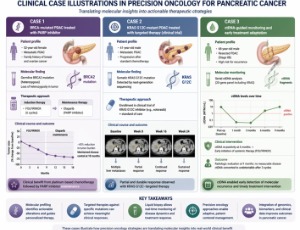
Five-year recurrence-free survival in glioblastoma: A case series of eight patients treated with a traditional herbal adjunct
Mahmood Mirzaee
Glioblastoma (GBM) is an aggressive brain tumor with poor prognosis despite standard treatment. This case series presents eight patients with confirmed GBM who received traditional herbal preparation in addition to standard therapy. Over a follow-up period of two to five years, none showed signs of tumor recurrence on serial MRI.
Clin Res Oncol, 2026, Volume 2, Issue 1, p24-25 | DOI:
Clinical validation of a metabolomics-based multi-cancer early detection test
M. Gopichand , A. Gupta , K. K. Mittal , A. Ahmad , M. V. Kalloli , P. R. Kumar , P. P. Lad , I. Longkumer , R. V. Nagarkar , W. R. Narayan , R. Neve , S. K. Pal , K. V. S. Rao , D. Sadhupati , G. Sagar , Z. Siddiqui , V. Tripathi , N. M. Saquib , V. P. Singh
Multi-cancer detection (MCD) tests can improve the efficacy of existing screening tests by detecting a greater number of cancers. For exerting a clinical impact, however, it is important that the MCD is able to accurately detect early-stage cancers, a feature that is limited in currently available tests.
Clin Res Oncol, 2026, Volume 2, Issue 1, p12-23 | DOI: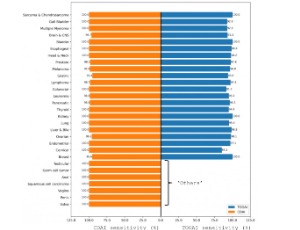
Predicting GIST mitotic index before surgery: Where conventional CT fits in oncology precision?
Junjie An , Yingzheng Ren , Yang Yang , Yonghong Dong
Risk stratification for gastrointestinal stromal tumor (GIST) depends on postoperative mitotic index (MI), a histologic marker unavailable before surgery to guide neoadjuvant therapy and operative strategy. In 2020, Ren et al.
Clin Res Oncol, 2026, Volume 2, Issue 1, p26-30 | DOI: