

Abstract
Sub-Saharan Africa (SSA) accounted for nearly 70% of global maternal deaths in 2023. As mortality from direct obstetric causes declines, cardiovascular disease is emerging as an increasingly important yet underrecognized contributor to maternal morbidity and mortality. The regional burden includes rheumatic and congenital heart disease, peripartum cardiomyopathy, hypertensive disorders of pregnancy, and HIV-associated cardiovascular disease. Adverse outcomes are exacerbated by delayed recognition, limited diagnostic capacity, workforce shortages, fragmented referral pathways, and restricted access to cardiac interventions.
Cardio-obstetric programs provide a coordinated, multidisciplinary model across preconception, pregnancy, delivery, and postpartum care. These programs facilitate early diagnosis, structured risk stratification, individualized management, coordinated delivery planning, and longitudinal follow-up.
Our experience from multidisciplinary clinics in Ethiopia and Tanzania demonstrates the feasibility of adapting cardio-obstetric principles to resource-constrained health systems. We propose a scalable framework comprising five interconnected pillars: early diagnosis and risk stratification; multidisciplinary team-based care; regional referral networks; telemedicine and digital health; and research and capacity building. Implementation should integrate cardiovascular care into existing maternal health services while strengthening diagnostic capacity, workforce development, referral infrastructure, and locally generated evidence. Context-adapted cardio-obstetric pathways may therefore provide a practical, scalable approach to reducing preventable cardiovascular maternal deaths and advancing equitable maternal health across SSA.
Keywords
Cardio-obstetrics, Maternal mortality, Sub-Saharan Africa, Cardiovascular disease in pregnancy, Peripartum cardiomyopathy
Abbreviations
SSA: Sub-Saharan Africa; CVD: Cardiovascular Disease; RHD: Rheumatic Heart Disease; CHD: Congenital Heart Disease; PPCM: Peripartum Cardiomyopathy; HIV: Human Immunodeficiency Virus; LMICs: Low- and Middle-Income Countries
Introduction
Maternal mortality remains a major public health crisis in low-income countries. Although the global maternal mortality ratio has declined since 2000, progress has stalled in recent years, and many maternal deaths remain preventable. In 2023, the global maternal mortality ratio was approximately 197 deaths per 100,000 live births, with nearly 70% of maternal deaths occurring in sub-Saharan Africa (SSA) [1]. This disparity is also reflected in lifetime risk: approximately 1 in 8,000 women die from maternal causes in high-income countries, compared with 1 in 66 in low-income countries and nearly 1 in 55 in SSA [1]. The United Nations Sustainable Development Goal 3.1 calls for reducing the global maternal mortality ratio to fewer than 70 deaths per 100,000 live births by 2030 [2]. However, current projections indicate that much of SSA will remain well above this target in 2030 [3] (Figure 1).
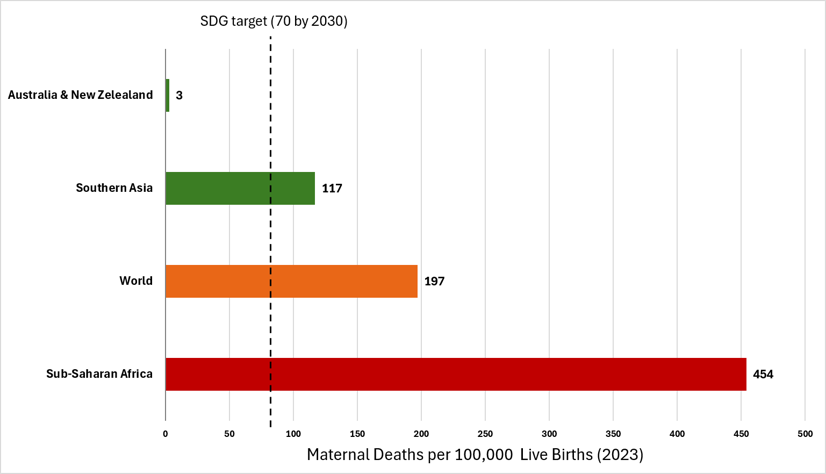
Figure 1. Maternal mortality ratios by region in 2023. Bars represent maternal deaths per 100,000 live births. The dashed line indicates the SDG 3.1 target of fewer than 70 maternal deaths per 100,000 live births by 2030. Data from the UN Maternal Mortality Estimation Inter-Agency Group and WHO (2025).
As deaths from direct obstetric causes decline, indirect causes account for a growing share of maternal mortality [4,5]. Cardiovascular disease is among the most important contributors to maternal morbidity and mortality worldwide [6,7] (Figure 2). Pregnancy is associated with profound cardiovascular adaptations, including increases in plasma volume, cardiac output, and heart rate, as well as reduced systemic vascular resistance [8,9]. While these physiologic changes are generally well tolerated in healthy women, they may unmask previously undiagnosed cardiovascular disease or worsen pre-existing cardiac conditions, resulting in adverse maternal and fetal outcomes [8,9]. These risks are amplified in low- and middle-income countries, particularly in SSA, where gaps in detection and management coexist with limited access to specialized cardiovascular care.
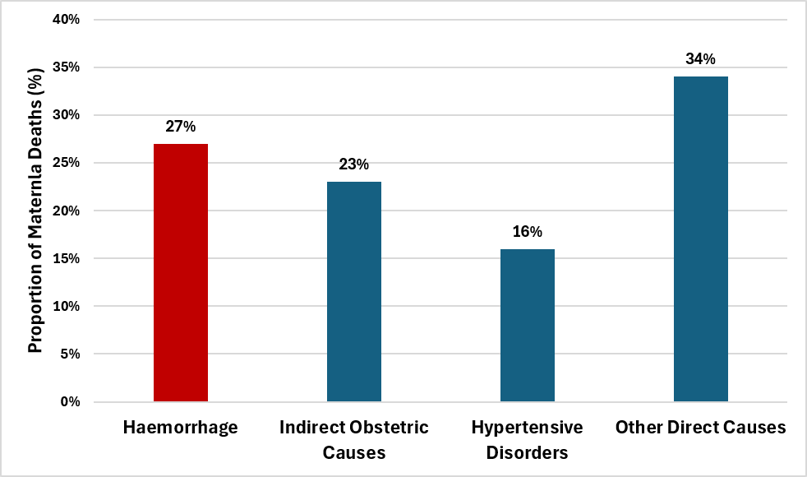
Figure 2. Global distribution of causes of maternal death, 2009–2020. Hemorrhage was the leading cause of maternal death worldwide, followed by indirect obstetric causes, including cardiovascular disease. Data adapted from Cresswell et al. [4].
The causes of cardiovascular maternal mortality differ substantially between high-income countries and SSA [10]. In high-income settings, maternal cardiovascular deaths increasingly result from acquired conditions, including cardiomyopathy, ischemic heart disease, aortic disease, gestational diabetes, complications of hypertension and obesity [10]. In contrast, SSA faces a dual burden: persistent rheumatic and congenital heart disease alongside peripartum cardiomyopathy, hypertensive disorders of pregnancy, and HIV-associated cardiovascular complications [10,11]. This distinct disease profile requires screening and management strategies tailored to regional needs.
Given the growing contribution of cardiovascular disease to maternal mortality and the disproportionate burden in SSA, context-adapted cardio-obstetric programs may provide a practical strategy for improving maternal outcomes across the region. This review summarizes the burden of cardiovascular disease in pregnancy in SSA, examines the clinical and health-system barriers that impede care, and proposes a five-pillar framework for integrating scalable cardio-obstetric pathways into existing maternal health systems.
Cardiovascular Disease in Pregnancy in Sub-Saharan Africa
Cardiovascular disease in pregnancy in SSA is driven by several conditions that differ from those commonly encountered in high-income countries. These include rheumatic heart disease, congenital heart disease, peripartum cardiomyopathy, hypertensive disorders of pregnancy, and HIV-associated cardiovascular disease.
Rheumatic heart disease
Rheumatic heart disease (RHD) remains one of the leading contributors to cardiovascular maternal morbidity and mortality in sub-Saharan Africa and continues to be the predominant valvular heart disease affecting young adults in many LMICs [12,13]. Mitral stenosis is the predominant valvular lesion in pregnant women with RHD, conferring an increased risk of heart failure, arrhythmias, maternal death, and adverse fetal outcomes including preterm delivery, pregnancy loss, and fetal growth restriction. A recent systematic review of pregnant women with RHD in SSA reported heart failure and arrhythmias in up to 12.9% and 36% of patients, respectively, highlighting the substantial burden of disease [14]. Limited access to screening, specialist care, and valve intervention continues to contribute to poor outcomes, underscoring the importance of early diagnosis and multidisciplinary management.
Congenital heart disease
Access to specialized congenital heart disease (CHD) care and corrective cardiac surgery remains limited across many regions of SSA, resulting in many women entering pregnancy with unrecognized or unrepaired congenital lesions [15]. Maternal CHD is associated with an increased risk of heart failure, arrhythmias, stroke, and other cardiovascular complications during pregnancy, particularly among women with complex or unrepaired disease [16]. In a multinational registry, heart failure occurred in 8.7% of pregnant women with unrepaired CHD, while preterm birth rates approached 12% in some cohorts [16]. The complexity of managing CHD during pregnancy underscores the need for coordinated cardio-obstetric programs capable of providing preconception counseling, comprehensive risk assessment, and integrated care throughout pregnancy.
Peripartum cardiomyopathy
Peripartum cardiomyopathy (PPCM) is an important cause of pregnancy-associated heart failure in SSA and remains associated with significant maternal morbidity and mortality. The burden of disease is particularly pronounced in parts of Africa, where incidence estimates have been reported as high as 1 in 100 live births in Nigeria, compared with approximately 1 in 4,000 live births in the United States, a disparity that may be partly explained by the higher prevalence of risk factors such as African ancestry, hypertensive disorders of pregnancy, and multiparity [17]. Despite advances in treatment globally, outcomes remain poor and highly variable, with reported mortality rates ranging from approximately 13% to over 40% across several African cohorts [18]. Given its potentially reversible nature when identified and treated early, PPCM highlights the importance of timely cardiovascular assessment, longitudinal postpartum care, and individualized counseling regarding contraception, family planning, and future pregnancy risk.
Hypertensive disorders of pregnancy
Hypertensive disorders of pregnancy, including pre-eclampsia and eclampsia, are among the leading causes of maternal mortality in sub-Saharan Africa and represent a major contributor to cardiovascular complications during pregnancy [19]. Beyond their direct obstetric consequences, these conditions are associated with heart failure, arrhythmias, stroke, and long-term cardiovascular disease. Women with hypertensive disorders frequently present late in the disease course, often in settings with limited access to specialist care and cardiovascular monitoring. As rates of chronic hypertension and cardiovascular risk factors rise across many SSA populations, the cardiovascular implications of hypertensive pregnancy disorders warrant greater attention within maternal health programs.
HIV-Associated cardiovascular disease
HIV-associated cardiovascular disease represents an additional challenge unique to many regions of SSA. Women bear a disproportionate burden of the HIV epidemic, accounting for approximately 63% of new HIV infections in SSA in 2021, and the risk of HIV infection has been reported to more than double during pregnancy and the postpartum period [20]. Furthermore, HIV infection is associated with substantially worse maternal outcomes. In a population-based study from Malawi, Tanzania, and South Africa, women living with HIV experienced more than a fivefold higher rate of direct maternal mortality compared with HIV-uninfected women [21]. When considered alongside the ongoing burden of rheumatic heart disease, congenital heart disease, peripartum cardiomyopathy, and hypertensive disorders of pregnancy, HIV-associated cardiovascular disease further illustrates the complex cardiovascular landscape facing pregnant women in SSA.
Cardio-Obstetrics: An Evolving Specialty
Growing recognition of cardiovascular disease as a major contributor to maternal morbidity and mortality has established cardio-obstetrics as a distinct multidisciplinary specialty. Over the past two decades, maternal mortality reviews from North America and Europe have identified cardiovascular disease as a leading cause of pregnancy-related death and revealed critical gaps in care for women with pre-existing or newly diagnosed cardiac conditions. Concurrent increases in obesity, hypertension, diabetes, and advanced maternal age have further increased the complexity of cardiovascular care during pregnancy.
In response, major academic medical centers in North America and Europe have established dedicated cardio-obstetric programs that coordinate patient-centered care across the reproductive continuum. By integrating expertise from cardiology, maternal-fetal medicine, obstetrics, anesthesiology, critical care, nursing, and related disciplines, these programs promote earlier diagnosis, comprehensive risk assessment, individualized management, coordinated delivery planning, and postpartum follow-up. Emerging evidence suggests that multidisciplinary care improves adherence to guideline-directed management and delivery planning and may reduce adverse maternal cardiovascular outcomes. As the field has evolved, workforce development has also become a priority. Recent expert recommendations support incorporating cardio-obstetrics into cardiovascular fellowship training so that future cardiologists can care effectively for pregnant patients within multidisciplinary teams [22].
The maturation of cardio-obstetrics is reflected in an expanding body of professional guidance and scientific literature. A 2023 JACC State-of-the-Art Review highlighted the field’s rapid evolution and the role of multidisciplinary care in improving maternal and fetal outcomes [23]. The 2025 European Society of Cardiology Guidelines on Cardio-Obstetrics subsequently provided comprehensive recommendations for cardiovascular care before, during, and after pregnancy [24]. Together, these publications support structured cardiovascular care pathways throughout pregnancy and the postpartum period. Although developed largely in high-income settings, their core principles can be adapted to the clinical needs and resource constraints of SSA.
Cardio-Obstetrics: A Framework for Improving Maternal Outcomes in SSA
The need for dedicated cardio-obstetric programs in SSA is amplified by several factors unique to the region. Unlike many high-income countries where maternal cardiovascular disease increasingly reflects advanced maternal age and accumulated cardiovascular risk factors, women in SSA often present at younger ages with structural and infectious cardiovascular conditions, creating distinct screening and management challenges. Similar challenges have been described across other LMICs, including shortages of specialized healthcare workers, fragmented referral systems, limited access to cardiovascular diagnostics, and inadequate multidisciplinary pregnancy heart teams, all of which contribute to delayed diagnosis and worse maternal outcomes [25]. In addition, public awareness of cardiovascular disease during pregnancy remains limited. Symptoms such as dyspnea, palpitations, or exercise intolerance are often attributed to normal pregnancy-related changes, resulting in delayed presentation, missed opportunities for diagnosis, and progression to advanced disease before specialist evaluation occurs.
The feasibility of this approach is demonstrated by our multidisciplinary cardio-obstetric clinics in Tanzania and Ethiopia, both of which continue to provide clinical care [26]. Our experience identified several implementation challenges, including shortages of specialists, limited access to obstetric anesthesia and cardiovascular diagnostics, inconsistent laboratory monitoring, restricted referral pathways for advanced cardiac interventions, and insufficient local data on cardiovascular disease in pregnancy. Focused capacity building, infrastructure development, and establishment of clinical registries helped address these barriers and integrate cardio-obstetric services into existing health systems. These experiences offer a practical roadmap for developing sustainable cardio-obstetric services in resource-constrained settings and supporting broader scale-up across SSA.
These regional needs support a model that adapts the core principles of cardio-obstetrics to local health-system capacity rather than replicating resource-intensive programs developed in high-income settings. We therefore propose a framework organized around five interconnected pillars: early diagnosis and risk stratification, multidisciplinary team-based care, regional referral networks, telemedicine and digital health, and research and capacity building. Together, these pillars provide a scalable approach to strengthening maternal cardiovascular care across diverse healthcare settings in SSA (Figure 3).
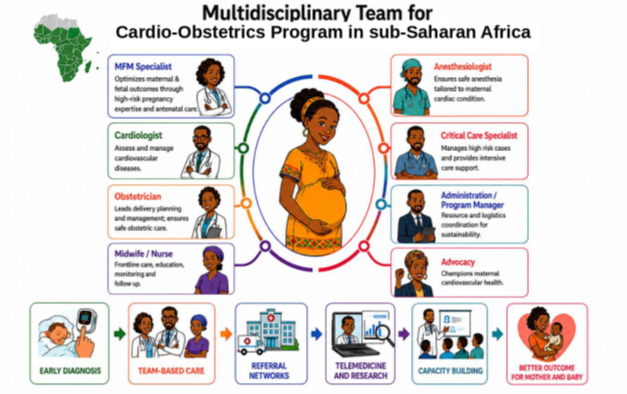
Figure 3. Proposed multidisciplinary cardio-obstetrics care model for sub-Saharan Africa. Coordinated multidisciplinary care across the continuum of pregnancy aims to improve maternal and neonatal outcomes among patients with cardiovascular disease.
Pillar 1: Early diagnosis and risk stratification
Early identification of cardiovascular disease represents the cornerstone of effective cardio-obstetric care. Many women in SSA present late in the disease course because underlying cardiovascular conditions remain unrecognized until pregnancy-related physiologic stress precipitates clinical deterioration. Improved screening strategies, risk assessment tools, community awareness initiatives, and increased access to diagnostic testing such as echocardiography can facilitate earlier recognition of high-risk patients. Early diagnosis enables timely referral, optimization of medical therapy, and appropriate pregnancy planning before significant maternal or fetal complications occur.
Pillar 2: Multidisciplinary team-based care
The second pillar is the establishment of dedicated multidisciplinary cardio-obstetric teams. Our proposed team includes maternal-fetal medicine specialists, cardiologists, obstetricians, nurses and midwives, anesthesiologists, critical care specialists, administrative leadership, and patient advocates. At the center of this model is a Pregnancy Heart Team approach in which complex cases are reviewed collaboratively, allowing for comprehensive risk assessment and individualized management plans. Such coordinated care facilitates continuity across the antepartum, intrapartum, and postpartum periods while ensuring that both maternal and fetal considerations inform clinical decision making. Comprehensive care extends across the reproductive continuum, including preconception counseling, antepartum surveillance, delivery planning, and postpartum follow-up.
Pillar 3: Regional referral networks
Given the uneven distribution of specialist resources throughout SSA, regional referral networks are essential. Not every facility can support a comprehensive cardio-obstetric program; however, structured referral pathways can connect community hospitals and rural clinics with tertiary centers that possess the expertise required to manage complex cardiovascular conditions during pregnancy. Development of hub-and-spoke models may improve access to specialized care while reducing delays in diagnosis and treatment. Clear referral criteria and coordinated communication between institutions can further strengthen these networks.
Pillar 4: Telemedicine and digital health
Telemedicine offers a practical mechanism for extending specialist expertise to underserved regions where cardiovascular and maternal-fetal medicine specialists may be scarce. Virtual consultations, multidisciplinary case conferences, remote imaging review, and digital patient monitoring can facilitate timely clinical decision making while minimizing geographic barriers to care. As digital infrastructure continues to expand throughout many regions of SSA, telemedicine may become an important tool for supporting both clinical care and professional education.
Pillar 5: Research and capacity building
Sustainable improvement in maternal cardiovascular outcomes requires investment in research, workforce development, healthcare infrastructure, and policy. However, data on the burden, management, and outcomes of cardiovascular disease during pregnancy remain limited across SSA. Similar research gaps have been identified throughout LMICs, where the absence of national registries, prospective datasets, and context-specific guidelines limits both clinical decision-making and healthcare policy development [25]. Regional registries, prospective outcome databases, and collaborative research networks can address these gaps, support quality improvement, and identify disparities in care.
Local data can also guide national policy. Ministries of health allocate scarce resources using limited evidence, and estimates extrapolated from other regions may be discounted. Registry data on incidence, case mix, and preventable mortality instead define the burden in nationally relevant terms. Clinicians can then translate these findings into policy briefs, contribute to maternal death surveillance and response systems, and partner with professional societies and patient groups to prioritize maternal cardiovascular health in essential-medicines lists, diagnostic equipment procurement, and workforce planning. In parallel, training programs for physicians, nurses, midwives, and allied healthcare professionals can expand the cardio-obstetric workforce [27]. Together, research, advocacy, and training can support sustainable cardio-obstetric programs throughout SSA.
Conclusion
Cardiovascular disease is an increasingly important but under-recognized contributor to maternal morbidity and mortality in sub-Saharan Africa. The region’s distinctive burden of rheumatic and congenital heart disease, peripartum cardiomyopathy, hypertensive disorders of pregnancy, and HIV-associated cardiovascular disease is compounded by delayed diagnosis, fragmented care, limited diagnostic capacity, and restricted access to specialists and cardiac intervention. These gaps underscore the need for maternal health strategies that explicitly integrate cardiovascular care.
Dedicated cardio-obstetric programs offer a practical response by coordinating cardiovascular and obstetric expertise across the reproductive continuum. Although these models were formalized in high-income settings, experience from Tanzania and Ethiopia suggests that their core principles can be adapted to resource-constrained health systems. The proposed five-pillar framework—early diagnosis and risk stratification, multidisciplinary team-based care, regional referral networks, telemedicine and digital health, and research and capacity building—addresses both the clinical and system-level barriers identified throughout this review.
The central priority is therefore not to replicate resource-intensive programs, but to embed scalable cardio-obstetric pathways within existing maternal health systems. Linking screening and risk stratification to multidisciplinary consultation, referral, digital support, workforce development, and locally generated evidence can extend specialist expertise, improve continuity of care, and enable timely intervention for high-risk women. Investment in context-adapted cardio-obstetric programs should thus be viewed as a strategic approach to reducing preventable cardiovascular maternal deaths and advancing equitable maternal health across sub-Saharan Africa.
Author Contribution Statement
All authors have contributed to the initial concept development of this work, participated in manuscript drafting, and were involved in the final editing and review of the manuscript. All authors have read and approved the final version.
Conflicts of Interest
The authors declare no conflicts of interest.
Funding
None.
References
2. United Nations. Goal 3 | ensure healthy lives and promote well-being for all ages. United Nations; 2025 [cited 2026 Sept 18]. Available from: https://sdgs.un.org/goals/goal3#targets_and_indicators
3. Adegoke Y, Mbonigaba J, George G. Sustainable Development Goals (SDGs), Public Health Expenditures, and Maternal and Child Mortality in Selected African Countries: Forecasting Modelling. Int J Environ Res Public Health. 2025 Mar 24;22(4):482.
4. Cresswell JA, Alexander M, Chong MYC, Link HM, Pejchinovska M, Gazeley U, et al. Global and regional causes of maternal deaths 2009-20: a WHO systematic analysis. Lancet Glob Health. 2025 Apr;13(4):e626-e634.
5. Musarandega R, Nyakura M, Machekano R, Pattinson R, Munjanja SP. Causes of maternal mortality in Sub-Saharan Africa: A systematic review of studies published from 2015 to 2020. J Glob Health. 2021 Oct 9;11:04048.
6. Kotit S, Yacoub M. Cardiovascular adverse events in pregnancy: A global perspective. Glob Cardiol Sci Pract. 2021 Apr 30;2021(1):e202105.
7. Lau ES, D'Souza V, Zhao Y, Reeder C, Goldberg R, Flores M, et al. Correction to: Contemporary Burden of Cardiovascular Disease in Pregnancy: Insights From a Real-World Pregnancy Electronic Health Record Cohort. Circulation. 2026 Jan 13;153(2):e11.
8. Yao JV, Zentner D, Chandrasekhar J, Mukherjee S. Pregnancy- the ultimate cardiovascular stress test. NPJ Cardiovasc Health. 2026 Jun 2;3(1):35.
9. Baloch F, Zafar A, Faisal M, Marium A, Sheikh L, Yasmin H, Douglas PS, Samad Z. Pregnancy and cardiovascular disease in developing countries of South Asia-A narrative review. NPJ Womens Health. 2025;3(1):56.
10. Yuyun MF, Sliwa K, Kengne AP, Mocumbi AO, Bukhman G. Cardiovascular Diseases in Sub-Saharan Africa Compared to High-Income Countries: An Epidemiological Perspective. Glob Heart. 2020 Feb 12;15(1):15.
11. Lumsden R, Barasa F, Park LP, Ochieng CB, Alera JM, Millar HC, et al. High Burden of Cardiac Disease in Pregnancy at a National Referral Hospital in Western Kenya. Glob Heart. 2020 Feb 7;15(1):10.
12. World Health Organization. Rheumatic heart disease. World Health Organization. 2025 [cited 2026 Sept 5]. Available from: https://www.who.int/news-room/fact-sheets/detail/rheumatic-heart-disease
13. Bhatti S, Rehman S, Iqbal Z, Usman M, Hakeem A. Multidisciplinary Innovations in Managing Complex Rheumatic Valve Disease in Low- and Middle-Income Countries: Insights From the NICVD Heart Valve Registry in Pakistan. JACC Case Rep. 2024 Oct 16;29(20):102621.
14. Alexopoulos E, Nakagaayi D, Blackwood ER, Barasa F, Kiyeng J, Kosgei W, et al. Cardiac and Obstetric Complications of Pregnant Women with Rheumatic Heart Disease in Sub-Saharan Africa: A Systematic Review. Glob Heart. 2026 Jan 30;21(1):5.
15. Vicente M, Lopes MS, Pires A. Congenital Heart Disease in Sub-Saharan Africa: Equity Crisis and Global Test for Cardiovascular Medicine. JACC. Case Reports. 2026 May 8;31(23):108163.
16. Small A. Pregnancy in Adult Congenital Heart Disease - American College of Cardiology. Washington: American College of Cardiology; 2025 [cited 2026 Sept 15]. Available from: https://www.acc.org/latest-in-cardiology/articles/2025/01/14/14/38/pregnancy-in-adult-congenital-heart-disease
17. Rodriguez Ziccardi M, Siddique MS. Peripartum Cardiomyopathy. 2025 Feb 20. In: StatPearls [Internet]. Treasure Island (FL): StatPearls Publishing; 2025 Jan–.
18. Cunningham FG, Byrne JJ, Nelson DB. Peripartum cardiomyopathy. Obstetrics & Gynecology. 2019 Jan;133(1):167–79.
19. Nguru Musese C, Maroyi R, Ganywamulume B, Maha AB, Ngeleza ON, Mukwege DM. Challenges and Prospects in Managing Hypertensive Disorders of Pregnancy in Sub-Saharan Africa: A Narrative Review. Int J Womens Health. 2026 Mar 9;18:593155.
20. Moyo E, Murewanhema G, Moyo P, Dzinamarira T, Ross A. The use of oral human immunodeficiency virus pre-exposure prophylaxis in pregnant and lactating women in sub-Saharan africa: considerations, barriers, and recommendations. Global Health Journal. 2024 Jun 1;8(2):41–5.
21. Calvert C, Marston M, Slaymaker E, Crampin AC, Price AJ, Klein N, et al. Direct maternal deaths attributable to HIV in the era of antiretroviral therapy: evidence from three population-based HIV cohorts with verbal autopsy. AIDS. 2020 Jul 15;34(9):1397–405.
22. Davis MB, Bello NA, Berlacher K, Harrington CM, Lin JP, Lindley KJ, et al. Cardiovascular Fellowship Training in Cardio-Obstetrics: JACC Review Topic of the Week. J Am Coll Cardiol. 2023 Oct 31;82(18):1792–803.
23. DeFilippis EM, Bhagra C, Casale J, Ging P, Macera F, Punnoose L, et al. Cardio-Obstetrics and Heart Failure: JACC: Heart Failure State-of-the-Art Review. JACC Heart Fail. 2023 Sep;11(9):1165–80.
24. De Backer J, Haugaa KH, Hasselberg NE, De Hosson M, Brida M, Castelletti S et al. 2025 ESC Guidelines for the management of cardiovascular disease and pregnancy: Developed by the task force on the management of cardiovascular disease and pregnancy of the European Society of Cardiology (ESC) Endorsed by the European Society of Gynecology (ESG). European heart journal. 2025 Nov 14;46(43):4462–568.
25. Marium A, Abbas SO, Jaskani H, Shahwar DE, Baloch F. Cardiovascular disease in pregnancy: challenges, care and collaboration in low-and middle-income countries. Journal of Asian Pacific Society of Cardiology. 2025;4:e43.
26. Halvorson E, Kshettry VR, Kshettry SS, Mengistu AD, Gudu W, Adem A, et al. Barriers to implementing cardio-obstetrics programs in sub-Saharan Africa. Eur Heart J. 2026;47(Suppl 1).
27. Kshettry VR, Kanchi M, Witt DR, Shetty DP. Bridging the cardiac care gap in sub-Saharan Africa: from short-term medical missions to sustainable solutions. Int J Cardiol Cardiovasc Dis. 2026;6(1):11–6.