

Commentary
Epidemiologic data show a high incidence of central nervous system (CNS) disease, which therefore is a prominent healthcare issue. Adults and the elderly are most commonly affected, with heavy repercussions on society and caregivers. The outcome of CNS disease, whether the etiology is vascular, degenerative or traumatic, is often significant disability or death. Motor, language and cognitive deficits are most prevalent, but vision is also frequently affected, in the form of visual field defects or oculomotor and binocular disorders. In the present paper, we discuss peripheral and central visual field defects.
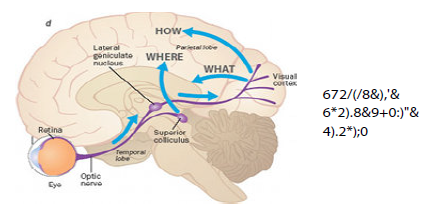
Figure 1: “Where” and “what” visual pathways.
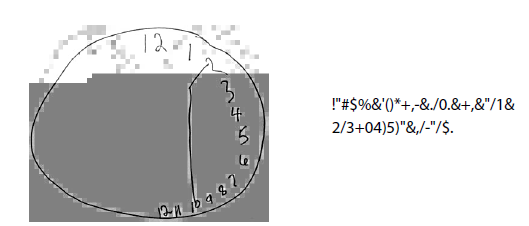
Figure 2: Clock drawing test in left hemispatial neglect.
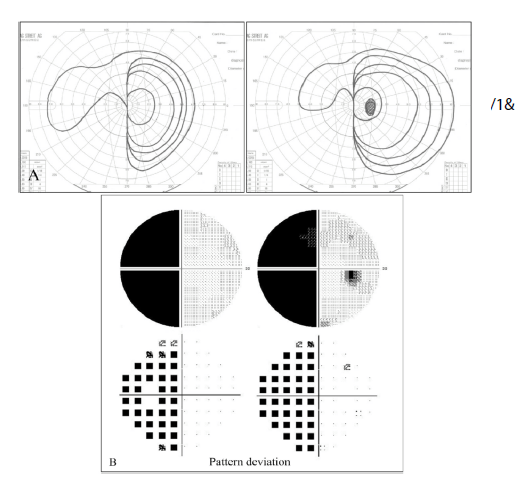
Figure 3: Left homonymous hemianopia.
Two common deficits following brain injury are hemispatial neglect (HSN) and homonymous hemianopia (HE). HSN refers to the inability to attend to space, usually contralateral to the damaged hemisphere, most commonly the right parietal lobe. The patient has reduced or no awareness of what happens in the affected space and sometimes even of his own hemibody, and both conditions can seriously impair rehabilitation attempts and functional recovery.
HE instead refers to the true loss of all or part of the visual hemifield contralateral to the brain lesion, as a result of damage to the retrochiasmatic visual pathway. HE is common and also has profoundly negative effects on the functional prognosis. Both HSN and HE are of great interest in the field of rehabilitative medicine, however until recently HE was considered a fairly static deficit with little chance of recovery, while a lot of efforts have been directed to HSN rehabilitation, although evidence for its effectiveness is still scarce.
Zhang et al. in their retrospective study about clinical-anatomic correlations of 904 homonymous visual field defects (HVFD) in 852 patients found that over half of the cases (69.6%) were due to stroke [1]. Rowe et al. [2] in the Vision in Stroke (VIS) prospective multicenter study found a visual field defect in 27.6% of 1033 acutephase patients (cit) and in 479 (52.3%) of 915 patients referred to orthoptic centers (cit); in the latter study in 424 patients the visual field defect was homonymous and in 259, a complete HE. Some degree of spontaneous recovery is expected in the first few months following brain injury, which has implications for rehabilitation studies. In the Zhang et al. study [3], 254 patients were followed over time: at 6 months the visual field had improved in 37% of the patients, with most of the recovery occurring in the first 3 months. At least half of the patients had already improved by the first month, while after 6 months from the event of recovery, if any, was scarce. Papageorgiou et al. [4] investigated the vision-related quality of life in 33 patients with HVFD, at least 6 months post-lesion. They found that the NEI-VFQ-25 score was significantly lower in patients (77.1) than in controls (90.6), with most of the difficulties relating to orientation in space (eg. obstacles, searching, scanning) and reading (especially in right HE without macular sparing).
All these studies confirm that the visual process takes place in close relationship with the environment, it is a system of mechanisms that man possesses to relate to the environment in which he finds himself.
Visual efficiency is a visually perceptive skill and expresses the ability to receive an external stimulus, analyze it, interpret it and give it meaning. The visual system is organized in interdependent anatomical and functional structures, whose alterations can occur at any level and at various stages of gravity, both as a direct consequence of ophthalmological diseases and as a result of comorbidity with other organic, systemic degenerative pathologies.
The presence of such disorders can significantly reduce the effectiveness of a global rehabilitation intervention, compromising the possibility of achieving the objectives in terms of reducing impairment, disability and social disadvantage. The visual disturbance also has a negative impact on the perception of the self, thus leading to a reduction in the person's quality of life.
Until relatively recently, in the approach to neurological pathologies, visual impairment was underestimated both from a clinical and rehabilitative point of view, and the general direction was that visual alterations secondary to brain damage did not require any specific treatment.
Today visual rehabilitation is considered indispensable in supporting the process of rehabilitation of nonvisual brain areas and is an open field of study and in continuous development to which studies of neurophysiology, neuro-ophthalmology and neural brain plasticity contribute.
Functional rehabilitation is articulated in a series of inter-professional interventions aimed at improving the functional prognosis of disabling diseases; with the rehabilitation of visual deficits we aim to improve the overall outcome by combining interventions on several factors: sight-proprioception-touch-hearing. In the development of a rehabilitation plan of visual damage of neurological origin, we must turn our point of view upside down and leave the eye as a referent organ. It is true that the eyes see and transmit the images but it is the brain that processes the image, therefore the brain, the right and left primary cortex are the real centers of vision and the eye receptors of information.
Another reference point is the spatial reference system, the visual process is related to the surrounding environment, as visual efficiency is a visuo-perceptive skill that expresses the ability to receive a stimulus coming from outside, and then analyze it, interpret it and give it meaning.
The visual system is organized in interdependent anatomical and functional structures, whose alterations can occur at any level and at various stages of gravity, both as a direct consequence of ophthalmologic diseases and as a result of comorbidity with other organic, systemic and degenerative pathologies.
The resulting visual damage is manifested by a reduction in the peripheral and central visual field, and alterations of binocular vision as well as ocular motility.
It is often thought that the visual alterations secondary to brain damage do not require any specific treatment. On the contrary, it is considered mandatory to treat speech and motor deficits, underestimating the negative influences that visual-perceptual disorders can cause on these deficits.
The concept of visual capacity and the consequences of a relative deficit following acquired brain injuries on everyday life is very much underestimated both from a clinical and rehabilitative point of view.
The treatment of visual disturbances is therefore not only indispensable for itself but supports the process of rehabilitation of non-visual brain areas.
Approaching the study of rehabilitation methods means trying to overturn the daily concept of visual pathways, which sees the eye as a referring organ.
In reality, we know that the eyes are only receptor organs, because if it is true that the eyes see and transmit information to the brain, it is the brain that processes the image. Brain, right and left primary cortex are the real centers of vision.
Another parameter to consider is the spatial reference system, our space is organized as the combination of a multitude of spatial references. The question of the references used by the brain to guide our action in space is crucial.
We can locate an object in relation to the environment in which we find ourselves but also thanks to other variables.
The visual system is instead a centric ocular system, with a retinotopic organization, each point is associated with the directional value of a retinal point based on a set of coordinates similar to those that define the eccentricity of the visual field. If an unexpected object occurs in our field of vision, a system of relocation of the system guided by the saccades immediately triggers.
The eyepiece poursuite allows us to shift our visual spatial attention to a moving object both with a fixed g A damaged visual system is deprived of part of the system, but it is precisely on complex consolidated mechanisms that you can appeal to work out a rehabilitation program. After the pathological insult, the system tends to reorganize itself faster than one would think. Our study has resorted to the mechanisms illustrated so far to develop a rehabilitation plan as personalized as possible. The improvement of vision in the affected half-life follows a sequence that starts from the perception of light and continues with the perception of movement, then of form and finally of color, age and in pursuit.
Reinhard et al. [5] studied fixation characteristics and saccadic accuracy in patients with HVFD with a scanning laser ophthalmoscope (SLO) and found that these parameters didn't correlate with age or time since visual field defect onset; they found instead reduced saccadic accuracy and eccentric fixation in those patients with less extensive macular sparing. These findings highlight the role of the macular visual field in spontaneous adaptation to the visual field defect. Zihl et al. [6] found that the search time was increased and the search strategy was disorganised mainly in those patients with occipito-parietal and/or posterior thalamus involvement. They attributed these findings to the role of occipito-parietal cortex and posterior thalamus in attention and oculomotor control, suggesting that spontaneous adaptation mechanisms could depend more on the location of the brain damage than on the visual field defect extension.
The rehabilitation interventions in patients with HVFD can be classified in three main approaches:
- a substitutive approach, which attempts to shift and expand the visual field with prismatic lenses
- a compensatory approach, which aims to compensate for the visual field defect by training saccadic exploration of the blind visual field
- a restitutive approach, whose goal is to promote visual field recovery by repetitive stimulation
Substitutive approach (+ immagini dei vari tipi di montaggio e degli effetti ottici):
To shift the image from the blind towards the seeing visual field, that is to shift the image from non-seeing to seeing retina, prisms with base oriented towards the blind visual field can be used. However, if homonymous prisms are placed over both eyes the effect is that of a visual field translation without expansion, as a corresponding shift of fixation is elicited. These prisms could be more useful if fitted as a sector lens to help saccadic scanning towards the blind hemifield, but then an inconvenience is the optical scotoma that is created at the apex of the prism (apical scotoma). A monocular prism with the base temporal on the eye on the same side of the hemifield defect provides true expansion of the visual field, but this effect is obtained together with diplopia, as an optical exotropia is induced. For these reasons, the prismatic lenses used today for HE rehabilitation all involve some kind of monocular sector prism, to avoid diplopia in primary position. The Gottlieb prism (a 18,5pd button prism) and the Chadwick prism (a monocular sector prism fused to the prescription lens) are to be used with saccadic scanning in the blind visual field (with diplopia) followed by a head movement to bring the eyes back in primary position (without diplopia) once the target is detected (Figure 4). The Peli prisms are monocular Fresnel sector prisms placed on the superior and inferior lens, providing visual field expansion with the eyes in primary position with only peripheral diplopia (Figure 4). Since in the visual field periphery diplopia and optical aberrations are fairly well tolerated high power prisms can be used, usually 40pd or 57pd.
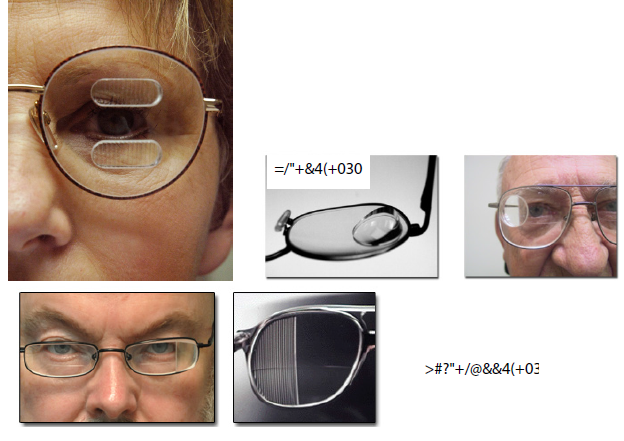
Figure 4: Peli, Gottlieb and Chadwick prisms.
Compensatory Approach: Spatial Orientation and Exploration
The aim of the compensatory approach is to encourage the exploration of the blind visual field by training saccadic movements and scanning strategies. When the visual field is intact, visual stimuli in the periphery determine a reflexive (bottom-up process) relocation of attention, which is then followed by the saccade. If the information from the peripheral visual field is lost, then a conscious effort (top-down process) is needed before the saccade can start, which is less efficient. Therefore, the aim of the training is to teach appropriate scanning strategies first and then to practice them enough to make them spontaneous. Shortly after the injury, patients are often unaware of their visual field defect, and when asked to look into their blind hemifield tend to make a series of small fragmented saccades. In this situation it is appropriate to start with exercises to improve scotoma awareness and saccadic amplitude. Above all, a single large hypermetric saccade, which quickly brings the target into the seeing hemifield and can be easily followed by a corrective backward saccade, should be favoured over many hypometric saccades, which take too long to complete and detect the target. Once this is achieved, searching and scanning can be trained, first with a single target, then with a target among dissimilar distractors (parallel search) and finally with a target among similar distractors (serial search). Depending on the equipment available, this kind of training can be performed in many ways, e.g. with a penlight, on paper, by projecting on a wall or tangent screen, with a Goldmann perimeter or with dedicated software. Commonly patients turn their head towards the blind hemifield as a compensation attempt, however this is ineffective as a counter rotation of the eyes occurs in the opposite direction. The training should first be performed with eye movements only, keeping the head still and neutral, until the patient can easily make saccades of appropriate amplitude. Then the patient can be allowed to move the head when needed, as the head turn allows increased oculomotor excursion from fixation towards the blind hemifield.
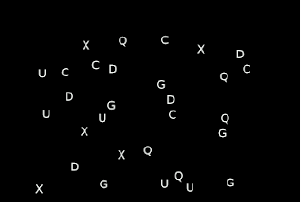
Figure 5: Compensatory approach: reading
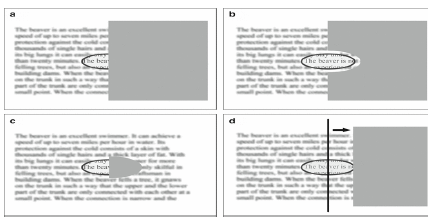
Figure 6: Training options for hemianopic reading disorder include searching along a line, tachistoscopic word presentation in various visual field
Both spatial orientation and reading should be addressed specifically when needed, since there appears to be little transfer of gains from one kind of training to the other. The main factors influencing reading ability in HVFD are macular sparing and laterality of the defect. Reading mainly depends on parafoveal visual field, therefore reading impairment is usually prominent only when the scotoma approaches fixation. Assuming a reading system from left to right, right HE causes a greater reading disorder, as the missing parafoveal right visual field impairs saccadic generation along the line, while left HE mainly interferes with locating the start of the following line. Regardless of the type of HVFD, the training should focus on bringing the whole word into the seeing visual field before comprehension, as a common spontaneous adaptation attempt is to guess the meaning of partially seen words, which leads to slow reading from the numerous errors and consequent backward saccades.
The rehabilitation plan of a neurologic patient must necessarily follow an interdisciplinary evaluation, which aims to pinpoint which and how many brain plasticity processes we can try to exploit with our rehabilitative techniques. We need to know what recovery timing to expect and if we can indeed rely on spontaneous recovery or a specific intervention is required instead. Peripheral vision might not seem of primary relevance, but when a patient is struggling to get back his own functions after a devastating event like a stroke, any ability counts, especially those which can also impact on social life and self-image.
References
2. Rowe FJ, VIS Writing Group, Wright D, Brand D, Maan T, Peel S, Akerman N, Dodridge C, Howard C, Shipman T, Sperring U. Vision In Stroke cohort: Profile overview of visual impairment. Brain and Behavior. 2017 Nov;7(11):e00771.
3. Zhang X, Kedar S, Lynn MJ, Newman NJ, Biousse V. Natural history of homonymous hemianopia. Neurology. 2006 Mar 28;66(6):901-5.
4. Papageorgiou E, Hardiess G, Schaeffel F, Wiethoelter H, Karnath HO, Mallot H, Schoenfisch B, Schiefer U. Assessment of vision-related quality of life in patients with homonymous visual field defects. Graefe's Archive for Clinical and Experimental Ophthalmology. 2007 Dec 1;245(12):1749-58.
5. Reinhard JI, Damm I, Ivanov IV, Trauzettel-Klosinski S. Eye movements during saccadic and fixation tasks in patients with homonymous hemianopia. Journal of Neuro-ophthalmology. 2014 Dec 1;34(4):354-61.
6. Zihl J. Visual scanning behavior in patients with homonymous hemianopia. Neuropsychologia. 1995 Mar 1;33(3):287-303.