Loading


Journal of Biomed Research
ISSN: 2693-5910
Most Read Articles
Syndrome similar to Familial Hypocalciuric Hypercalcemia (FHH) produced in mice deleted of the gene encoding transient receptor potential canonical channel 1 (TRPC1)
Bonnie Eby , Alexander Ku Lau , Meghan Pantalia , Usman Khan , Kai Lau
We recently found that global deletion of TRPC1 produces phenotypes similar to FHH. These TRPC1 null mice have mildly elevated serum Ca in both fasted and unfasted conditions from 3.5 through 21.5 months of age, and inappropriately elevated parathyroid hormone (PTH) levels. They also have hypocalciuria, similar to FHH patients.
J Biomed Res, 2022, Volume 3, Issue 1, p1-2 | DOI: 10.46439/biomedres.3.016
Digital workflow for high-risk, low-volume procedure simulation
Nicholas Jacobson , Hayden McClain , Melissa L New
For thousands of years, simulations have been used by doctors for training before performing high-risk procedures on patients. Due to changes in healthcare and academic environments, as well as the introduction of new technologies, we have seen an increase in the use of simulation for education and competency assessment.
J Biomed Res, 2023, Volume 4, Issue 1, p1-7 | DOI: 10.46439/biomedres.4.27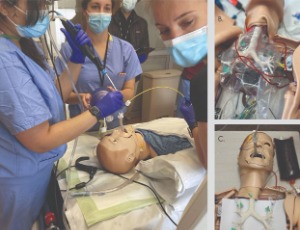
Non-invasive optical brain pulse monitoring: Experience from the first 195 patients
Elliot J. Teo , Sigrid Petautschnig , Finula I Isik , Barry Dixon
Continuous, non-invasive optical brain pulse monitoring (OBPM; Cyban Pty. Ltd., Melbourne, Australia) represents a significant advancement in the field of neurological monitoring. OBP monitoring uses red and infrared light sources to capture cardiac and respiratory waves from brain pulse waveforms, which reflect changes in both brain oxygen levels and brain movement.
J Biomed Res, 2025, Volume 6, Issue 1, p1-10 | DOI: 10.46439/biomedres.6.055
A longing for flawless awakening from general anesthesia
Yumiko Ishizawa , Jesus J. Ballesteros
Anesthetic recovery can be a critical period since neurocognitive problems such as agitation and delirium are often seen during the early recovery phase. We recently demonstrated that an α2-adrenergic agonist dexmedetomidine-induced unconsciousness and accompanying brain dynamics changes were completely and instantly reversed by the α2-adrenergic antagonist in the nonhuman primate model.
J Biomed Res, 2022, Volume 3, Issue 1, p3-5 | DOI: 10.46439/biomedres.3.017
Human and Earth evolution through CO2: Perspective for climate crisis
Kenji Sorimachi
Although human civilization has developed through genomic evolution, including its fingernail-functional cooperation, the daily lives of humans have resulted in a significant amount of carbon dioxide (CO2) being released into the atmosphere since the Industrial Revolution, which started almost 200 years ago. Recently, climate change has been documented to have spread globally.
J Biomed Res, 2022, Volume 3, Issue 1, p11-17 | DOI: 10.46439/biomedres.3.020
Acute type A aortic dissection in a patient testing positive for Influenza A
Carmel Ashur , Anna Conlon , Marion A. Hofmann Bowman
Acute Type A aortic dissection (ATAAD) is a life-threatening condition, leading to rapid fatality if not promptly treated. The risk for Type A aortic dissection is increased in patients with preexisting thoracic aortic aneurysms, but specific triggering events leading to acute aortic dissection are incompletely understood. Our recent research suggests that influenza may be a risk factor for ATAAD by demonstrating a relationship between regional influenza activity and hospital admissions for ATAAD.
J Biomed Res, 2020, Volume 1, Issue 1, p12-16 | DOI: 10.46439/biomedres.1.004
Attaining highest honors: A study proposal for the medical student’s honors bar expectancy and values changes within medical education
Cheney Elizabeth Huls , Rachel Elizabeth Daum , Zachary Isaac Merhavy , Thomas Chandy Varkey
Expectancy-Value theory was originally proposed by John William Atkinson in the 1950s and 60s as an attempt to understand different behaviors of students including persistence, decision making when given multiple opportunities to choose from, and the effort of striving for success.
J Biomed Res, 2021, Volume 2, Issue 1, p16-21 | DOI: 10.46439/biomedres.2.008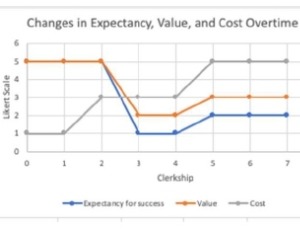
Adjusting the carbohydrates consumption and improving specific-soccer skills
Haniel Fernandes
Clearly, elite soccer athletes can lose performance as the time matches comes to an end, due to fatigue, match intensity, dehydration, and also, oftentimes, due to poor nutrition or poor supply of energy through carbohydrates.
J Biomed Res, 2021, Volume 2, Issue 1, p30-31 | DOI: 10.46439/biomedres.2.010
Cell therapies for neonatal encephalopathy: On the question of dose, route of administration, timing, and single versus multiple doses
Elliot J. Teo
The optimal range of cell dose, route of administration, and timing for the treatement of neonatal encephalopathy are not known. However, it is not practical to systematically interrogate all combinations of these variables in animal models to define the optimal cell therapy protocol. Despite this limitation, a number of trends are present in the literature that should be considered when designing future clinical and preclinical trials.
J Biomed Res, 2021, Volume 2, Issue 2, p47-50 | DOI: 10.46439/biomedres.2.015