Loading


Journal of Clinical and Experimental Gastroenterology
ISSN: 2833-1133
Latest Articles
The effect of tirofiban hydrochloride on colon anastomosis healing in hypoperfusion ischemia induced in rats
Guvenc Diner , Mustafa Ugur , Muhyittin Temiz , Ahmet Aslan
Objective: Anastomotic insufficiency in colorectal surgery can lead to serious complications and high morbidity and mortality rates. This study aimed to evaluate the effect of tirofiban hydrochloride, an antiplatelet agent, on ischemic colon anastomosis healing.A total of 21 male Wistar albino rats were randomly divided into three groups: Group A (Sham), Group B (Ischemia-Control), and Group C (Ischemia-Tirofiban).
J Clin Exp Gastroenterol, 2026, Volume 5, Issue 1, p1-6 | DOI: 10.46439/gastro.5.028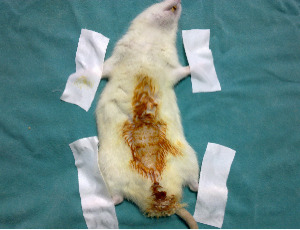
Vedolizumab in Indian patients with inflammatory bowel disease: final results from a prospective, multicenter, open-label, phase 4 study
Mayank Kabrawala , Rupa Banerjee , Vineet Ahuja , Anumula Kavitha , Vaishali Bharadwaj , Ashok Dalal , B Ramesh Kumar , Shrikant Mukewar , Ajit Sood , VG Mohan Prasad , Sandeep Arora , Gaurav Bahuguna , Avi Sharma
Background: There is limited data on the effectiveness and safety of vedolizumab for Indian patients, making this study the first focused evaluation of its use in this population.This prospective, multicenter, open-label phase IV study enrolled patients aged 18–65 with moderate to severe ulcerative colitis (UC) or Crohn's disease (CD), who received vedolizumab 300 mg IV at weeks 0, 2, and 6 (induction) and at weeks 14, 22, 30, 38, and 46 (maintenance).
J Clin Exp Gastroenterol, 2026, Volume 5, Issue 1, p7-14 | DOI: 10.46439/gastro.5.029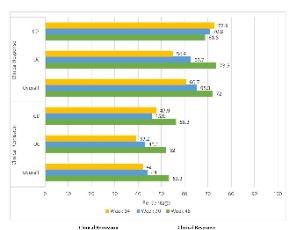
Selenium-modified natural polysaccharides: bridging preclinical antioxidant mechanisms to clinical translation in hepatic fibrosis and related gastroenterological disorders
Yuwen Wang , Junfeng Niu
Liver fibrosis represents a critical convergence point in gastroenterological practice, serving as the common pathway from chronic injury—whether metabolic (MASLD/MASH), alcoholic, viral, or drug-induced—to cirrhosis and hepatocellular carcinoma. Globally, cirrhosis and chronic liver disease account for over 1.5 million deaths annually, with MASLD now the leading indication for liver transplantation in many regions.
J Clin Exp Gastroenterol, 2026, Volume 5, Issue 1, p15-22 | DOI: 10.46439/gastro.5.030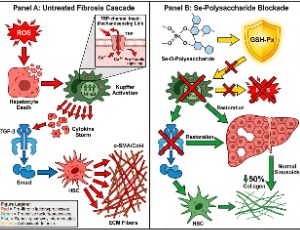
Carvedilol and the evolving management of portal hypertension in compensated cirrhosis
Talha Khalid , Muhammad Ali Butt , Raza Malik
Cirrhosis remains a major cause of liver-related mortality worldwide. The transition from compensated to decompensated disease, marked by complications such as ascites, hepatic encephalopathy, or variceal hemorrhage represents a critical shift in prognosis and survival. Clinically significant portal hypertension (CSPH) is the primary driver of this progression, making portal pressure reduction a central therapeutic target.
J Clin Exp Gastroenterol, 2026, Volume 5, Issue 1, p23-28 | DOI: 10.46439/gastro.5.031
Thalidomide in gastrointestinal angiodysplasia: translating systematic evidence into clinical practice
Junaid Khan , Daniel K Daniels
Gastrointestinal (GI) angiodysplasia represents one of the most vexing diagnostic and therapeutic challenges in clinical gastroenterology. These arteriovenous malformations, predominantly affecting the cecum, right colon, and small bowel, are the most common vascular lesions of the GI tract and account for a disproportionately large share of obscure GI bleeding, particularly in elderly patients.
J Clin Exp Gastroenterol, 2026, Volume 5, Issue 1, p29-31 | DOI: 10.46439/gastro.5.032