Loading


Journal of Biomed Research
ISSN: 2693-5910
Featured Articles
Digital workflow for high-risk, low-volume procedure simulation
Nicholas Jacobson, Hayden McClain, Melissa L New
For thousands of years, simulations have been used by doctors for training before performing high-risk procedures on patients. Due to changes in healthcare and academic environments, as well as the introduction of new technologies, we have seen an increase in the use of simulation for education and competency assessment.
J Biomed Res, 2023, Volume 4, Issue 1, p1-7 | DOI: 10.46439/biomedres.4.27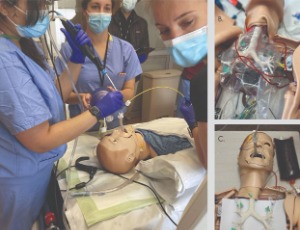
Non-invasive optical brain pulse monitoring: Experience from the first 195 patients
Elliot J. Teo, Sigrid Petautschnig, Finula I Isik, Barry Dixon
Continuous, non-invasive optical brain pulse monitoring (OBPM; Cyban Pty. Ltd., Melbourne, Australia) represents a significant advancement in the field of neurological monitoring. OBP monitoring uses red and infrared light sources to capture cardiac and respiratory waves from brain pulse waveforms, which reflect changes in both brain oxygen levels and brain movement.
J Biomed Res, 2025, Volume 6, Issue 1, p1-10 | DOI: 10.46439/biomedres.6.055
A longing for flawless awakening from general anesthesia
Yumiko Ishizawa, Jesus J. Ballesteros
Anesthetic recovery can be a critical period since neurocognitive problems such as agitation and delirium are often seen during the early recovery phase. We recently demonstrated that an α2-adrenergic agonist dexmedetomidine-induced unconsciousness and accompanying brain dynamics changes were completely and instantly reversed by the α2-adrenergic antagonist in the nonhuman primate model.
J Biomed Res, 2022, Volume 3, Issue 1, p3-5 | DOI: 10.46439/biomedres.3.017
Blending into the crowd: electrophysiological evidence of gestalt perception of a human dyad: extended discussion and theoretical viewpoint
Karima Mersad, Philippe Oliviero
In this commentary, we provide further discussion and interpretation of a recent article entitled “Blending into the Crowd: Electrophysiological Evidence of Gestalt Perception of a Human Dyad”, published one year ago by the first author of the present commentary. Firstly, drawing a parallel between the experiment described in the above article and another closely comparable experimental study, we propose that the neural integration process evidenced when seeing two human shapes close in space is a marker of the categorization of a stimulus as a group of humans (two here) represented as an entity per se.
J Biomed Res, 2022, Volume 3, Issue 1, p8-10 | DOI: 10.46439/biomedres.3.019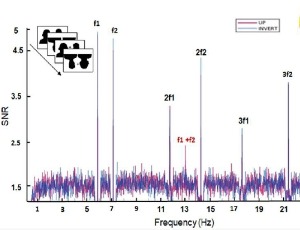
The biomedical implications of living off-Earth
Chris Impey
Not long ago, the prospect of humans living off-Earth seemed like science fiction. In sixty years of human space flight, fewer than 600 people have been to low Earth orbit, and just 12 have stood on the surface of another world. The cost and difficulty of liberating humans from the grip of gravity put dreams of living off-Earth on ice. Yet that is rapidly changing [1]. Space entrepreneurs Elon Musk and Jeff Bezos are perfecting reusable rockets that can ferry people more frequently and cheaply into orbit, and Musk’s company Space-X has announced plans for a large rocket to ferry people to Mars.
J Biomed Res, 2021, Volume 2, Issue 2, p35-37 | DOI: 10.46439//biomedres.2.012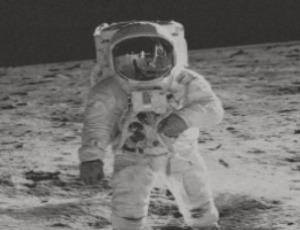
The relationship between poor oral health and poor general health in Indigenous and non-Indigenous peoples
Xiangqun Ju, Kostas Kapellas, Lisa Jamieson
It is impossible to conceive of oral health outside of general health. Evidence suggests that both the short- and long-term systemic diseases are associated with poor oral health, including diabetes, cardiovascular disease, renal disease, respiratory disease in particular for chronic obstructive pulmonary disease (COPD), osteoporosis and Alzheimer’s disease.
J Biomed Res, 2021, Volume 2, Issue 2, p38-44 | DOI: 10.46439/biomedres.2.013
Commentary: SARS-CoV-2 new variants: Characteristic features and impact on the efficacy of different vaccines
Jiyun Zhou, Abbas Khan, Dong-Qing Wei
A recent article published by Abbas et al. in the Journal of Biomedicine and Pharmacotherapy systematically revealed about the vaccines developed against the recent pandemic agents SARS-CoV-2 and its variants [1]. The authors insightfully provided an overview on the distinct features of the SARS-CoV-2 new variants, the associated mortality rate, hospitalization, re-infection and finally the efficacy of different vaccines.
J Biomed Res, 2021, Volume 2, Issue 2, p45-46 | DOI: 10.46439/biomedres.2.014
Cell therapies for neonatal encephalopathy: On the question of dose, route of administration, timing, and single versus multiple doses
Elliot J. Teo
The optimal range of cell dose, route of administration, and timing for the treatement of neonatal encephalopathy are not known. However, it is not practical to systematically interrogate all combinations of these variables in animal models to define the optimal cell therapy protocol. Despite this limitation, a number of trends are present in the literature that should be considered when designing future clinical and preclinical trials.
J Biomed Res, 2021, Volume 2, Issue 2, p47-50 | DOI: 10.46439/biomedres.2.015
Modeling of psychological time cognition with Human Language based Consciousness model
Hana Hebishima, Shinichi Inage
This paper interprets subjective psychological time in a model of consciousness called the HLbC model proposed by the authors. Time has an objective physical time and a subjective psychological time. Subjective psychological time is thought to vary in its flow depending on the individual and the situation. For this explanation, this paper introduces surreal numbers into the perception of subjective psychological time.
J Biomed Res, 2024, Volume 5, Issue 1, p96-102 | DOI: 10.46439/biomedres.5.048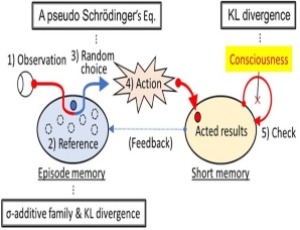
CRISPR-Cas systems: A revolution in genome editing and its diverse applications
Joseph Lin, Jun Yang
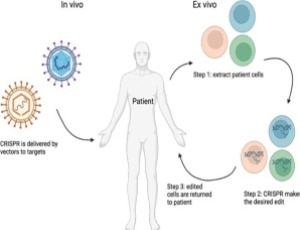
The clustered regularly interspaced short palindromic repeats (CRISPR) Cas (CRISPR6 associated protein) system is an advanced adaptive immune system found in prokaryotes. First discovered in1987, CRISPR Cas has revolutionized genetic research in the past two decades. CRISPR-Cas9 the most widespread system enables precise gene editing by creating double strand breaks.
J Biomed Res, 2024, Volume 5, Issue 1, p108-114 | DOI: 10.46439/biomedres.5.050