Loading


Journal of Experimental Nephrology
ISSN: 2767-3383
Archive
2026
2025

2023
2022
2021
2020

Recommended Articles
Beneficial effects of nicotinamide on hypertensive mice with impaired endothelial nitric oxide function
Nicotinamide (Nam, amide form of niacin acid or nicotinate), a precursor for nicotinamide adenine dinucleotide (NAD+), is important for normal physiological function of organisms. Nam also suppresses mobilization of Ca2+ from sarcoplasmic reticulum into cytoplasm through inhibiting ADP-ribose cyclase. Previously, we have demonstrated that a pharmacological dose of Nam normalizes maternal blood pressure in mouse models of preeclampsia, a pregnancy related hypertensive disorder.
Toll-like receptor 3 signaling and human glomerular endothelial cells
Given that viral infections may trigger either the development of inflammatory renal disease or the worsening of pre-existing renal disease, activated signaling through Toll-like receptor 3 (TLR3) reportedly plays a role in the pathogenesis of glomerular diseases (GN). Concerning TLR3 in intrinsic glomerular cells, it has been reported that the activation of TLR3 and downstream immune responses can be induced by both infectious organisms and endogenous ligands and leading to the development of “pseudo” antiviral immunity-related inflammations in the kidney.
Usefulness to assess the disease progression and mortality risk profiles, in a population of chronic kidney disease patients followed by general practitioners and nephrologists
The number of individuals with all-stage chronic kidney disease (CKD) reached almost 700 million in 2017, which is more people than those with diabetes, osteoarthritis, chronic obstructive pulmonary disease (COPD), asthma, or depressive disorders [1]. A multitude of studies have been published in the field of CKD based on patho-physiological considerations, screening, etiological factors, clinical observations, targeted therapeutic interventions, but very little is known about the fate of a patient, who has CKD and who is followed for years by his treating physician and the reference nephrologist.
Rickets in renal tubular acidosis: A clinical appraisal
Rickets, a metabolic disease restricted to an age group before epiphyseal growth plate fusion, and is diagnosed by typical skeletal deformities and characteristic radiological features. The commonest etiology of rickets worldwide is nutritional deficiency of vitamin D and/or calcium, followed by primary renal phosphate wasting disorders
In vitro analysis and cadaver feasibility study of a peritoneal dialysis catheter tungsten weighted anchor
Objective: Peritoneal dialysis (PD) catheters function best when residing within the retrovesical space of the peritoneal cavity, but they frequently migrate and fail. A novel variable length and conforming PD catheter weighted anchor to prevent migration has been evaluated.
Antioxidant vitamins in diabetic kidney disease: The unsettled issues
Diabetic kidney disease (DKD), as a common complication of diabetes mellitus, is one of the leading causes for end-stage renal disease (ESRD) in the world. Inhibitors of the renin–angiotensin–aldosterone system is widely used in DKD, but many patients still progressed to ESRD, and progress in the treatment of DKD is limited in recent years, thus more effective ways to prevent or treat DKD are necessary. Chronic hyperglycemia can induce the imbalance between the excessive reactive oxygen species (ROS) and antioxidant defense mechanisms. Increasing evidences indicated oxidative stress acts as a crucial role in the initiation and progression of DKD. It is suggested that the restoration of the balance between oxidative stress and antioxidant defense may be a hopeful drug target to prevent or treat DKD. Our meta-analysis showed that the antioxidant vitamins can benefit kidney function and systolic blood pressure in patients with diabetes and albuminuria.
The beneficial role of vitamin B12 in injury induced by ischemia/reperfusion: beyond scavenging superoxide?
Vitamin B12 is one of the most complex non-protein compounds as described by Dorothy Hodgkin, a Nobel Prize-winning chemist, who discovered the molecular crystal structure of B12. Cobalamins (vitamin B12 derivatives) contain the rare transition metal, cobalt (Co), positioned in the center of a corrin ring and weakly bound to carbon. While cobalamins are synthesized only in certain bacteria and archaea, not in mice or humans, they are co-enzymes essential for all life except for plants. For example, in higher vertebrates, methyl-cobalamin and 5’-deoxyadenosyl-cobalamin are essential for the function of methionine synthase and methylmalonyl CoA mutase, respectively.
An overview of non-invasive methods for transcutaneous measurements of glomerular filtration
The kidneys are responsible for excreting out xenobiotics and metabolites produced within the body through the urine. Therefore, healthy functioning of the kidneys is vital for a healthy being. The formation of urine takes place by three main processes: filtration of plasma via glomeruli, reabsorption and secretion by the tubular cells. Assessment of these three processes can help in evaluating kidney function. Out of the three functions, measurement of glomerular filtration rate (GFR) is by far the most often used renal diagnostic technique. A common way of evaluating GFR is based on the principle of clearance of a marker. An ideal GFR marker should be completely filtered by the glomeruli, should neither be secreted, nor reabsorbed by the renal tubular cells, and should not follow extrarenal clearance pathways. Clearance is expressed as the volume of plasma from which a marker is completely cleared per unit of time. While the endogenous markers such as serum creatinine are inaccurate due to age, gender, muscle mass, body weight and other anthropometric factors, thorough research has been done in search for exogenous GFR markers. This paper reviews the development of these GFR markers and their use in transcutaneous measurements as a way of non-invasive renal assessment.
Host range of zoonotic hepatitis E viruses
Based on a proposed classification, the family Hepeviridae is divided into two genera: Orthohepevirus and Piscihepevirus. The genus Orthohepevirus, divided into seven species, contains the fast majority of HEV strains identified so far: Orthohepevirus A, B, C and D. Within Orthohepevirus A genotype HEV-1 and HEV-2 infect only humans; for genotype HEV-3 and HEV-4 the predominant host species are pig, wild boar, rabbit, deer, mongoose and human. Genotype HEV-5 and HEV-6 infect wild boar and genotype 7 and 8 camel. Orthohepevirus B infect chicken, Orthohepevirus C infect rat and ferrets and Orthohepevirus D infect bat. In this review article epidemiological aspects of HEV due to crossing species barriers based on infectivity studies are assessed.
Evaluation of the pathophysiological mechanisms of salt sensitivity
Globally, hypertension is estimated to affect 40% of adults and cause 7.5 million deaths, approximately 12.8% of all deaths. And the rate of hypertension control is still exceptionally low. There is strong evidence to suggest a causal relationship between salt intake and high blood pressure. Salt sensitivity is an independent risk factor for cardiovascular disease (CVD) and mortality, which is present in half of the hypertensive population and one quarter of the normotensive subjects. Additionally, despite the unquestionable influence of environmental factors in the determination of salt sensitivity in humans, estimates of its heritability have been as high as 74% in blacks and 50% in Chinese subjects, both higher than those for hypertension.
An update on proliferative glomerulonephritis with monoclonal immunoglobulin deposits in pediatric patients
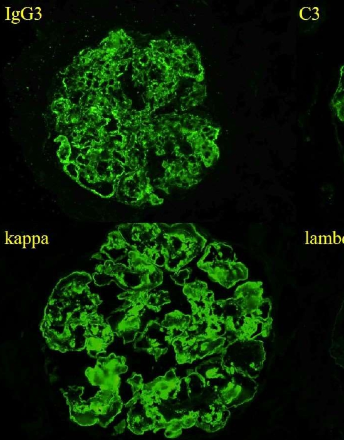
Proliferative glomerulonephritis with monoclonal immunoglobulin deposits (PGNMID) was first described by Nasr et al. in 2004 with a subsequent study composed of a larger patient cohort a few years later [1,2]. Although more commonly occurring in older adults, PGNMID has since been reported in a wide range of age groups including children [3-5]. PGNMID is categorized as a monoclonal gammopathy of renal significance (MGRS), and is additionally included in the recently expanded concept of monoclonal gammopathy of clinical significance (MGCS), which encompasses disorders of any organ system related to underlying plasma cell or B-cell clones [6]; however, most patients with PGNMID do not show evidence of a circulating monoclonal protein or clonal plasma cell proliferation, and monoclonal gammopathy has not been reported in any pediatric patients with the disease. Herein we briefly discuss the clinical and histopathologic features of PGNMID, as well as advances in our understanding of the pathogenesis and clinical course of the disease.
Role of vitamin D in diabetic nephropathy
Diabetic nephropathy (DN) or Diabetic kidney disease (DKD) is one of the major microvascular complications of diabetes mellitus (DM). DN is observed in approximately 20–40% of diabetic patients. DN is also an important risk factor for DM patient’s death. Nowadays, DN has become the leading cause of chronic renal failure (CRF) in most countries without effective therapeutic methods. Recently, the renoprotective effects mediated by vitamin D have been evidenced. Currently available evidence showed that vitamin D is effective in reducing proteinuria in DN patients. A recent meta-analysis demonstrated the therapeutic effect of vitamin D, on urinary albumin excretion, in DN patients. This review summarized the multiple roles of vitamin D in mechanism of renopretective effect of vitamin D to explore much more and effective therapeutic methods for DN.
Effect of pentoxifylline on the dose of erythropoietin among hemodialysis patients: A double-blind randomized clinical trial
Renal anemia is a major complication in chronic kidney disease (CKD), and is a problem that has yet to be overcome. This problem had been improved by the recombinant human erythropoietin (rhEPO), but some patients are relatively resistant to it and require higher doses, which is associated with increased adverse outcomes and mortality. Furthermore, the consequence of higher demand for rhEPO to achieve target Hb level is costly. Some factors can be considered as the reasons of rhEPO resistance; blood loss, impaired hematopoiesis and inadequate dialysis. Moreover, there is a hypothesis that enhancement of the immune system activity in CKD patients is one of the important causes of resistance to EPO, and the use of anti-inflammatory drugs like pentoxifylline (PTX) may be useful as a methylxanthine derivate used for the management of chronic peripheral arterial disease that increases the blood flow to the microcirculation because of its potent hemorheological properties, which include preservation of the erythrocyte water and cation content and enhanced tissue oxygenation.
Apheresis methods in COVID-19 era: What about Long COVID?
COVID-19 disease caused by the novel coronavirus SARS-CoV-2, emerged in Wuhan, China, and has spread worldwide. According to the World Health Organization (WHO), to date more than 750 million people have been infected with SARS-CoV2 and almost 7 million patients have died. The disease has a wide spectrum of symptoms from mild to life threatening conditions. Strong evidence has shown that the severity of the disease is due to high levels of circulating inflammatory mediators including cytokines and chemokines, leading to a condition of dysregulated innate immune response and uncontrollable systemic hyperinflammation called cytokine storm syndrome (CSS). Several studies have shown elevated cytokine levels, particularly in COVID-19 patients requiring ICU treatment. Especially for IL-6, it has been demonstrated the need for mechanical ventilation, a potential thrombotic state with a poor outcome. The syndrome is also characterized by hypercoagulable state with microvascular thrombosis and clot formation features and endothelial dysfunction. The worst clinical manifestation of the syndrome is respiratory distress syndrome (ARDS) which is correlated with multiorgan failure and a high mortality.
Analysis of chronic kidney disease on diagnosis, treatment, prognosis and related risk factors in patients with lymphoma: A mini-review
Currently, the field of tumor nephrology continues to evolve, and the interplay between chronic kidney disease (CKD) and lymphoma merits further investigation. The incidence of CKD among lymphoma patients is substantial, posing a significant long-term risk for CKD progression. CKD should be regarded as an independent prognostic factor for mortality in lymphoma patients. In this mini-review, we aim to extend the research direction outlined in "Diagnosis and Treatment of Secondary Nephrotic Syndrome with Rash as the Initial Symptom: A Case Report", with a focus on elucidating the correlation between CKD and lymphoma.
Clinical and urodynamic findings in children and adolescents with refractory neurogenic bladder undergoing augmentation cystoplasty
Augmentation cystoplasty (AC) is a surgical procedure for patients with refractory neurogenic bladder (NB). This study aimed to evaluate urinary incontinence (UI), vesicoureteral reflux (VUR), and urodynamic parameters in patients’ post-AC and compare these results to preoperative data.
Difficulties of diagnosing hyponatremia disorders. Overcoming limitations with a 3-step approach and web-based diagnostic application
Hyponatremia presents a complex diagnostic challenge due to its broad differential diagnosis and the difficulties of its evaluation. The available diagnostic algorithms often have substantial limitations. Therefore, clinicians frequently struggle to distinguish the underlying causes of hyponatremia, leading to diagnostic and management errors that contribute to considerable morbidity and mortality.
Association of fundus damage, renal function deterioration, and ferroptosis in chronic kidney disease patients
Introduction: This study aimed to explore the changes in ferroptosis markers and their relationship with fundus lesion severity in chronic kidney disease (CKD). Methods: We enrolled 118 CKD patients and collected clinical, renal function, fundus imaging data, and ferroptosis markers. We performed correlation and regression analyses between renal dysfunction and fundus lesions, and assessed the changes and mediating roles of serum iron (Fe), malondialdehyde (MDA), and reduced glutathione (GSH) in CKD deterioration and retinal damage.
ICT-based approaches for managing hemodialysis therapy: a scoping review
Chronic kidney disease (CKD) constitutes a significant global health burden due to its association with kidney failure, cardiovascular morbidity, and premature mortality. Despite incremental advancements in nephrology, technological innovation has progressed more slowly than in other clinical fields.
Pathogenetic link between postpartum hemorrhage and renal cortical necrosis
Renal cortical necrosis (RCN) is a catastrophic form of pregnancy-related acute kidney injury (AKI) and is significantly more prevalent in developing countries than in developed nations. Among obstetric complications, postpartum hemorrhage (PPH) remains a major etiological factor associated with RCN.