Loading


Cell Signaling
ISSN: 2837-8253
Most Read Articles
Unlocking the significance of CD226 in cancer
Weili Sun
CD226 is a transmembrane glycoprotein with a well-defined structural organization, which is primarily expressed on natural killer (NK) cells, cytotoxic T cells, and some subsets of B cells [1,2]. Its primary structure consists of an extracellular domain, a transmembrane domain, and a cytoplasmic tail [1]. Each of these domains contributes to the protein's overall function.
Cell Signal, 2024, Volume 2, Issue 1, p1-4 | DOI: 10.46439/signaling.2.021
PDE4 inhibition and enhancement of human memory and cognition
Graeme B. Bolger
Two distinct, but intertwining, threads of inquiry have demonstrated that the PDE4, or cAMP-selective, phosphodiesterases, have an essential role in human cognition, learning and memory. Study of genetically-modified preclinical models, and of humans with mutations in the PDE4D gene, has provided some of the most rigorous proof of the importance of PDE4 signaling in the CNS. More recently, clinical trials of PDE4-selective inhibitors have shown promising clinical activity in disorders of cognition and memory.
Cell Signal, 2025, Volume 3, Issue 1, p1-9 | DOI: 10.46439/signaling.3.048
Commentary: Interferons in Influenza and Streptococcus Pneumoniae co-pathogenesis
Sunil Palani , Keer Sun
Influenza A virus (IAV) and Streptococcus pneumoniae (SPn) are two major respiratory pathogens in humans. IAV infection alone is often self-limited, and SPn colonization can be found in 5-90% of healthy individuals, as normal flora [1,2].
Cell Signal, 2024, Volume 2, Issue 1, p10-13 | DOI: 10.46439/signaling.2.023
Biomarkers for monoclonal antibody targeting EGFR in NSCLC: Challenges, current status, and future perspectives
May-Lucie Meyer , Fred R. Hirsch
Non-small cell lung cancer (NSCLC) is the leading cause of cancer-related deaths [1]. However, significant improvements in the past decades have been achieved with improved outcomes [2-4]. Several mutations have been described as promoters of oncogenesis, and specific treatments are available, including those for Epidermal Growth Factor (EGFR) mutations [4].
Cell Signal, 2024, Volume 2, Issue 1, p14-22 | DOI: 10.46439/signaling.2.024
Recombinant protein synthesis and isolation of human interferon alpha-2 in cyanobacteria
Anastasios Melis , Bharat Kumar Majhi
Interferons (IFNs) are a class of small immunological proteins that are secreted by infected cells during viral or bacterial infections to combat and prevent infection propagation [1]. They play important roles in triggering signal cascade processes inside the cell that activate other immune cells and limit viral multiplication.
Cell Signal, 2025, Volume 3, Issue 1, p23-26 | DOI: 10.46439/signaling.3.051
Insights into early acne pathogenesis: Exploring intercellular dynamics and key dysregulated genes
Min Deng , Kiana Farahani , George W. Agak
Acne vulgaris, the most common skin condition worldwide, affects over 85% of adolescents, with nearly half continuing to experience it into adulthood. The Scarring and post-inflammatory hyperpigmentation associated with acne can profoundly impact mental health and self-esteem, underscoring the importance of early and effective treatment [1].
Cell Signal, 2025, Volume 3, Issue 1, p32-39 | DOI: 10.46439/signaling.3.053
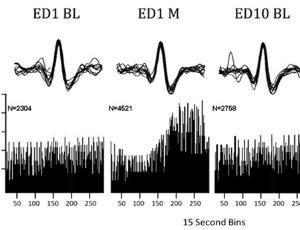
Methylphenidate (Ritalin) affects serotoninsignaling differently in young compared to adults. Concomitant behavioral and neuronal recording from dorsal raphe in freely behaving rats
Elizondo GM , Raymond A , Perez-Vasquez C , Dafny N
Attention deficit hyperactivity disorder (ADHD) is a complex behavioral disorder characterized by hyperactivity, increased impulsivity, and inattention [1-3]. Methylphenidate (MPD) is the most
commonly prescribed psychostimulant for management and treatment of ADHD [3-7].
Do arrestin oligomers have specific functions?
Vsevolod V. Gurevich
Arrestins were discovered as key players in the conserved two-step homologous desensitization of G protein-coupled receptors (GPCRs): they specifically bind active phosphorylated GPCRs, precluding their coupling to cognate G proteins, thereby stopping (“arresting”) G protein-mediated receptor signaling [1].
Cell Signal, 2023, Volume 1, Issue 1, p42-46 | DOI: 10.46439/signaling.1.009
Camping in the backyard: Identifying extracellular matrix targeting ligands using yeast surface display
Benjamin J Umlauf
Camping trips are often a lot of work, especially with children. Purchasing supplies, finding a location, and dealing with scary animals are often just too much. Inspired by so many films, my family instead set up a tent to camp in the backyard.
Cell Signal, 2024, Volume 2, Issue 1, p54-57 | DOI: 10.46439/signaling.2.027
Generation of selenium nano- and micro-materials using abiotic and biotic processes
Michael Wells , Kyle Rugg , Humaira Urmee , Jenna Etheridge , Caitlyn Boudreaux , Natalie Fairley , Mark A. DeCoster
We have previously described the generation of Metal Organic Biohybrids (MOBs) as self-assembling structures that are formed by a combination of a biological component (amino acid), and a metal, such as copper. This MOBs synthesis process has now been distilled to be purely biochemical (a green chemistry process), or abiotic, not requiring the presence of cells.
Cell Signal, 2026, Volume 4, Issue 1, p81-86 | DOI: 10.46439/signaling.4.101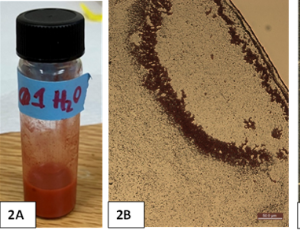
Intracellular signaling mechanism of sweat secretion by PACAP
Michio Yamashita , Junko Shibato , Randeep Rakwal , Naoko Nonaka , Fumiko Takenoya , Seiji Shioda
Sweat, an exocrine fluid secreted (sweat gland tissue of the eccrine and apocrine glands) by skin has an indispensable function for regulating body temperature and skin hydration [1]. The eccrine gland performs 90% of sweat secretion and secretory fluid of eccrine glands consists of 99% water and 1% inorganic substances.
Cell Signal, 2024, Volume 2, Issue 1, p86-89 | DOI: 10.46439/signaling.2.035
Sample multiplexing in CyTOF: Path to optimize single-cell proteomic profiling
Muharrem Muftuoglu , Michael Andreeff
In biomedical research, achieving single-cell resolution in investigation of cellular systems is of paramount importance. Ongoing research efforts to explore and decode the heterogeneity in cellular phenotype, functionality, genomics, epigenetics, and transcriptomics in biological systems have propelled significant technological advancements through innovative breakthroughs [1-3].
Cell Signal, 2024, Volume 2, Issue 1, p113-119 | DOI: 10.46439/signaling.2.041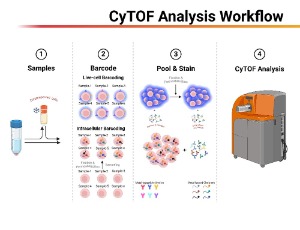
The interplay of regulatory T cells, endoplasmic reticulum stress, and unfolded protein response activation in post-transplant alloimmune hepatitis and autoimmune hepatitis
Kumar Subramanian , Udeme D. Ekong
The incidence and prevalence of autoimmune hepatitis (AIH) globally is 1.28 per 100,000 population-years (95% CI, 1.01-1.63) and 15.65 per 100,000 population (95% CI, 13.42-18.24), respectively [1]. The incidence and prevalence in children is 0.4 and 3.0 cases per 100,000 children [2], and in adults 17 per 100,000 [3,4].
Cell Signal, 2024, Volume 2, Issue 1, p120-125 | DOI: 10.46439/signaling.2.042